
Zimbabwe – A Culinary Tradition Rooted in Local Ingredients
Zimbabwean cuisine is deeply connected to the country's agricultural heritage and everyday home cooking. Maize, pumpkins, leafy vegetables, groundnuts and legumes play an important role in traditional dishes. Many recipes rely on simple, locally available ingredients that are transformed into nourishing, comforting meals. Particularly within Shona culinary traditions, pumpkin and peanut butter are familiar ingredients that reflect the importance of seasonal produce and practical, resourceful cooking.
Nhopi – Traditional Pumpkin and Peanut Butter Comfort Food
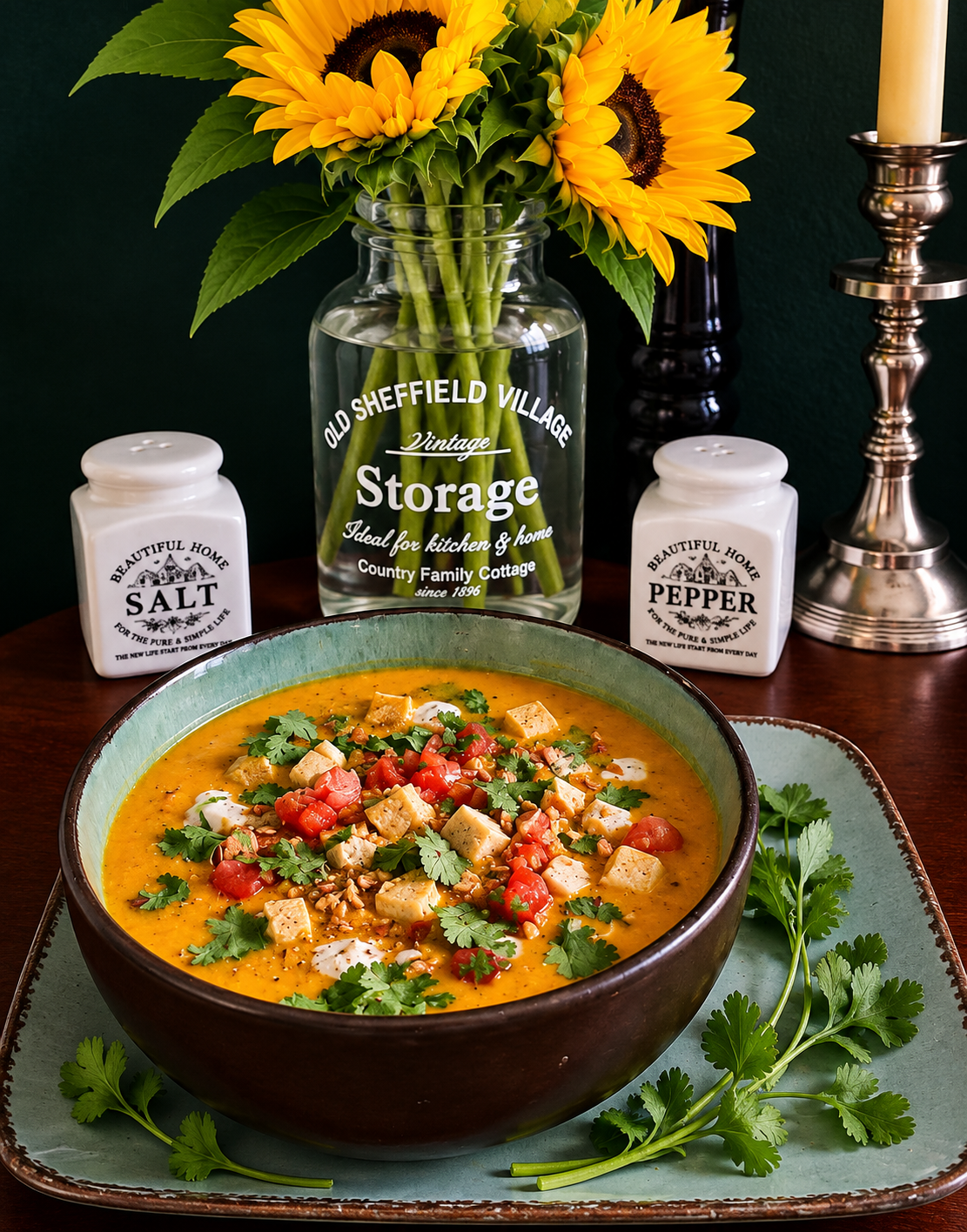
Nhopi is a traditional Zimbabwean dish made from soft-cooked pumpkin, often combined with peanut butter and maize meal. Its naturally creamy texture and gently sweet flavour make it a popular breakfast dish or comforting accompaniment. Depending on the household, Nhopi can be prepared as a thick porridge or a softer, spoonable dish. My Via Veggie Vegan interpretation keeps the traditional pumpkin, cornmeal and peanut butter foundation but takes it in a savoury direction with golden pan-fried tofu, fresh tomatoes, coriander and a dollop of vegan crème fraîche.
▣ Ingredients (2 servings)
- 250 g pumpkin flesh
- 40 g fine white maize meal (cornmeal, not coarse polenta)
- 40 g smooth peanut butter
- 350 ml water
- 1 tsp sugar
- 1 pinch ground cinamon
- 1 pinch ground coriander
- 75 g firm tofu
- 1 tomato
- 4 sprigs fresh coriander
- 1 tbsp vegan crème fraîche alternative
- 1 tsp neutral vegetable oil, for frying the tofu
- to taste salt & freshly ground black pepper
♨ Preparation
- Cook the Pumpkin
Place the diced pumpkin in a saucepan with approximately 250 ml water and a pinch of salt. Bring to a boil, cover and simmer over medium heat for approximately 15 minutes, until the pumpkin is completely tender. Do not drain the cooking water. - Mash the Pumpkin
Mash the softened pumpkin directly in the saucepan using a potato masher or fork. Mix it thoroughly with the remaining cooking liquid until a smooth, creamy consistency forms. - Prepare the Cornmeal
In a small bowl, combine the fine cornmeal with the remaining 100 ml cold water. Stir until smooth and free of lumps. - Thicken the Nhopi
Slowly pour the cornmeal mixture into the hot pumpkin purée, stirring continuously. Reduce the heat to low and simmer gently for approximately 5–8 minutes, stirring frequently, until the cornmeal is fully cooked and the mixture has thickened. - Add the Peanut Butter
Stir in the smooth peanut butter, optional sugar, remaining salt and, if desired, a pinch of cinnamon and ground ginger. Continue stirring until the peanut butter is completely incorporated and the mixture becomes creamy and homogeneous. - Adjust the Consistency
If the Nhopi becomes too thick, add a little warm water, one tablespoon at a time. For my savoury bowl version, the consistency should be creamy and spoonable, somewhere between a thick soup and a soft porridge. - Prepare the Tofu
While the Nhopi finishes cooking, cut the firm natural tofu into small cubes. Heat a little neutral vegetable oil in a non-stick frying pan and fry the tofu over medium-high heat, turning occasionally, until golden brown on several sides. - Prepare the Fresh Toppings
Finely dice the tomato and roughly chop the leaves from the fresh coriander sprigs. - Assemble the Bowls
Divide the warm Nhopi between two serving bowls. Top with the golden tofu cubes, finely diced tomato and fresh coriander. - Finish and Serve
Add a dollop of vegan crème fraîche alternative and serve immediately. The creamy pumpkin base, savoury tofu and fresh toppings create a delicious contrast of flavours and textures.
Food Story
Simple Ingredients, Wonderful Discoveries
One of my favourite things about my culinary journey around the world is discovering traditional dishes that turn just a handful of ingredients into something wonderfully comforting. Nhopi from Zimbabwe is a perfect example: pumpkin, cornmeal and peanut butter, cooked into a creamy, slightly sweet porridge. No complicated techniques, no endless shopping list. Just honest, comforting food. And I absolutely love it when a traditional recipe is already naturally vegan!
A Little Via Veggie Vegan Magic
Of course, I couldn’t resist giving Nhopi my own savoury twist. I added golden pan-fried tofu, finely diced tomatoes, fresh coriander and a spoonful of vegan crème fraîche. The result was a colourful bowl with extra plant protein, freshness and a lovely contrast between creamy pumpkin and crispy tofu. A few simple additions turned this traditional dish into a satisfying little meal of its own.
Breakfast, Lunch or Dinner? Yes, Please!
Traditionally enjoyed for breakfast or as a side dish, Nhopi is wonderfully versatile. Keep it thick and enjoy it like porridge, serve it as a comforting accompaniment or add a little more liquid for a warming, creamy soup. Personally, I love the savoury bowl version with all its colourful toppings. Three delicious possibilities, one Zimbabwean classic – and another reminder that plant-based cooking around the world has so much to offer.
♨ Nutrition per serving
Nutritional values are approximate and may vary depending on the ingredients and products used.
Good to Know
Why Is Butternut Squash So Good for You?
Butternut squash is naturally rich in beta-carotene, a plant pigment that the body can convert into vitamin A. Vitamin A contributes to normal vision and immune function. Butternut also provides vitamin C, potassium and dietary fiber while being relatively low in calories. Its naturally sweet, creamy flesh makes it ideal for soups without requiring large amounts of added fat.
Does Peanut Butter Add Protein to Soup?
Absolutely! Unsweetened peanut butter typically provides around 25–26 g of protein per 100 g, depending on the product. The 60 g used in this recipe therefore contribute approximately 15 g of plant-based protein to the entire soup, or around 7.5 g per serving. Peanuts also contain unsaturated fats, magnesium and vitamin E. Together with butternut squash, peanut butter creates a rich, satisfying texture without dairy cream.
Can Bats Detect Spiderwebs?
Many bats navigate using echolocation, emitting high-frequency sounds and interpreting the returning echoes. This ability helps them detect and avoid many obstacles. However, the finest individual silk threads may be difficult to detect, and small bats occasionally become entangled in large, strong webs. Some spiders have even been documented capturing bats, although such encounters are unusual. Fortunately, the two pumpkin bats accompanying this soup have nothing to worry about!
You may also like
♡
You may also like
Fijian Kaddu Tarkari – Vegan Roasted Pumpkin Curry with Two Halloween Rice Pumpkins
You may also like
Afghan Borani Kadoo with Vegan Chaka
You may also like