
Brazil – A Land of Tropical Fruits and Culinary Diversity
Brazil is the largest country in South America, famous for its extraordinary landscapes, from the Amazon rainforest to its beautiful Atlantic coastline. Its rich culinary heritage reflects Indigenous Brazilian, African, Portuguese and other cultural influences. Tropical fruits play an important role in many regional food traditions, with açaí holding a particularly special place in the Amazon region. For generations, local communities have harvested and enjoyed the dark-purple fruit of the açaí palm, making it an important part of northern Brazil's food culture.
What Is an Açaí Bowl?
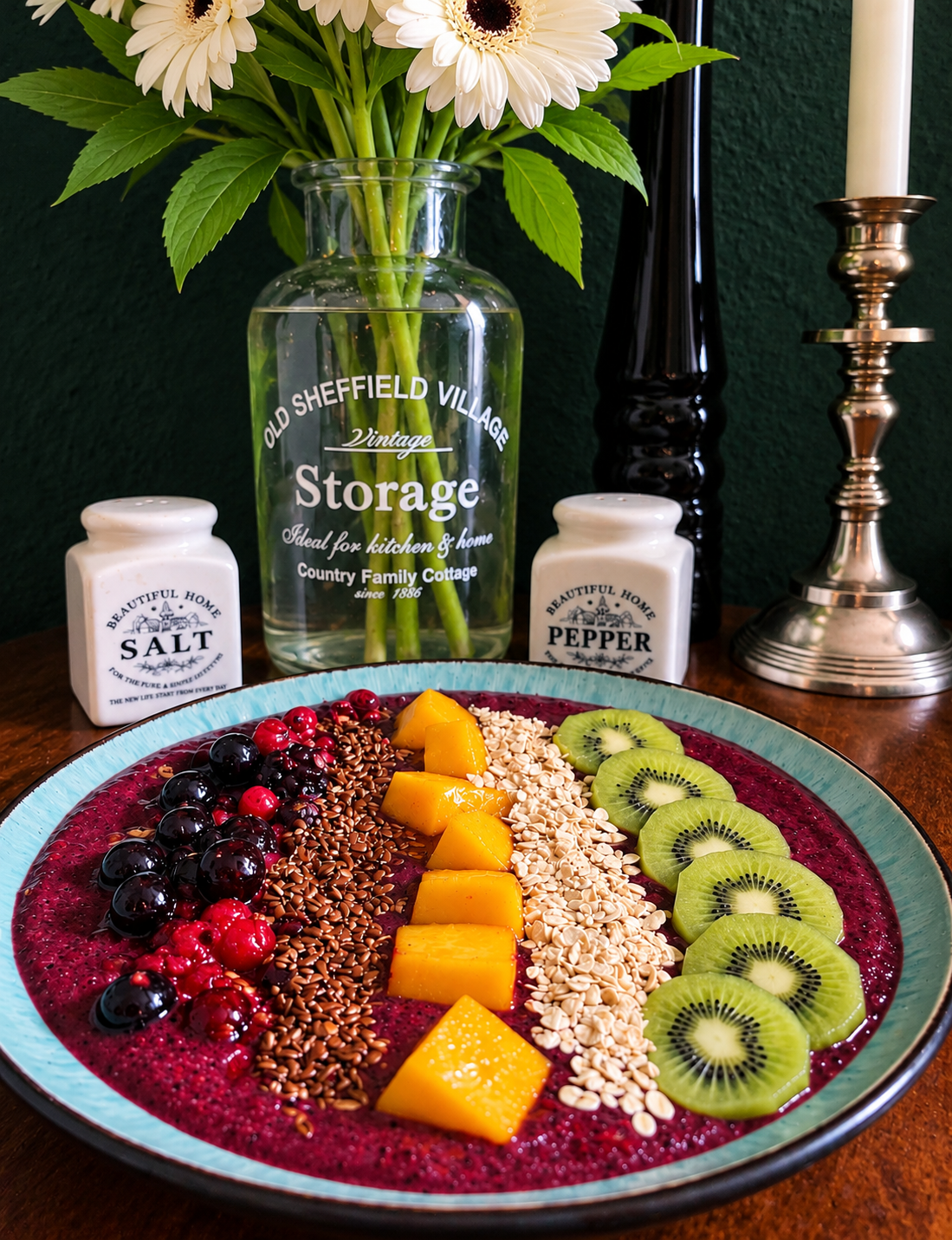
An açaí bowl is a thick, chilled preparation made from the deep-purple pulp of the açaí palm fruit. Traditionally, açaí has been enjoyed in northern Brazil in both savoury and unsweetened preparations, often accompanied by local staples such as manioc flour. The sweet, fruit-topped açaí bowls popular in other parts of Brazil and internationally are a more modern interpretation. My Via Veggie Vegan version combines suitable dried, pitted açaí fruit pieces with creamy unsweetened soy yoghurt, then adds colourful rows of blueberries, redcurrants, mango, kiwi, rolled oats and ground flaxseeds. The result is a vibrant, nourishing, Brazilian-inspired rainbow breakfast that brings a little tropical sunshine to the table.
▣ Ingredients (2 servings)
- 100 g fresh blueberries
- 100 g fresh redcurrants
- 150 g fresh mango flesh
- 2 kiwis
- 25 g dried, pitted açaí fruit pieces, suitable for blending
- 30 g ground flaxseeds
- 40 g rolled oats
- 300 g unsweetened soy yoghurt
- 1-2 splash drinking water, only if needed to soften the dried açaí fruit pieces
♨ Preparation
- 8. Prepare the Dried Açaí Fruit Pieces
Check that the dried açaí fruit pieces are pitted, edible and suitable for blending.
If they are particularly firm, soak them in a small amount of drinking water for approximately 15 minutes, or according to the manufacturer's instructions, until softened.
Drain off any excess soaking water if necessary. - 2. Prepare the Fresh Fruit
Wash the blueberries and redcurrants carefully and allow them to drain.
Peel the mango and cut the flesh into bite-sized cubes.
Peel the kiwis and cut them into even slices.
Set the prepared fruit aside. - 3. Blend the Açaí Yoghurt
Place the softened açaí fruit pieces and unsweetened soy yoghurt in a blender or suitable mixing container.
Blend until the mixture is smooth, creamy and evenly purple.
If necessary, add a very small amount of drinking water to help the ingredients blend.
The finished consistency should remain thick enough to support the fruit toppings. - 4. Arrange the Açaí Base
Divide the açaí yoghurt mixture evenly between two wide, shallow bowls or deep plates.
Use the back of a spoon to spread the mixture into an even layer.
Leave a little space below the rim for the toppings. - 5. Create the Fruit Rainbow
Arrange the blueberries and redcurrants in a colorful row on one side of each bowl.
Place the mango cubes in a separate row.
Arrange the kiwi slices in another neat row on the opposite side.
Keep the individual fruit varieties visually separated to create a bright rainbow effect. - 6. Add the Oats and Flaxseeds
Sprinkle the ground flaxseeds in a narrow row between two of the fruit sections.
Add the rolled oats in another row, creating a beautiful contrast between the colorful fruit toppings.
Distribute all toppings evenly between the two portions. - 7. Serve Immediately
Serve the açaí power bowls immediately while the yoghurt is cool and the fruit is fresh.
Enjoy as a colorful, nourishing breakfast or a refreshing plant-based brunch.
Food Story
Breakfast Inspiration from Around the World
I’m always on the lookout for new breakfast inspiration. But not just any breakfast! I love discovering colourful, delicious and nourishing ways to start the day, preferably with a little inspiration from somewhere around the world. After all, why should culinary adventures be reserved for lunch and dinner? Breakfast deserves its own passport, too! And when you’re exploring the food traditions of 195 countries, there’s certainly no shortage of exciting ideas waiting to be discovered. One morning it’s something savoury, the next it’s something sweet. And sometimes, breakfast turns into a little work of art. Because apparently, even my breakfast likes to travel in style!
And Then Brazil Caught My Attention
During one of my many culinary research sessions, I stumbled across the famous Brazilian açaí bowl. That gorgeous deep-purple colour immediately caught my attention. And once I started reading about açaí and its connection to Brazil’s Amazon region, I knew exactly what was going to happen next. That bowl was going to end up in my kitchen. No negotiations, no escape! Sorry, açaí – you’ve officially become part of my Via Veggie Vegan journey. Of course, I couldn’t resist adding my own little twist. Instead of making a traditional açaí preparation, I blended dried, pitted açaí fruit pieces with creamy soy yoghurt and started planning a breakfast that would be just as colourful as it was delicious.
Five Little Breakfast Highways
For my version, I wanted a proper explosion of colour. So I turned the toppings into five little breakfast highways: glossy blueberries and tangy redcurrants, golden mango cubes, bright-green kiwi slices, wholesome rolled oats and nutty ground flaxseeds, all arranged in neat rows across that beautiful purple base. The result? A tiny tropical parade on my plate! Almost too pretty to eat. Almost! Because underneath all those colours is simply a delicious combination of fruit, creamy yoghurt, oats and seeds. No complicated cooking, no fancy techniques – just a little creativity and a whole lot of breakfast happiness. Brazil, you’ve definitely made my mornings more colourful! Via Veggie Vegan – A Culinary Journey Around the World.
♨ Nutrition per serving
Nutritional values are approximate and may vary depending on the ingredients and products used.
Good to Know
Brazil – Home of the Açaí Palm
The açaí palm, Euterpe oleracea, is native to tropical South America and is particularly important in Brazil's Amazon region. It thrives in humid environments, including floodplain forests, and produces small, dark-purple fruits that have been consumed by local communities for generations. Açaí harvesting also provides an important source of income for many families in the Amazon. Sustainable cultivation and harvesting practices can help support local livelihoods while protecting the region's extraordinary biodiversity.
What Exactly Is Açaí?
Açaí is the fruit of a tropical palm tree. Although commonly called a berry, it is botanically classified as a drupe because it contains a large, hard seed surrounded by a relatively thin layer of edible pulp. The pulp has a distinctive earthy flavour and a beautiful deep-purple colour. For this recipe, I use commercially prepared, dried and pitted açaí fruit pieces suitable for blending. Whole açaí fruits with intact hard seeds must not be blended. Always check the product description and preparation instructions before use.
Traditional Açaí Versus Modern Açaí Bowls
In northern Brazil, particularly in the Amazon region, açaí has traditionally been enjoyed as a thick pulp, sometimes served with savoury foods such as manioc flour and fish. The sweet, fruit-topped bowls familiar from cafés and social media became popular in other Brazilian regions and internationally. My Via Veggie Vegan version is a contemporary Brazilian-inspired breakfast rather than a traditional Amazonian preparation. Combining açaí with soy yoghurt, fresh fruit, oats and flaxseeds creates a colourful plant-based interpretation of this famous Brazilian ingredient.
Anthocyanins – The Secret Behind Açaí's Purple Colour
Açaí owes its striking deep-purple colour partly to anthocyanins, natural plant pigments belonging to the flavonoid family. These compounds also occur in blueberries, blackberries and red cabbage. Anthocyanins demonstrate antioxidant activity in laboratory studies, although this does not automatically translate into specific health benefits in humans. Açaí is often marketed as a superfood, but that term has no precise scientific definition. The best approach is to enjoy açaí as one delicious component of a varied, balanced plant-based diet.
Soy Yoghurt – Creaminess and Plant-Based Protein
Unsweetened soy yoghurt creates a smooth, creamy base without overpowering the natural flavours of the açaí and fresh fruit. Soybeans provide all nine essential amino acids, making soy a valuable source of plant-based protein. Some soy yoghurts are also fortified with calcium, which contributes to the maintenance of normal bones and teeth. Nutritional values vary between products, so checking the label is worthwhile. Choosing an unsweetened variety also allows the mango, berries and kiwi to provide the bowl's natural sweetness without additional sugar.
Blueberries and Redcurrants – A Colourful Berry Combination
Blueberries contribute natural sweetness, dietary fibre and anthocyanins responsible for their characteristic dark-blue colour. Redcurrants provide a pleasantly tart contrast and contain vitamin C, which contributes to normal immune function and helps protect cells from oxidative stress. Combining the two creates a refreshing balance of sweetness and acidity while adding different plant compounds to the breakfast bowl. Their contrasting colours also make them perfect for the rainbow presentation.
Mango and Kiwi – Tropical Flavours and Vitamin C
Sweet mango and tangy kiwi bring two completely different flavours to this breakfast. Mango provides vitamin C and carotenoids, including beta-carotene, which the body can convert into vitamin A as needed. Kiwi is particularly well known for its vitamin C content and also contributes dietary fibre. Its tiny black seeds are completely edible. Together, these fruits create a delicious contrast between golden sweetness and refreshing acidity while adding vibrant yellow and green colours to the purple açaí base.
Rolled Oats – Fibre, Energy and Natural Texture
Rolled oats are made from oat grains that have been steamed and flattened. They provide carbohydrates, dietary fibre and plant-based protein, making them a popular breakfast ingredient. Oats also contain beta-glucan, a soluble fibre associated with maintaining normal blood cholesterol levels when consumed in sufficient amounts. The small quantity used in this recipe contributes to overall fibre intake but should not be considered sufficient on its own for that specific cholesterol-related effect. Their slightly chewy texture adds a satisfying contrast to the creamy yoghurt and juicy fruit.
Ground Flaxseeds – Plant-Based Omega-3 Fatty Acids
Flaxseeds provide dietary fibre, plant protein and alpha-linolenic acid, or ALA, an essential plant-based omega-3 fatty acid. The body cannot produce ALA, so it must be obtained through food. Grinding flaxseeds makes their nutrients more accessible because whole seeds may pass through the digestive system without being fully broken down. Their delicate oils are sensitive to oxidation, so ground flaxseeds should be stored in a tightly sealed container, preferably in the refrigerator. In this bowl, they add a pleasantly nutty flavour and complement the fruit and oats.
Zero Waste – Make the Most of Your Fruit
A colourful breakfast is even better when nothing goes to waste! Leftover mango, kiwi and berries can be used in smoothies, fruit salads, overnight oats or other plant-based breakfast creations. Suitable ripe fruit can also be frozen before it spoils and saved for future smoothie bowls. The açaí yoghurt base can be prepared ahead and refrigerated in a covered container, but the fresh fruit, oats and flaxseeds are best added shortly before serving to preserve their texture. For more ideas, use the search function on Via Veggie Vegan to discover recipes featuring ingredients you already have. Less waste, more creativity and another delicious breakfast adventure!