Recipe postcard
Fiji – A South Pacific Island Nation with a Remarkable Culinary HeritageFiji is an island nation in the South Pacific, consisting of more than 300 islands. Its cuisine reflects Indigenous Fijian traditions alongside Indian and other cultural influences. Root vegetables, tropical fruits, leafy greens and coconut feature in many local food traditions, while Indo-Fijian cuisine is especially known for aromatic vegetable curries, roti, dhal and carefully balanced spice mixtures. Beginning in 1879, Indian indentured labourers were brought to Fiji during the British colonial period. Over generations, their culinary traditions evolved alongside local ingredients and food cultures, creating the distinctive Indo-Fijian cuisine enjoyed today.
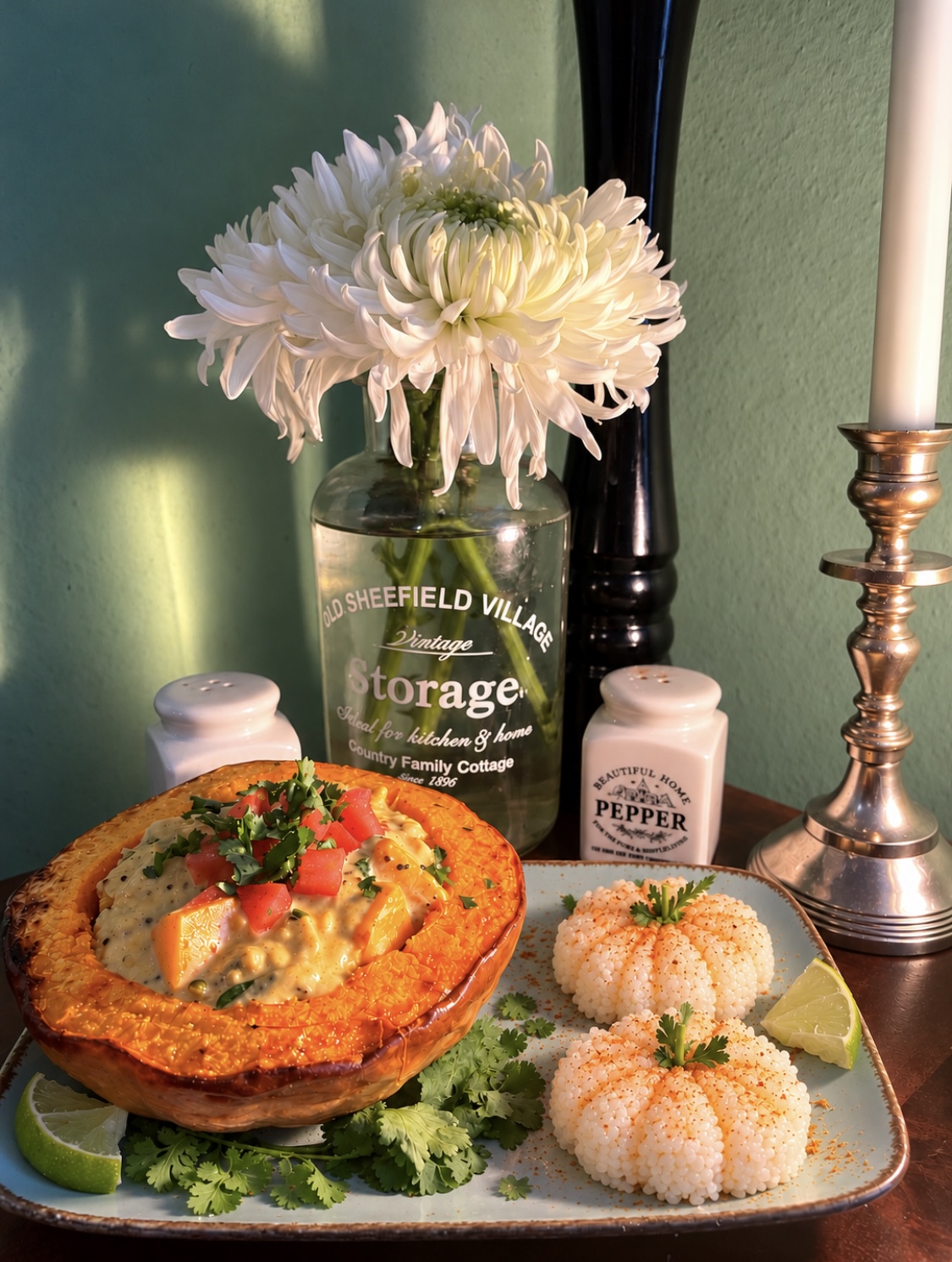
Kaddu Tarkari – Indo-Fijian Pumpkin Curry with a Creative Halloween TwistKaddu means pumpkin or squash in Hindi, while tarkari refers to a vegetable dish or curry. Indo-Fijian pumpkin curry is commonly prepared with pumpkin, onions, garlic, chilli and aromatic spices, often using relatively little liquid. As the pumpkin softens, some of the flesh breaks down and creates a naturally thick texture. My Via Veggie Vegan version takes inspiration from these flavours but introduces a few personal twists: a whole muscat pumpkin roasted with chilli oil, a creamy coconut milk sauce and two decorative pumpkins shaped from leftover basmati rice. The roasted pumpkin becomes both an ingredient and an edible serving vessel. This is a creative Indo-Fijian-inspired interpretation rather than a traditional Fijian presentation.
Cook this recipe →
Recipe postcard
Sri Lanka – The Pearl of the Indian OceanSri Lanka is an island nation in South Asia, situated in the Indian Ocean southeast of India. Often called the Pearl of the Indian Ocean, the country is known for its tropical landscapes, tea plantations, diverse wildlife and rich culinary traditions. Sri Lankan cooking makes extensive use of coconut, rice, vegetables, chillies, curry leaves and aromatic spices. Regional and cultural influences have shaped a cuisine that combines bold flavours with everyday ingredients, creating dishes that are both vibrant and deeply comforting.
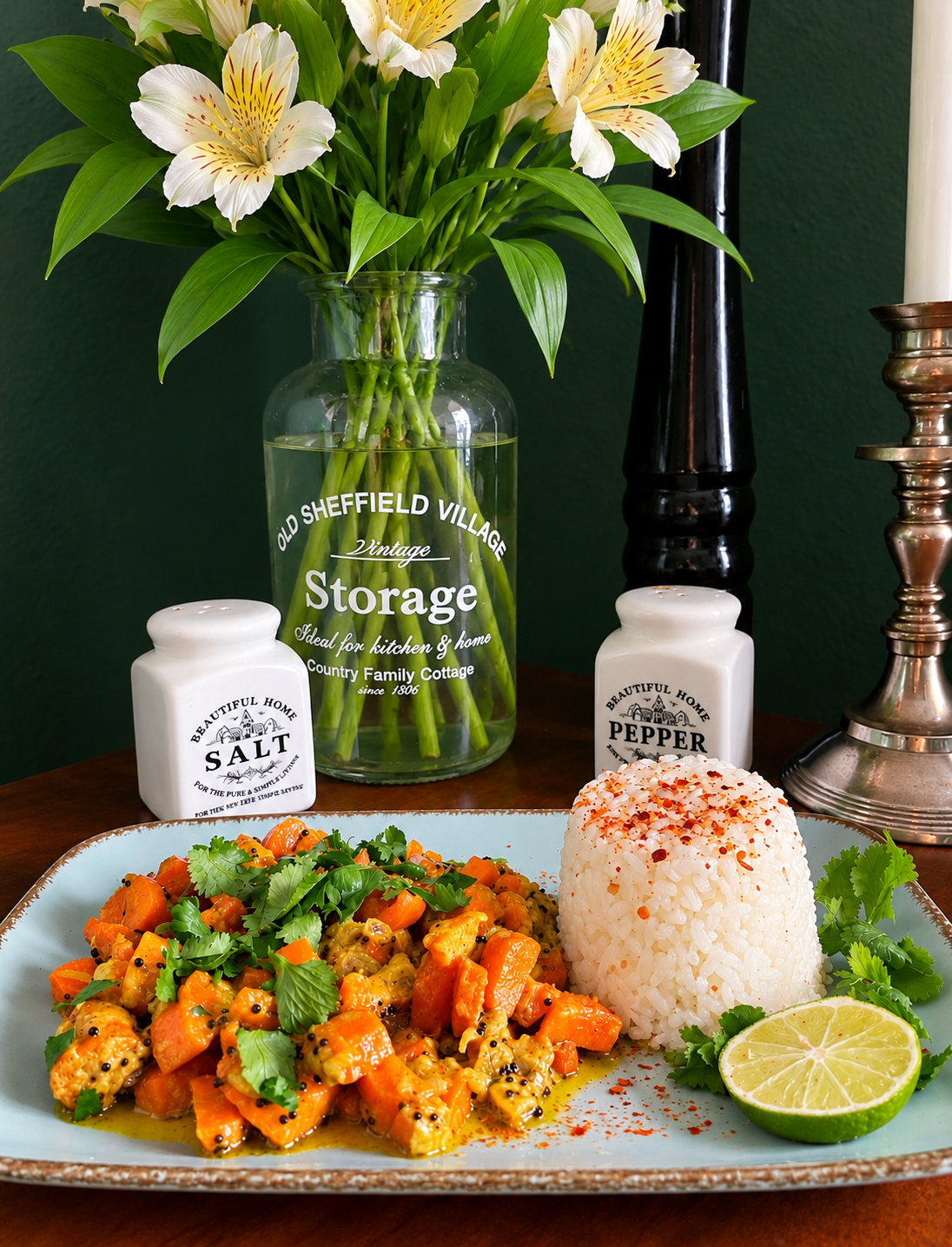
Carrot Mallum – A Colourful Sri Lankan Vegetable ClassicMallum, also spelled mallung, refers to a Sri Lankan preparation of finely chopped or shredded vegetables or leafy greens mixed with grated coconut and seasonings. Unlike a creamy coconut curry, mallum is generally relatively dry and retains more texture. Carrot Mallum brings together naturally sweet carrots, coconut, mustard seeds, curry leaves and fresh chillies. My Via Veggie Vegan version uses mustard oil for an additional aromatic note and finishes with fresh lime juice. Served alongside rice, it makes a colourful and satisfying plant-based meal.
Cook this recipe →
Recipe postcard
5. SHORT DESCRIPTION / ORIGIN
India – A Country of Many Religions and Culinary TraditionsIndia is a vast South Asian country with an extraordinarily diverse culinary heritage. Its regional cuisines reflect differences in geography, climate, history, religion and local ingredients. While cows are revered in many Hindu traditions and beef is avoided by many Hindus, dietary practices vary considerably across India. Hindu, Muslim, Christian and other communities have developed distinct food traditions over centuries. Kerala, on India's southwestern Malabar Coast, is particularly known for its coconut-based dishes, fragrant curry leaves, black pepper and aromatic spices. Its cuisine reflects the region's long history of maritime trade and its religious and cultural diversity.
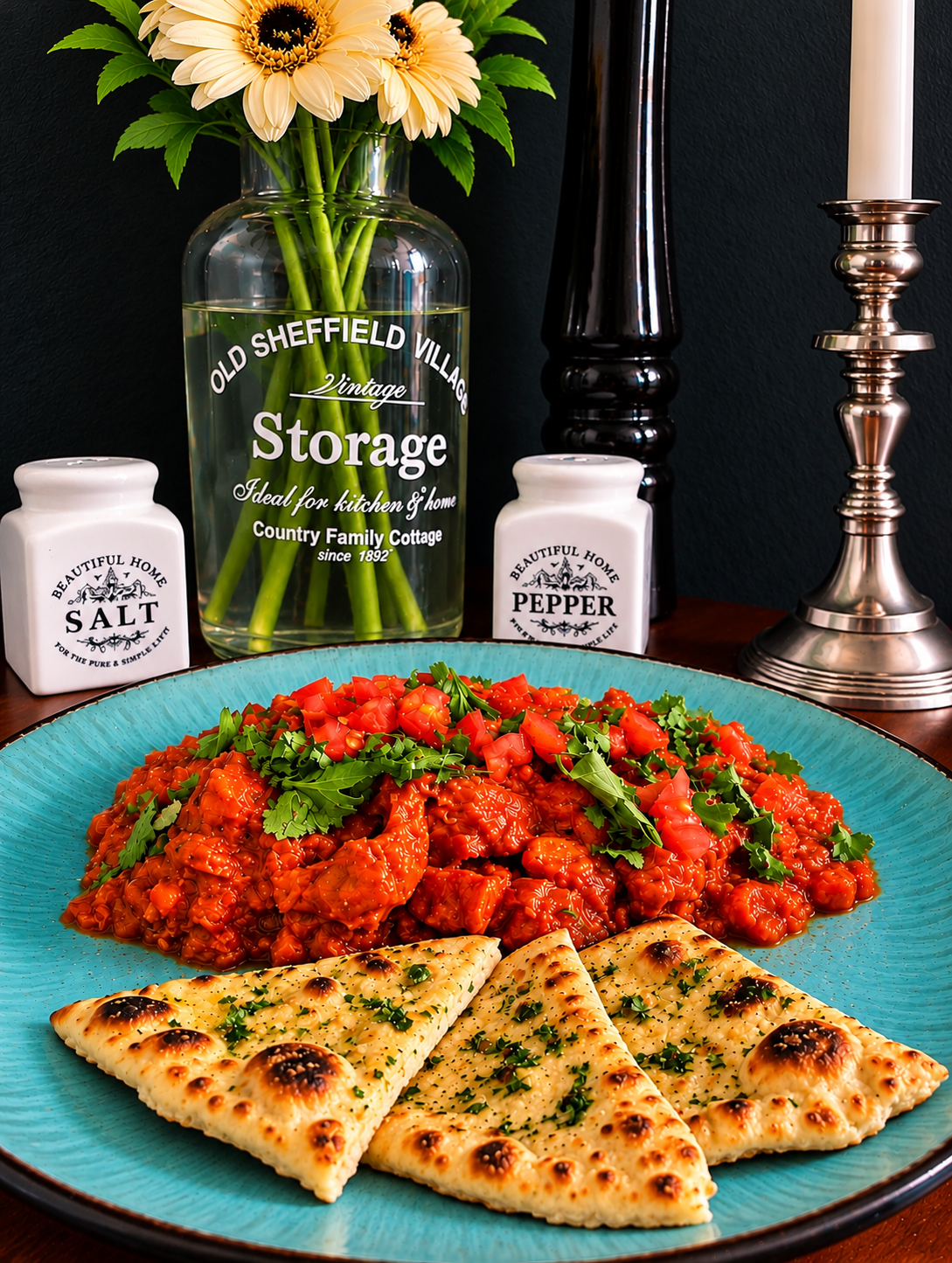
Beef Ularthiyathu – Kerala's Famous Beef FryBeef Ularthiyathu, also known as Kerala Beef Fry, is a well-known preparation associated with Kerala's regional food culture. The Malayalam term ularthiyathu describes a cooking technique in which ingredients are sautéed or roasted while moisture is reduced, concentrating their flavors. Traditional versions commonly combine beef with shallots, garlic, ginger, curry leaves, black pepper and spices, often with coconut pieces. The finished dish is generally relatively dry and intensely seasoned. This Via Veggie Vegan interpretation replaces beef with LikeMeat plant-based pieces and adds fresh tomatoes, tomato paste and coconut milk for a richer, saucier result. It preserves the aromatic inspiration of Kerala cuisine while giving the dish a completely plant-based makeover.
Cook this recipe →
