
From my kitchen to your plate.
France – The Culinary Traditions of AlsaceAlsace is a region in northeastern France, bordering Germany and Switzerland, with a distinctive culinary heritage influenced by both French and German traditions. One of its best-known specialities is Flammkuchen, called Tarte Flambée in French and Flammekueche in Alsatian. Traditionally prepared with an exceptionally thin dough base, cream, onions and bacon, it is baked at high temperatures until beautifully crisp. Today, countless modern variations celebrate the versatility of this rustic regional dish.
What Is Pumpkin-Shaped Vegan Flammkuchen?My Via Veggie Vegan interpretation gives the Alsatian classic a playful autumn makeover. A simple homemade dough made from flour, water, vegetable oil and salt is shaped into two pumpkins, complete with curved pastry ribs and rosemary stems. Chili oil adds gentle heat, while vegan sour cream mixed with nutritional yeast creates a savoury base. Muscat pumpkin purée, thinly sliced fresh figs and fragrant rosemary bring together the flavours of autumn. During the final minute of baking, a little maple syrup is carefully drizzled over the Flammkuchen using a food-safe syringe, adding a delicate sweet finish to this fully plant-based creation.
From my kitchen to your plate.
Fiji – A South Pacific Island Nation with a Remarkable Culinary HeritageFiji is an island nation in the South Pacific, consisting of more than 300 islands. Its cuisine reflects Indigenous Fijian traditions alongside Indian and other cultural influences. Root vegetables, tropical fruits, leafy greens and coconut feature in many local food traditions, while Indo-Fijian cuisine is especially known for aromatic vegetable curries, roti, dhal and carefully balanced spice mixtures. Beginning in 1879, Indian indentured labourers were brought to Fiji during the British colonial period. Over generations, their culinary traditions evolved alongside local ingredients and food cultures, creating the distinctive Indo-Fijian cuisine enjoyed today.
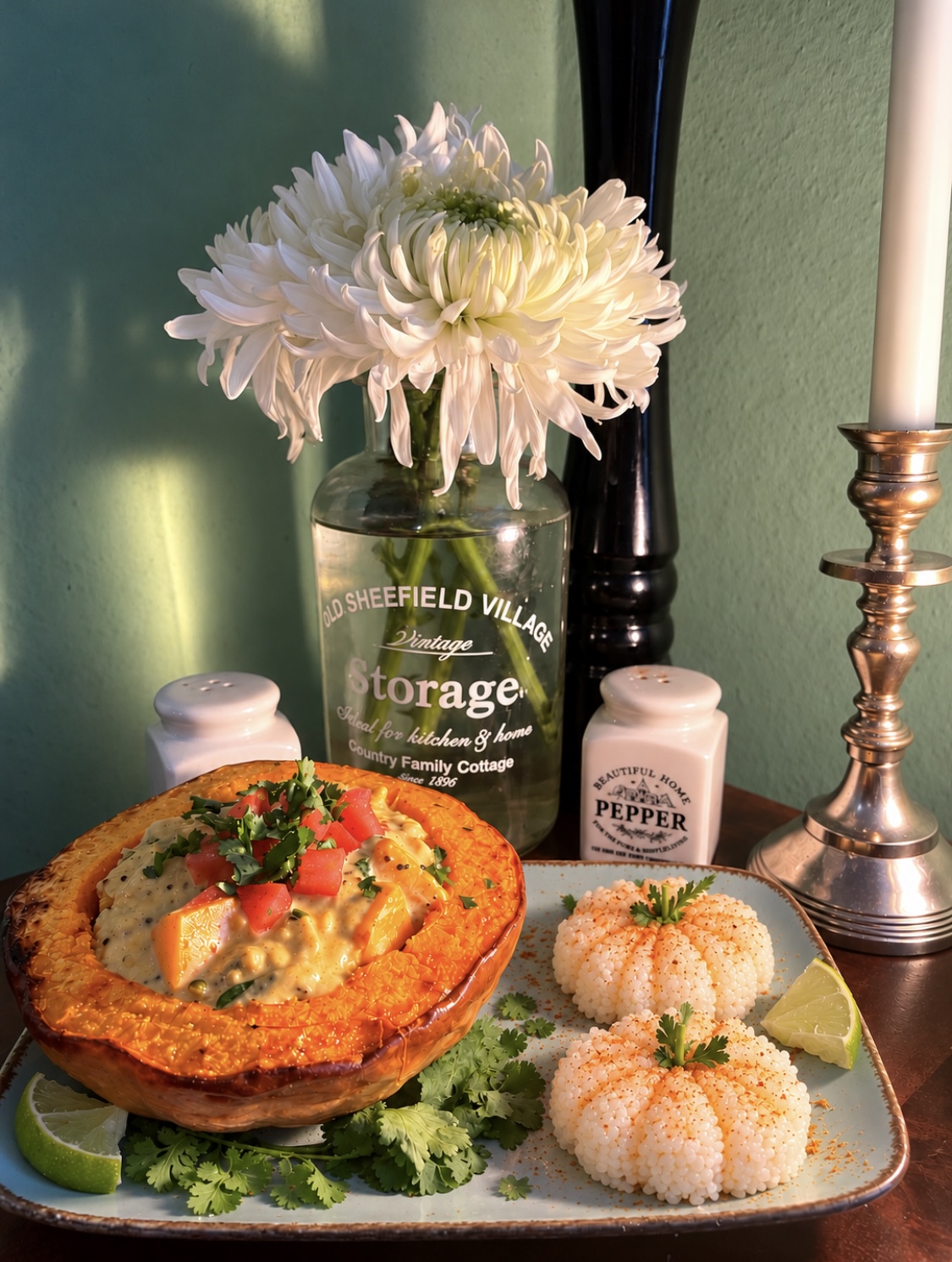
Kaddu Tarkari – Indo-Fijian Pumpkin Curry with a Creative Halloween TwistKaddu means pumpkin or squash in Hindi, while tarkari refers to a vegetable dish or curry. Indo-Fijian pumpkin curry is commonly prepared with pumpkin, onions, garlic, chilli and aromatic spices, often using relatively little liquid. As the pumpkin softens, some of the flesh breaks down and creates a naturally thick texture. My Via Veggie Vegan version takes inspiration from these flavours but introduces a few personal twists: a whole muscat pumpkin roasted with chilli oil, a creamy coconut milk sauce and two decorative pumpkins shaped from leftover basmati rice. The roasted pumpkin becomes both an ingredient and an edible serving vessel. This is a creative Indo-Fijian-inspired interpretation rather than a traditional Fijian presentation.
From my kitchen to your plate.
Zimbabwe – A Culinary Tradition Rooted in Local IngredientsZimbabwean cuisine is deeply connected to the country's agricultural heritage and everyday home cooking. Maize, pumpkins, leafy vegetables, groundnuts and legumes play an important role in traditional dishes. Many recipes rely on simple, locally available ingredients that are transformed into nourishing, comforting meals. Particularly within Shona culinary traditions, pumpkin and peanut butter are familiar ingredients that reflect the importance of seasonal produce and practical, resourceful cooking.
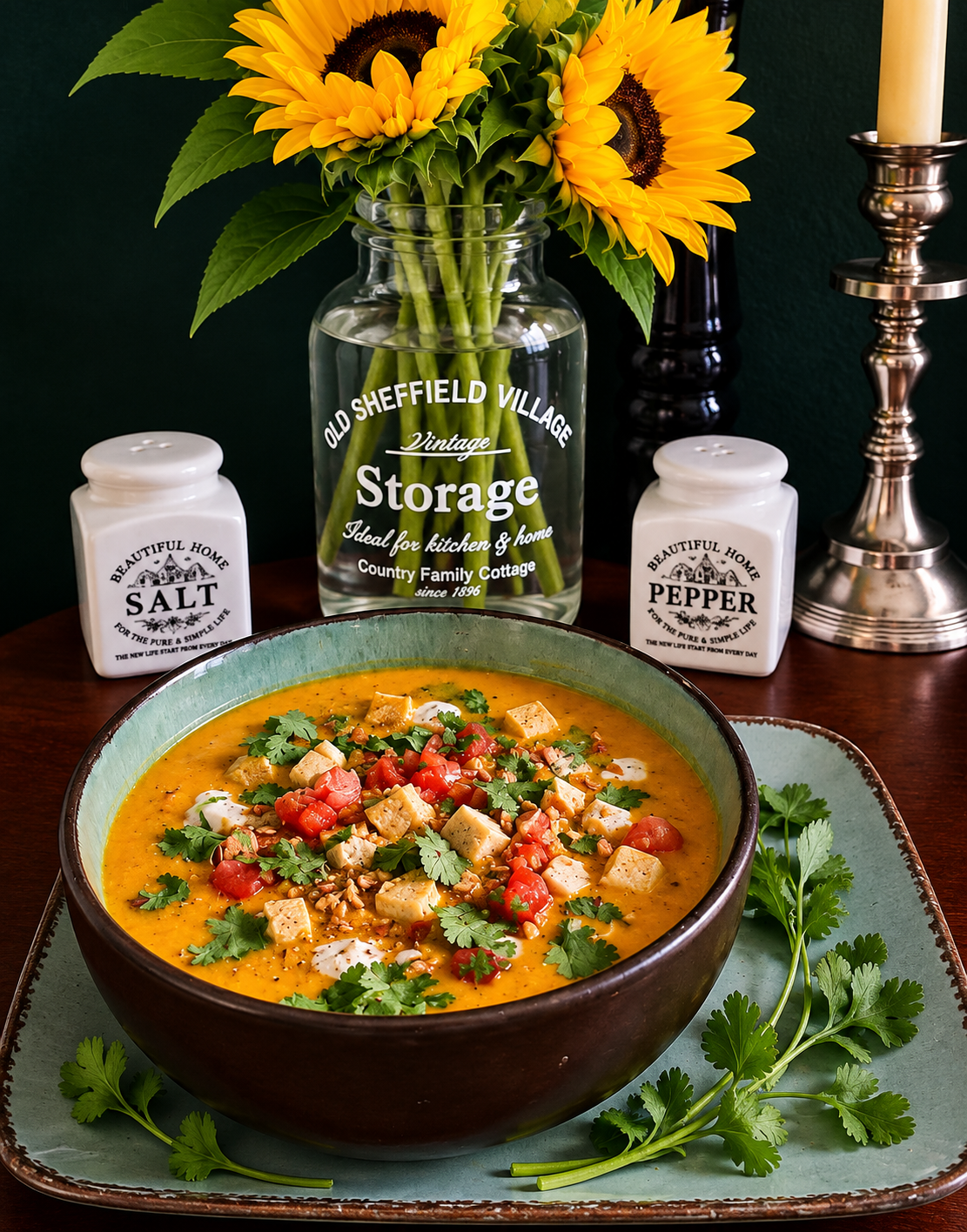
Nhopi – Traditional Pumpkin and Peanut Butter Comfort FoodNhopi is a traditional Zimbabwean dish made from soft-cooked pumpkin, often combined with peanut butter and maize meal. Its naturally creamy texture and gently sweet flavour make it a popular breakfast dish or comforting accompaniment. Depending on the household, Nhopi can be prepared as a thick porridge or a softer, spoonable dish. My Via Veggie Vegan interpretation keeps the traditional pumpkin, cornmeal and peanut butter foundation but takes it in a savoury direction with golden pan-fried tofu, fresh tomatoes, coriander and a dollop of vegan crème fraîche.
From my kitchen to your plate.
What Is Cari Giraumon?
Cari Giraumon is a pumpkin curry associated with Mauritian home cooking.
The name combines cari, the Mauritian Creole word for curry, with giraumon, a term used for pumpkin or squash.
Mauritian cuisine reflects a rich mixture of culinary influences, particularly from India, Africa, Europe and China.
Curries are an important part of the island's food culture, with recipes varying between families and communities.
What Makes This Pumpkin Curry Different?
Unlike coconut-based curries, this version relies on the natural moisture and starches of the pumpkin.
As the pumpkin cooks, some pieces soften and partially break down.
This naturally thickens the cooking liquid, creating a rich sauce without cream, coconut milk or additional thickeners.
The result is a curry that tastes intensely of pumpkin, supported by garlic, ginger, chili and fragrant herbs.
What Is Giraumon?
Giraumon refers to pumpkin or squash.
Different varieties can be used depending on availability.
A firm, flavorful pumpkin with relatively dense flesh works particularly well.
Butternut squash or other suitable cooking pumpkins can also be used if Sombra pumpkin is unavailable.
Why Use Curry Leaves?
Curry leaves have a distinctive aromatic flavor with citrusy, herbal and slightly nutty notes.
They are commonly used in Indian Ocean cuisines, including Mauritian cooking.
They are not the same as curry powder.
Fresh curry leaves are particularly fragrant, although frozen leaves can also work well.
Why Add Thyme?
Thyme is used in many Mauritian savory dishes.
It adds an earthy, herbal character that complements the sweetness of pumpkin and the warmth of ginger.
Cooking the whole sprig with the curry allows its flavor to infuse the sauce.
Remove the woody stem before serving.
What Is Traditionally Served with Cari Giraumon?
Mauritian curries are often enjoyed with flatbreads such as farata or roti, or with rice.
Farata is a layered Mauritian flatbread related to Indian paratha.
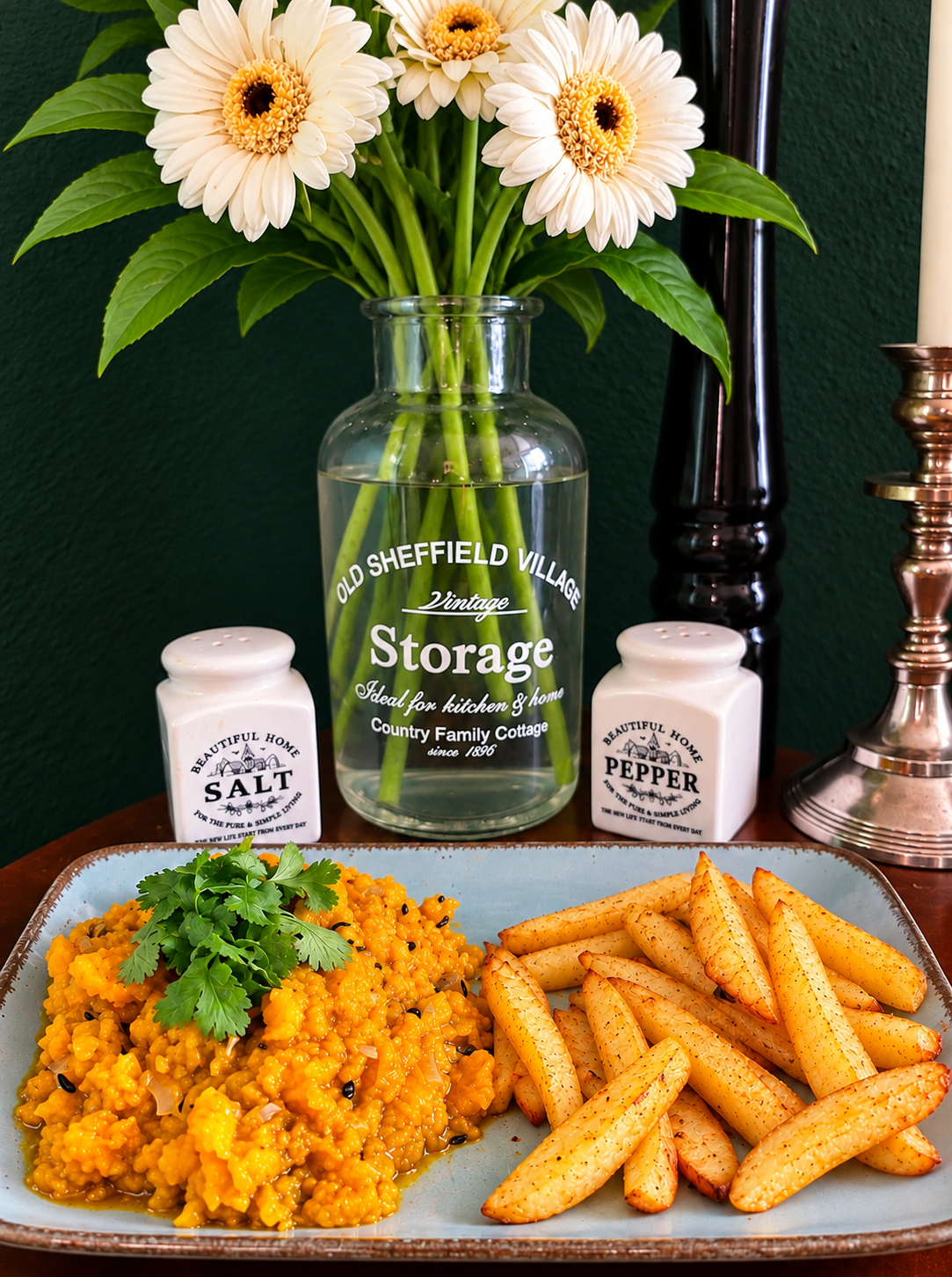
For this Via Veggie Vegan presentation, crispy potato wedges replace the more traditional accompaniment.
