
Jerusalem – A Culinary Crossroads of Cultures and Traditions
Jerusalem is a city of extraordinary historical, religious and cultural significance, sacred to Judaism, Christianity and Islam. Its culinary heritage reflects the diverse communities and traditions of the region. One of its most distinctive street foods is Ka’ak Al-Quds, an elongated, sesame-coated bread especially associated with Palestinian baking traditions in Jerusalem. Often enjoyed with aromatic za’atar and olive oil, this freshly baked bread represents the simple pleasures of Levantine food culture.
What Is Jericho Rose Bagel & Za’atar Ka’ak?
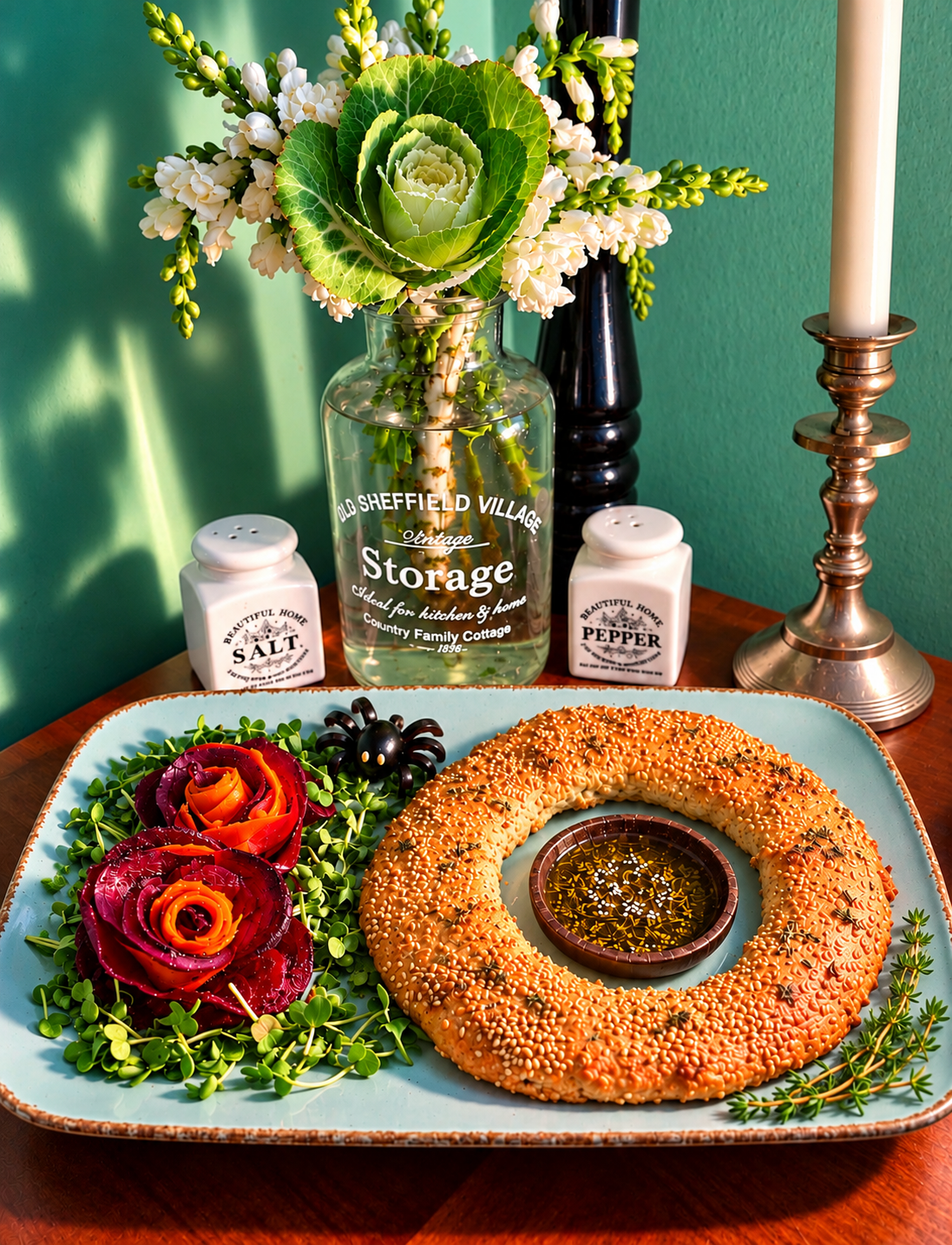
This Via Veggie Vegan breakfast combines traditional Jerusalem-style sesame bread, known as Ka’ak Al-Quds, with homemade za’atar, extra virgin olive oil and creamy vegan cashew cream cheese. Unlike American bagels, Jerusalem bagels are shaped into elongated ovals and baked without boiling, creating a soft interior and lightly crisp crust. Delicate beetroot and carrot roses add a creative finishing touch inspired by the Rose of Jericho, a symbol of resilience and renewal. These vegetable roses are a personal interpretation rather than a traditional Jerusalem accompaniment, bringing together culinary heritage, botanical inspiration and colorful plant-based creativity.
▣ Ingredients (2 servings)
- 250 g wheat flour, type 550
- 150 ml lukewarm water
- 3.5 g dry yeast
- 1 1/2 tbsp sugar
- 1/2 tsp salt
- 1 1/2 tbsp olive oil
- 50 g white sesame seeds for coating
- 2 tbsp dried thyme
- 2 tbsp dried majoran
- 2 tbsp ground sumac
- 2 tbsp white sesame seeds for za’atar
- 1/2 tsp sea salt for za’atar
- 3 tbsp extra virgin olive oil for serving
- 1 beetroot
- 1 carrot
- 1 tsp olive oil for the vegetable roses
- 1 pinch salt
- 100 g cashew cream cheese (optional)
- to taste freshly ground black pepper
♨ Preparation
- Prepare the Jerusalem Bagel Dough
Combine flour, yeast, sugar and salt. Add lukewarm water and olive oil and knead until smooth and elastic. Cover and leave to rise for approximately 45–60 minutes. - Shape the Bagels
Divide the dough into three portions. Shape each into a long rope, join the ends and form an elongated oval. Moisten lightly with water, coat generously with sesame seeds and leave to rise for another 15–20 minutes. - Bake the Bagels
Preheat the oven to 220°C conventional heat. Bake for approximately 12–15 minutes until golden brown and lightly crisp outside, while remaining soft inside. - Prepare the Za’atar
Toast the sesame seeds in a dry pan until fragrant. Cool and mix with thyme, oregano or marjoram, sumac and sea salt. Serve with olive oil. - Prepare the Vegetable Roses
Peel the beetroot and carrot and cut into very thin slices. Briefly blanch until flexible. Pat dry and brush with olive oil. Arrange overlapping slices in a lightly oiled muffin tin, working from the outer petals towards the center. - Bake the Roses
Bake at 180°C conventional heat for approximately 20–30 minutes, loosely covered for the first 20 minutes, until tender. Allow to rest before carefully removing from the tin. - Serve
Arrange the warm Jerusalem bagels with the beetroot and carrot roses, vegan cashew cream cheese, freshly prepared za’atar and olive oil.
Food Story
Jerusalem – A City That Stays With You
Jerusalem is a city unlike any other. Sacred to Judaism, Christianity and Islam, its ancient streets bring together extraordinary history, spiritual traditions and vibrant everyday life. The atmosphere can be so intense that Jerusalem has even given its name to a rare psychological phenomenon: Jerusalem Syndrome. Some visitors experience powerful religious preoccupations or delusions, occasionally believing they have a special spiritual mission. Fortunately, enjoying Jerusalem’s culinary traditions requires no divine revelation – just good bread, fragrant spices and a healthy appetite.
Ka’ak Al-Quds – The Bread of Jerusalem
Ka’ak Al-Quds is a distinctive elongated, sesame-coated bread especially associated with Palestinian baking traditions in Jerusalem. Street vendors sell these fragrant breads throughout the city, often accompanied by za’atar. And za’atar is much more than just a spice. It refers both to aromatic herbs and to a beloved Levantine spice mixture. Recipes vary by region and household, but commonly combine dried herbs, sesame seeds, sumac and salt. Dipping fresh bread into olive oil and za’atar is a cherished breakfast tradition.
The Rose of Jericho – A Symbol of Renewal
The Rose of Jericho is associated with survival, resilience and renewal. Certain desert plants known by this name curl inward during dry conditions and open when rehydrated. Inspired by this fascinating botanical phenomenon, I created delicate beetroot and carrot roses to accompany my homemade Jerusalem bagels. These colorful vegetable flowers are my personal Via Veggie Vegan interpretation rather than a traditional Jerusalem breakfast accompaniment. A little creativity, a little symbolism and plenty of delicious sesame bread. Via Veggie Vegan – A Culinary Journey Around the World.
♨ Nutrition per serving
Nutritional values are approximate and may vary depending on the ingredients and products used.
Good to Know
Ka’ak Al-Quds – The Traditional Bread of Jerusalem
Ka’ak Al-Quds is a distinctive sesame-coated bread closely associated with Palestinian baking traditions in Jerusalem. Its elongated oval shape, soft interior and lightly crisp crust make it different from many other types of bread. Traditionally sold by street vendors, it is often enjoyed fresh with za’atar. The name Al-Quds is the Arabic name for Jerusalem, reflecting the bread’s deep connection to the city and its culinary heritage.
Jerusalem Bagels vs. American Bagels – What's the Difference?
Unlike American-style bagels, which are typically boiled before baking, Jerusalem bagels are generally baked directly after proofing. This produces a lighter, softer texture rather than the dense, chewy consistency associated with New York bagels. Their elongated shape and generous sesame coating are also characteristic features. Although both are commonly called bagels in English, they belong to different baking traditions.
Za’atar – More Than Just a Spice Mixture
Za’atar is a term used both for certain aromatic herbs and for a traditional Levantine seasoning blend. Common ingredients include dried thyme or related herbs, sumac, toasted sesame seeds and salt. Recipes vary considerably between regions, families and producers. In this recipe, dried thyme, oregano or marjoram, sumac and sesame seeds create a fragrant homemade version. Za’atar is especially delicious when paired with extra virgin olive oil and freshly baked bread.
Sumac – The Tangy Red Spice of the Levant
Sumac is made from the dried, ground fruits of certain sumac shrubs. It has a pleasantly tart, citrus-like flavor and a distinctive reddish-purple color. Widely used in Levantine cooking, sumac adds brightness to spice blends, salads, vegetables and marinades without requiring additional lemon juice. In homemade za’atar, it provides a refreshing contrast to the earthy dried herbs and nutty sesame seeds.
Sesame Seeds – Small Seeds with Valuable Nutrients
Sesame seeds contain predominantly unsaturated fatty acids, along with plant-based protein, fiber and minerals such as calcium, magnesium and iron. They also contain naturally occurring compounds called lignans, including sesamin. Toasting sesame seeds develops their nutty aroma, although excessive heat can make them bitter. Sesame is a recognized food allergen, so people with sesame allergies must avoid both the sesame-coated bread and the za’atar mixture.
Olive Oil, Unsaturated Fats & Cholesterol
Extra virgin olive oil provides predominantly monounsaturated fatty acids, particularly oleic acid. Replacing some saturated fats with unsaturated fats can help lower LDL cholesterol, an important factor in cardiovascular health. Elevated LDL cholesterol increases the risk of atherosclerosis, while HDL particles participate in transporting cholesterol from tissues toward the liver. However, cardiovascular health depends on more than individual cholesterol values. Olive oil is energy-dense, so the amount used for dipping also influences the nutritional values of this breakfast.
Kosher, Halal & Vegan – Understanding the Differences
Vegan, kosher and halal describe different dietary principles. Vegan food excludes animal-derived ingredients, while Jewish kosher laws and Islamic halal rules include additional requirements concerning permitted foods and their preparation. A vegan product is therefore not automatically kosher- or halal-certified. Many traditional Jerusalem bagel recipes are naturally plant-based, but ingredients and production methods vary. Anyone following specific religious dietary requirements should check the relevant certification or preparation details.
The Rose of Jericho – A Symbol of Resilience & Renewal
The name Rose of Jericho is used for different plants associated with the ability to curl inward during dry conditions and open when exposed to moisture. The true Rose of Jericho, Anastatica hierochuntica, is a desert plant that disperses its seeds through moisture-related movements. The so-called false Rose of Jericho, Selaginella lepidophylla, is a different species known for its remarkable tolerance of dehydration. Both have inspired associations with survival, renewal and resilience. The beetroot and carrot roses in this recipe are a creative botanical tribute rather than a traditional Jerusalem breakfast component.
Beetroot & Carrots – Colorful Vegetables with Different Plant Pigments
Beetroot gets its characteristic red-purple color mainly from betalain pigments, while orange carrots contain carotenoids, particularly beta-carotene. Beta-carotene can be converted into vitamin A by the body and contributes to normal vision and immune function. A little dietary fat can support the absorption of carotenoids. Brief blanching makes thin vegetable slices more flexible, allowing them to be shaped into decorative roses before baking. Their vibrant colors create a beautiful contrast to the golden sesame bread.
Cashew Cream Cheese, Food Safety & Zero-Waste Cooking
Vegan cashew cream cheese adds a creamy, mildly nutty element to this Jerusalem-inspired breakfast. Its nutritional composition depends on the ingredients used, and cashews are tree nuts that must be avoided by people with a relevant allergy. Store homemade cashew cream cheese according to its ingredients and preparation method, keeping it refrigerated until serving. Leftover Jerusalem bagels can be sliced, frozen and toasted when needed, while extra za’atar can be stored in an airtight container away from heat and moisture. Beetroot and carrot trimmings can be added to soups, vegetable stock or salads. Zero Waste, Full Flavor.
You may also like
♡
You may also like