
Tunisia – North African Flavours with a Mediterranean Soul
Tunisia lies on the Mediterranean coast of North Africa, where Amazigh, Arab, Ottoman and Mediterranean influences have shaped a rich and distinctive culinary heritage. Olive oil, legumes, vegetables, garlic, cumin and chili peppers feature prominently in traditional cooking. Harissa, the country's famous chili paste, adds depth and heat to everything from soups and stews to vegetable dishes. Tunisian cuisine is known for its bold seasoning, comforting everyday meals and the wonderful ability to transform simple ingredients into something memorable.
Lablabi – Tunisia's Beloved Chickpea and Bread Soup
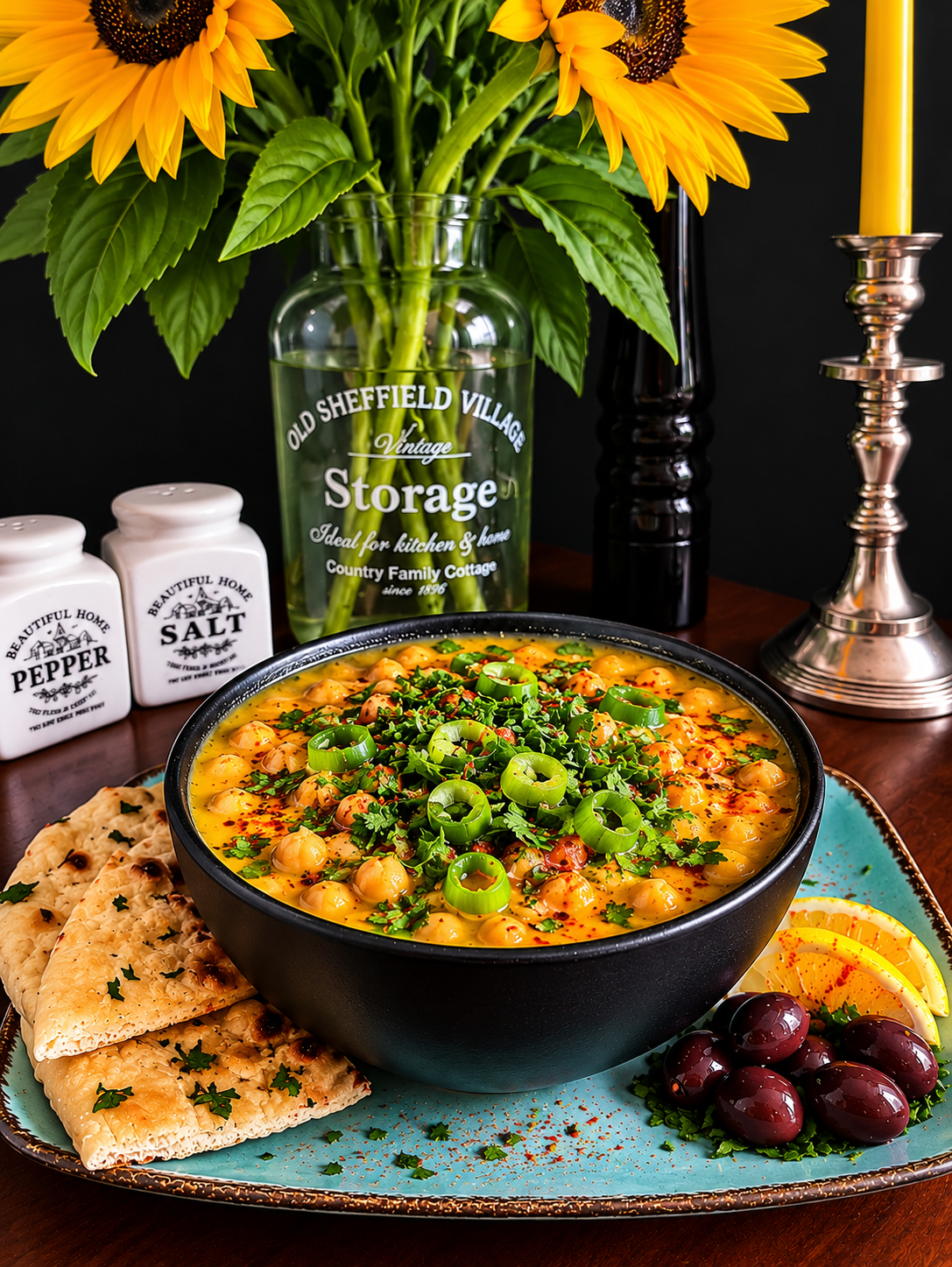
Lablabi is a traditional Tunisian dish made with tender chickpeas, their cooking broth, garlic, cumin, harissa and pieces of bread. Particularly popular during the colder months, it is widely enjoyed as an affordable, filling street food and everyday comfort meal. The bread absorbs the fragrant broth, gradually turning the soup into a thick, rustic mixture. Depending on the preparation, Lablabi may be served with additional toppings such as eggs, tuna, capers or olives. My Via Veggie Vegan version keeps the chickpeas, spices, bread and olives while leaving out the animal-derived toppings. Fresh coriander and spring onion greens provide a colourful finishing touch.
▣ Ingredients (2 servings)
- 150 g dried chickpeas
- 3 cloves garlic
- 1 spring onion
- 1 handful fresh coriander
- 1 tbsp harissa paste
- 1/2 tsp ground cumin
- 1/2 tsp ground coriander
- 2 pieces flat bread
- 2 tbsp olive oil
- 500-600 ml reserved chickpea cooking water
- 1/2 juice of ½ lemon
- 1 pinch extra virgin olive oil, for drizzling
- to taste fresh lemon juice
- to taste extra harissa
- to taste 1 pinch ground cumin, for serving
- to taste salt & freshly ground black pepper
♨ Preparation
- Soak the Chickpeas Overnight
Place the dried chickpeas in a large bowl and cover generously with cold water, allowing plenty of room for expansion. Leave to soak overnight, ideally for 8–12 hours. The following day, drain the chickpeas, discard the soaking water and rinse thoroughly under fresh running water. - Cook the Chickpeas Until Tender
Transfer the soaked chickpeas to a saucepan and cover generously with fresh water. Bring to a boil, then reduce the heat and simmer gently for approximately 60–90 minutes, or until completely tender. Check occasionally and add more hot water if necessary. Do not discard the cooking liquid, as it forms the base of the Lablabi. - Prepare the Aromatic Ingredients
While the chickpeas are cooking, peel and finely chop or press the garlic. Wash and finely slice the green part of the spring onion. Roughly chop the fresh coriander and set aside. Prepare the harissa, ground cumin, ground coriander and lemon juice so everything is ready for seasoning the broth. - Season the Chickpea Broth
Once the chickpeas are tender, make sure approximately 500–600 ml of cooking liquid remains in the saucepan. Add the garlic, harissa, ground cumin, ground coriander and salt. Stir thoroughly and simmer gently for another 10 minutes, allowing the chickpeas to absorb the spicy, aromatic flavours. - Finish the Soup with Olive Oil and Lemon
Remove the saucepan from the heat and stir in 2 tbsp olive oil and the juice of half a lemon. Taste the broth and adjust the seasoning with additional salt, harissa or lemon juice if necessary. The finished soup should be fragrant, pleasantly spicy and slightly tangy, with plenty of liquid remaining to soak into the bread. - Prepare the Bread and Serving Bowls
Tear the stale white bread or baguette into small, bite-sized pieces. Divide the bread evenly between two deep serving bowls. Avoid packing it too tightly, as the pieces need space to absorb the hot chickpea broth. Keep a little additional broth aside if available, as the bread will continue absorbing liquid after serving. - Assemble the Lablabi
Ladle the hot chickpeas and a generous amount of their seasoned broth directly over the bread. Allow the mixture to stand briefly so the bread softens and absorbs the aromatic liquid. The consistency should remain pleasantly soupy at first, gradually becoming thicker as the bread absorbs more broth. - Add the Toppings and Serve
Arrange the black olives over the soup and garnish generously with chopped fresh coriander and finely sliced spring onion greens. Add extra harissa, a drizzle of extra virgin olive oil, fresh lemon juice and a small pinch of cumin if desired. Serve immediately and stir everything together in the bowl before eating. The result should be wonderfully rustic, warming and full of flavour.
Food Story
195 Countries, 195 Dishes and One Curious Doctor
My culinary journey actually began with a conversation at my doctor’s office. I hadn’t cooked a single dish for my project yet, but I was already excitedly telling him about my plan: 195 countries, 195 dishes and one very adventurous kitchen. He listened with interest and then suddenly asked, “And what are you going to make for Tunisia?” Well, that was a very good question. I had absolutely no idea! We talked about Tunisian cuisine and its many meat-based dishes, but I wasn’t worried. Surely I would find something delicious to veganize. Challenge accepted!
Tunisia Had Other Plans
Eventually, I discovered Lablabi, Tunisia’s wonderfully comforting chickpea and bread soup. Garlic, cumin, harissa, olive oil and yesterday’s bread? Now we’re talking! Of course, I usually find a way to give every dish my own Via Veggie Vegan twist. But this time, the recipe was practically doing the work for me. Chickpeas? Perfect. Coriander and spring onion? Absolutely. Tuna and eggs, which sometimes appear as toppings? Not invited. Capers? Also not invited, but that’s entirely a matter of personal taste. Olives, however, were more than welcome. Sometimes the best vegan makeover is knowing when to leave a good thing alone.
A Little Lablabi, a Medical Mystery and One Survivor
And because my doctor had been so curious about Tunisia, I decided to surprise him with a little Lablabi amuse-bouche. He was absolutely delighted and seemed genuinely excited about the dish. He took his little culinary souvenir home, and I waited for the verdict. And waited. And waited some more. To this day, I still haven’t received any feedback. But I do know one thing: he’s still alive! So I think we can safely call my Tunisian cooking experiment a success. Although, Doctor, if you’re reading this, a restaurant review would still be appreciated!
♨ Nutrition per serving
Nutritional values are approximate and may vary depending on the ingredients and products used.
Good to Know
What Is Lablabi?
Lablabi is a traditional Tunisian dish made primarily from chickpeas, their cooking broth, bread, garlic, cumin and harissa. It is especially popular as a warming meal during colder weather. The broth is poured over pieces of bread, which absorb the liquid and create the characteristic thick, comforting consistency.
Why Is Lablabi So Popular in Tunisia?
Lablabi combines affordable ingredients with bold flavour and satisfying texture. Chickpeas and bread are filling, while garlic, cumin, olive oil and harissa transform them into a deeply aromatic meal. Its popularity is also connected to Tunisia's street-food culture, where simple dishes are prepared and served with a variety of individual toppings.
Is Lablabi Traditionally Vegan?
The basic combination of chickpeas, broth, bread, garlic, cumin and harissa can be naturally vegan. However, many serving variations include eggs, tuna or other animal-derived toppings. This Via Veggie Vegan version keeps the traditional plant-based foundation and omits those additions. Check the ingredients of commercially prepared bread and harissa if strict vegan suitability is important.
Why Are Eggs and Tuna Sometimes Added?
Some Tunisian Lablabi preparations are topped with a boiled or soft-cooked egg, tuna or both. These ingredients make the dish more substantial and provide additional protein and richness. Other popular additions include capers, olives, extra harissa and olive oil. The exact combination varies according to personal preference and local preparation.
What Is Harissa?
Harissa is a North African chili paste particularly associated with Tunisia. It is commonly made from red chili peppers, garlic, spices and oil, although recipes and commercial products vary. Harissa provides more than heat: depending on its ingredients, it can also contribute smoky, earthy and aromatic flavours. Tunisia's harissa-related culinary knowledge and practices were inscribed on UNESCO's Representative List of the Intangible Cultural Heritage of Humanity in 2022.
Why Is Cumin Essential to Lablabi?
Ground cumin has a warm, earthy aroma that complements the mild, nutty flavour of chickpeas. It is one of the defining seasonings of many Lablabi preparations. The cumin becomes particularly fragrant when warmed in the broth, while a final small pinch can provide an additional aromatic finish.
Why Use Dried Chickpeas Instead of Canned?
Dried chickpeas allow you to control the cooking process and, importantly, retain the naturally flavoured cooking liquid for the soup. This liquid contains dissolved starches and other compounds released during cooking, giving the broth more body. Canned chickpeas are a convenient alternative, but the soup may require additional vegetable broth and seasoning.
Why Soak Chickpeas Overnight?
Soaking dried chickpeas allows them to absorb water before cooking, which generally reduces the time needed to make them tender. It also helps them cook more evenly. Discard the soaking water, rinse the chickpeas and cook them in fresh water until thoroughly tender. Cooking time depends on the age, size and storage conditions of the chickpeas.
Chickpeas and Plant-Based Protein
Chickpeas provide plant protein, carbohydrates, fibre and minerals such as iron, magnesium and folate. Combined with bread, they make a satisfying meal. Eating a variety of plant proteins throughout the day helps provide all essential amino acids without needing animal products.
Why Is Lablabi Rich in Fibre?
Chickpeas are an excellent source of dietary fibre. Fibre supports normal digestive function, contributes to fullness and provides material for beneficial intestinal bacteria to ferment. This recipe contains approximately 14 g of fibre per serving, depending on the bread and exact chickpea quantity. Increase fibre intake gradually if you are not accustomed to eating legumes regularly.
Chickpeas, Blood Sugar and Satiety
Chickpeas contain a combination of protein, fibre and starch, which can help make a meal satisfying. Their fibre and food structure can moderate the rate at which carbohydrates are digested compared with some highly refined foods. The overall effect of Lablabi on blood glucose also depends on the type and quantity of bread, portion size and individual metabolism.
Why Is Stale Bread Perfect for This Soup?
Lablabi is a wonderful example of traditional resourceful cooking. Slightly stale bread absorbs the seasoned chickpea broth and becomes soft without immediately dissolving. Fresh bread can also be used, but it may behave differently depending on its texture. Using yesterday's bread reduces food waste and gives the dish its characteristic rustic consistency.
Why Does the Soup Become Thicker After Serving?
Bread contains starch and a porous structure that readily absorbs liquid. As it sits in the hot broth, the bread softens and takes up moisture, making the soup appear thicker. This is an essential part of Lablabi rather than a mistake. Add a little extra hot broth if the mixture becomes too dense.
Olive Oil and Unsaturated Fats
Olive oil contains predominantly monounsaturated fatty acids, particularly oleic acid. Replacing some saturated fats with unsaturated fats can help support healthier LDL cholesterol levels. Olive oil also contributes flavour and richness, but it remains energy-dense. The final amount used for drizzling will affect the calorie content of the finished dish.
Understanding LDL and HDL Cholesterol
LDL and HDL are lipoproteins that transport cholesterol through the bloodstream. Elevated LDL cholesterol is an established cardiovascular risk factor. HDL participates in transporting cholesterol from tissues towards the liver, but simply increasing HDL levels does not necessarily reduce cardiovascular risk. Overall dietary patterns, physical activity and other health factors are important. Plant foods naturally contain no dietary cholesterol, although the types and amounts of fat they contain still matter.
Garlic – Small Ingredient, Big Aroma
Garlic contains sulfur-containing compounds responsible for its characteristic smell and flavour. Chopping or crushing garlic activates enzymatic reactions that produce aromatic substances, including allicin. Adding garlic to the hot chickpea broth distributes its flavour throughout the soup. Its main role here is culinary rather than medicinal.
Lemon Juice and Plant-Based Iron Absorption
Chickpeas contain non-haem iron, the form found in plant foods. Vitamin C can improve the absorption of non-haem iron when consumed in the same meal. Fresh lemon juice adds acidity and freshness, helping balance the rich chickpeas and olive oil while also contributing some vitamin C.
Fresh Coriander vs. Ground Coriander
Although they come from the same plant, fresh coriander leaves and ground coriander seeds have different flavour profiles. The leaves provide a bright, fresh aroma, while the seeds contribute warmer, citrus-like and slightly earthy notes. Using both gives the soup additional aromatic complexity.
Why Add Spring Onion Greens?
Spring onion greens provide a mild onion flavour, fresh colour and a little crunch. They contrast beautifully with the soft chickpeas and soaked bread. Using the green part is also a practical way to make the most of an ingredient that is sometimes unnecessarily discarded.
Black Olives – A Mediterranean Finishing Touch
Black olives provide a savoury, slightly salty contrast to the spicy broth. They also contribute small amounts of fat and plant compounds, although the nutritional composition varies according to variety and processing. Because olives can be salty, taste the soup before adding extra salt.
Can Lablabi Be Prepared in Advance?
Yes. The chickpeas and seasoned broth can be cooked ahead and refrigerated promptly in a covered container. Reheat until thoroughly hot before serving. Keep the bread and fresh toppings separate until the last moment, otherwise the bread will absorb too much liquid and lose its intended texture.
How Long Can Leftover Lablabi Be Stored?
If cooled promptly and refrigerated at approximately 4°C or below, the chickpea soup can generally be kept for about 3–4 days. Reheat thoroughly before eating. Bread that has already been soaked in the soup will become increasingly soft, so storing the components separately gives the best results.
Zero Waste – Save the Bread and Use the Whole Spring Onion
This recipe is a wonderful example of zero-waste cooking. Stale bread becomes an essential ingredient rather than something to discard. Use the spring onion greens as a garnish and reserve the white part for another dish. Leftover chickpea broth can be incorporated into soups or stews, provided it has been cooled and stored safely.
Why This Dish Works So Well for Vegan World Cuisine
Lablabi demonstrates that many traditional food cultures already contain naturally plant-based dishes or preparations that require only small adjustments. The combination of legumes, bread, herbs, spices and olive oil creates a filling meal without relying on complicated meat substitutes. It is an excellent example of how traditional Tunisian cooking can fit naturally into a vegan culinary journey.
You may also like
♡
You may also like
Greek Chickpea Lemon Soup – Creamy Vegan Soup with Fresh Dill
You may also like
Portuguese Coriander Bread Soup with Vegan Bacon
You may also like