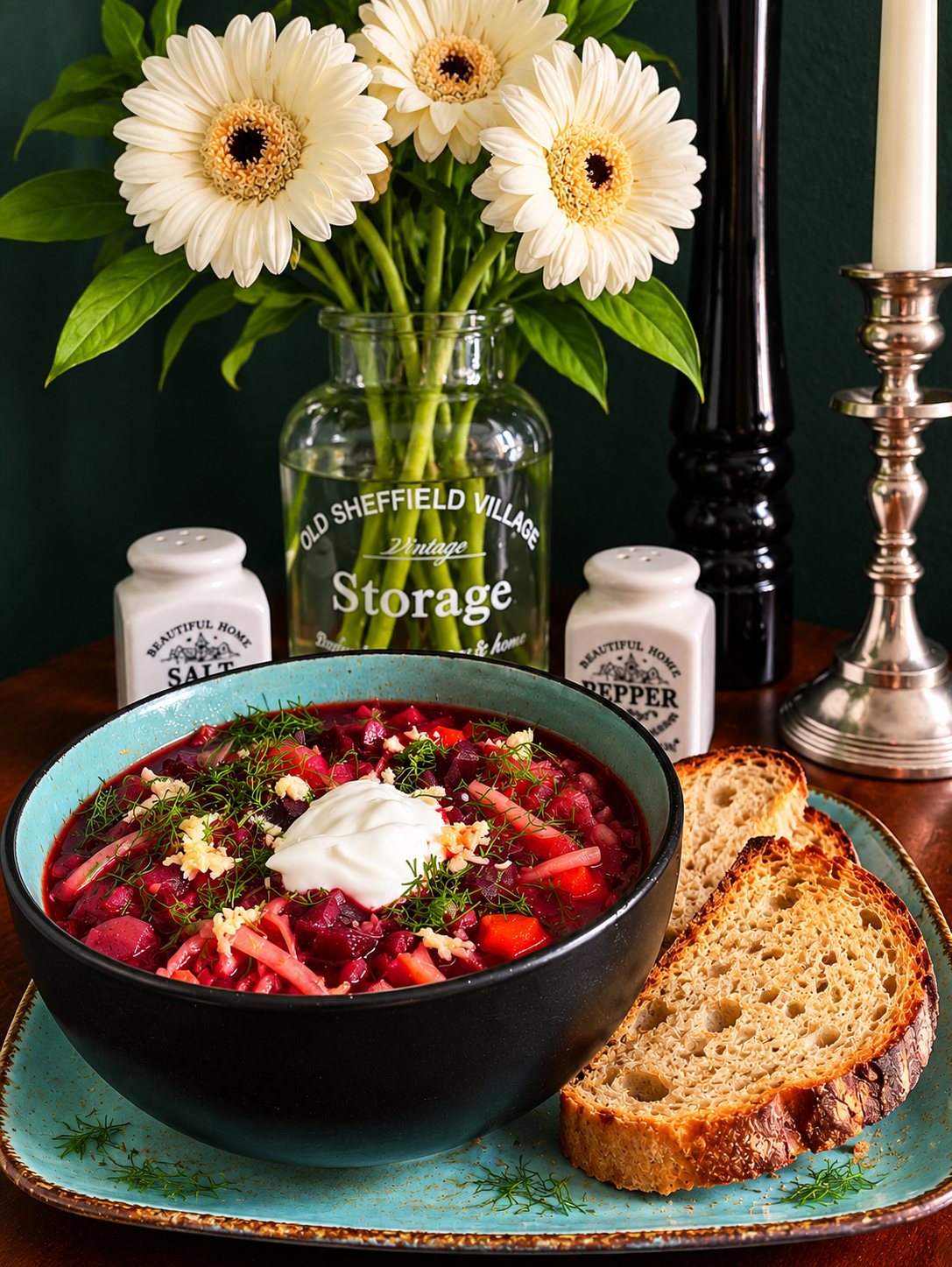
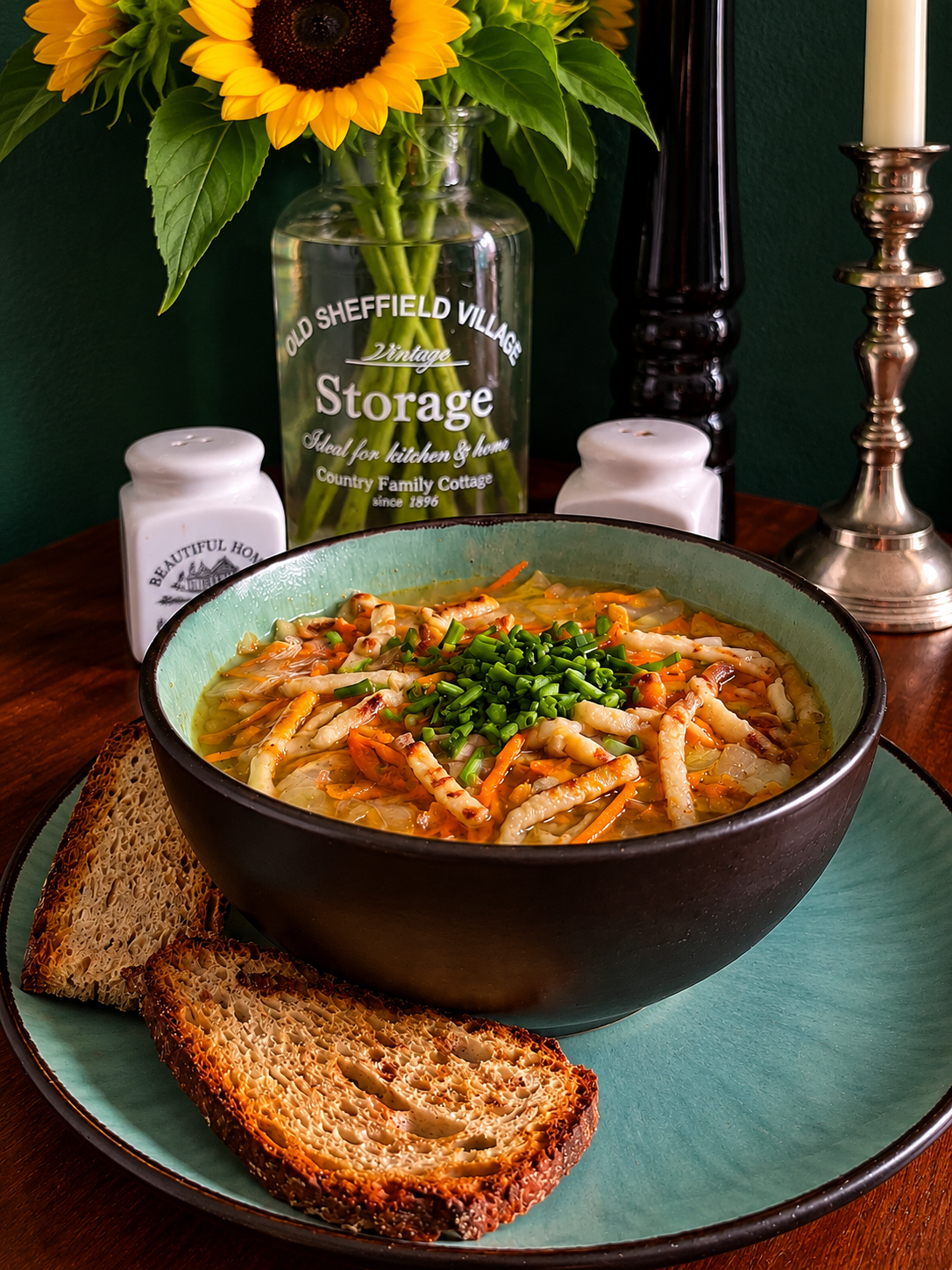
Serbia – A Country of Hearty Balkan Cooking
Serbian cuisine reflects centuries of Balkan culinary traditions, combining influences from Central Europe, the Ottoman Empire and neighboring southeastern European countries. Hearty soups, slow-cooked stews, seasonal vegetables, aromatic paprika and fresh herbs are important elements of Serbian home cooking. Traditional meals often celebrate simple, affordable ingredients transformed into satisfying dishes, with warm soups playing a particularly important role during the colder months.
Čorba sa Tikvicama i Šargarepom – Zucchini & Carrot Soup
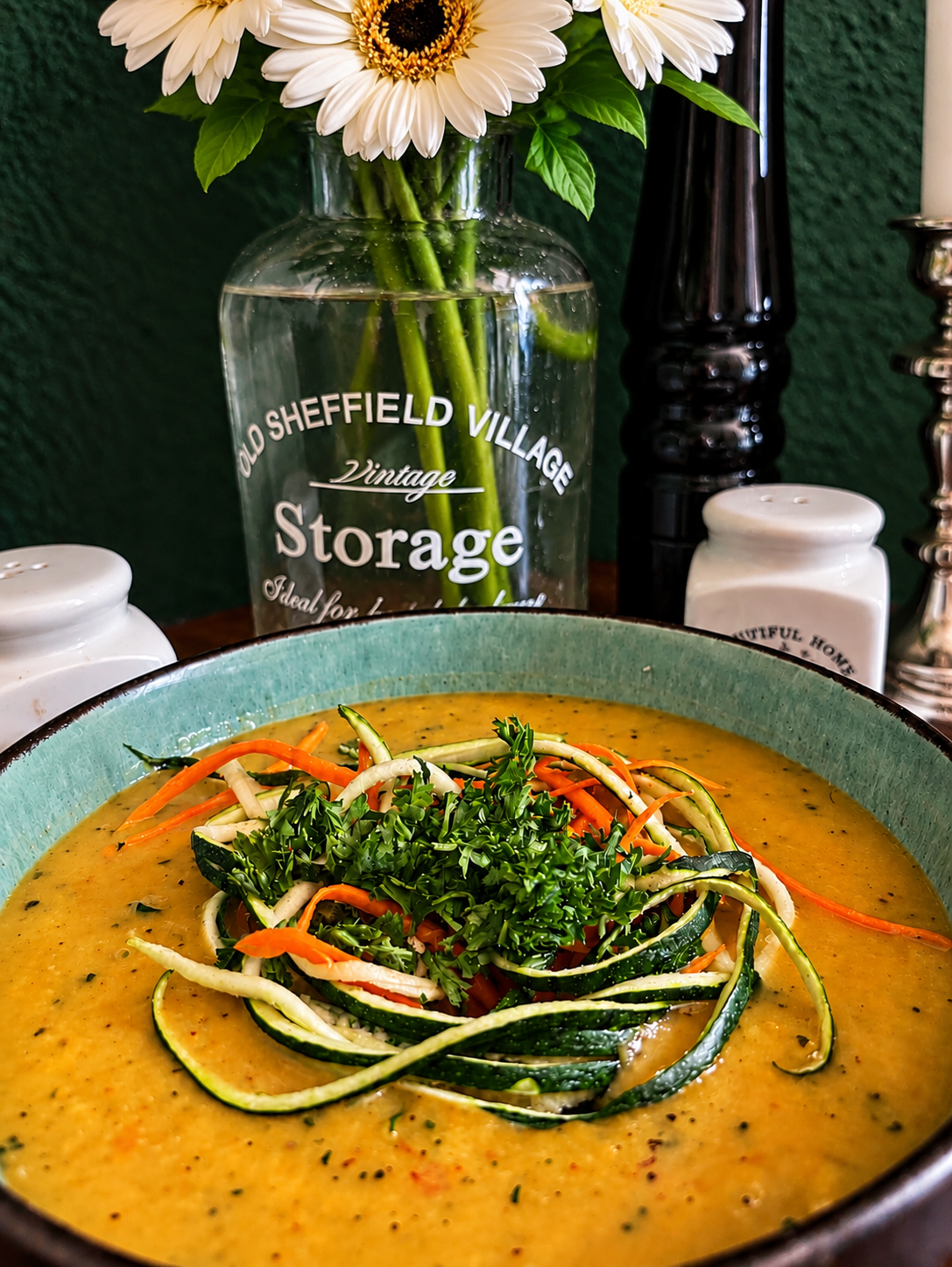
Čorba is a Serbian term commonly used for a hearty soup, often with vegetables, meat or other substantial ingredients. Čorba sa tikvicama i šargarepom simply means soup with zucchini and carrots. Rather than representing one strictly standardized national recipe, this dish reflects the tradition of preparing comforting vegetable soups with seasonal produce. My Via Veggie Vegan interpretation combines zucchini, carrots, potatoes, garlic, paprika and marjoram with a creamy soy-based finish. A portion of the soup is blended to create a velvety consistency while preserving some of the vegetables' natural texture. Fresh parsley, delicate vegetable ribbons and an optional touch of chili bring this rustic Balkan-inspired soup to life.
▣ Ingredients (2 servings)
- 1 zucchini, approximately 250 g
- 2 carrots
- 1 yellow onion
- 2 cloves garlic
- 1 potato, approximately 150 g
- 1 tsp mild paprika powder
- 1/2 tsp dried marjoram
- 1 pinch freshly grated nutmeg
- 2 tbsp fresh parsley
- to taste salt & freshly ground black pepper
- 1/2 tsp hot paprika powder or chili flakes (optional)
- 1 tbsp vegetable oil
- 500-600 ml vegetable broth
- 100 ml soy cream or plant-based cooking cream
- 1-2 tsp freshly squeezed lemon juice
♨ Preparation
- Prepare the Vegetables and Zoodles
Wash the zucchini and carrots thoroughly. Using a spiralizer, cut a few long, thin zucchini ribbons from the outer part of the zucchini, keeping the green skin attached. Set these zucchini zoodles aside for the garnish. Peel the carrots, then use the spiralizer to create a few delicate carrot zoodles and reserve them as well. Dice the remaining zucchini and carrots into small pieces. Peel the potato and cut it into small cubes. Finely chop the onion and garlic, and wash and chop the fresh parsley. - Build the Aromatic Soup Base
Heat the vegetable oil in a large saucepan over medium heat. Add the onion and sauté for ap-proximately 2–3 minutes until translucent. Stir in the garlic and cook briefly until fragrant. Add the diced carrots and potatoes and sauté for another 3 minutes. Sprinkle in the mild pap-rika and dried marjoram, stirring briefly to release their aromas without burning the spices. - Simmer the Vegetables
Pour in 500 ml of vegetable broth and bring to a gentle boil. Reduce the heat and simmer for approximately 10 minutes. Add the diced zucchini and continue cooking for another 8–10 minutes until all the vegetables are tender. Add a little additional broth if necessary. - Create the Creamy Texture
Blend approximately one-third of the soup using an immersion blender or carefully transfer it to a heatproof blender. Return the puréed portion to the saucepan and stir thoroughly. This creates a naturally creamy consistency while allowing the remaining vegetables to retain their texture. - Finish and Season
Stir in the soy cream and season with freshly grated nutmeg, salt, black pepper and 1–2 tsp fresh lemon juice. If desired, add hot paprika powder or chili flakes for a spicier Balkan-inspired variation. Heat gently without bringing the soup to a vigorous boil. - Prepare the Fresh Zoodle Garnish
Take the reserved zucchini and carrot zoodles and gently loosen them with your fingers to create a light, airy mixture. If the ribbons are particularly long, shorten them slightly for easier serving. Keep them raw to preserve their fresh colors and delicate texture. - Garnish and Serve
Divide the hot soup between two bowls. Arrange the fresh zucchini and carrot zoodles in the center of each bowl, creating a colorful little nest. Garnish generously with freshly chopped parsley. For an extra creamy finish, add a small spoonful of unsweetened soy yogurt and a few drops of chili oil if desired. Serve immediately, ideally with a slice of dark, crusty bread
Food Story
Soup Season? That’s Every Season!
Some people look forward to pumpkin season, others get excited about asparagus or strawberries. Me? I get excited about soup. All year round! There’s something incredibly comforting about a big bowl of homemade soup, especially when the days get shorter, the temperatures drop and autumn slowly turns into winter. Give me a steaming bowl of something delicious, a cozy kitchen and a generous helping of fresh herbs, and I’m perfectly happy. And honestly, I don’t need much convincing when food is involved anyway. I simply love eating. Because let’s face it: food is awesome!
From Steaming Bowls to Chilled Summer Soups
Of course, my soup obsession doesn’t suddenly disappear when spring arrives. It simply changes temperature! As soon as the weather gets warmer, I happily trade steaming winter soups for refreshing chilled creations filled with seasonal vegetables, fresh herbs and bright flavors. Whether it’s a hearty autumn pumpkin soup, a warming winter vegetable soup or a beautifully refreshing summer gazpacho, there’s always room for another soup in my kitchen. And the best part? Soups are wonderfully versatile. Creamy or chunky, mild or spicy, rustic or elegant – there’s practically no limit to what you can create.
A Little Serbian Comfort in My Bowl
For my culinary journey through Serbia, this zucchini and carrot Čorba was exactly the kind of recipe I was in the mood for. Simple vegetables, a little paprika, fragrant marjoram and a creamy plant-based finish – nothing complicated, just good, comforting food. I love how blending only part of the soup gives it a beautiful texture without turning everything into a completely smooth purée. And because I apparently can’t resist playing with my food, I finished my bowl with delicate zucchini and carrot ribbons and a generous handful of fresh parsley. A little color, a little crunch and a lot of deliciousness. Another country, another soup, another happy stomach. What can I say? I just really, really love food!
♨ Nutrition per serving
Nutritional values are approximate and may vary depending on the ingredients and products used.
Good to Know
What Does Čorba Mean?
Čorba is a term used in Serbian and several other Balkan languages for certain types of soup.
The word is historically related to Turkish çorba, reflecting the culinary influence of the Ottoman period in southeastern Europe.
In everyday Serbian cooking, čorba often refers to a substantial soup that may contain vegetables, legumes, meat or other ingredients.
The distinction between čorba and supa is not always rigid, but supa frequently refers to a lighter or clearer soup, while čorba is often thicker and heartier.
There are numerous regional and household variations, and no single recipe defines the entire category.
Is Zucchini and Carrot Čorba a Traditional Serbian Dish?
Vegetable soups are an established part of Serbian home cooking, and zucchini and carrots are familiar ingredients in many Balkan kitchens.
However, Čorba sa tikvicama i šargarepom is a descriptive name meaning soup with zucchini and carrots rather than the title of one universally standardized Serbian national dish.
Recipes may vary considerably in their choice of vegetables, herbs, thickening methods and finishing ingredients.
Some preparations use dairy cream or sour cream, while others rely on vegetable starches or a simple broth.
This Via Veggie Vegan version is inspired by Serbian vegetable soup traditions and uses soy cream to create a fully plant-based interpretation.
Why Are Soups So Important in Balkan Cuisine?
Soups have long played an important role in everyday cooking across southeastern Europe.
They are often served as a first course or enjoyed as a complete light meal.
Many traditional recipes developed around seasonal vegetables, legumes, inexpensive cuts of meat or homemade broth.
In home kitchens, soups provide an effective way to use available ingredients while creating filling, flavorful dishes.
During colder months, hearty soups and stews are particularly popular, although lighter vegetable soups can be enjoyed throughout the year.
Zucchini – A Versatile Summer Vegetable
Zucchini belongs to the species Cucurbita pepo, which also includes several other squash varieties.
Although botanically classified as a fruit, zucchini is generally treated as a vegetable in culinary applications.
It contains a high proportion of water and is relatively low in calories.
Zucchini also provides small amounts of vitamin C, potassium and other micronutrients.
Its mild flavor makes it particularly suitable for soups because it absorbs the aromas of herbs, spices and broth without overpowering other ingredients.
The skin is edible and contributes additional color and texture, so peeling is generally unnecessary when the zucchini is fresh and thoroughly washed.
Carrots – Natural Sweetness and Beta-Carotene
Carrots contribute natural sweetness and a beautiful orange color to this soup.
They are particularly known for their beta-carotene content.
Beta-carotene is a provitamin A carotenoid that the body can convert into vitamin A.
Vitamin A supports normal vision, immune function and the maintenance of healthy skin and mucous membranes.
Cooking carrots softens their cellular structure, which can improve the accessibility of some carotenoids.
Because carotenoids are fat-soluble, combining carrots with a little vegetable oil can support their absorption.
Why Does Potato Make Soup Creamier?
Potatoes contain starch, which absorbs water and gelatinizes during cooking.
When cooked potatoes are blended into a soup, the released starch helps create a thicker and smoother consistency.
This allows the soup to develop a creamy texture without relying entirely on added cream.
However, excessive blending can release too much starch and create a gluey consistency.
For this recipe, blending only a portion of the soup is particularly effective.
The result is creamy while retaining the rustic character of the vegetables.
What Is Marjoram?
Marjoram, Origanum majorana, is an aromatic herb closely related to oregano.
It has a mild, slightly sweet and gently floral flavor.
Marjoram is commonly used in Central European and Balkan-inspired cooking, particularly in soups, potato dishes, vegetable stews and savory preparations.
Its delicate aroma complements zucchini, carrots and potatoes without overpowering them.
Dried marjoram is more concentrated than fresh marjoram, so a relatively small amount is sufficient.
Adding it during cooking allows its flavor to infuse the broth.
Paprika – An Important Flavor in Balkan Cooking
Paprika is widely used in many southeastern and Central European culinary traditions.
It is produced by drying and grinding peppers from the Capsicum genus.
Depending on the variety, paprika may be sweet, mild, hot or smoked.
Mild paprika contributes warm flavor and reddish-orange color without necessarily making a dish spicy.
Hot paprika contains more capsaicin, the compound responsible for the sensation of heat in chili peppers.
Paprika should be heated gently because excessive temperatures can damage its aromatic compounds and create bitterness.
Why Add Nutmeg to Vegetable Soup?
Nutmeg is the seed of the tropical tree Myristica fragrans.
It has a warm, sweet and slightly woody aroma.
Small quantities are commonly used in creamy soups, potato dishes, sauces and vegetable preparations.
In this recipe, a tiny pinch adds depth and complements the natural sweetness of carrots and the richness of soy cream.
Nutmeg has a powerful flavor, so only a small amount is necessary.
Large quantities of nutmeg can be toxic and should never be consumed intentionally for their psychoactive effects.
Soy Cream – A Plant-Based Alternative to Dairy
Soy cream provides a creamy finish without using animal-derived dairy products.
Depending on the manufacturer, it may contain soy protein, vegetable oil, water and stabilizing ingredients.
Its nutritional composition varies between brands.
Some soy-based cooking creams contain less saturated fat than conventional dairy cream, although this depends on the formulation.
Soy cream works particularly well in vegetable soups because it creates a smooth consistency without introducing a strong flavor.
Adding it toward the end of cooking helps maintain a pleasant texture.
Why Add Lemon Juice at the End?
Lemon juice provides acidity that balances the sweetness of carrots and the richness of plant-based cream.
Acidity can make vegetable flavors seem brighter and more pronounced.
Adding lemon juice gradually at the end of cooking allows you to adjust the final flavor balance precisely.
Too much lemon juice can overwhelm the delicate zucchini and marjoram.
For this recipe, 1–2 teaspoons are sufficient to provide freshness without making the soup noticeably sour.
Fresh Parsley – More Than Just Decoration
Parsley belongs to the Apiaceae family, alongside carrots, celery and coriander.
It is widely used in European and Mediterranean cooking.
Fresh parsley contains vitamin K and various plant compounds, although the nutritional contribution depends on the amount consumed.
Its bright, herbaceous flavor provides a fresh contrast to creamy soups.
Adding parsley immediately before serving helps preserve its color and aroma.
In this recipe, chopped parsley also complements the decorative zucchini and carrot ribbons.
How Spicy Is This Soup?
The basic recipe uses mild paprika and black pepper, making it suitable for people who prefer gentle seasoning.
For a more pronounced Balkan-inspired heat, hot paprika powder or chili flakes can be added.
Capsaicin is the compound responsible for the burning sensation associated with hot chilies.
The perceived intensity depends on the type of pepper, the quantity used and individual tolerance.
For a moderate heat level, begin with a small pinch and increase gradually.
A few drops of chili oil added before serving can also provide heat without changing the entire pot of soup.
Homemade Vegetable Broth – A Flavorful Foundation
Vegetable broth forms the foundation of this soup and influences its overall flavor.
Homemade broth can be prepared using vegetables such as carrots, onions, celery and leeks, together with herbs and spices.
Using clean vegetable trimmings can help reduce kitchen waste.
However, spoiled vegetables or moldy scraps should never be used.
Commercial vegetable broths vary considerably in sodium content.
When using a salty broth, taste the finished soup before adding additional salt.
How to Store and Reheat Leftover Soup
Allow leftover soup to cool promptly before transferring it to a clean, airtight container.
Refrigerate within two hours and consume within approximately 3–4 days.
The soup may thicken during storage because of the potato starch.
When reheating, add a small amount of vegetable broth or water to restore the desired consistency.
Heat thoroughly and stir regularly.
For freezing, it is often preferable to freeze the vegetable soup before adding soy cream, then incorporate the cream after reheating.
Can This Soup Be Prepared Ahead of Time?
Yes. This zucchini and carrot soup is suitable for meal preparation.
The vegetable base can be cooked in advance and refrigerated.
For the freshest flavor, add the soy cream, lemon juice and parsley shortly before serving.
Prepare the zucchini and carrot ribbons just before plating so they remain crisp and colorful.
This makes the recipe convenient for busy weekdays while preserving its fresh presentation.