
Ukraine – A Culinary Heritage of Hospitality and Resilience
Ukraine is a country in Eastern Europe with a rich agricultural heritage and a deeply rooted food culture. Fertile farmland, seasonal vegetables, grains and traditional preservation methods have shaped Ukrainian cooking for generations. Beetroot, cabbage, potatoes, carrots, onions and dill are familiar ingredients in many everyday dishes. Soups hold a particularly important place in Ukrainian cuisine, bringing families together around the table. Ukrainian borscht is much more than a recipe: it represents hospitality, family traditions and cultural identity. In 2022, UNESCO inscribed the culture of Ukrainian borscht cooking on its List of Intangible Cultural Heritage in Need of Urgent Safeguarding, recognising the importance of protecting this living culinary tradition.
Ukrainian Borscht – A Beloved Beetroot Soup with Many Variations
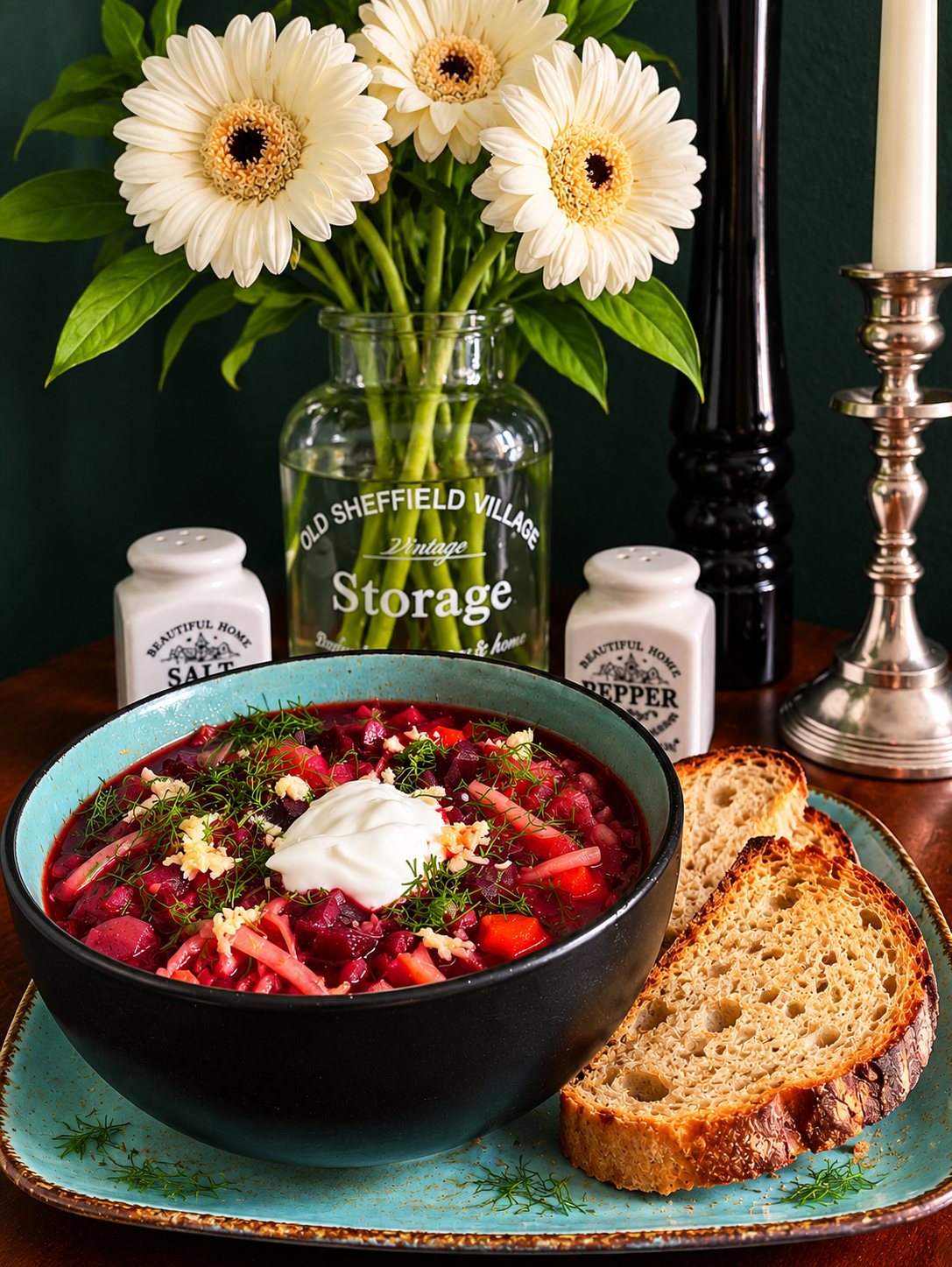
Borscht is one of Ukraine's best-known traditional dishes. There is no single universal recipe: ingredients and preparation methods vary between regions, families and seasons. Many versions combine beetroot, cabbage, potatoes, carrots, onions and tomatoes in a flavourful broth. Some are prepared with meat, while others are vegetarian or suitable for periods of religious fasting. My Via Veggie Vegan version uses a rich vegetable broth instead of beef stock and finishes the soup with plant-based sour cream, fresh dill and garlic. The beetroot is gently sautéed with tomato paste and lemon juice before being added to the soup, helping to develop its earthy sweetness and beautiful red colour. Served with rustic rye bread, this is a comforting Ukrainian-inspired classic made entirely from plants.
▣ Ingredients (2 servings)
- 1 large raw beetroot, approximately 250 g
- 100 g white cabbage
- 2 potatoes
- 1 carrot
- 1 yellow onion
- 2 cloves garlic
- 1 tbsp tomato paste
- 1 bay leave
- 2-3 whole allspice berries
- 1 handful fresh dill
- 1 tbsp freshly squeezed lemon juice
- l rich homemade vegetable broth
- 2 tbsp vegan sour cream or unsweetened thick soy yogurt
- 4 slices rustic rye bread, approximately 100 g
- additional fresh garlic and dill for serving (optional)
♨ Preparation
- Prepare the Vegetables
Peel the beetroot and cut it into fine matchsticks or grate it coarsely. Finely shred the white cabbage, peel and dice the potatoes, grate the carrot and finely chop the onion. Peel the garlic and set one clove aside for the soup and the other for serving. Wash and finely chop the fresh dill. Keep the beetroot separate from the remaining vegetables because it will be sautéed before being added to the broth. - Prepare the Aromatic Vegetable Broth
Pour 1 litre of homemade vegetable broth into a large saucepan. Add the bay leaf and whole allspice berries. Bring to a gentle simmer and allow the aromatics to infuse the broth for approximately 10 minutes. A rich vegetable broth is particularly important in this vegan version because it provides the savoury depth traditionally associated with long-simmered meat-based preparations. - Sauté the Onion and Carrot
Heat the vegetable oil in a separate frying pan over medium heat. Add the finely chopped onion and grated carrot. Sauté for approximately 4–5 minutes, stirring occasionally, until the onion becomes translucent and the carrot begins to soften. Add one finely chopped garlic clove and cook briefly until fragrant. - Add the Beetroot and Tomato Paste
Add the prepared beetroot to the frying pan and stir thoroughly. Cook gently for approximately 5 minutes. Add the tomato paste and continue stirring for another minute to develop its flavour. Pour in the lemon juice and approximately 100 ml of the warm vegetable broth from the saucepan. Cover the frying pan and allow the beetroot mixture to simmer gently for approximately 15–20 minutes, until it begins to soften. Stir occasionally and add a little more broth if necessary. - Cook the Potatoes and Cabbage
Meanwhile, add the diced potatoes to the simmering vegetable broth and cook for approximately 5 minutes. Add the shredded white cabbage and continue simmering for another 5–8 minutes. The vegetables should begin to soften but should not become mushy. - Combine the Borscht
Transfer the sautéed beetroot, onion and carrot mixture into the saucepan containing the potatoes and cabbage. Stir gently to combine all the ingredients. The broth should gradually develop a beautiful deep red colour. If necessary, add a small amount of hot water to adjust the consistency. - Simmer Until Tender
Reduce the heat and allow the Borscht to simmer gently for approximately 15–20 minutes, or until all the vegetables are tender. Avoid vigorous boiling, which can affect the beetroot's colour and the texture of the vegetables. Season with salt and freshly ground black pepper. Remove the bay leaf and allspice berries before serving. - Allow the Flavours to Develop
Turn off the heat and cover the saucepan. Allow the Borscht to rest for approximately 10 minutes. This gives the flavours time to settle and combine. Taste again and adjust the seasoning with a little extra lemon juice, salt or black pepper if necessary. - Prepare the Toppings and Bread
Finely crush or grate the remaining garlic clove. Stir a little of it into the vegan sour cream if desired, or reserve it for sprinkling directly over the soup. Chop the fresh dill. Warm the rye bread briefly in the oven or toast it until the crust becomes pleasantly crisp. - Serve the Ukrainian Borscht
Divide the hot Borscht between two deep bowls. Add a generous spoonful of vegan sour cream to each serving and finish with fresh dill and a little freshly crushed garlic. Serve immediately with warm, crispy rye bread. Alternatively, refrigerate the soup promptly after cooling and enjoy it reheated the following day, when the flavours have had even more time to develop.
Food Story
Beetroot – One of My Favourite Vegetables
Some people see beetroot and immediately think of stained fingers, red chopping boards and a kitchen that looks like a crime scene. I see one of my absolute favourite vegetables! I love its earthy sweetness, its beautiful colour and the way it can transform the simplest ingredients into something special. So when Ukraine came up on my culinary journey through 195 countries, Borscht was an obvious choice. A steaming bowl of beetroot soup with fresh dill, garlic and creamy vegan sour cream? Count me in. And yes, the chopping board survived. More or less.
Ukraine – A Country That Is Close to My Heart
Whenever I think about Ukraine, I cannot help thinking about the war and the suffering it has brought to so many people and families. It makes me incredibly sad that a country with such a rich culture and so many wonderful traditions has had to endure so much. Cooking Ukrainian Borscht certainly cannot change the world, but food has a beautiful way of connecting us with places, people and stories. For me, this bowl is also a small expression of appreciation for Ukrainian culture and the people who keep its traditions alive.
Three Countries, Three Cats and One Very International Household
And Ukraine actually has a very special place in my home. Meet Bruno, my Ukrainian cat! He shares his kingdom with Lemmy from Bulgaria and Rexy from Spain. Yes, I live with a truly multicultural feline delegation. Do we always speak the same language? Absolutely not. Do we always agree on everything? Definitely not. But somehow, we understand each other perfectly well. Perhaps that is something we humans could learn from them. Three cats, three countries, one home and plenty of love. And while my little international family was busy doing important cat things, I was in the kitchen preparing a warm bowl of Ukrainian Borscht. Different countries, different stories – but there is always room at my table.
♨ Nutrition per serving
Nutritional values are approximate and may vary depending on the ingredients and products used.
Good to Know
What Is Ukrainian Borscht?
Borscht is one of Ukraine's most beloved traditional dishes and an important part of its culinary identity. Although recipes vary between regions, families and seasons, the familiar red version commonly combines beetroot, cabbage, potatoes, carrots, onions and tomatoes in a flavourful broth. Some versions contain meat, while others are prepared entirely with vegetables, particularly during periods of religious fasting. There is no single universal recipe, and family traditions are an essential part of the dish's cultural significance. My Via Veggie Vegan interpretation uses a rich vegetable broth, fresh dill, garlic and plant-based sour cream to create a comforting, completely vegan version of this Ukrainian classic.
Ukrainian Borscht – UNESCO Intangible Cultural Heritage
In 2022, UNESCO inscribed the culture of Ukrainian borscht cooking on its List of Intangible Cultural Heritage in Need of Urgent Safeguarding. This recognition highlights the knowledge, customs and social traditions associated with preparing and sharing Borscht in Ukraine. The dish represents much more than a collection of ingredients: it connects generations, brings families together and reflects regional culinary identities. The UNESCO inscription does not claim that every form of Borscht belongs exclusively to Ukraine, but it acknowledges the particular cultural importance of Ukrainian borscht cooking and the need to protect this living tradition. Preparing this soup is also an opportunity to appreciate the history and resilience of Ukrainian food culture.
Beetroot – The Heart and Colour of Borscht
Beetroot gives traditional red Borscht its distinctive earthy sweetness and beautiful deep-red colour. Its natural pigments, known as betalains, are responsible for the vibrant appearance. Beetroot also provides dietary fibre, folate, potassium and naturally occurring dietary nitrates. The body can convert dietary nitrate through several steps into nitric oxide, a compound involved in regulating blood vessel function. Although beetroot has been studied for potential effects on blood pressure, it should not be considered a substitute for medical treatment. In this recipe, gently sautéing the beetroot with tomato paste and lemon juice helps develop its flavour while maintaining an attractive red colour.
Why Beetroot Changes Colour During Cooking
The natural red pigments in beetroot are sensitive to heat, acidity and cooking conditions. Prolonged or vigorous boiling can gradually dull the soup's vibrant colour. Adding a little lemon juice helps create a more acidic environment that can support colour retention, while gentle simmering protects the vegetables from becoming overly soft. This is one reason why the beetroot is prepared separately before being combined with the cabbage and potatoes. The tomato paste also contributes colour and savoury depth. For the best results, avoid boiling the finished Borscht aggressively and allow it to rest briefly before serving.
Zazharka – The Secret to a Flavourful Soup Base
Zazharka is a sautéed vegetable mixture used in Ukrainian and other Eastern European cooking. It commonly contains onions and carrots, sometimes combined with tomato paste, beetroot or other vegetables. Cooking these ingredients in a little oil before adding them to the broth develops their natural sweetness and creates a more rounded, savoury flavour. In this recipe, onion, carrot and garlic are gently sautéed before the beetroot and tomato paste are added. The tomato paste loses some of its raw sharpness during cooking, while the vegetables develop a deeper aroma. This simple technique makes a noticeable difference to the richness of a completely plant-based Borscht.
White Cabbage and Potatoes – Traditional Comfort Food Ingredients
White cabbage and potatoes are familiar ingredients in Ukrainian home cooking and help transform Borscht into a hearty, satisfying meal. Cabbage belongs to the cruciferous vegetable family and provides dietary fibre, vitamin C and vitamin K. Potatoes contribute carbohydrates, potassium and some vitamin C, although cooking can reduce the amounts of certain heat-sensitive nutrients. Their starch also adds body to the soup. Cutting the potatoes into evenly sized cubes ensures consistent cooking, while finely shredded cabbage becomes tender without losing all its texture. Together, these vegetables balance the earthiness of beetroot and make the soup wonderfully comforting.
Fresh Dill and Garlic – Classic Ukrainian Flavours
Fresh dill and garlic are characteristic ingredients in many Ukrainian dishes. Dill has a delicate, slightly grassy aroma that pairs particularly well with beetroot, potatoes, cabbage and creamy toppings. Adding it shortly before serving helps preserve its fresh flavour. Garlic contributes a more pronounced savoury note, especially when freshly crushed. Crushing garlic activates enzymes involved in producing allicin, a compound associated with its distinctive aroma. This recipe uses garlic both during cooking and as an optional finishing touch, creating different layers of flavour. Together with the fresh dill, it gives the Borscht a beautifully aromatic finish.
Vegan Sour Cream – A Plant-Based Alternative to Smetana
Traditional Ukrainian Borscht is frequently served with smetana, a cultured dairy product similar to sour cream. Its cool, slightly tangy flavour provides a delicious contrast to the hot, earthy beetroot soup. For this vegan interpretation, plant-based sour cream or unsweetened thick soy yogurt creates a similar creamy finishing touch without dairy ingredients. The nutritional composition of vegan alternatives varies depending on whether they are made from soy, oats, nuts or coconut-based ingredients. Soy-based products may provide more protein, while some coconut-based alternatives contain more saturated fat. Add the topping immediately before serving rather than boiling it into the soup to preserve its creamy texture.
Why Borscht Often Tastes Better the Next Day
Borscht is one of those wonderful dishes whose flavours often become more harmonious after resting. As the soup cools and is stored, the aromas of beetroot, cabbage, garlic, tomato paste and spices continue to distribute throughout the broth. This can create a fuller, more rounded flavour when the soup is reheated. Allow leftovers to cool promptly, transfer them to suitable containers and refrigerate within approximately two hours. Enjoy refrigerated Borscht within two to three days and reheat thoroughly until steaming hot throughout. Add fresh dill and vegan sour cream only after reheating. Serve with rustic rye bread or traditional Ukrainian garlic rolls known as pampushky for an especially comforting meal.
Zero Waste – Make the Most of Your Vegetables
Preparing Ukrainian Borscht offers plenty of opportunities to reduce food waste. Fresh, healthy beetroot leaves can be cooked like spinach or Swiss chard, while their tender stems can be finely chopped and sautéed. Thoroughly washed carrot peels, onion trimmings and suitable cabbage scraps can be collected for homemade vegetable broth. Leftover Borscht is ideal for another meal and can be portioned for convenient storage. Even slightly stale rye bread can be toasted until crisp and served alongside the soup. Using vegetables thoughtfully and transforming leftovers into delicious meals is an essential part of the Via Veggie Vegan philosophy. Zero Waste, Full Flavour – and a beautiful celebration of Ukrainian culinary heritage!
You may also like
♡
You may also like
Vegan Soup Joumou – Haitian Freedom Soup
You may also like
Biešu Zupa with Halloween Tofu Brains
You may also like