Argentina – The Land of Asado
Argentina is famous for its asado, a traditional grilling culture that brings family and friends together. Grilled dishes are often accompanied by fresh, aromatic condiments such as Salsa Criolla, reflecting the country's passion for bold flavours and shared meals.
What Is Salsa Criolla?
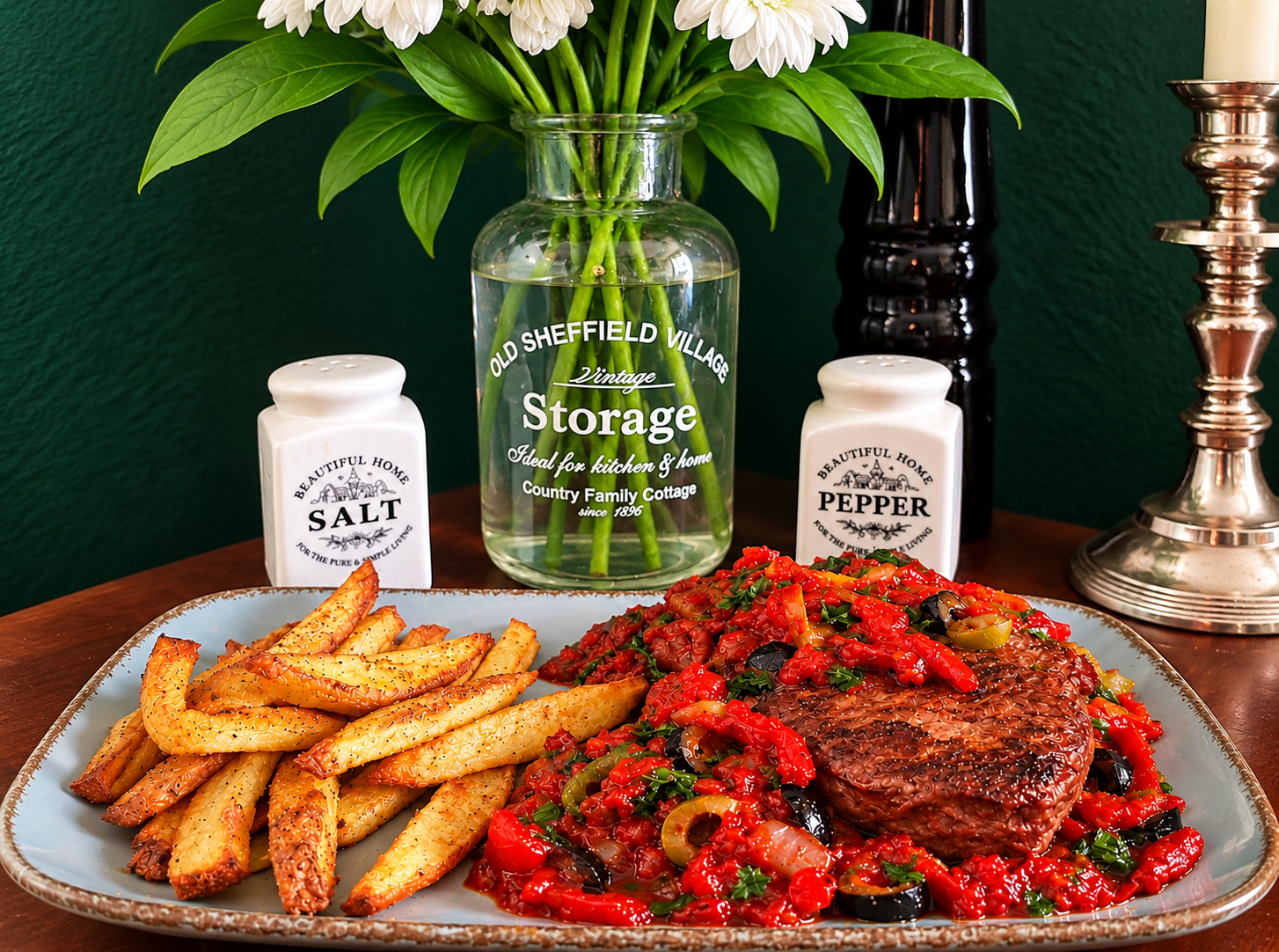
Salsa Criolla is a traditional Argentinian condiment made with finely chopped tomatoes, onions, bell peppers, oil, vinegar and seasonings. Unlike herb-based chimichurri, it is fresh, chunky and colourful. My Via Veggie Vegan interpretation combines a juicy Planted Steak with homemade Salsa Criolla, green and black olives, spicy peppers and beetroot juice instead of vinegar. A plant-based twist on an Argentinian classic!
▣ Ingredients (2 servings)
- 2 planted steak
- 1 tsp neutral-flavoured oil, for frying
- to taste freshly ground black pepper
- to taste salt
- 1 onion
- 1-2 cloves garlic
- 1/2 red bell pepper
- 1 tbsp fresh parsley
- 2 ripe tomatoes
- 2 tbsp olive oil
- 1 tsp beetroot juice
- to taste black olives
- 2-4 to taste schmall hit peppers
♨ Preparation
- Prepare the Vegetables
Wash and finely dice the tomatoes, removing some of the watery seeds if necessary.
Peel and finely dice the onion. Remove the seeds and membranes from the red bell pepper and cut it into small cubes.
Peel and finely chop the garlic. Finely chop the parsley.
Slice the green and black olives into rings or small pieces.
Finely slice the hot peppers, removing the seeds if you prefer a milder salsa. - Make the Homemade Salsa Criolla
Combine the tomatoes, onion, red bell pepper, garlic and parsley in a mixing bowl.
Add the olives and hot peppers.
Pour in the olive oil and beetroot juice.
Season with chili flakes, salt and freshly ground black pepper.
Mix gently until all the ingredients are evenly combined. Taste and adjust the seasoning as needed. - – Let the Salsa Rest
Cover the bowl and leave the Salsa Criolla to rest for approximately 30 minutes.
This allows the vegetables to release some of their juices and the flavors to develop.
Stir gently once more before serving.
The salsa should remain fresh and chunky rather than becoming a smooth sauce. - Prepare the Plant-Based Steak
Remove the Planted Steak from its packaging and pat it dry with kitchen paper.
Season with freshly ground black pepper.
Heat the neutral-flavored oil in a frying pan over medium heat.
Add the steak and fry for approximately 3–4 minutes per side, following the manufacturer's instructions, until nicely browned and heated through.
Avoid pressing down on the steak while cooking.
Taste before adding extra salt, as the product is already seasoned. - Assemble and Serve
Divide the cooked plant-based steak between two serving plates.
Spoon a generous amount of homemade Salsa Criolla over and around the steak.
Make sure some of the olives, peppers and fresh vegetables remain visible on top.
Serve immediately.
For a more substantial meal, pair with crispy oven-baked potato wedges or French fries.
Food Story
Back Then, Meat Was My Vegetable!
Once upon a time, when I still ate meat, I absolutely loved a good steak – preferably with a generous helping of herb butter melting all over it. Vegetables? Sure, as long as they didn’t interfere with the main attraction! Well, times have changed, and so has my plate. But choosing a vegan lifestyle doesn’t mean I have to pretend I never enjoyed the taste of meat.
Plant-Based Meat? I’m Here for It!
I know that not every vegan is enthusiastic about meat alternatives, but I genuinely celebrate them! Burgers, sausages, schnitzels and steaks – it’s amazing how far plant-based products have come. For me, being vegan isn’t about giving up familiar flavours. It’s about choosing not to eat animals anymore. Whether someone prefers tofu, lentils or a juicy vegan steak, there’s room for all of them on a plant-based menu. And I’m certainly not going to apologise for enjoying a delicious meat alternative!
Argentina, Here Comes My Vegan Steak!
For my culinary journey to Argentina, I chose a Planted Steak and gave it some serious company: homemade Salsa Criolla with tomatoes, onions, red bell pepper, parsley, green and black olives, four spicy peppers and plenty of garlic. Instead of traditional vinegar, I added a little beetroot juice for colour and subtle sweetness. The result? A juicy plant-based steak surrounded by fresh, colourful vegetables and a generous kick of heat. No meat, no compromises and definitely no shortage of garlic. Team Garlic and Team Spicy approved! Via Veggie Vegan – A Culinary Journey Around the World.
♨ Nutrition per serving
Nutritional values are approximate and may vary depending on the ingredients and products used.
Good to Know
Salsa Criolla – Argentina's Colourful Classic
Salsa Criolla is a traditional Argentinian condiment made with finely chopped tomatoes, onions, bell peppers, oil, vinegar and seasonings. Its fresh, chunky texture makes it a popular accompaniment to grilled dishes.
Salsa Criolla vs. Chimichurri
Both are popular in Argentinian cuisine, but they differ in texture and ingredients. Chimichurri is primarily herb-based, featuring parsley, garlic, oil and vinegar. Salsa Criolla contains more fresh vegetables and has a juicier, chunkier consistency.
Asado – More Than Just Grilling
In Argentina, asado is both a grilling tradition and a social gathering. Family and friends come together to prepare and share food. A plant-based steak offers a vegan interpretation of this culinary tradition.
Why Beetroot Juice Instead of Vinegar?
Traditional Salsa Criolla usually contains vinegar for acidity. In this Via Veggie Vegan version, beetroot juice adds a deeper red colour and subtle sweetness instead. A little lemon juice can provide additional freshness if desired.
Plant-Based Meat Alternatives – What Are They Made Of?
Vegan steaks can be made from ingredients such as pea protein, soy protein or wheat protein. Their nutritional composition varies depending on the product. Some provide substantial protein, while others contain more salt or saturated fat.
Processed Doesn't Automatically Mean Unhealthy
Food processing includes many different techniques, from cooking and fermentation to producing plant-based meat alternatives. Nutritional quality depends on the ingredients, protein, fibre, saturated fat and sodium content rather than processing alone.
Plant Protein & Muscle Maintenance
Protein contributes to the maintenance and growth of muscle mass. Plant-based meat alternatives can be useful protein sources, depending on their formulation. A varied vegan diet can also provide protein through legumes, tofu, tempeh, grains, nuts and seeds.
Iron & Vitamin B12 in Vegan Alternatives
Some plant-based meat alternatives contain iron or are fortified with vitamin B12, but this varies between products. Vitamin B12 is essential for normal nerve function and red blood cell formation. People following a vegan diet need a reliable B12 source through supplementation or appropriately fortified foods.
Tomatoes, Lycopene & Olive Oil
Tomatoes contain lycopene, a natural carotenoid responsible for their red colour. Lycopene absorption can be improved when tomatoes are consumed with dietary fat, such as olive oil. Olive oil also provides predominantly monounsaturated fatty acids.
Capsaicin – What Makes Chili Peppers Hot?
Chili peppers contain capsaicinoids, compounds responsible for their characteristic heat. Their concentration varies considerably between pepper varieties. Removing the inner membranes and reducing the number of peppers can make Salsa Criolla milder without sacrificing its fresh vegetable flavours.