Country of Origin: Germany (Bavaria)
Gelbwurst is a traditional mild German sausage particularly associated with Bavaria and southern Germany. Often remembered as a childhood favourite, it is commonly enjoyed cold, thinly sliced, on bread or as part of a traditional Brotzeit.
What is Gelbvurst?
Gelbwurst is a finely textured, delicately seasoned cooked sausage traditionally made with meat. Its characteristic flavour comes from mild spices, especially mace, white pepper and sometimes ginger and lemon. This homemade vegan interpretation replaces the meat with tofu and wheat gluten, creating a tender, sliceable deli sausage without animal products.
▣ Ingredients (2 servings)
- 2 sprigs curley parsley
- 3/4 tsp ground mace
- 1/2 tsp onion powder
- 1/4 tsp ground white pepper
- 1/4 tsp ground ginger
- 1/4 tsp ground turmeric
- 1 tsp finely grated organic lemon zest
- 200 g firm natural tofu, well pressed
- 140 g vital wheat gluten (Seitan Fix)
- 1 tbsp nutritional yeast
- 1 tbsp medium-hot mustard
- 25 ml neutral vegetable oil, such as rapeseed oil
- 120 ml cold mild vegetable broth
- 1 tsp salt
♨ Preparation
- Press the tofu thoroughly to remove excess moisture. Place it in a blender or food processor with the cold vegetable broth, vegetable oil, lemon zest, mace, onion powder, white pepper, ginger, turmeric, nutritional yeast, mustard and salt. Blend until completely smooth and creamy.
- Transfer the mixture to a large bowl. Add the vital wheat gluten and mix quickly with a fork until a dough begins to form. Knead by hand for 2–3 minutes until compact, elastic and evenly combined.
- Spread the dough onto a sheet of baking parchment. Sprinkle the finely chopped curly parsley evenly over the surface and knead again until the herbs are distributed throughout the mixture.
- Shape the dough into a firm, even sausage approximately 5–6 cm in diameter.
- Roll the sausage very tightly in baking parchment, then wrap it securely in aluminium foil. Twist both ends firmly, like a wrapped sweet, to help the sausage maintain its shape during steaming.
- Bring water to a boil in a large pot fitted with a steamer basket. Place the wrapped sausage inside, cover with a lid and steam over medium heat for 60 minutes. Check the water level occasionally and replenish with hot water if necessary.
- Remove the sausage from the steamer and allow it to cool completely. Refrigerate overnight to develop a firm, sliceable texture.
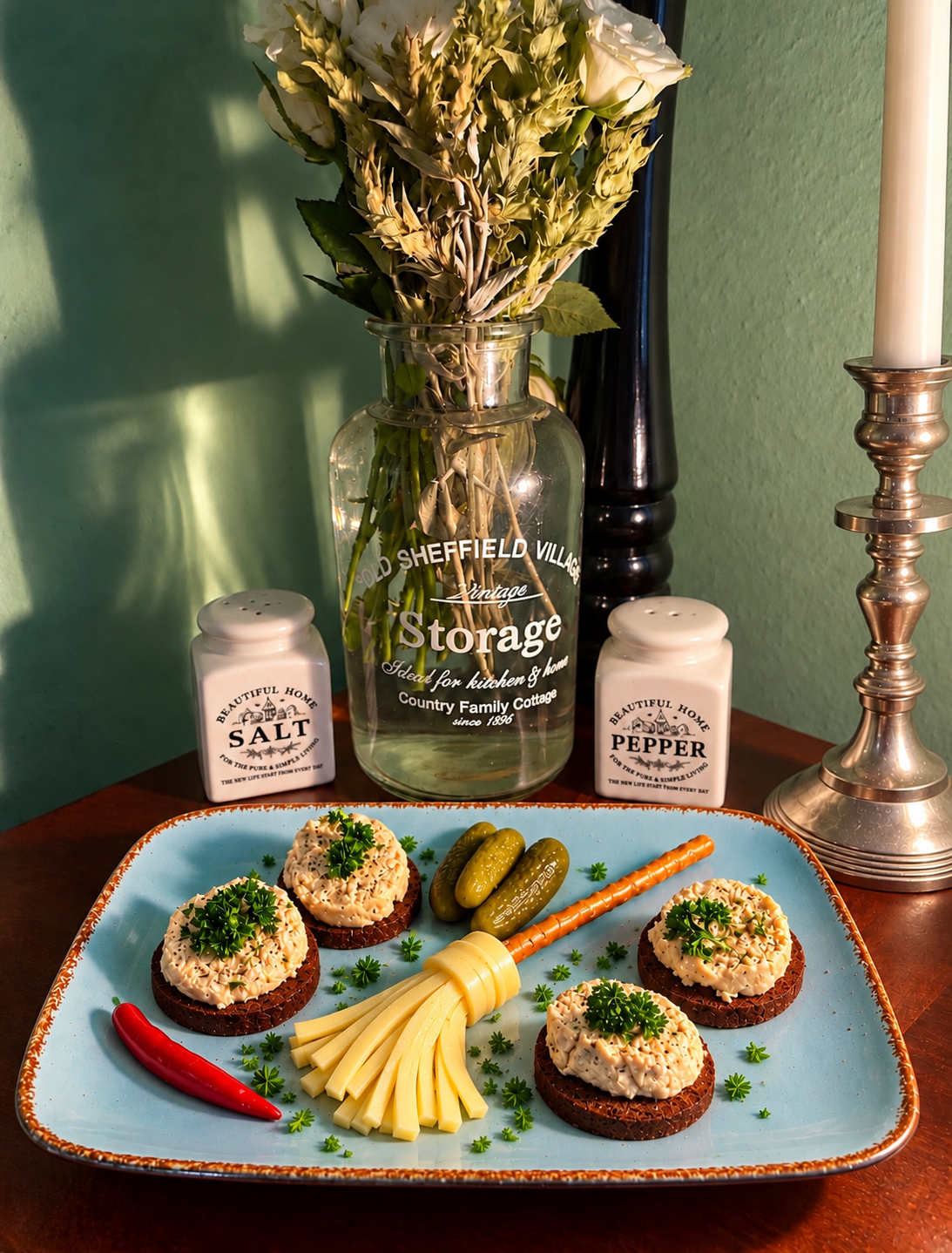
- Unwrap the chilled Gelbvurst and cut it into thin slices. Serve with spicy cornichons, fresh bread or your favourite Bavarian Brotzeit accompaniments.
Food Story
A Little Slice of Childhood
“Magst a Radl Wurst?” If you grew up in Bavaria, you probably remember those magical words from the lady behind the deli counter. While your parents were shopping, you were handed a little slice of Gelbwurst – completely free, and somehow the best part of the entire shopping trip!
Old Memories, New Ingredients
That little slice is one of my sweetest childhood memories. Today, I’m bringing it back in my own way: homemade, 100% vegan and delicately seasoned with mace, lemon zest and a touch of ginger. And of course, no proper Bavarian Brotzeit would be complete without a few spicy cornichons!
A Little Halloween Magic
Because even childhood memories leave crumbs, I’ve added a tiny witch’s broom to sweep them away. A little Bavarian nostalgia, a little plant-based magic and just enough spooky-season mischief to make Grandma raise an eyebrow!
♨ Nutrition per serving
Nutritional values are approximate and may vary depending on the ingredients and products used.
Good to Know
Mace vs. Nutmeg
Mace, also called macis, comes from the delicate outer covering of the nutmeg seed. It has a warm, aromatic flavour that is generally more delicate than nutmeg itself. Both work in this recipe, but mace is particularly well suited to the traditional Gelbwurst seasoning.
Why Is It Called Gelbwurst?
The name literally means “yellow sausage”. Traditionally, the name refers primarily to its distinctive yellow casing rather than the colour of the sausage filling, which is usually pale.
A Bavarian Childhood Tradition
In many German butcher shops, children were traditionally offered a complimentary slice of mild sausage while their parents shopped. The familiar question “Magst a Radl Wurst?” means “Would you like a slice of sausage?” in Bavarian dialect.
The Role of Vital Wheat Gluten
Vital wheat gluten forms an elastic protein network when mixed with liquid and kneaded. This helps the vegan sausage hold together and gives it a firm, sliceable structure after steaming.
Why Tofu Matters
Tofu adds moisture and softness to the wheat gluten mixture. It helps create a more delicate texture than a sausage made entirely from seitan, while also contributing plant-based protein.
The Secret of White Pepper
White pepper offers a subtle warmth without the prominent dark specks of black pepper. It is particularly useful in pale sausages and delicately seasoned dishes where appearance matters.
What Nutritional Yeast Adds
Nutritional yeast contributes savoury, umami-rich notes to the sausage mixture. It helps create a fuller flavour without making the finished Gelbvurst taste strongly of any single ingredient.
Why Steam Instead of Bake?
Steaming provides gentle, moist heat and allows the sausage to cook while retaining its compact shape. Baking can produce a drier outer surface and a different texture.
Storage and Freezing
Store the fully cooked Gelbvurst in an airtight container in the refrigerator and consume within 3–4 days. For longer storage, freeze individual portions. Thaw in the refrigerator before serving. Keep the sausage properly chilled and do not leave it at room temperature for extended periods.
A Traditional Brotzeit, Made Vegan
Brotzeit is the Bavarian tradition of enjoying a simple meal or snack built around bread and savoury accompaniments. Serve your Homemade Gelbvurst with crusty bread, spicy cornichons, radishes and mustard for a deliciously plant-based version.