Lebanon – The Heart of Levantine Mezze Culture
Lebanon is known for its vibrant mezze culture, where a variety of small dishes are shared around the table. Fresh herbs, vegetables, olive oil, garlic, lemon and tahini are central ingredients in Lebanese cuisine. Roasted eggplant dips are particularly popular throughout the Levant, reflecting a long tradition of transforming simple vegetables into wonderfully aromatic dishes.
What Is Baba Ganoush?
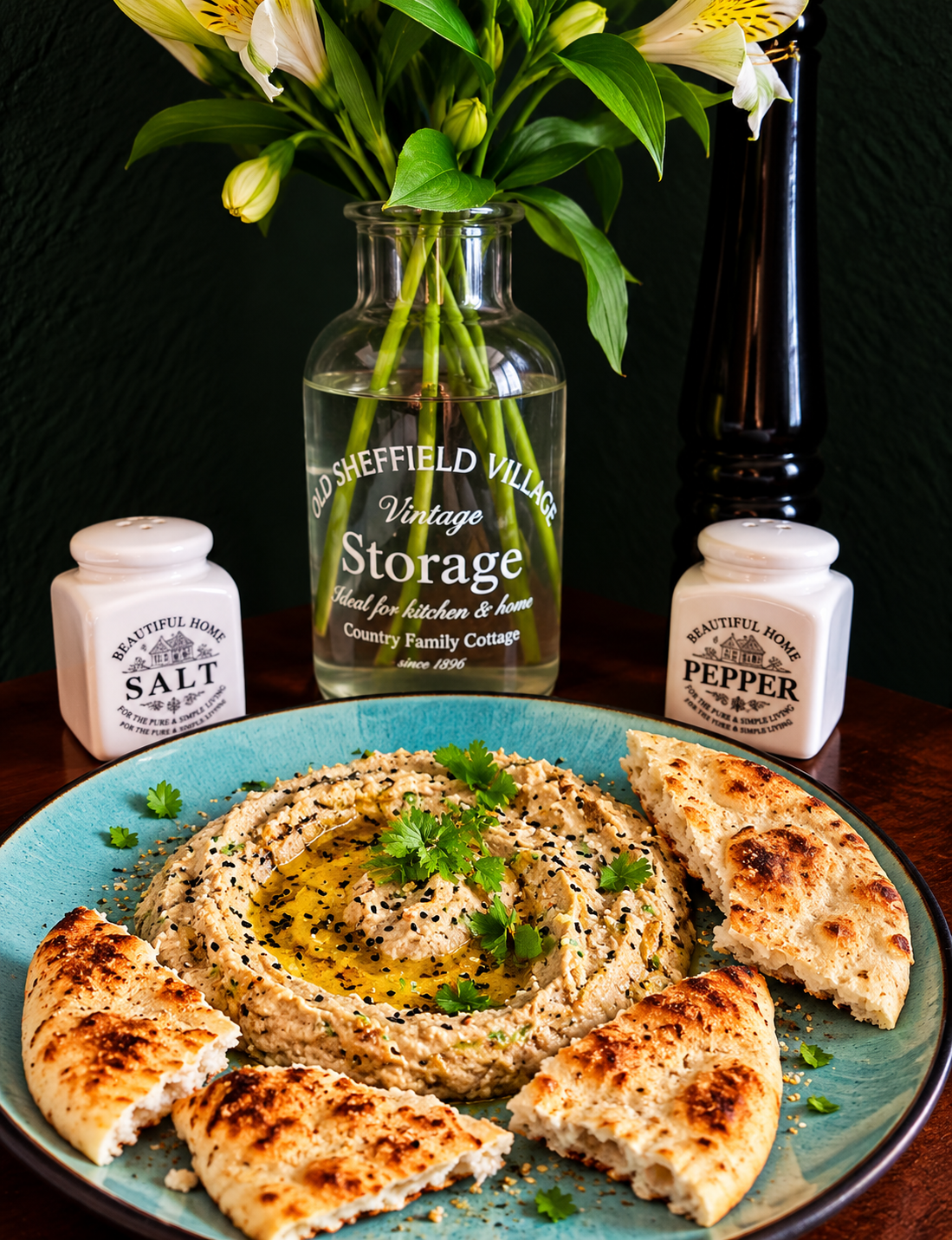
Baba Ganoush is a roasted eggplant dish associated with Lebanon and the wider Levant. Its preparation varies between regions and households. Some versions include tahini for a creamy, nutty texture, while others feature additional vegetables or herbs. This Via Veggie Vegan version combines smoky roasted eggplant with tahini, garlic, lemon juice and extra virgin olive oil, finished with fresh coriander, sesame seeds and a touch of chili. Served with warm toasted flatbread, it is a naturally vegan mezze full of flavor.
▣ Ingredients (2 servings)
- 1/2 eggplant (large)
- 1 1/2 tbsp tahini
- 1 tsp freshly squeezed lemon juice
- 1 tsp extra virgin olive oil
- 1 pinch salt
- 1 pinch ground cumin
- to taste freshly ground black pepper
- 1 tsp extra virgin olive oil (for the topping)
- 1 tbsp fresh coriander (for the topping)
- 1/2 tsp sesame seeds (for the topping)
- to taste harissa (for the topping)
- 100 g vegan flatbread (for the topping)
♨ Preparation
- – Roast the Eggplant
Preheat the oven to 230°C / 445°F conventional heat (top and bottom heat).
Line a baking tray with baking paper.
Place the eggplant half cut-side down on the tray.
Roast for approximately 20–25 minutes, until the flesh is completely soft and the skin has developed dark roasted patches.
The flesh should be tender enough to scoop out easily with a spoon. - Cool and Drain
Remove the eggplant from the oven and allow it to cool until comfortable to handle.
Scoop the soft flesh away from the skin.
Transfer the flesh to a fine-mesh sieve.
If the eggplant contains excess liquid, allow it to drain for approximately 3–5 minutes.
This prevents the finished dip from becoming watery. - Prepare the Baba Ganoush
Place the roasted eggplant flesh in a mixing bowl.
Add the tahini, crushed garlic, lemon juice, olive oil, salt, cumin and freshly ground black pepper.
Mash thoroughly with a fork until creamy but still slightly textured.
Avoid blending the mixture completely smooth.
A little texture gives Baba Ganoush its rustic character. - Adjust the Seasoning
Taste the Baba Ganoush.
Adjust the salt, garlic or lemon juice if necessary.
The roasted eggplant should remain the dominant flavor, complemented by the nutty tahini and aromatic garlic. - Prepare the Flatbread
Cut the vegan flatbread into four pieces.
Warm the pieces in a dry frying pan or briefly in the oven until lightly toasted.
Allow a few golden-brown spots to develop while keeping the inside pleasantly soft. - Arrange the Baba Ganoush
Spoon the Baba Ganoush into the center of a large serving plate.
Use the back of a spoon to spread it into a generous circular mound.
Create a shallow well in the center and decorative swirls across the surface.
Drizzle extra virgin olive oil into the well.
Scatter fresh coriander, sesame seeds and a little harissa or chili flakes over the dip. - Serve
Arrange the four pieces of warm, toasted flatbread around the Baba Ganoush on the same plate.
Serve immediately.
The bread is perfect for scooping up the creamy roasted eggplant dip.
Food Story
Half an Eggplant, a Whole Lot of Flavor
Who would have thought that half an eggplant could cause so much excitement in my kitchen? A little roasting, a generous spoonful of tahini, garlic, cumin and olive oil – and suddenly, I had a wonderfully creamy Lebanese mezze on my hands. No complicated ingredients, no elaborate vegan substitutions. Baba Ganoush is already naturally vegan. Sometimes Mother Nature really does all the hard work for us.
Team Garlic & Team Coriander Take Over
Of course, I couldn’t resist adding my personal Via Veggie Vegan touch. Fresh coriander, sesame seeds, a little chili and a beautiful drizzle of golden olive oil turned my humble eggplant into a proper little feast. And since I’m firmly on Team Garlic and Team Coriander, there was absolutely no reason to hold back. I spread everything directly onto my favorite turquoise plate, made a few decorative swirls and arranged four pieces of warm, toasted flatbread around it.
Four Pieces of Bread – Really?
Four pieces of bread. One generous mountain of Baba Ganoush. And one very optimistic assumption that four pieces would actually be enough. Spoiler alert: they weren’t. But that’s the wonderful thing about Lebanese mezze – there’s always room for another piece of bread and one more delicious scoop. Via Veggie Vegan – A Culinary Journey Around the World.
♨ Nutrition per serving
Nutritional values are approximate and may vary depending on the ingredients and products used.
Good to Know
Baba Ganoush or Mutabbal – What's the Difference?
Both belong to the culinary traditions of the Levant, particularly Lebanon, Syria and Palestine. In some regions, Mutabbal refers to a creamy roasted eggplant dip containing tahini, while Baba Ganoush may include additional vegetables, herbs or a chunkier texture. However, names and recipes vary between countries and households, so there is no universally accepted distinction. This version combines roasted eggplant with tahini, garlic and lemon.
What Does Baba Ganoush Mean?
The name Baba Ganoush is sometimes interpreted as “pampered daddy” or “spoiled daddy.” However, its exact etymology remains uncertain, and several explanations exist. Whatever the origin of its name, this delicious eggplant preparation has become one of the best-known mezze dishes associated with Levantine cuisine.
Why Roasting Makes All the Difference
Eggplant contains a high proportion of water. During roasting, its flesh softens and develops the silky texture that makes Baba Ganoush so creamy. Roasting over an open flame or charcoal creates a particularly pronounced smoky aroma, while oven roasting is a convenient alternative. For this recipe, the eggplant is roasted at 230°C conventional heat until completely tender.
Tahini – The Creamy Secret Ingredient
Tahini is a paste made from ground sesame seeds. It contributes a rich, nutty flavor and a naturally creamy consistency without requiring dairy products. Sesame seeds also provide unsaturated fats, protein and minerals. The amount of tahini can be adjusted to taste, but in this recipe, one generous tablespoon allows the roasted eggplant to remain the dominant flavor.
Garlic – Small Clove, Big Personality
Garlic contains sulfur compounds responsible for its distinctive aroma. Crushing or chopping garlic activates enzymatic reactions that help form allicin, a compound associated with freshly prepared garlic. Because the garlic is added raw to Baba Ganoush, its flavor is particularly noticeable. One large clove provides plenty of character, especially for members of Team Garlic!
Lemon Juice – Finding the Perfect Balance
Freshly squeezed lemon juice brings acidity and freshness to the rich combination of roasted eggplant, tahini and olive oil. Its bright flavor helps balance the creamy texture and smoky aromas. This recipe starts with just one teaspoon, allowing the eggplant to remain the star. Additional lemon juice can be added gradually according to personal preference.
Extra Virgin Olive Oil & Healthy Fats
Extra virgin olive oil contains predominantly monounsaturated fatty acids and naturally occurring plant compounds, including polyphenols. Together with tahini, it contributes richness and a smooth mouthfeel to Baba Ganoush. This recipe uses a small amount in the dip and an additional drizzle for serving. The oil also enhances the presentation by collecting beautifully in the decorative swirls.
Fresh Coriander, Sesame Seeds & Chili
Fresh coriander contributes a bright, citrusy herbal note, while sesame seeds add a delicate nutty flavor and visual contrast. A little harissa or chili provides optional heat without overpowering the roasted eggplant. These toppings are personal Via Veggie Vegan additions rather than mandatory ingredients in every traditional preparation. Add them shortly before serving to preserve their freshness.
Naturally Vegan – No Swaps Required
Baba Ganoush prepared with roasted eggplant, tahini, garlic, lemon juice and olive oil is naturally plant-based. No meat, dairy or egg alternatives are necessary. It is a wonderful example of how satisfying vegan dishes have long been part of regional culinary traditions. For a completely vegan meal, simply make sure the accompanying flatbread contains no animal-derived ingredients.
Levantine Mezze, Flatbread & Zero-Waste Cooking
Mezze refers to a selection of small dishes enjoyed across the Eastern Mediterranean and Middle East, often shared with family and friends. Baba Ganoush is especially delicious with warm flatbread, which can be used to scoop up the creamy dip. Leftover bread can be toasted into crispy chips, while tender coriander stems can be finely chopped and added to dressings or sauces. Store leftover Baba Ganoush in a covered container in the refrigerator and enjoy it within approximately 2–3 days.