
Russia – A Culinary Tradition of Refreshing Summer Dishes
Russian cuisine is known for its hearty soups, comforting potato dishes, fresh vegetables and seasonal ingredients. During the warmer months, cold soups provide a refreshing alternative to traditional hot meals. Okroshka is particularly associated with Russian summer cooking and is often enjoyed at family gatherings, in countryside homes and during hot afternoons.
What Is Okroshka?
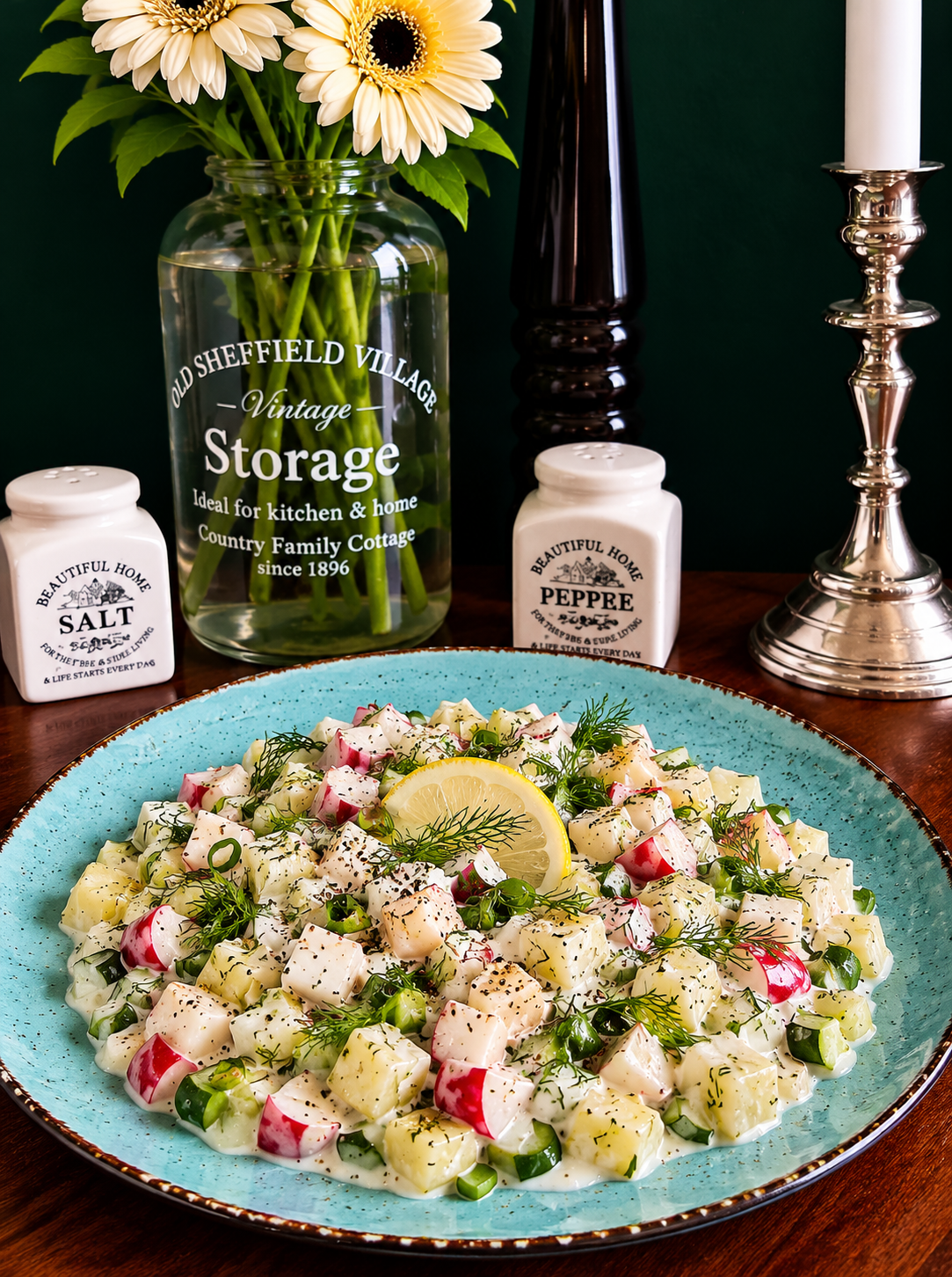
Okroshka is a traditional Russian cold soup made with finely chopped vegetables, herbs and a chilled liquid base. Classic versions often contain kvass, a fermented beverage, or kefir, and may also include eggs or meat. My Via Veggie Vegan interpretation uses unsweetened soy yogurt instead, creating a thicker, creamy salad-style version with potatoes, cucumber, radishes, spring onions, fresh dill and lemon. It preserves the refreshing character of Okroshka while giving the dish a completely plant-based twist.
▣ Ingredients (2 servings)
- 2 waxy potatoes
- 1 cucumber
- 1 bunch radishes
- 1 bunch spring onions
- 1/2 bunch fresh dill
- 250 g unsweetened soy yogurt
- 1 organic lemon (juice and zest)
- to taste salt & freshly ground black pepper
♨ Preparation
- Cook and Cool the Potatoes
Wash the potatoes and boil them in lightly salted water until tender, approximately 15 minutes depending on their size. Drain and allow to cool completely. Peel if desired, then cut into small, even cubes. - Prepare the Vegetables and Herbs
Wash the cucumber, radishes and spring onions thoroughly. Peel the cucumber, reserving the peel for the optional zero-waste dressing technique. Finely dice the cucumber and radishes, slice the spring onions and finely chop the fresh dill. Wash the organic lemon, grate the zest and squeeze out the juice. - Prepare the Creamy Dressing
Place the unsweetened soy yogurt in a large mixing bowl. Stir in the lemon juice and finely grated lemon zest. Season with salt and freshly ground black pepper. For the optional zero-waste version, blend the reserved cucumber peel into the dressing until smooth. - Combine the Okroshka
Add the cooled potato cubes, cucumber, radishes, spring onions and chopped dill to the dressing. Gently fold everything together until the vegetables are evenly coated. Taste and adjust the seasoning. - Chill and Serve
Cover and refrigerate for at least 30 minutes to allow the flavours to develop. Stir gently before serving and divide between two plates or bowls. Garnish with a little reserved dill, freshly ground black pepper and an optional lemon slice. Serve thoroughly chilled.
Food Story
One of My Very First Culinary Destinations
Some recipes stay with you for a very special reason. Russian Okroshka is one of them. It was one of the very first dishes I prepared for my Via Veggie Vegan culinary journey around the world – and I was absolutely delighted with the result. Actually, I still am! There is something wonderful about discovering a dish you have never made before and realising after the first bite that it deserves a permanent place in your kitchen.
Team Potatoes Meets Team Salad
Anyone who knows my cooking preferences knows that I love potatoes. And salads? Absolutely! So combining both in one dish was already a promising start. Add crunchy cucumber, colourful radishes, fresh dill, spring onions and a creamy lemon dressing, and suddenly you have everything I love about a refreshing meal. Nothing complicated, nothing extravagant – just a delicious combination of textures and flavours that made me wonder why I hadn’t discovered Okroshka much earlier.
A Little Reminder of Where It All Began
What makes this recipe particularly special to me is the memory attached to it. When I started cooking my way around the world, every new country was a little adventure, every unfamiliar recipe a surprise. Okroshka was one of those early discoveries that reminded me exactly why I wanted to begin this journey in the first place. New flavours, new traditions and the pure joy of trying something for the very first time. One country, one dish, one very happy vegan kitchen. And yes, I would happily make it all over again!
♨ Nutrition per serving
Nutritional values are approximate and may vary depending on the ingredients and products used.
Good to Know
What Is Traditional Russian Okroshka?
Okroshka is traditionally a cold Russian soup consisting of finely chopped ingredients mixed with a chilled liquid. Common vegetables include potatoes, cucumbers, radishes and spring onions. Many traditional recipes also contain boiled eggs, meat or sausage. The exact ingredients and proportions vary between households and regions. This recipe is a vegan, thicker salad-style interpretation rather than a conventional liquid soup.
Kvass, Kefir and Modern Plant-Based Alternatives
Traditional Okroshka is frequently prepared with kvass or kefir. Kvass is a fermented beverage commonly made from bread or grain and may contain alcohol in varying amounts. Kefir is a fermented milk drink. Unsweetened soy yogurt offers a practical dairy-free alternative and gives this version its creamy consistency without requiring either traditional ingredient.
Why Waxy Potatoes Work So Well
Waxy potatoes contain relatively little starch compared with floury varieties and generally retain their structure during cooking. This makes them suitable for cold salads and dishes where clearly defined potato cubes are desirable. Potatoes also provide carbohydrates, potassium and vitamin C, although the exact nutritional content depends on the variety and preparation.
Radishes – Colour, Crunch and Freshness
Radishes belong to the Brassicaceae family, alongside vegetables such as cabbage, broccoli and mustard greens. Their characteristic peppery flavour comes from naturally occurring compounds associated with this plant family. Red and white radishes provide attractive colour contrasts, crisp texture and small amounts of vitamin C and dietary fibre.
Cucumber – The Refreshing Ingredient
Cucumbers have a high water content and contribute a cool, refreshing texture to Okroshka. They contain relatively few calories and provide small amounts of vitamin K and other nutrients. The skin contains additional fibre and plant compounds, so keeping it or incorporating it into the dressing can be a practical way to use more of the vegetable.
Fresh Dill in Russian Cuisine
Dill is widely used in Russian and other Eastern European cuisines, particularly in salads, soups, pickled vegetables and potato dishes. Its delicate, slightly grassy and aromatic flavour pairs particularly well with cucumber, radishes and creamy dressings. Fresh dill is best added towards the end of preparation to preserve its distinctive aroma.
Soy Yogurt as a Vegan Alternative
Unsweetened soy yogurt provides a creamy base without dairy ingredients. Depending on the product, it may contribute plant-based protein and sometimes calcium or vitamin B12 if fortified. Nutritional values differ between brands, so the packaging is the best source for exact information. Choose an unsweetened variety to avoid unwanted sweetness in this savoury dish.
Lemon Juice and Lemon Zest – Two Different Flavours
Lemon juice contributes acidity, while lemon zest provides aromatic citrus oils concentrated in the outer yellow peel. Together, they create a fresher, more complex flavour than either ingredient alone. Wash the lemon thoroughly before zesting and avoid grating the bitter white pith. The acidity also balances the richness of the soy yogurt.
Why Chilling Improves Okroshka
Resting the prepared salad in the refrigerator allows the flavours of the dill, spring onions, lemon and dressing to mingle. The potatoes and other vegetables become evenly coated, creating a more harmonious overall taste. For food safety, keep the salad refrigerated rather than leaving it at room temperature for extended periods. Consume refrigerated leftovers within approximately two days.
Zero Waste – Make the Most of Your Vegetables
There is no need to discard clean, good-quality cucumber peel. Blend it into the soy yogurt dressing for extra colour, texture and fibre. Tender radish leaves can also be washed and used in salads, pesto or vegetable dishes. Potato skins may be left on if suitable, or turned into crispy oven-baked snacks after thorough cleaning. Small vegetable offcuts can be collected for homemade vegetable stock. Zero Waste, Full Flavor!
You may also like
♡
You may also like
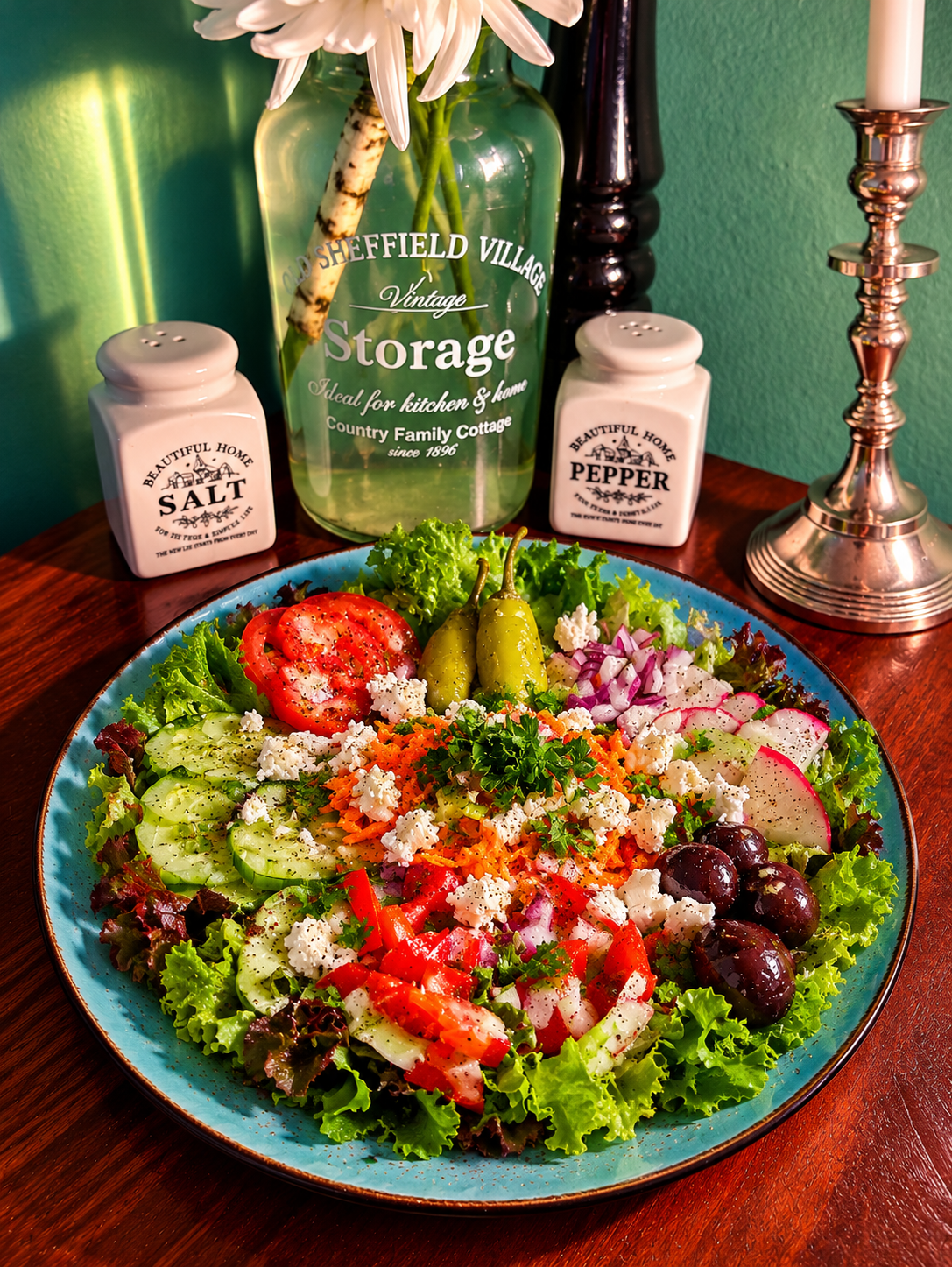
Bulgarian Shopska Salad – Vegan Shopska Salata with Creamy Zero-Waste Cucumber Dressing
You may also like
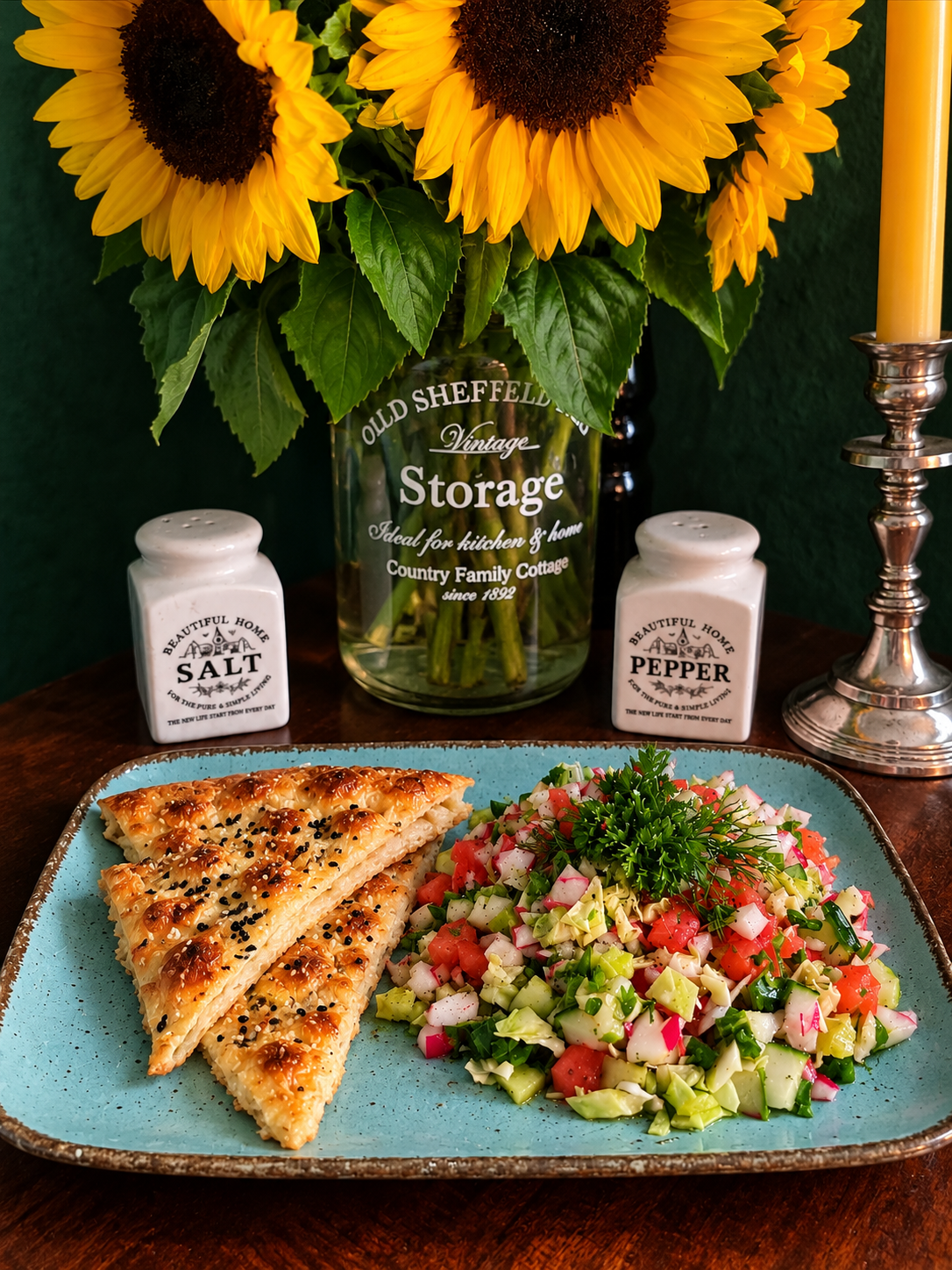
Turkmen Chopped Summer Salad – Fresh Vegetable Salad with Dill & Lemon Dressing
You may also like