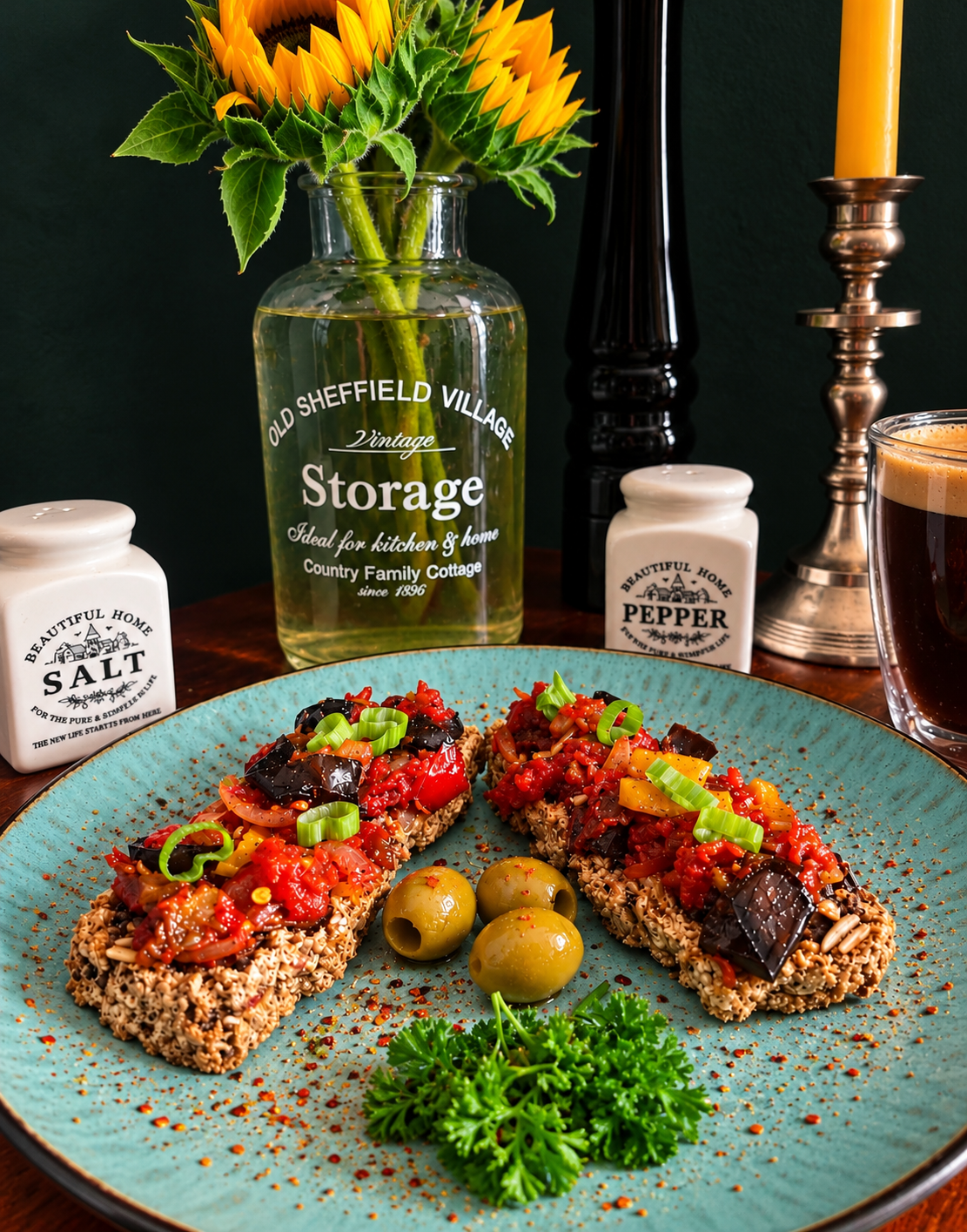
From my kitchen to your plate.
North Macedonia – A Culinary Crossroads in the BalkansNorth Macedonia is a landlocked country in southeastern Europe whose cuisine reflects centuries of Balkan, Mediterranean and Ottoman influences. Fresh vegetables, peppers, tomatoes, beans, herbs and rustic breads are essential parts of its culinary traditions. Roasted vegetable preparations, savory spreads and small dishes known as meze are particularly popular. Seasonal ingredients and traditional preservation methods play an important role, especially when preparing vegetables for the colder months.
Pindjur – A Rustic Roasted Vegetable SpecialtyPindjur is a traditional North Macedonian vegetable relish typically prepared with roasted peppers, tomatoes, garlic and, in many variations, eggplant. Unlike the better-known Ajvar, Pindjur generally has a chunkier consistency and a particularly juicy tomato character. The vegetables are chopped or crushed rather than blended into a completely smooth purée. Pindjur is naturally vegan when prepared without animal-derived additions and can be enjoyed as a spread, side dish or part of a meze selection. It is sometimes served with traditional white brined cheese, but my Via Veggie Vegan version skips the cheese entirely. Instead, I serve the rich, aromatic vegetable relish generously on crispy roasted farmhouse bread, accompanied by green olives and fresh parsley.
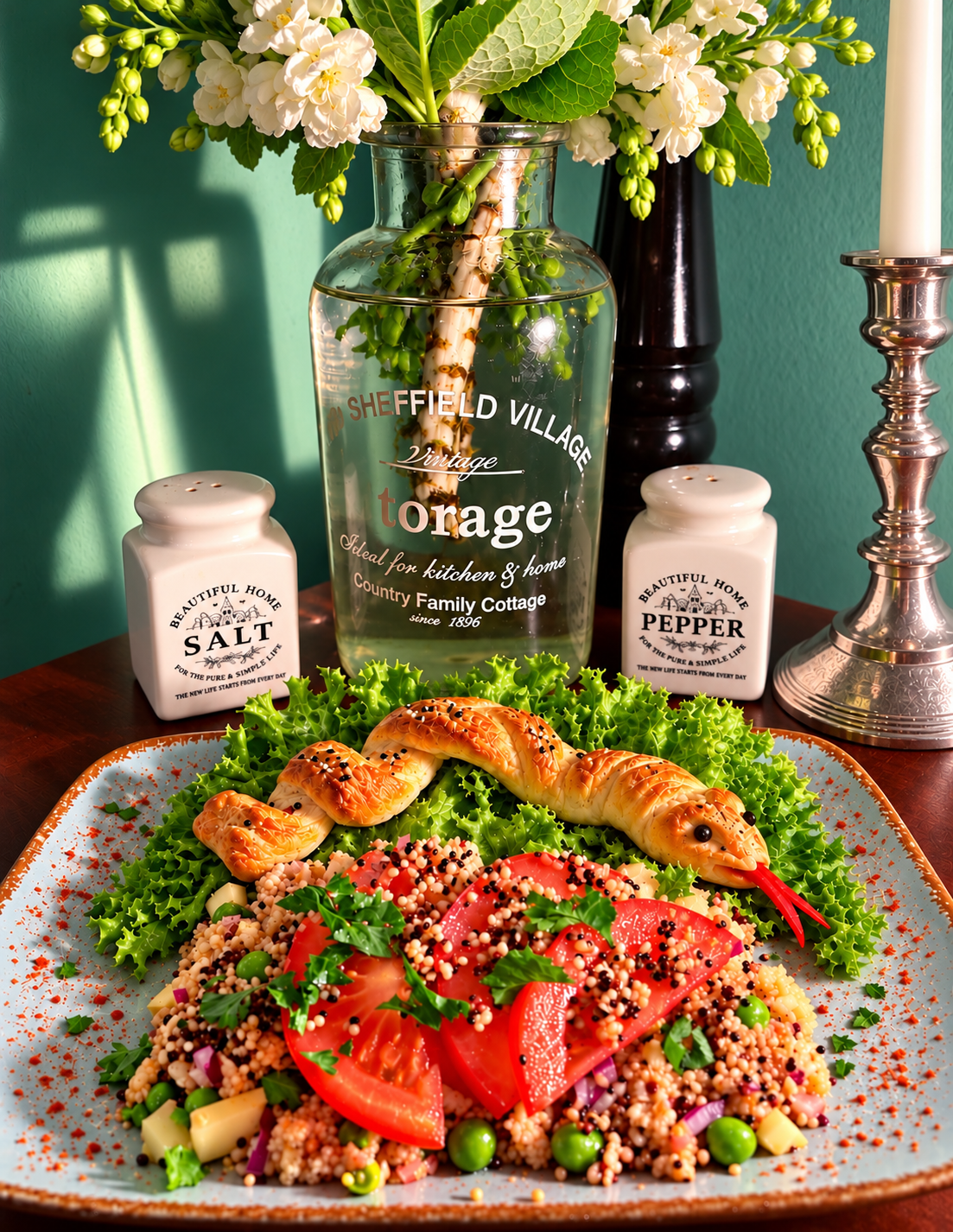
From my kitchen to your plate.
Côte d’Ivoire – A Taste of West Africa
Located along the Atlantic coast of West Africa, Côte d’Ivoire, also known as Ivory Coast, is a country of vibrant markets, tropical landscapes and wonderfully diverse culinary traditions. From the bustling streets of Abidjan to the historic coastal town of Grand-Bassam, food plays an important role in everyday life and social gatherings. Cassava, plantains, rice, fresh vegetables, fish and aromatic seasonings feature prominently in Ivorian cooking. One particularly distinctive specialty is attiéké, a fermented cassava product with a light, couscous-like texture. Often served with fresh vegetables and fish, it reflects the coastal food culture that inspired my colorful plant-based interpretation.
What Is Salade Bassamoise?
Salade Bassamoise takes its name from Grand-Bassam, a historic coastal town in southeastern Côte d’Ivoire. The dish is associated with fresh, colorful ingredients and the refreshing flavors of Ivorian coastal cuisine. My version takes inspiration from salads combining attiéké, vegetables and fish, but gives the idea a completely plant-based twist. Instead of traditional cassava-based attiéké, I use colorful wheat couscous, combined with vegan tuna, cucumber, green pointed pepper, red onion, green peas and plenty of fresh herbs. Olive oil and lime juice bring everything together in a bright, refreshing dressing. And because Halloween is just around the corner, a homemade snake made from leftover pizza dough has slithered onto the plate! It's a playful, zero-waste adaptation rather than an authentic traditional preparation.
