
Germany – A Country of Regional Food Traditions
Germany's culinary heritage extends far beyond sausages and sauerkraut. Every region has its own specialties, and Thuringia in central Germany is particularly associated with hearty home cooking. During the years of the German Democratic Republic (DDR), many traditional regional dishes continued to be prepared in everyday kitchens, often with simple, affordable ingredients.
What Is Thüringer Malzbiersuppe?
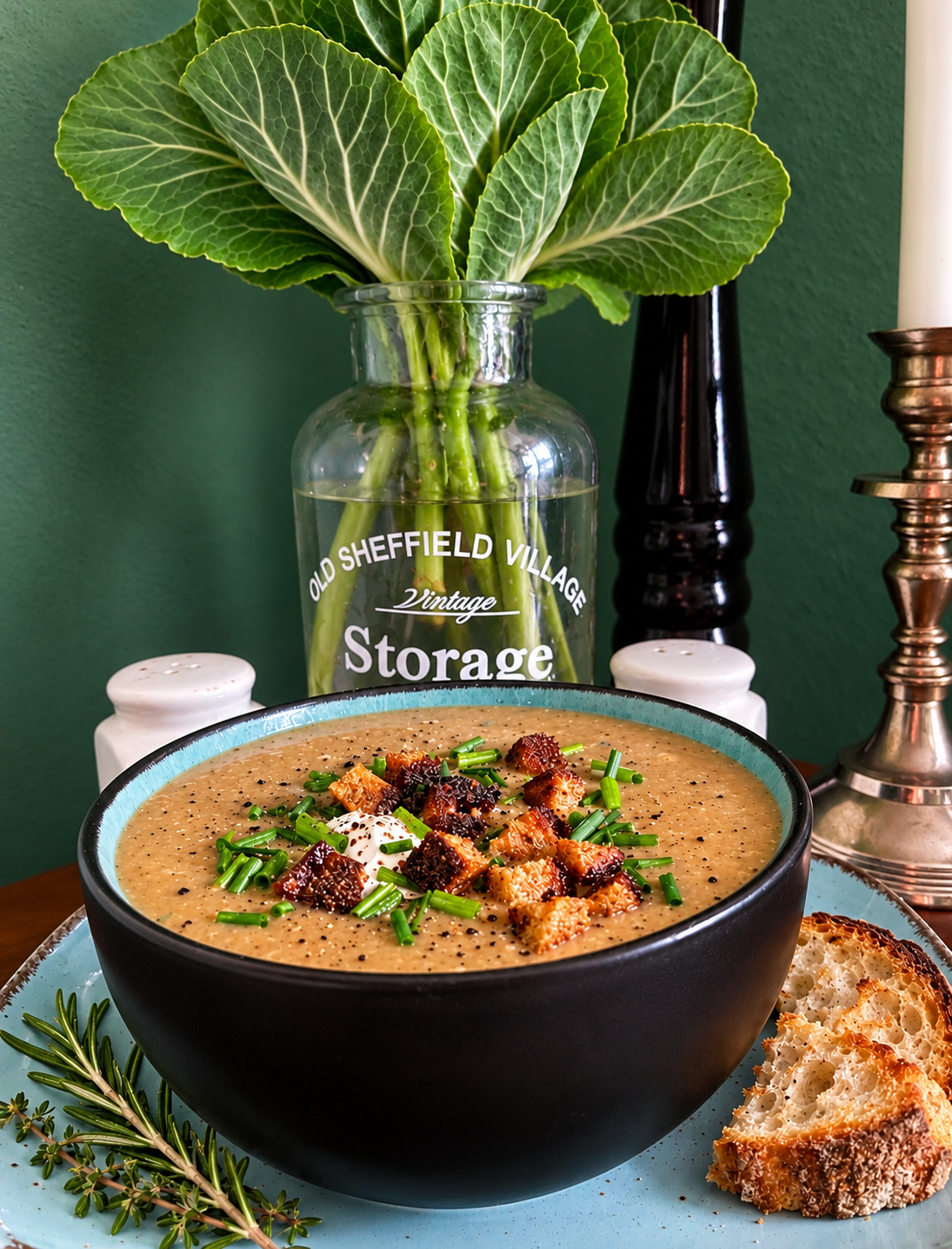
Beer soups have existed in German cooking for centuries, long before the DDR. This Thuringian-inspired malt soup draws on that tradition, using sweet malt flavors, bread and savory seasonings. While malt beer is commonly used for this type of preparation, my version uses Karamalz, an alcohol-free malt drink, because alcohol has no place in my cooking. Rosemary, plant-based cream and crispy croutons complete my vegan interpretation.
▣ Ingredients (2 servings)
- 300 ml Karamalz
- 250 ml vegetable broth
- 1 onion
- 2 tbsp vegan butter
- 1 tbsp wheat flour
- 2 slices grey bread
- 1 srig rosemary
- 1 pinch nutmeg
- 1 handful fresh chives
- to taste salt & pepper
♨ Preparation
- Sauté the Onion
Peel and finely dice the onion. Heat 1 tablespoon of vegan butter in a saucepan over medium heat. Add the onion and sauté gently for approximately 3–4 minutes until soft and translucent. Avoid browning the onion too much, as the soup should retain its mild, balanced flavor. - Prepare the Roux
Sprinkle the wheat flour over the softened onion. Stir continuously for approximately 30–60 seconds until the flour is evenly combined with the butter and onion. Allow the flour to cook briefly without developing a dark color. - Add the Alcohol-Free Malt Drink
Gradually pour the Karamalz into the saucepan while whisking continuously. Stir thoroughly to dissolve the roux and prevent lumps. Bring the mixture briefly to a gentle boil. - Build the Soup
Add the vegetable broth, vegan cooking cream and fresh rosemary sprig. Tear one slice of grey bread into small pieces and add it directly to the soup. Season with freshly ground black pepper and a generous pinch of freshly grated nutmeg. Reduce the heat and simmer gently for approximately 10 minutes, stirring occasionally. Allow the rosemary to infuse the soup as it cooks. - Prepare the Crispy Croutons
Cut the remaining slice of grey bread into small cubes. Heat the remaining tablespoon of vegan butter in a frying pan over medium heat. Add the bread cubes and fry until golden brown and crisp on all sides. Remove from the heat and set aside until serving. - Remove the Rosemary and Blend
Remove the rosemary sprig completely. Take the saucepan off the heat and blend the soup with an immersion blender until smooth and creamy. The bread and roux create a rich, velvety consistency without the need for additional thickening agents. - Adjust the Seasoning
Taste the soup before adding salt, as the vegetable broth may already contain enough seasoning. Add plenty of freshly ground black pepper and adjust the nutmeg if necessary. Gently reheat the soup if needed, without allowing it to boil vigorously. - Garnish and Serve
Wash the fresh chives and cut them into fine rings. Divide the hot malt beer soup between two bowls. Scatter the crispy croutons over the soup and finish generously with freshly chopped chives. Serve immediately so the croutons retain their crunchy texture.
Food Story
A German Reunion – With a Slight Change of Plans
I have a wonderful longtime colleague and friend who comes from eastern Germany. And when Germany’s turn came around on my culinary journey, especially with German Unity Day in mind, she had a very specific request: Eier in Senfsoße – eggs in mustard sauce. A proper East German comfort food favorite!
When Vegan Eggs Refuse to Cooperate
There was just one little problem: my vegan egg recipe still needs some fine-tuning. And since I wasn’t about to serve my friend a less-than-perfect vegan egg, the mustard sauce had to wait. Instead, I decided to explore another dish associated with eastern German home cooking: Thüringer Malzbiersuppe.
One Slice for the Soup, One for the Crunch
Of course, I gave it the Via Veggie Vegan treatment. No dairy, no alcoholic beer – just Karamalz, plant-based cream, rosemary and a clever little bread trick. One slice disappears into the soup to make it creamy, while the other returns as golden croutons. Nothing wasted, everything delicious. And the Eier in Senfsoße? Don’t worry. They’re still on the culinary to-do list. I just need to convince my vegan eggs to cooperate first!
♨ Nutrition per serving
Nutritional values are approximate and may vary depending on the ingredients and products used.
Good to Know
Beer Soup – A Forgotten Piece of German Food History
Beer soups were once familiar in many parts of Germany and Central Europe. Historically, beer was used in both sweet and savory preparations, sometimes combined with bread, flour, milk, eggs or warming spices. Depending on the region and household, beer soup could be a simple everyday meal rather than the unusual specialty it might seem today. The term therefore describes a family of recipes rather than one fixed preparation. This vegan version draws inspiration from those traditions while using a non-alcoholic malt drink and modern plant-based ingredients.
Thuringia, the DDR and Regional Cooking Traditions
Thuringia is located in central Germany and became part of the German Democratic Republic after Germany's division. Regional food traditions continued throughout the DDR period, often shaped by ingredient availability, affordability and practical home cooking. However, beer soups existed long before the DDR was founded in 1949. It would therefore be historically misleading to describe beer soup itself as a DDR invention. My Thüringer Malzbiersuppe is a modern vegan interpretation of an older German cooking tradition.
What Is Karamalz?
Karamalz is a German malt beverage made with ingredients such as water, barley malt and hops. It has a distinctive roasted, caramel-like sweetness that makes it suitable for recipes where malt flavour is desired without the pronounced bitterness of conventional beer. Because Karamalz is considerably sweeter than many traditional beers, savoury ingredients such as onion, rosemary, vegetable stock and black pepper are particularly important for creating a balanced soup.
Is Karamalz Completely Alcohol-Free?
Karamalz is marketed as an alcohol-free malt drink, but the designation alcohol-free does not necessarily guarantee an absolute alcohol content of 0.0%. Depending on the product and applicable labelling rules, trace amounts may be possible. Anyone who wishes to avoid even the smallest traces of alcohol should check the manufacturer's current product information and choose a beverage explicitly confirmed as 0.0% alcohol. Heating a beverage does not reliably remove all alcohol.
Why Does Malt Taste Sweet?
Malting begins with cereal grains, most commonly barley, which are allowed to germinate under controlled conditions. This process develops enzymes that can convert starch into smaller carbohydrates during brewing. Sweet malt beverages contain sugars that contribute to their characteristic flavour, while roasted malt compounds create toasted, caramel-like and sometimes slightly bitter notes. The natural sweetness of Karamalz means that no additional sugar is necessary in this recipe.
Barley Malt, Bread and Gluten
Karamalz is generally made with barley malt, which contains gluten. The wheat flour and conventional grey bread used in this recipe also contain gluten. Therefore, Thüringer Malzbiersuppe prepared with these ingredients is not suitable for people with coeliac disease. Replacing only the flour or bread would not make the finished soup gluten-free. All gluten-containing ingredients would need to be replaced with suitable certified gluten-free alternatives.
Why Bread and Roux Make the Soup Creamy
This recipe combines two traditional thickening techniques. A roux is prepared by cooking flour with vegan butter alternative before gradually adding liquid. As the soup heats, the flour's starch granules absorb water and swell, creating a thicker consistency. The bread added during simmering also absorbs liquid and softens. When blended, it contributes additional body and a smooth, velvety texture. Together, these ingredients create a creamy soup without relying entirely on plant-based cream.
Rosemary, Nutmeg and Fresh Chives – Aromatic Balance
Rosemary contributes a distinctive pine-like, slightly resinous fragrance that helps balance the sweetness of the malt drink. A small pinch of freshly grated nutmeg adds warmth, while black pepper provides gentle savoury depth. Remove the woody rosemary sprig before blending to prevent fibrous pieces in the soup. Fresh chives, added just before serving, contribute a mild onion flavour, bright green colour and a refreshing contrast to the rich, creamy base.
Plant-Based Cream, Unsaturated Fats and Cholesterol
Plant-based cooking creams differ considerably in their nutritional composition. Oat-based, soy-based and coconut-based alternatives may contain different amounts of fat, protein and saturated fatty acids. Some vegan butter alternatives are also rich in saturated fat, particularly when made with coconut or palm fat. Replacing some saturated fats with unsaturated fats can help lower LDL cholesterol as part of a balanced diet. Checking product labels is therefore useful when choosing plant-based cream and vegan butter alternatives.
Zero Waste – Two Jobs for One Loaf
This recipe demonstrates how one simple ingredient can serve two delicious purposes. One slice of grey bread thickens the soup, while another becomes golden, crispy croutons. Slightly stale bread works particularly well, provided it is still safe to eat and shows no signs of mould. Mouldy bread should always be discarded rather than trimmed. Leftover soup can be refrigerated promptly and gently reheated with a splash of vegetable stock, while croutons should be stored separately to preserve their crunch. Zero Waste, Full Flavor!
You may also like
♡
You may also like
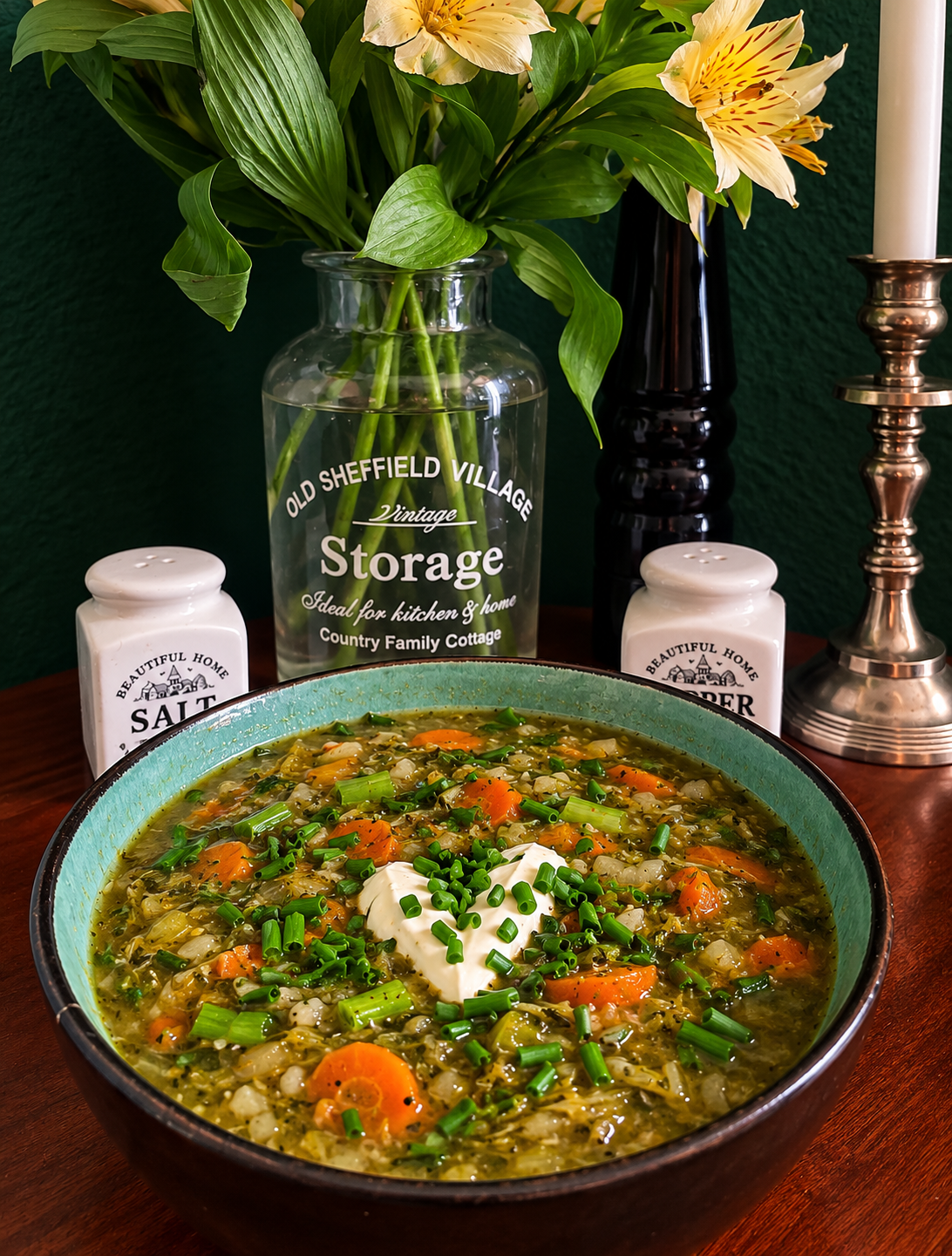
Romanian Leek Soup – Vegan Ciorbă de Praz de Post with Fresh Chives
You may also like
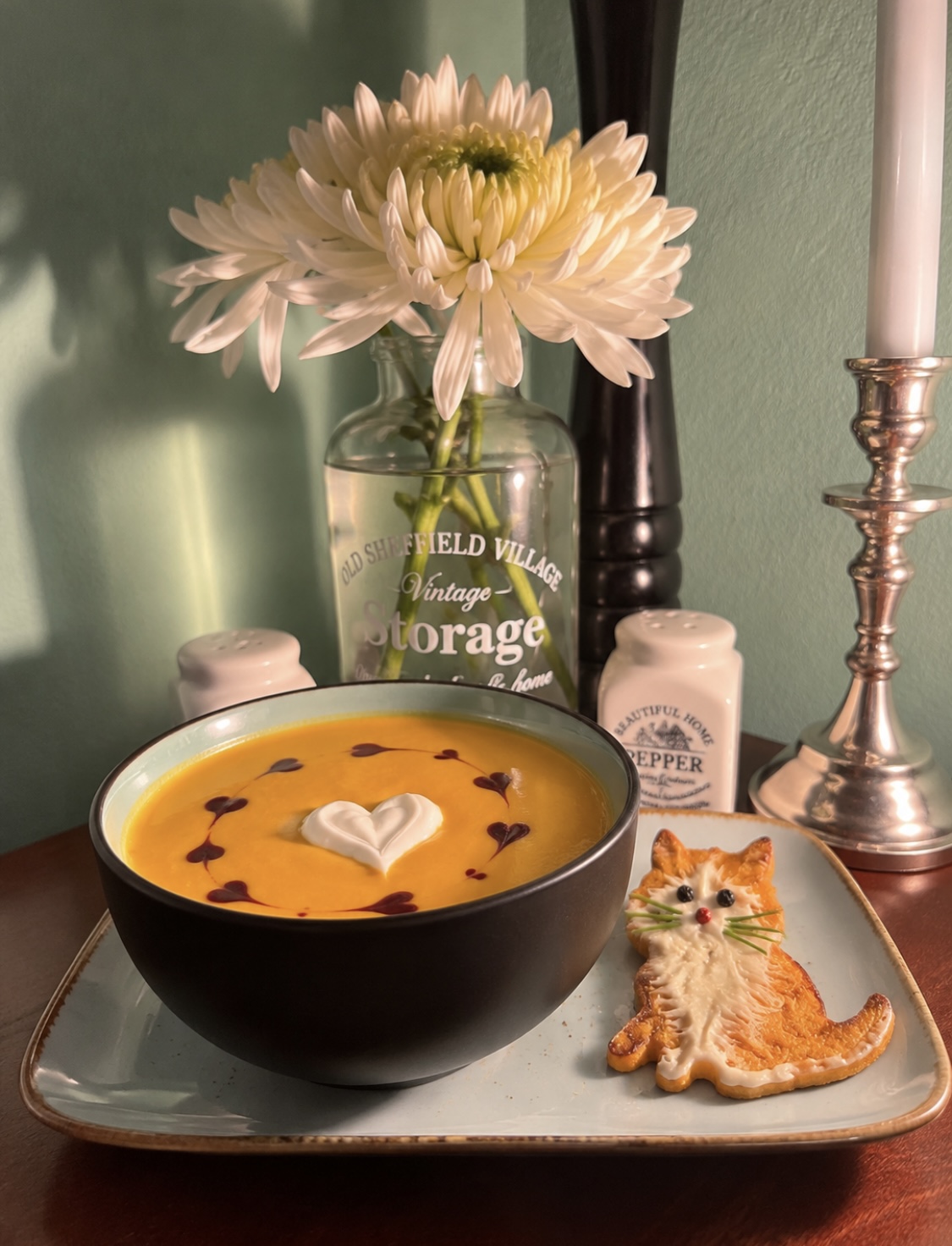
Smurfy’s Magic Pumpkin Orange Soup – Roasted Hokkaido & Madras Curry
You may also like