
Scotland – Hearty Comfort Food from the Scottish Borders
Scotland is famous for its rugged landscapes, rich traditions and hearty cuisine. Root vegetables, potatoes and cabbage have long played an important role in Scottish home cooking, particularly in the Scottish Borders, where simple, warming dishes are a treasured part of culinary heritage.
What Is Rumbledethumps?
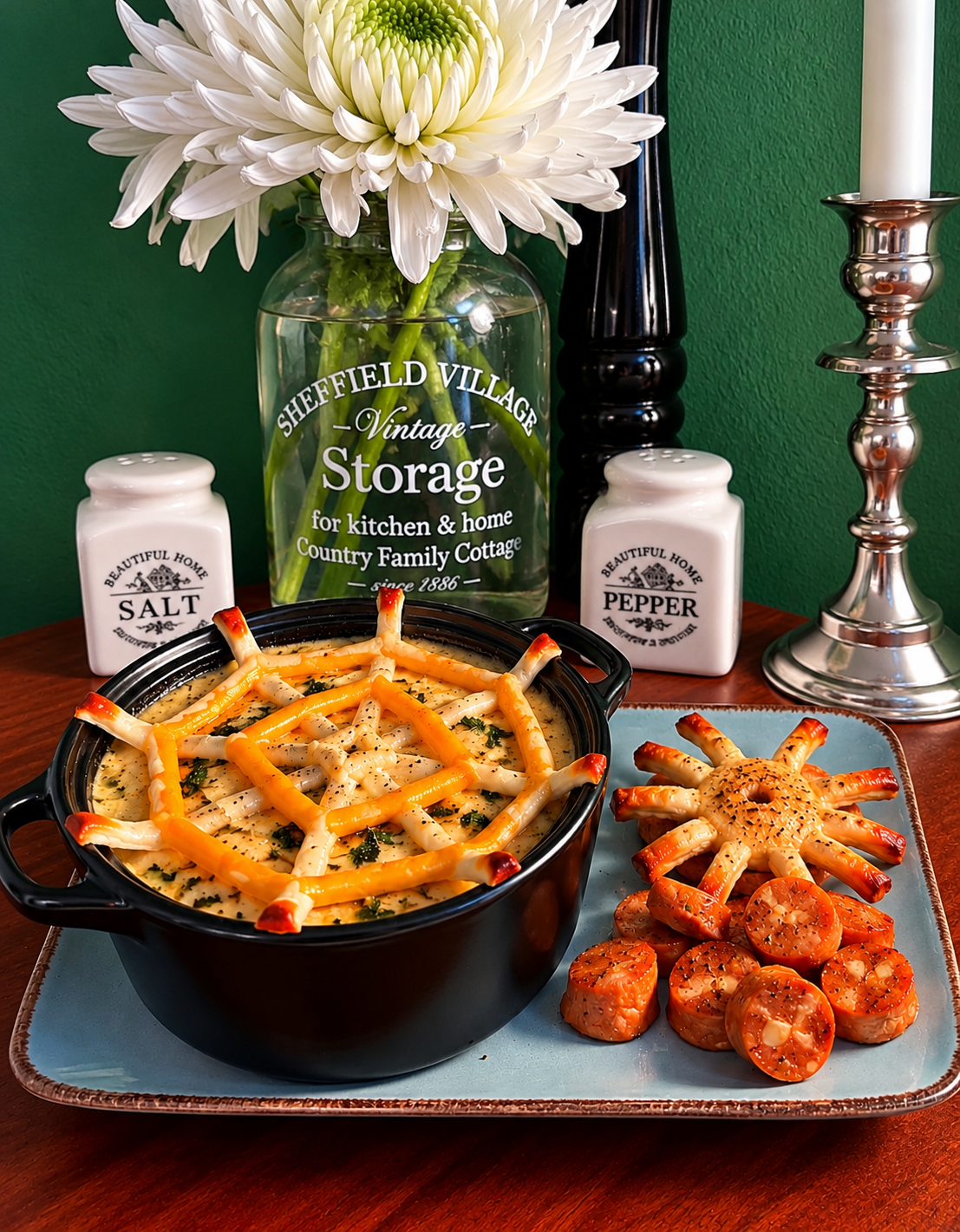
Rumbledethumps is a traditional Scottish dish made from mashed potatoes, cabbage and onions, usually finished with a generous layer of cheese. Often compared to Irish Colcannon or English Bubble and Squeak, it can be served as a vegetarian main course or as a side dish alongside hearty meat dishes and sausages. This Halloween-inspired vegan version adds Brussels sprouts, layers of savoy cabbage and a playful spiderweb topping.
▣ Ingredients (2 servings)
- 400 g potatoes
- 150 g savoy cabbage
- 10 Brussels sprouts
- 1 onion
- 1 clove garlic
- 30 g vegan cheddar cheese slices
- 30 g mild, light-coloured plant-based cheese slices
- 2 vegan cheese sausages
- 40 g vegan butter alternative
- 1 pinch ground nutmeg
- a small amount of leftover pizza dough
- 300 ml homemade vegetable broth, enough to cover the potatoes and Brussels sprouts
- 1 splash oat drink, plus a little extra for brushing
- to taste salt & freshly ground black pepper
♨ Preparation
- Prepare the Vegetables
Peel the potatoes and cut them into small, even cubes. Wash the Brussels sprouts, trim the ends and cut them into quarters. Separate and wash the savoy cabbage leaves. Finely dice the onion and chop the garlic. - Cook the Potatoes and Brussels Sprouts
Bring the homemade vegetable broth to a boil. Add the diced potatoes and quartered Brussels sprouts and cook for approximately 10 minutes, until tender.
About 3 minutes before the end of cooking, add the whole savoy cabbage leaves to the broth. Carefully remove the softened cabbage leaves and set them aside. - Sauté the Onion and Garlic
Meanwhile, melt approximately 30 g of the vegan butter alternative in a frying pan. Gently sauté the onion until translucent, then add the garlic and cook briefly until fragrant. - Prepare the Potato Mixture
Drain the potatoes and Brussels sprouts thoroughly. Add a splash of oat drink, the nutritional yeast and the sautéed onion and garlic.
Mash everything together until creamy but still slightly textured. Season with salt, freshly ground black pepper and nutmeg. - Layer the Rumbledethumps
Lightly grease a small ovenproof casserole dish.
Place two softened savoy cabbage leaves on the bottom, followed by a layer of the potato and Brussels sprout mixture.
Continue alternating cabbage leaves and potato mixture, just like assembling a lasagne.
Finish with a generous layer of the potato mixture. - Create the Cheese Spiderweb
Cut both varieties of plant-based cheese slices into thin, evenly sized strips.
Arrange several strips across the surface of the gratin to form the main spokes of a spiderweb.
Connect the spokes with shorter cheese strips, working from the centre towards the outer edges to create the web pattern.
Alternate the cheddar and lighter cheese strips for a beautiful two-tone effect. - Bake the Rumbledethumps
Preheat the oven to 200°C (top and bottom heat).
Place the casserole dish in the oven and bake for approximately 15–20 minutes, until the filling is heated through and the cheese has softened and lightly browned.
Keep a close eye on the cheese, as plant-based varieties melt and brown differently from dairy cheese.
8. Prepare the Vegan Cheese Sausages
While the gratin is baking, cut the two vegan cheese sausages into thin slices.
Heat the remaining vegan butter alternative in a frying pan and gently fry the slices on both sides until lightly browned and crispy around the edges.
The plant-based cheese inside should soften slightly.
Transfer the slices to kitchen paper and gently blot away any excess fat.
Season with freshly ground black pepper if desired. - Make the Crispy Pizza Dough Spider
Roll out a small piece of leftover pizza dough.
Using a spider-shaped cookie cutter, cut out a spider. If necessary, carefully separate the legs with a small knife to create more definition.
For gently curved legs, loosely shape them around a thin oven-safe stainless-steel skewer. Remove the skewer before baking if the dough holds its shape, or leave it in place during baking if needed.
Brush the spider lightly with oat drink.
Bake on a lined baking tray at 200°C until golden brown and crispy, approximately 8–12 minutes, depending on thickness.
Allow to cool slightly before handling. - Assemble the Halloween Plate
Place the hot Rumbledethumps casserole dish on a serving plate.
Arrange the pan-fried vegan cheese sausage slices alongside it.
Position the crispy pizza dough spider towards the back of the plate, with its front legs resting naturally over the sausage slices.
Serve immediately while the gratin is hot and the cheese is beautifully softened.
Food Story
From Shepherd’s Pie to Scottish Rumbledethumps
My original plan was to make a classic Shepherd’s Pie. But while looking for vegan versions, I kept stumbling across recipes containing mushrooms. And mushrooms are absolutely off-limits in my kitchen! Why? Because that’s where the Smurfs live, obviously. I certainly wouldn’t want to make Papa Smurf homeless, let alone destroy an entire Smurf village just for dinner! So I continued my search for a comforting British classic and eventually discovered Scottish Rumbledethumps. What a wonderfully ridiculous name! Potatoes, cabbage, onions and cheese? No mushrooms, no endangered Smurfs and plenty of comfort food. Scotland had officially saved dinner!
When a Cheese Topping Becomes a Spiderweb
As soon as I discovered that traditional Rumbledethumps is often finished with a generous layer of cheese, my Halloween imagination took over. Why settle for an ordinary golden crust when you can turn the whole thing into a spooky spiderweb? I layered tender savoy cabbage leaves with creamy mashed potatoes, Brussels sprouts, garlic and onions, almost like a rustic Scottish lasagna. Then came the delicate operation: cutting vegan Cheddar and lighter plant-based cheese into thin strips and arranging them into a two-tone spiderweb. A little patience, a steady hand and a few questionable artistic decisions later, my innocent Scottish potato gratin had transformed into a proper Halloween creation!
A Little Scandinavian Rebellion and One Crispy Spider
Traditionally, Rumbledethumps can be served alongside hearty meat dishes or sausages. But apparently, sticking to one country wasn’t adventurous enough for me. So I invited a little Scandinavian rebellion to the party and paired my Scottish gratin with Swedish-style vegan cheese sausages, sliced and pan-fried until beautifully golden. And because a cheese spiderweb without an actual spider would be a missed opportunity, I rescued some leftover pizza dough and turned it into a crispy eight-legged dinner guest. Suddenly, Scotland and Sweden were sharing a plate, Halloween had taken over the kitchen, and Papa Smurf could sleep peacefully in his mushroom house. No Smurfs were harmed in the making of this dish. The spider, however, didn’t survive dinner!
♨ Nutrition per serving
Nutritional values are approximate and may vary depending on the ingredients and products used.
Good to Know
What Is Scottish Rumbledethumps?
Rumbledethumps is a traditional Scottish dish particularly associated with the Scottish Borders. It combines mashed potatoes, cooked cabbage and onions, often with butter and a generous layer of cheese. The mixture is typically baked until hot and golden. Originally a practical way to turn simple ingredients and leftovers into a hearty meal, Rumbledethumps remains a comforting example of traditional Scottish home cooking.
Where Does the Name Rumbledethumps Come From?
The wonderfully unusual name Rumbledethumps is associated with the Scottish Borders, although its exact etymology is uncertain. It is often explained as an evocative reference to the sounds of potatoes and cabbage being mashed, mixed or knocked around in a pot. Whether or not that explanation captures its true historical origin, the name perfectly suits such a rustic, comforting dish.
Rumbledethumps, Colcannon and Bubble and Squeak
These three dishes share a love of potatoes and cabbage but belong to different culinary traditions. Scottish Rumbledethumps is generally mixed and baked, often with cheese on top. Irish Colcannon combines mashed potatoes with cabbage or kale and traditionally includes butter or milk. English Bubble and Squeak is commonly made by pan-frying leftover potatoes and vegetables until a golden crust develops. All three demonstrate how humble ingredients can become delicious comfort food.
Why Are Potatoes and Cabbage So Important in Traditional Scottish Cooking?
Potatoes and cabbage became important ingredients in Scottish home cooking because they are relatively affordable, filling and well suited to cooler growing conditions. Both can also be stored for extended periods under appropriate conditions. Dishes such as Rumbledethumps reflect a tradition of making satisfying meals from ingredients that were readily available rather than relying on expensive or elaborate preparations.
Is This Halloween Version Traditionally Scottish?
The foundation of this recipe is inspired by traditional Scottish Rumbledethumps, but the layered presentation, Brussels sprouts, vegan cheese spiderweb, Swedish-style vegan cheese sausages and pizza dough spider are my own creative additions. Classic Rumbledethumps is usually mixed together rather than assembled like lasagna. This version celebrates Scottish comfort food while giving it a playful Via Veggie Vegan Halloween makeover.
Why Use Savoy Cabbage?
Savoy cabbage has distinctive crinkled leaves and a relatively mild, slightly sweet flavor. Its leaves become tender and flexible when briefly cooked, making them particularly suitable for layering. In this recipe, whole savoy cabbage leaves separate the creamy potato mixture and create a structure reminiscent of lasagna. Their gentle flavor complements the stronger notes of garlic, nutmeg and plant-based cheese.
What Makes Savoy Cabbage Nutritious?
Savoy cabbage belongs to the Brassica family, alongside broccoli, cauliflower, kale and Brussels sprouts. It provides dietary fiber, vitamin C, vitamin K and folate. Vitamin C contributes to normal immune function, while vitamin K plays a role in normal blood clotting. Folate supports normal cell division, and fiber contributes to digestive health. Cooking can reduce some heat-sensitive nutrients, but savoy cabbage remains a valuable addition to a varied plant-based diet.
Brussels Sprouts – Small but Nutrient-Dense
Brussels sprouts are miniature cabbage-like buds belonging to the same botanical species as several other familiar cabbage vegetables. They provide fiber, vitamin C, vitamin K and folate. Their slightly nutty, earthy flavor adds depth to the mashed potato mixture. Quartering the sprouts helps them cook more evenly and allows them to blend into the filling without disappearing completely.
Why Do Brussels Sprouts Sometimes Taste Bitter?
Brussels sprouts contain naturally occurring compounds, including glucosinolates, that contribute to their characteristic flavor. Perceived bitterness also depends on variety, preparation and individual taste sensitivity. Modern cultivars are often less bitter than some older varieties. Cooking the sprouts until tender and combining them with creamy potatoes, onions and nutmeg helps balance their stronger flavor.
What Are Glucosinolates?
Glucosinolates are naturally occurring sulfur-containing compounds found in cruciferous vegetables such as cabbage, Brussels sprouts and broccoli. When plant tissues are damaged by chopping or chewing, these compounds can be converted into various breakdown products. Researchers are investigating their biological effects, but laboratory findings do not mean that eating a particular cabbage dish prevents or treats disease. Including a variety of cruciferous vegetables is a sensible part of a balanced diet.
Why Cook Potatoes and Brussels Sprouts Together?
Small potato cubes and quartered Brussels sprouts can cook in approximately the same amount of time, making it practical to prepare them in one pot. The potatoes become soft enough to mash, while the Brussels sprouts retain some texture. Cutting the ingredients into relatively even pieces encourages consistent cooking. Always check tenderness with a fork because cooking time depends on size and variety.
Why Use Vegetable Broth Instead of Water?
Cooking the potatoes and Brussels sprouts in vegetable broth adds savory flavor from the beginning. Depending on its ingredients, broth may contain aromas from onions, carrots, celery, herbs and spices. Homemade vegetable broth also allows better control over salt content. Because some broth is absorbed during cooking, its seasoning contributes directly to the finished gratin.
Why Should the Vegetables Be Drained Thoroughly?
Excess cooking liquid can make mashed potatoes watery and prevent the casserole from holding its shape. Thoroughly draining the potatoes and Brussels sprouts creates a thicker, creamier filling. The blanched savoy cabbage leaves should also be drained and gently patted dry before layering. This helps prevent moisture from collecting at the bottom of the baking dish.
Why Mash the Potatoes While They Are Warm?
Warm cooked potatoes are generally easier to mash because their starch has gelatinized and the flesh has softened. However, excessive mixing can rupture starch-rich cells and release more starch, creating a sticky or gluey texture. A potato masher or fork is therefore preferable to a high-speed blender. For Rumbledethumps, a slightly rustic texture works particularly well.
Why Add Nutmeg to Potatoes and Cabbage?
Nutmeg has a warm, aromatic flavor that pairs beautifully with creamy potatoes and cooked cabbage. It is commonly used in European mashed potato dishes, gratins and creamy vegetable preparations. A small pinch adds depth without dominating the other ingredients. Freshly grated nutmeg generally has a more pronounced aroma than pre-ground varieties.
Nutritional Yeast – A Savory Vegan Kitchen Essential
Nutritional yeast is an inactive yeast product with a savory, slightly nutty flavor often described as cheese-like. It adds depth to mashed potatoes, sauces and casseroles. Nutritional yeast naturally provides protein and several B vitamins, although meaningful amounts of vitamin B12 are present only in fortified products. Check the packaging if you rely on nutritional yeast as a source of vitamin B12.
Why Use Two Different Vegan Cheese Colors?
The two-tone cheese spiderweb is primarily a visual Halloween feature. Light-colored plant-based cheese creates contrast against the orange-yellow vegan Cheddar alternative, making the individual web strands easier to recognize. Using thin, evenly sized strips helps create a more delicate pattern. The exact appearance after baking depends on how each cheese alternative melts and browns.
Why Does Vegan Cheese Melt Differently?
Traditional dairy cheese contains milk proteins, particularly casein, that contribute to its characteristic melting and stretching behavior. Vegan cheese alternatives may be made from coconut oil, starches, nuts, soy or other plant-based ingredients. Their melting properties vary considerably depending on the formulation. Some become soft and creamy, while others retain their shape or brown quickly. Choosing products designed for melting helps produce a more appealing gratin topping.
How Do You Create a Cheese Spiderweb?
Start by arranging long, thin cheese strips across the surface of the casserole to create the main spokes of the web. Add shorter connecting strips between them, working from the center outward. Alternating light and orange cheese makes the pattern more visible. Leave small spaces between the strips so the web remains recognizable as the cheese softens during baking.
Why Does Cheese Brown in the Oven?
Browning during baking can involve several reactions, including the Maillard reaction, which occurs between certain sugars and amino compounds under heat. The ingredients in plant-based cheese alternatives vary, so not all products brown in the same way. Some simply soften or release oil, while others develop a golden surface. Keeping an eye on the gratin is particularly important when preserving a decorative spiderweb.
Why Bake Rumbledethumps After Cooking the Vegetables?
The potatoes, Brussels sprouts and savoy cabbage are already cooked before the casserole enters the oven. Baking therefore serves mainly to heat the assembled layers thoroughly, bring the flavors together and soften or brown the cheese topping. This two-stage preparation creates a comforting combination of tender vegetables, creamy potatoes and a lightly golden surface.
Vegan Cheese Sausages – What Are They Made From?
Vegan cheese sausages vary considerably between brands. Their bases may contain soy, wheat protein, pea protein or other plant ingredients, while the cheese-style filling may use starches, oils and plant proteins. They offer a convenient savory accompaniment to the vegetable gratin. Their protein, sodium and saturated-fat contents depend on the formulation, so checking the nutrition label can be useful.
Why Pan-Fry the Vegan Cheese Sausages?
Pan-frying develops a lightly browned exterior and creates a pleasant contrast with the creamy potato gratin. The heat also softens the plant-based cheese filling, depending on the product. Cooking over moderate heat helps prevent the sausage slices from burning before they are heated through. A small amount of vegan butter alternative is sufficient if the frying pan has a good non-stick surface.
Scotland Meets Sweden – A Culinary Crossover
The vegan cheese sausages in this recipe are inspired by Swedish-style products rather than traditional Scottish accompaniments. Pairing them with Rumbledethumps is a playful culinary crossover. While the potato and cabbage casserole celebrates Scottish comfort food, the sausages add another European influence. The result is a deliberately creative combination rather than a historically traditional Scottish meal.
Why Use Leftover Pizza Dough for Halloween Decorations?
Small pieces of leftover pizza dough can be transformed into edible decorations instead of being discarded. The dough can be rolled out and cut into spiders, bats, stars or other shapes. Baking produces a crisp, bread-like decoration that complements savory dishes. This makes pizza dough particularly useful for zero-waste Halloween food art.
How Do You Keep Pizza Dough Spider Legs from Breaking?
Very thin dough strips can become fragile after baking, especially when they form long spider legs. Keeping the legs relatively short and evenly shaped helps them remain intact. A gentle curve can make the spider appear more realistic, but tight twists may cause uneven baking or breakage. Allow the finished decoration to cool slightly before moving it, and handle it carefully when arranging the plate.
Why Does Pizza Dough Become Crispy?
As pizza dough bakes, moisture evaporates from its surface while the starches and proteins undergo structural changes. Browning reactions create additional roasted aromas and flavor. Thin pieces generally become crisp faster than thick ones because they lose moisture more quickly. This explains why the spider's delicate legs may brown before its thicker body. Watch closely during the final minutes of baking.
Zero Waste – Give Leftover Dough a Second Life
Small dough scraps are often too little for another pizza but perfect for edible decorations. They can be shaped into Halloween figures, breadsticks or small savory crackers. Using leftovers creatively reduces unnecessary kitchen waste and adds personality to a dish. The same approach works for other seasonal occasions, not just Halloween.
Can You Use the Savoy Cabbage Stems?
Yes. The thicker central ribs of savoy cabbage leaves are edible, although they require longer cooking than the tender leaf sections. Finely chop any trimmed stems and add them to soups, vegetable stock or sautéed dishes. Tender outer leaves can also be used rather than discarded. Only damaged or spoiled parts should be removed.
Potatoes and Resistant Starch
Potatoes contain starch that becomes gelatinized during cooking. When cooked potatoes are cooled, some of this starch can reorganize into resistant starch, which is less readily digested in the small intestine. Resistant starch can be fermented by gut bacteria and may contribute to dietary fiber intake. The amount formed depends on preparation and cooling conditions, and reheating does not necessarily eliminate all of it. This is an interesting nutritional property, although it does not make a potato gratin a low-carbohydrate dish.
What Makes This Dish Filling?
Potatoes provide carbohydrates, while cabbage and Brussels sprouts contribute fiber and additional volume. Vegan sausages and some plant-based cheese products may add protein, depending on their ingredients. The combination of carbohydrates, fat, protein and fiber makes this a substantial meal. The estimated nutritional values are approximately 670 calories and 24 g protein per serving, including the sausages and pizza dough spider.
Plant-Based Fats and Cholesterol
Plant-based foods naturally contain no dietary cholesterol, but their fat composition still matters. Some vegan cheeses and butter alternatives contain considerable amounts of saturated fat, particularly when made with coconut or palm-derived fats. Replacing saturated fats with unsaturated fats generally helps reduce LDL cholesterol. Olive oil, rapeseed oil, nuts and seeds are examples of foods that provide predominantly unsaturated fats.
LDL and HDL Cholesterol – Understanding the Difference
LDL particles carry cholesterol through the bloodstream, and elevated LDL cholesterol contributes to the development of atherosclerotic cardiovascular disease. HDL particles participate in transporting cholesterol toward the liver, but higher HDL cholesterol alone does not guarantee cardiovascular protection. Maintaining healthy LDL levels is particularly important. A balanced plant-based diet rich in vegetables, legumes, whole grains and unsaturated fats can support cardiovascular health.
Can Rumbledethumps Be Prepared in Advance?
Yes. The potatoes, Brussels sprouts and savoy cabbage can be cooked ahead, cooled promptly and stored in the refrigerator. The casserole can also be assembled in advance and kept covered and chilled until baking. For the best Halloween presentation, prepare the cheese spiderweb shortly before placing the dish in the oven. The pizza dough spider is best baked separately to keep it crisp.
How Should Leftovers Be Stored?
Allow leftovers to cool promptly and refrigerate them in covered containers. Use within approximately two to three days and reheat thoroughly until hot throughout. Because the casserole contains cooked potatoes and vegetables, avoid leaving it at room temperature for extended periods. Reheating in the oven can help restore some of the topping's texture, although the cheese spiderweb may lose its original shape.
Why This Dish Is Perfect for Halloween
Spooky Scottish Rumbledethumps combines traditional comfort food with playful edible decoration. The golden potato and cabbage gratin becomes a Halloween centerpiece thanks to its two-tone cheese spiderweb, while the crispy pizza dough spider adds a little theatrical charm. The pan-fried vegan cheese sausages make the plate even heartier. It is a celebration of Scottish culinary inspiration, zero-waste creativity and the joy of turning everyday ingredients into something unexpectedly spooky.
You may also like
♡
You may also like
Antarktik Polar Night Gratin – Vegan Potato & Savoy Cabbage Bake
You may also like
Vegan DDR Goldbroiler – Crispy Rice Paper Chicken
You may also like