Germany – Where the Broiler Became an East German Icon
Germany's regional food culture reflects a fascinating mix of traditions and historical influences. During the years of the German Democratic Republic (DDR), the word Broiler became an everyday term for roast chicken. Borrowed from English, where broiling refers to cooking with intense direct heat and broiler also describes a chicken raised for meat, the term became firmly established in East German food culture. Goldbroiler restaurants and takeaway counters helped turn the dish into a familiar DDR favorite.
What Is a Goldbroiler?
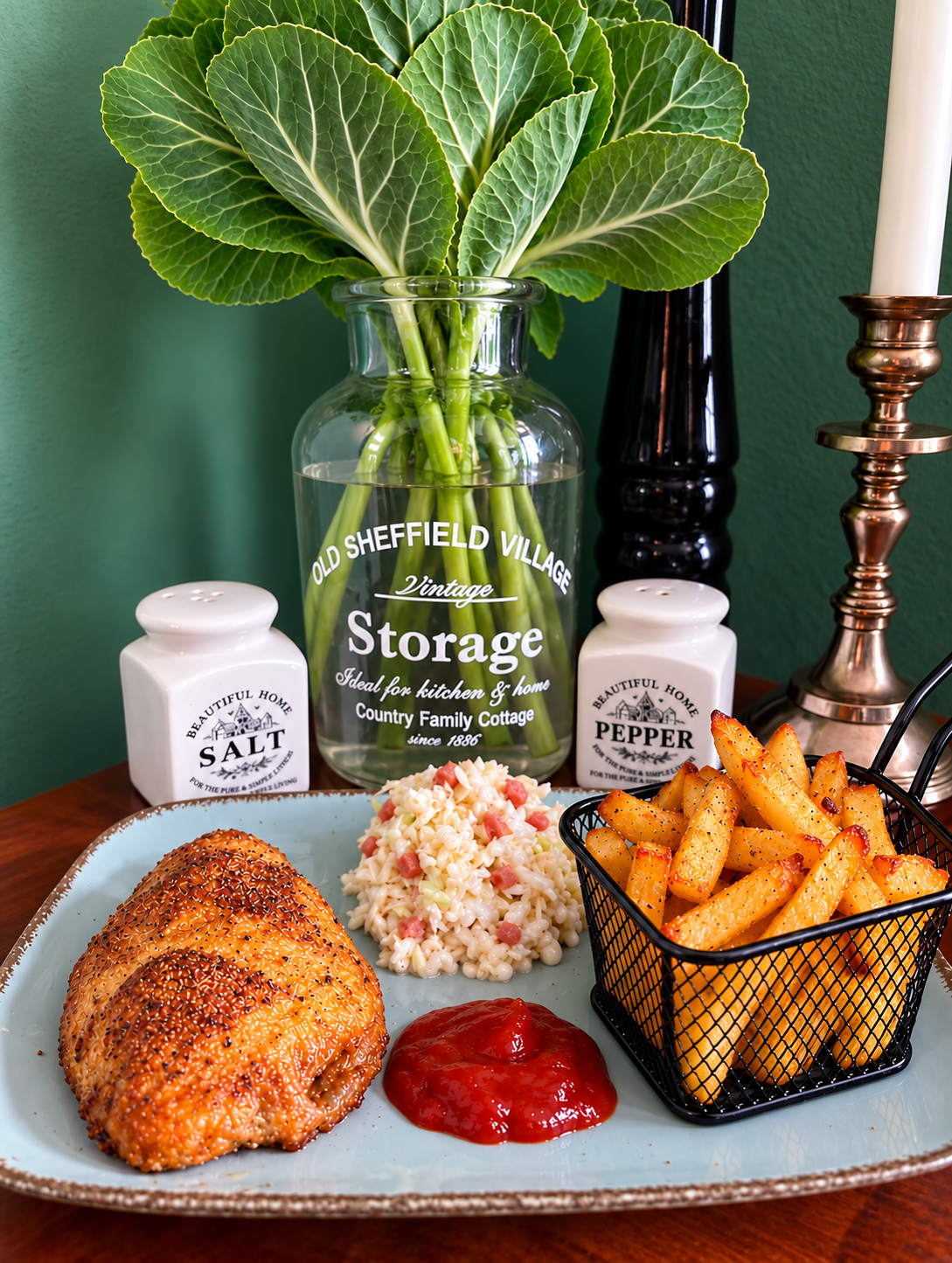
A Goldbroiler is a seasoned roast chicken with a characteristic golden-brown skin. Its popularity grew in the DDR during the 1960s, when poultry production and dedicated chicken restaurants expanded. My vegan version replaces the chicken with a plant-based alternative and recreates the crispy skin using seasoned rice paper. Homemade fries, white cabbage coleslaw and espresso ketchup complete this nostalgic East German-inspired meal.
▣ Ingredients (2 servings)
- 1 large piece vegan chicken-style product
- 2 sheets rice paper
- 3 tbsp neutral vegetable oil
- 1 tsp poultry-style seasoning
- 1/2 tsp nutritional yeast
- 1 pinch garlic powder
- 1 pinch onion powder
- 1 pinch smoked paprika
- 2 floury potatoes
- 1 tsp neutral vegetable oil
- 300 g white cabbage
- 50 g vegan bacon-style cubes
- 2 tbsp apple cider vinegar
- 1 tbsp rapeseed oil
- 1 tsp sugar
- 1 pinch ground caraway
- 1 tomato
- 1/2 tsp tomato paste
- 1 tsp sugar
- 2 tsp freshly brewed espresso
- to taste salt & pepper
♨ Preparation
- Prepare the White Cabbage Coleslaw
Remove any damaged outer leaves from the white cabbage and finely shred approximately 300 g. Place the cabbage in a mixing bowl. Add the apple cider vinegar, rapeseed oil, sugar and ground or lightly crushed caraway. Season with salt and freshly ground black pepper. Massage the cabbage gently with clean hands for a few minutes to soften its texture. Heat a small frying pan and cook the vegan bacon-style cubes until lightly golden and crisp. Allow them to cool slightly before folding them into the cabbage mixture. Set the coleslaw aside to allow the flavors to develop. - Prepare the Homemade Oven Fries
Preheat the oven to 180°C fan/convection. Peel the potatoes, wash them thoroughly and cut them into evenly sized fries. Spread the fries in a single layer on a baking tray lined with baking parchment. Lightly coat them with neutral vegetable oil spray or approximately 1 teaspoon of vegetable oil. Place the tray in the preheated oven and begin roasting. - Prepare the Broiler Seasoning
In a small bowl, combine 3 tablespoons of neutral vegetable oil with the poultry-style seasoning, nutritional yeast, garlic powder, onion powder and, if desired, a small pinch of smoked paprika. Stir thoroughly until the spices are evenly distributed. Brush the vegan chicken-style piece generously with some of the seasoned oil. - Start Roasting the Vegan Chicken
After the fries have been roasting for approximately 10 minutes, place the seasoned vegan chicken-style piece in the oven alongside them. Allow it to heat through while preparing the rice paper skin. - Prepare the Crispy Rice Paper Skin
Fill a shallow plate with lukewarm water. Dip the first sheet of rice paper into the water for approximately 5–10 seconds until flexible but not completely soft. Place it on a clean work surface and brush lightly with the seasoned oil. Soften the second sheet in the same way and place it directly over the first. Press the two layers gently together and brush the upper surface with a little more seasoned oil. - Wrap the Vegan Goldbroiler
Carefully remove the vegan chicken-style piece from the oven. Wrap the double layer of seasoned rice paper around the piece, pressing it gently against the surface so that it adheres. Fold any loose edges underneath. Return the wrapped Broiler to the oven. - Crisp the Rice Paper Skin
Increase the oven temperature to 200°C fan/convection. Continue roasting for approximately 8–10 minutes, checking frequently. The rice paper will gradually begin to bubble, blister and develop a golden, crispy surface. Remove the Broiler as soon as the skin is beautifully crisp. Avoid leaving it in the oven too long, as rice paper can burn quickly. - Finish the Homemade Fries
Check the fries after approximately 20–25 minutes of total cooking time. Continue roasting briefly if necessary until golden and crisp. Transfer them to a bowl lined with kitchen paper and gently blot away any excess surface oil. Remove the kitchen paper and season the hot fries immediately with salt and any additional seasoning of choice. - Prepare the Homemade Espresso Ketchup
Wash the tomato and purée it until smooth. Transfer the tomato purée to a small saucepan and add the tomato paste, sugar and a pinch of salt. Bring to a gentle simmer and cook uncovered for approximately 8–10 minutes, stirring regularly, until the sauce has reduced and thickened. Add 1 teaspoon of freshly brewed espresso and taste. Add the second teaspoon if a deeper roasted flavor is desired. Simmer briefly until the ketchup reaches the preferred consistency. Allow it to cool slightly before serving. - Assemble and Serve
Divide the vegan Goldbroiler into two portions and arrange on serving plates. Add the homemade oven fries, white cabbage coleslaw with vegan bacon and a generous spoonful of homemade espresso ketchup. Serve immediately while the rice paper skin is still crisp and golden.
Food Story
Once Upon a Time, There Was Chicken Skin…
Once upon a time, back when I still ate meat, there was one part of a roast chicken I found absolutely irresistible: the skin. Golden, crispy, salty, wonderfully seasoned chicken skin. Forget the rest of the bird – that crunchy little masterpiece was always the highlight for me. And I still believe someone should invent potato chips that taste exactly like crispy roast chicken skin. Seriously, why isn’t that a thing?
Rice Paper to the Rescue!
So imagine my excitement when I discovered the brilliant trick of using rice paper to recreate crispy chicken skin. Whoever came up with that idea deserves a medal! Two sheets of rice paper, a little seasoned oil and a hot oven – and suddenly there’s bubbling, blistering and that wonderfully satisfying crunch. I tested it, and it works like a charm. Underneath the crispy coating sits a vegan chicken-style piece, while homemade fries, white cabbage coleslaw and espresso ketchup complete my plant-based version of a DDR classic. No chicken required, no crispy skin cravings left unanswered. Broiler ahoi!
♨ Nutrition per serving
Nutritional values are approximate and may vary depending on the ingredients and products used.
Good to Know
Why Was Roast Chicken Called Broiler in the DDR?
The word broiler comes from English. In American English, a broiler can refer to a chicken raised specifically for meat production, while the verb to broil describes cooking with intense direct heat, typically from above.
The term was adopted into German usage and became particularly familiar in the German Democratic Republic. It was not invented in East Germany, but the DDR helped establish Broiler as the everyday name for roast chicken in eastern Germany.
Did American Soldiers Introduce the Word Broiler?
The American origin of the English word sometimes leads to the assumption that US soldiers stationed in Germany introduced the term directly into East German cuisine. However, that specific explanation should not be presented as an established historical fact without supporting evidence.
The word was already used in English-language poultry production and cooking. Its adoption into the DDR is more accurately connected with the terminology of modern poultry breeding and industrial food production.
The Goldbroiler – A Culinary Symbol of East Germany
During the 1960s, poultry production expanded in the DDR, and specialized restaurants made roast chicken more widely available. Goldbroiler became a familiar name for the golden-brown roasted birds served in these establishments.
The dish was popular because it was convenient, filling and relatively affordable. Even after German reunification, the word Broiler remained part of everyday vocabulary in many eastern German regions.
Why Is It Called Goldbroiler?
The word Gold refers to the characteristic golden-brown appearance of the roasted chicken. The color develops as the surface browns during cooking, creating the familiar roasted aroma and crisp texture.
In this vegan version, the golden appearance comes from the seasoned oil, spices and the transformation of the rice paper coating during roasting.
Rice Paper – The Secret Behind Vegan Chicken Skin
Rice paper is commonly used in Vietnamese cuisine, particularly for fresh spring rolls. Depending on the product, it is made from rice flour, tapioca starch, water and salt.
When briefly softened in water, the sheets become flexible enough to wrap around food. During roasting, moisture evaporates and the starch-based coating can become firm, blistered and crispy.
This makes rice paper an unexpectedly useful ingredient for creating a plant-based alternative to crispy chicken skin.
Why Does Rice Paper Bubble in the Oven?
Rice paper contains starch and moisture. When exposed to high heat, water within the coating turns into steam. Small pockets of steam can lift and separate parts of the starch structure, creating bubbles and blisters.
As moisture evaporates, the surface becomes drier and firmer. A thin coating of oil helps distribute heat and contributes to a crisp texture.
The exact result depends on the thickness of the rice paper, the amount of moisture, the oil coating and the oven temperature.
Why Two Layers Work Better Than One
A single rice paper sheet can become very thin and fragile when roasted. Using two layers creates a sturdier coating that is easier to wrap around the vegan chicken-style piece.
The small amount of seasoned oil between the layers helps distribute flavor and encourages the characteristic blistered texture. However, too much oil can make the coating greasy rather than crisp.
What Is Poultry-Style Seasoning?
Poultry-style seasoning is a blend of herbs and spices traditionally used to season chicken and other poultry. It often contains ingredients such as sage, thyme, rosemary, marjoram and black pepper.
Despite its name, the seasoning itself does not necessarily contain animal products. However, commercially prepared blends should always be checked for ingredients such as chicken extract or other animal-derived flavorings.
Nutritional Yeast – Savory Flavor Without Meat
Nutritional yeast contributes a savory, slightly nutty flavor to the seasoned oil. It is particularly popular in vegan cooking because it adds depth to sauces, coatings and plant-based alternatives.
Some nutritional yeast products are fortified with vitamin B12, but this is not universal. Anyone relying on fortified nutritional yeast as a source of B12 should check the product label.
Vegan Chicken Alternatives – What Are They Made From?
Plant-based chicken-style products are commonly made from soy protein, wheat protein, pea protein or combinations of different plant ingredients.
Their nutritional values vary significantly. Some provide substantial amounts of protein, while others contain more starch, fat or salt. Checking the product label helps determine how a particular alternative fits into a balanced diet.
Why the Skin Should Be Added at the End
The vegan chicken-style piece and the rice paper coating have different cooking requirements. The filling needs sufficient time to heat through, while the thin rice paper becomes crisp relatively quickly.
Adding the coating only during the final roasting stage reduces the risk of burning and helps preserve the contrast between a tender filling and a crunchy exterior.
White Cabbage – A Classic Side Dish Ingredient
White cabbage is a member of the Brassica family, alongside broccoli, cauliflower and Brussels sprouts. It provides dietary fiber, vitamin C and vitamin K.
Finely shredding and massaging the cabbage helps soften its texture. Salt and acidic ingredients such as apple cider vinegar also influence how the cabbage releases moisture and absorbs dressing.
Caraway – A Traditional Central European Spice
Caraway is widely used in German and Central European cooking, particularly in dishes containing cabbage, potatoes and bread.
Its distinctive warm, slightly earthy flavor comes from aromatic compounds such as carvone. A small pinch is enough to complement the coleslaw without overwhelming the other ingredients.
Espresso Ketchup – Why Coffee Works with Tomatoes
Espresso may seem like an unusual ingredient for ketchup, but its roasted and slightly bitter notes can complement the natural sweetness and acidity of tomatoes.
Using only a small amount creates additional depth without making the sauce taste strongly of coffee. The tomato paste provides concentrated tomato flavor, while gentle simmering reduces excess liquid and thickens the sauce.
Homemade Ketchup and Added Sugar
Preparing ketchup at home allows greater control over the amount of sugar and salt. Tomatoes already contain naturally occurring sugars, while tomato paste contributes concentrated flavor.
In this recipe, a small amount of sugar balances the acidity of the tomatoes. The espresso adds roasted depth rather than sweetness.
Oven Fries Versus Deep-Fried Fries
Oven fries generally require less added oil than traditional deep-fried fries, although the exact difference depends on preparation and portion size.
Cutting potatoes evenly and arranging them in a single layer helps hot air circulate around the pieces. Overcrowding the tray traps moisture and makes browning more difficult.
Potatoes – More Than Just Carbohydrates
Potatoes provide carbohydrates for energy and also contain potassium, vitamin C and some dietary fiber. Their nutritional composition varies according to variety, cooking method and whether the skin is eaten.
When preparing homemade fries, the amount of added oil has a considerable influence on the final calorie content.
Unsaturated and Saturated Fats – What Matters?
Neutral vegetable oils and rapeseed oil generally contain substantial amounts of unsaturated fatty acids. Replacing some saturated fats with unsaturated fats can help lower LDL cholesterol, an established cardiovascular risk factor.
However, the nutritional profile of the complete meal also depends on the vegan chicken alternative and vegan bacon-style cubes. Plant-based products can still contain significant amounts of saturated fat or salt.
HDL and LDL Cholesterol Explained
LDL particles transport cholesterol through the bloodstream. Persistently elevated LDL cholesterol increases the risk of cardiovascular disease because LDL-containing particles can contribute to plaque formation in artery walls.
HDL particles participate in transporting cholesterol away from peripheral tissues toward the liver. However, simply having a high HDL cholesterol level does not automatically guarantee protection against cardiovascular disease.
The overall dietary pattern, particularly the quality of fats consumed, plays an important role in cardiovascular health.
Is This Recipe Naturally Vegan?
Traditional Goldbroiler is made from chicken and is therefore not vegan. This recipe uses a plant-based chicken-style product, rice paper and vegan bacon-style cubes.
Check the ingredients of poultry-style seasoning and commercial meat alternatives to ensure they contain no animal-derived ingredients.
Zero Waste – Making the Most of the Ingredients
Leftover white cabbage can be used in stir-fries, soups or additional salads. Potato peels can also be used for crispy baked snacks if thoroughly washed and suitable for consumption.
Leftover ketchup can be stored separately in the refrigerator, while the coleslaw can be prepared in advance. Keeping the components separate helps preserve their different textures.