
North Macedonia – A Culinary Crossroads in the Balkans
North Macedonia is a landlocked country in southeastern Europe whose cuisine reflects centuries of Balkan, Mediterranean and Ottoman influences. Fresh vegetables, peppers, tomatoes, beans, herbs and rustic breads are essential parts of its culinary traditions. Roasted vegetable preparations, savory spreads and small dishes known as meze are particularly popular. Seasonal ingredients and traditional preservation methods play an important role, especially when preparing vegetables for the colder months.
Pindjur – A Rustic Roasted Vegetable Specialty
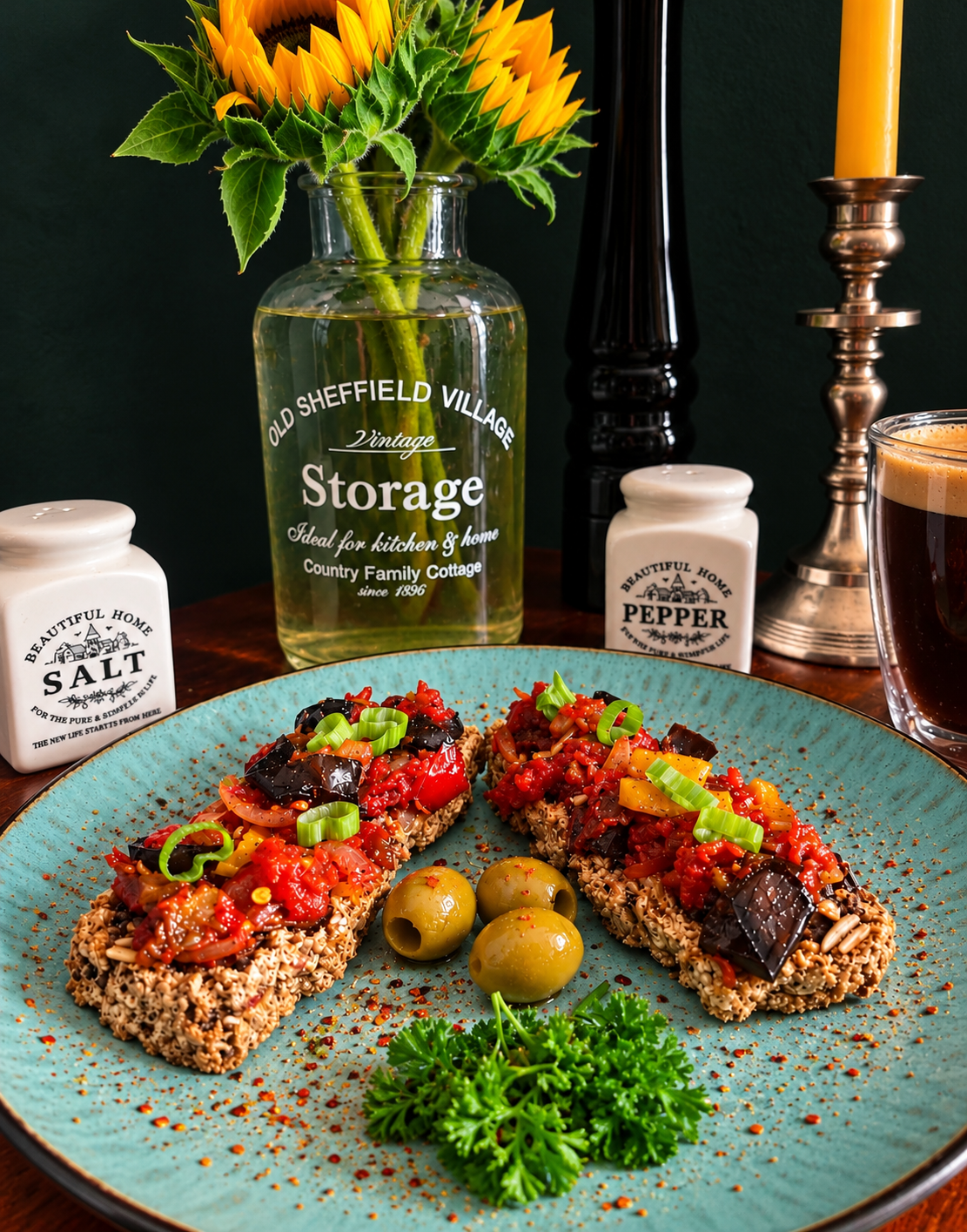
Pindjur is a traditional North Macedonian vegetable relish typically prepared with roasted peppers, tomatoes, garlic and, in many variations, eggplant. Unlike the better-known Ajvar, Pindjur generally has a chunkier consistency and a particularly juicy tomato character. The vegetables are chopped or crushed rather than blended into a completely smooth purée. Pindjur is naturally vegan when prepared without animal-derived additions and can be enjoyed as a spread, side dish or part of a meze selection. It is sometimes served with traditional white brined cheese, but my Via Veggie Vegan version skips the cheese entirely. Instead, I serve the rich, aromatic vegetable relish generously on crispy roasted farmhouse bread, accompanied by green olives and fresh parsley.
▣ Ingredients (2 servings)
- 500 g red pointed peppers
- 1 medium eggplant, approximately 250–300 g
- 300 g ripe, fleshy tomatoes
- 2-3 cloves garlic
- 1 small hot chili pepper
- 2 spring onions
- 1/2 tsp brown sugar
- 2-4 sprigs fresh parsley
- 6 green olives
- 40 ml sunflower oil
- 1 tsp apple cider vinegar
- to taste salt & freshly ground black pepper
- to taste chili flakes, optional, for serving
- 4 thick slices rustic farmhouse bread
♨ Preparation
- Prepare and Roast the Vegetables
Preheat the oven to 220°C conventional heat. Wash the peppers, eggplant and tomatoes. Pierce the eggplant several times with a fork and arrange it together with the whole peppers on a baking tray lined with parchment paper. Roast for approximately 25–30 minutes, turning the peppers halfway through, until their skins blister and develop dark spots. Remove the peppers once tender and transfer them to a covered bowl for 10 minutes. Continue roasting the eggplant if necessary until completely soft and collapsed. - Prepare and Reduce the Tomatoes
While the vegetables are roasting, score the tomatoes with a small cross, briefly blanch them in boiling water and remove their skins. Dice the tomatoes and heat approximately 1 tablespoon of the measured sunflower oil in a saucepan. Add the tomatoes and brown sugar, then simmer over medium heat for approximately 15 minutes until most of the liquid has evaporated and the mixture becomes thick and concentrated. - – Chop the Roasted Vegetables
Peel the roasted peppers, remove their stems and seeds, and chop the flesh into small pieces. Halve the softened eggplant and scoop out its flesh. Finely chop or roughly crush both vegetables using a knife or mortar. Avoid blending them into a smooth purée – traditional Pindjur should retain its characteristic rustic, chunky texture. - Finish the Pindjur
Add the chopped peppers and eggplant to the reduced tomatoes. Stir in the crushed garlic, remaining sunflower oil, apple cider vinegar and salt. Add the finely chopped hot chili if using. Simmer gently for another 10–15 minutes, stirring regularly, until the vegetables are well combined and the mixture becomes rich and glossy. Fold in a little chopped parsley and allow the Pindjur to cool slightly. - – Toast the Farmhouse Bread
Lightly brush the farmhouse bread with vegetable oil. Toast in a hot grill pan, under the oven grill or in a dry frying pan until golden brown and crisp on both sides. - Assemble and Garnish
Arrange the toasted farmhouse bread on serving plates and spoon the warm or cooled Pindjur generously over each slice. Finish with thinly sliced spring onions, fresh parsley and a light sprinkle of chili flakes if desired. Serve with green olives on the side.
Food Story
My Very First Taste of North Macedonia
Before starting my culinary journey around the world, I had never eaten anything from North Macedonia. Not a single dish! So when this beautiful Balkan country appeared on my cooking list, I was genuinely curious about what its traditional cuisine had to offer. I started researching local specialties, browsing through recipes and discovering the wonderful world of roasted peppers, eggplant, tomatoes and rustic vegetable spreads. And it really didn’t take long before one particular dish caught my attention: Pindjur!
Love at First Bite – Without the Cheese
The moment I discovered this traditional roasted vegetable relish, I knew I wanted to make it. Smoky roasted peppers, tender eggplant, juicy tomatoes, plenty of garlic and a little apple cider vinegar – how could that combination possibly disappoint? I loved the idea of keeping the vegetables chunky rather than turning everything into a smooth spread. And instead of adding the white cheese sometimes served alongside Pindjur, I decided to let the vegetables shine on their own. A few slices of crispy farmhouse bread, some green olives, fresh parsley and a little chili were all I needed.
Definitely Not My Last Pindjur!
And what can I say? My very first North Macedonian food experience was a complete success! The Pindjur was wonderfully rich, slightly smoky, beautifully garlicky and full of fresh vegetable flavor. Especially on crispy toasted bread, it was absolutely delicious. One thing is certain: this was definitely not the last time I made Pindjur. In fact, I have a feeling this little Balkan discovery might become a regular guest in my kitchen. Another country explored, another new favorite found – and another delicious reason why I love cooking my way around the world!
♨ Nutrition per serving
Nutritional values are approximate and may vary depending on the ingredients and products used.
Good to Know
What Exactly Is Pindjur?
Pindjur, also spelled Pinđur or Pindžur, is a traditional vegetable relish associated particularly with North Macedonia and other parts of the Balkans.
It is commonly prepared with roasted peppers, tomatoes, garlic and sometimes eggplant. Recipes vary between regions and households, with some versions containing hot chilies or additional herbs.
The vegetables are traditionally chopped, crushed or cooked together until they form a thick, rustic mixture.
Pindjur can be enjoyed warm, at room temperature or cold. It is commonly served with bread, as a side dish or as part of a selection of small savory dishes.
Pindjur vs. Ajvar – What's the Difference?
Pindjur and Ajvar are both well-known Balkan vegetable preparations, but they differ in their typical ingredients and texture.
Ajvar is generally based on roasted red peppers, sometimes combined with eggplant, and is often processed into a relatively smooth spread.
Pindjur usually contains a more noticeable proportion of tomatoes and has a chunkier, juicier consistency.
The tomato content contributes a lighter, slightly more acidic character, while the roasted peppers and eggplant provide sweetness and depth.
There is considerable regional variation, however, and no single recipe represents every traditional household preparation.
Why Are Roasted Peppers So Important in Balkan Cuisine?
Sweet peppers are widely used throughout southeastern Europe, particularly in roasted vegetable spreads, salads, stews and preserved preparations.
Roasting softens the flesh, concentrates natural sweetness and creates complex aromas through browning and slight charring.
Red peppers are also an excellent source of vitamin C and contain carotenoid pigments responsible for their bright color.
Vitamin C is sensitive to heat, so roasting can reduce its concentration. Nevertheless, peppers remain a valuable vegetable in a varied plant-based diet.
Eggplant – A Vegetable with a Remarkable Texture
Eggplant has a spongy structure that absorbs flavors particularly well.
When roasted, its flesh becomes soft and creamy, making it ideal for rustic vegetable spreads.
Eggplant contains dietary fiber and several plant compounds, including phenolic antioxidants.
Its purple skin contains anthocyanin pigments, although much of the skin is removed when preparing roasted eggplant flesh for Pindjur.
The vegetable's mild flavor allows the garlic, peppers and tomatoes to remain the dominant ingredients.
Tomatoes, Lycopene and Cooking
Tomatoes contain lycopene, a red carotenoid pigment with antioxidant properties.
Cooking tomatoes can make lycopene more accessible for absorption, especially when the tomatoes are prepared with a little dietary fat.
The sunflower oil in Pindjur therefore contributes not only to its rich texture but also provides fat that supports the absorption of fat-soluble carotenoids.
This does not mean that cooked tomatoes are universally healthier than raw tomatoes. Both preparations provide different nutritional advantages and can be valuable parts of a balanced diet.
Sunflower Oil – A Traditional Choice
Sunflower oil is widely used in many Balkan vegetable preparations and is a familiar choice for homemade spreads.
Conventional sunflower oil is rich in polyunsaturated fatty acids, particularly linoleic acid, an essential omega-6 fatty acid.
High-oleic sunflower oil contains a higher proportion of monounsaturated fatty acids and is another suitable option for cooking.
Replacing some saturated fats with unsaturated fats can help reduce LDL cholesterol levels when incorporated into an overall balanced dietary pattern.
For Pindjur, sunflower oil also helps create the characteristic glossy texture and carries the flavors of the roasted vegetables.
Why Use Apple Cider Vinegar?
Apple cider vinegar provides mild acidity that balances the natural sweetness of roasted peppers and tomatoes.
A small quantity can brighten the flavor without making the finished relish noticeably sour.
In this recipe, just one teaspoon is enough to contribute a gentle tang.
The vinegar is used for flavor rather than preservation. This homemade Pindjur should not be considered shelf-stable simply because it contains vinegar.
Is Pindjur Naturally Vegan?
The vegetable relish itself is naturally vegan when prepared with peppers, tomatoes, eggplant, garlic, vegetable oil and plant-based seasonings.
However, Pindjur is sometimes served alongside white brined cheese, commonly known as Sirenje in North Macedonia.
Sirenje is traditionally made from animal milk and is therefore not vegan.
For this Via Veggie Vegan interpretation, the cheese is deliberately omitted. The combination of roasted vegetables, crispy farmhouse bread, fresh herbs and olives already provides plenty of flavor and texture.
How Should Homemade Pindjur Be Stored?
Freshly prepared Pindjur can be stored in a clean, airtight container in the refrigerator.
Allow the relish to cool promptly, refrigerate within two hours of cooking and use within approximately 3–4 days.
For longer storage, freeze individual portions in suitable containers.
Because homemade vegetable spreads vary in acidity, moisture and preparation methods, this recipe is not intended for unrefrigerated storage or home canning without a scientifically tested preservation procedure.
What Does Meze Mean?
Meze refers to a selection of small dishes served across parts of the Balkans, the eastern Mediterranean and the Middle East.
Depending on the region, meze may include vegetable spreads, salads, olives, bread, beans, pickled vegetables and various other savory preparations.
Pindjur fits beautifully into a plant-based meze selection, especially when accompanied by crusty bread, olives and fresh vegetables.
For a completely vegan Balkan-inspired table, combine it with bean salads, roasted vegetables, fresh herbs and other dairy-free accompaniments.
You may also like
♡
You may also like
Mutabbal & Maazat Zaytoon – Jordanian Eggplant Dip & Za’atar Olive Paste
You may also like
Lebanese Baba Ganoush – Smoky Roasted Eggplant Dip
You may also like