Recipe postcard
Denmark – Nordic Comfort Food and Seasonal IngredientsDenmark is a Scandinavian country known for its coastal landscapes, agricultural traditions and appreciation of simple, seasonal food. Danish cuisine has long made use of root vegetables, potatoes, cabbage, rye bread, fresh herbs and creamy sauces. From traditional home cooking to modern Nordic cuisine, familiar ingredients are often transformed into satisfying dishes that celebrate flavour, texture and seasonality. Celeriac is particularly well suited to this style of cooking, offering a delicate, earthy flavour and a wonderfully tender texture when prepared correctly.
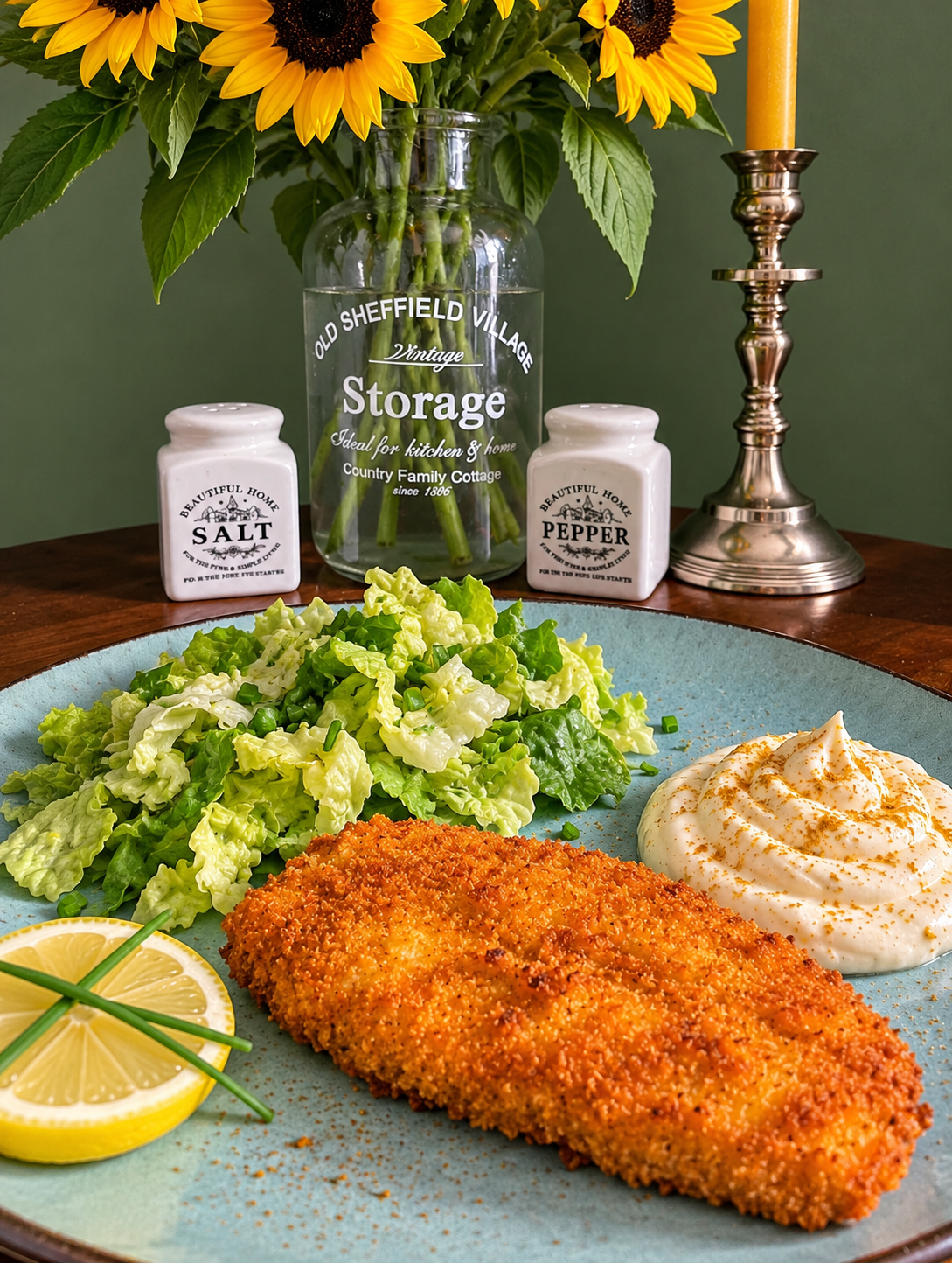
From Danish Dildsovs to Crispy Celeriac with Curry MayoDildsovs is a traditional Danish dill sauce, often prepared with a light roux, fresh dill and a creamy liquid. It is commonly associated with fish and other classic Danish meals. This Via Veggie Vegan recipe began with the idea of pairing celeriac with a Danish-inspired sauce, but the final plate took a different direction: breaded, golden-fried celeriac served with homemade vegan curry mayonnaise. Curry-flavoured dressings and remoulade-style sauces are familiar accompaniments in Danish food culture, particularly with certain sandwiches, fish dishes and fried foods. My version combines that flavour inspiration with a completely plant-based, egg-free mayonnaise and a fresh green salad.
Cook this recipe →
Recipe postcard
Poland – A Country of Hearty Traditions and Regional CuisinePoland is a Central European country with a rich culinary heritage shaped by regional traditions, seasonal produce and generations of home cooking. Polish cuisine is particularly well known for its comforting soups, potato dishes, cabbage preparations, dumplings and hearty stews. Vegetables such as carrots, potatoes, onions, beetroot and kohlrabi have long played an important role in everyday meals. From the Baltic coast to the mountainous south, Polish cooking celebrates familiar ingredients transformed into satisfying dishes that bring families together around the table.
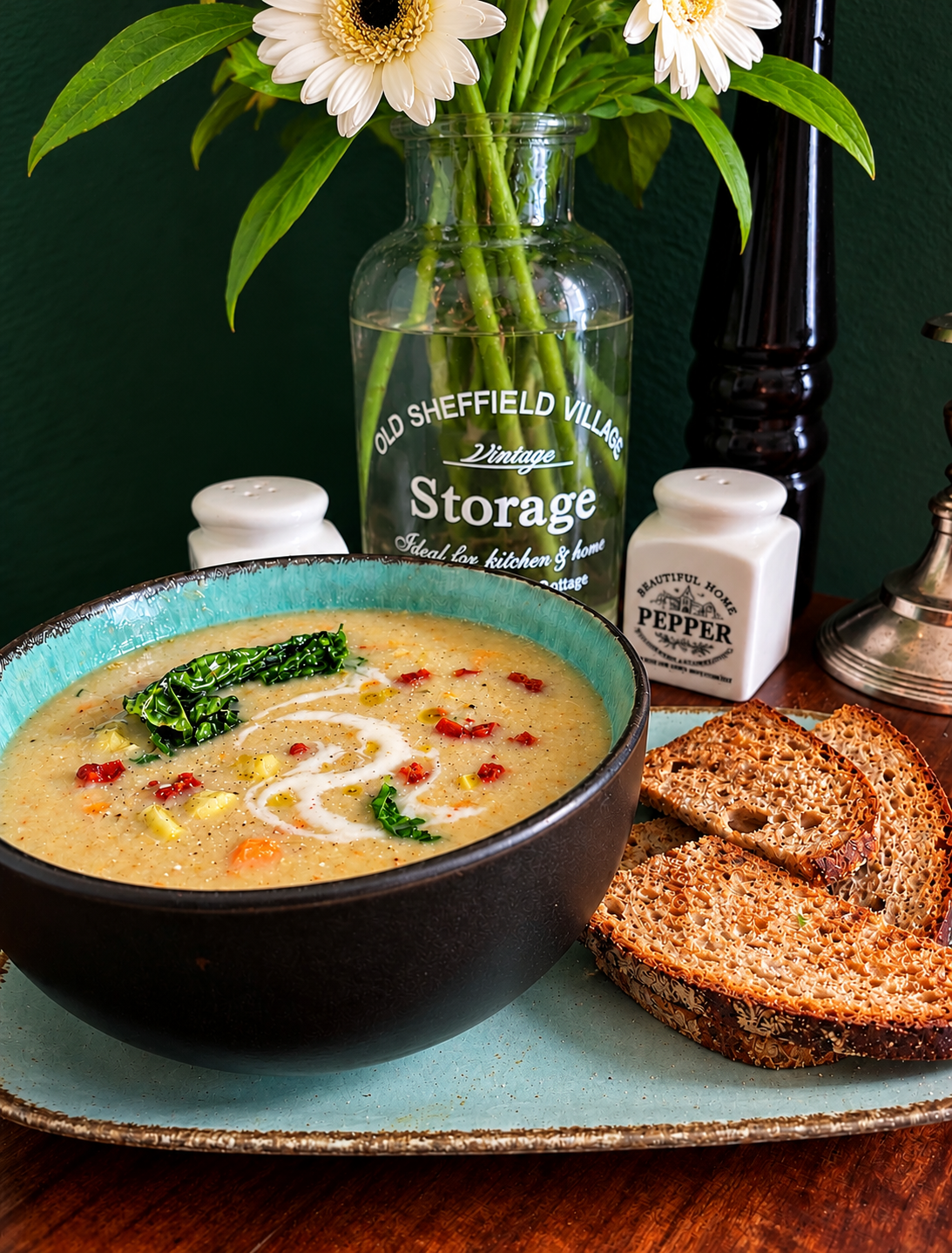
Silesian Oberiba – A Traditional Kohlrabi SoupOberiba is a regional name associated with kohlrabi in Silesian culinary traditions. Kohlrabi soup, known more generally in Polish as zupa z kalarepy, is a rustic vegetable preparation that can feature tender kohlrabi, potatoes, carrots, broth and cream. In traditional versions, meat-based broth may provide additional depth, while the tender young kohlrabi leaves can be cooked alongside the vegetables. My Via Veggie Vegan interpretation replaces animal-based ingredients with homemade vegetable broth, oat cream and vegan ham cubes. Crispy kohlrabi leaves and a little vegan sour cream give this comforting Silesian-inspired soup a delicious finishing touch.
Cook this recipe →
Recipe postcard
Sri Lanka – The Pearl of the Indian OceanSri Lanka is an island nation in South Asia, situated in the Indian Ocean southeast of India. Often called the Pearl of the Indian Ocean, the country is known for its tropical landscapes, tea plantations, diverse wildlife and rich culinary traditions. Sri Lankan cooking makes extensive use of coconut, rice, vegetables, chillies, curry leaves and aromatic spices. Regional and cultural influences have shaped a cuisine that combines bold flavours with everyday ingredients, creating dishes that are both vibrant and deeply comforting.
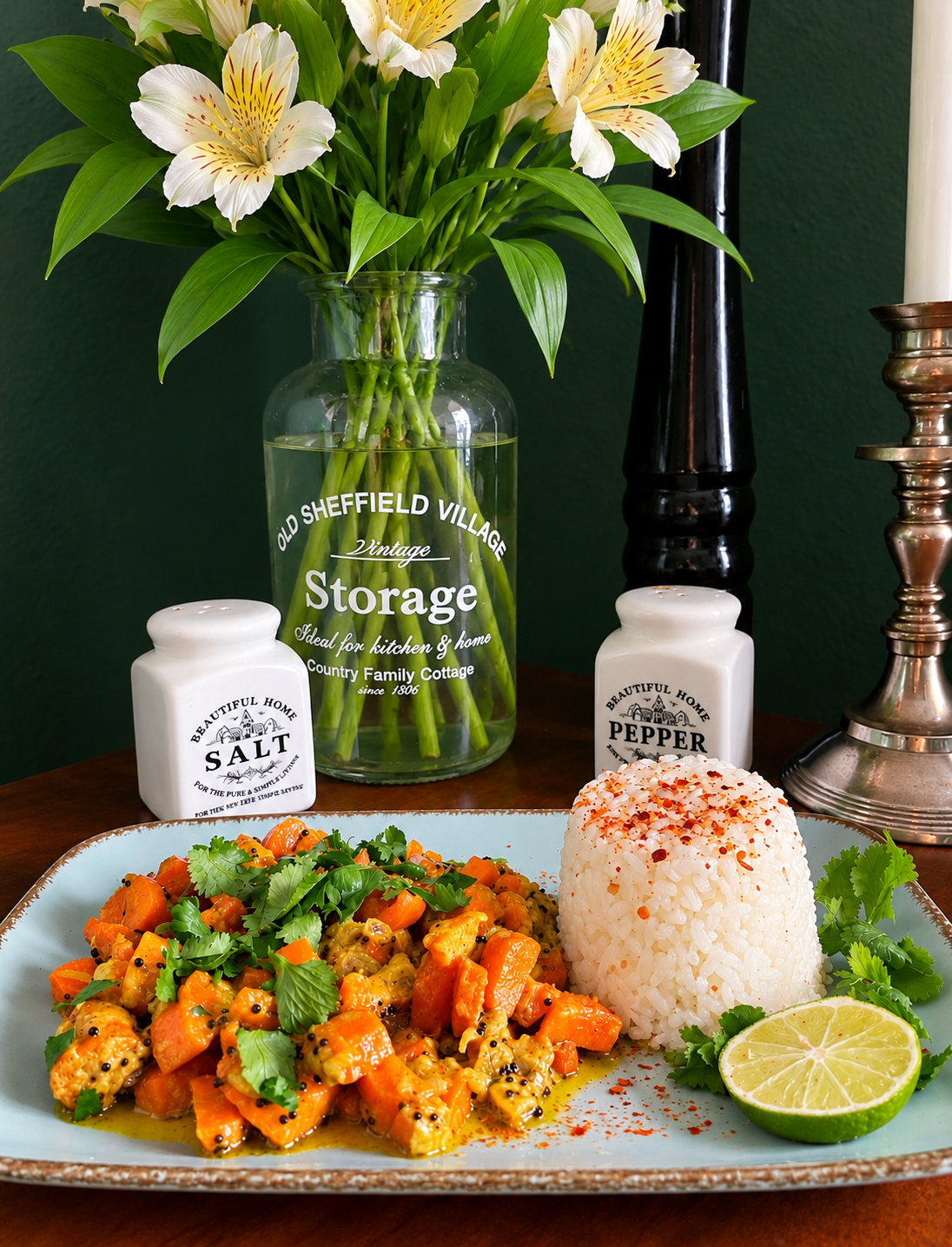
Carrot Mallum – A Colourful Sri Lankan Vegetable ClassicMallum, also spelled mallung, refers to a Sri Lankan preparation of finely chopped or shredded vegetables or leafy greens mixed with grated coconut and seasonings. Unlike a creamy coconut curry, mallum is generally relatively dry and retains more texture. Carrot Mallum brings together naturally sweet carrots, coconut, mustard seeds, curry leaves and fresh chillies. My Via Veggie Vegan version uses mustard oil for an additional aromatic note and finishes with fresh lime juice. Served alongside rice, it makes a colourful and satisfying plant-based meal.
Cook this recipe →
Recipe postcard
England – The Home of Fish and ChipsEngland is famous for its comforting pub food, seaside traditions and classic dishes enjoyed across generations. One of the country's best-known culinary symbols is fish and chips, traditionally consisting of battered fried fish served with thick-cut fried potatoes. The dish became especially popular during the nineteenth century, when fish-and-chip shops developed into an important part of British everyday food culture. Today, fish and chips remain closely associated with seaside holidays, takeaway meals and traditional British comfort food.
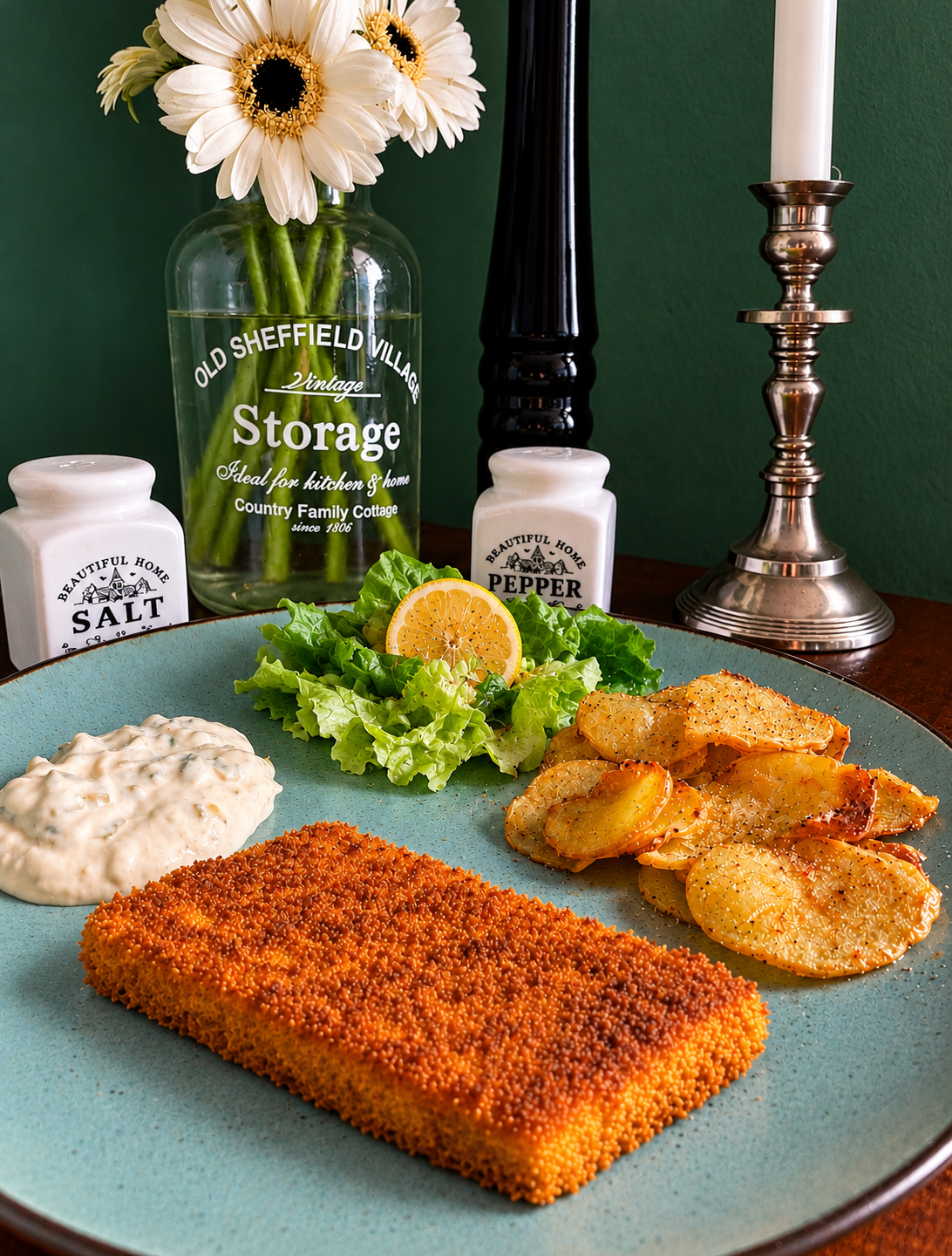
From Fish and Chips to Vegan Fish & CrispsTraditional British fish and chips usually features white fish such as cod or haddock, coated in batter and fried until golden. In this Via Veggie Vegan interpretation, firm tofu replaces the fish, while nori seaweed, lemon juice and soy sauce provide a savoury, sea-inspired flavour. Instead of a conventional batter-only coating, the tofu receives a crunchy breadcrumb crust. And here's the twist: British chips are thick-cut fries, whereas thin potato chips are called crisps. My accidental interpretation of the famous dish therefore became Vegan Fish & Crisps, served with homemade vegan remoulade.
Cook this recipe →
Recipe postcard
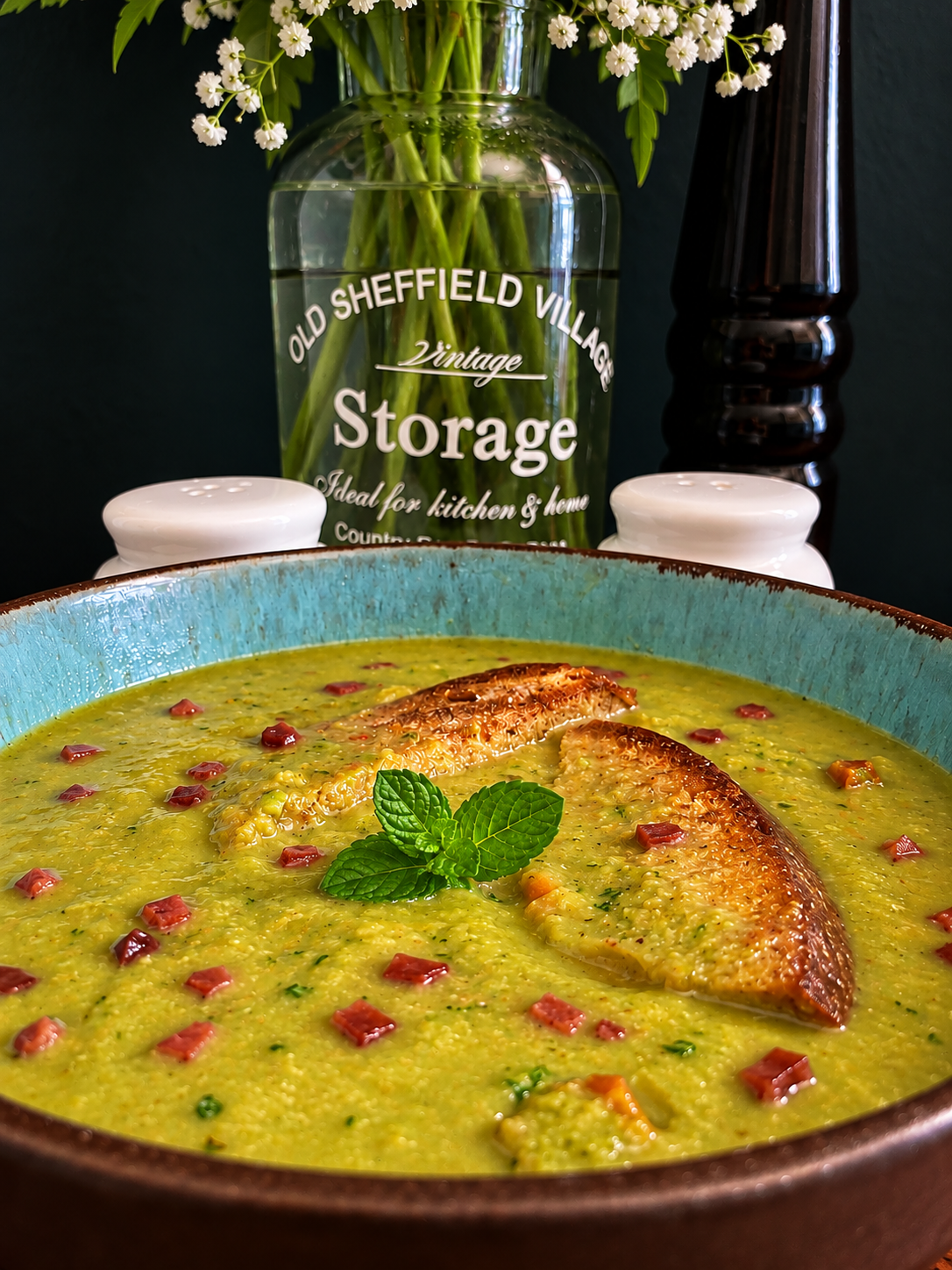
England – A Country of Gardens, Traditions and Comfort FoodEngland is the largest constituent country of the United Kingdom, known for its historic cities, picturesque countryside, traditional gardens and diverse culinary heritage. British cooking has long celebrated seasonal vegetables, hearty soups, homemade bread and comforting family meals. Garden peas are particularly popular during spring and summer, when their natural sweetness pairs beautifully with fresh herbs. Mint has an equally established place in English cooking, appearing in everything from sauces and vegetable dishes to refreshing drinks and desserts.
Pea & Mint Soup – A Fresh British FavouritePea and mint soup is a familiar dish in British home cooking, bringing together the sweetness of green peas and the refreshing aroma of garden mint. It can be prepared with fresh or frozen peas and is often finished with cream, crème fraîche or yoghurt. Depending on the season, it may be served warm or chilled. My Via Veggie Vegan interpretation uses soy cream for a silky texture, while crispy vegan bacon and warm lemon farmhouse bread provide an optional savoury and citrusy contrast.
Cook this recipe →
Recipe postcard
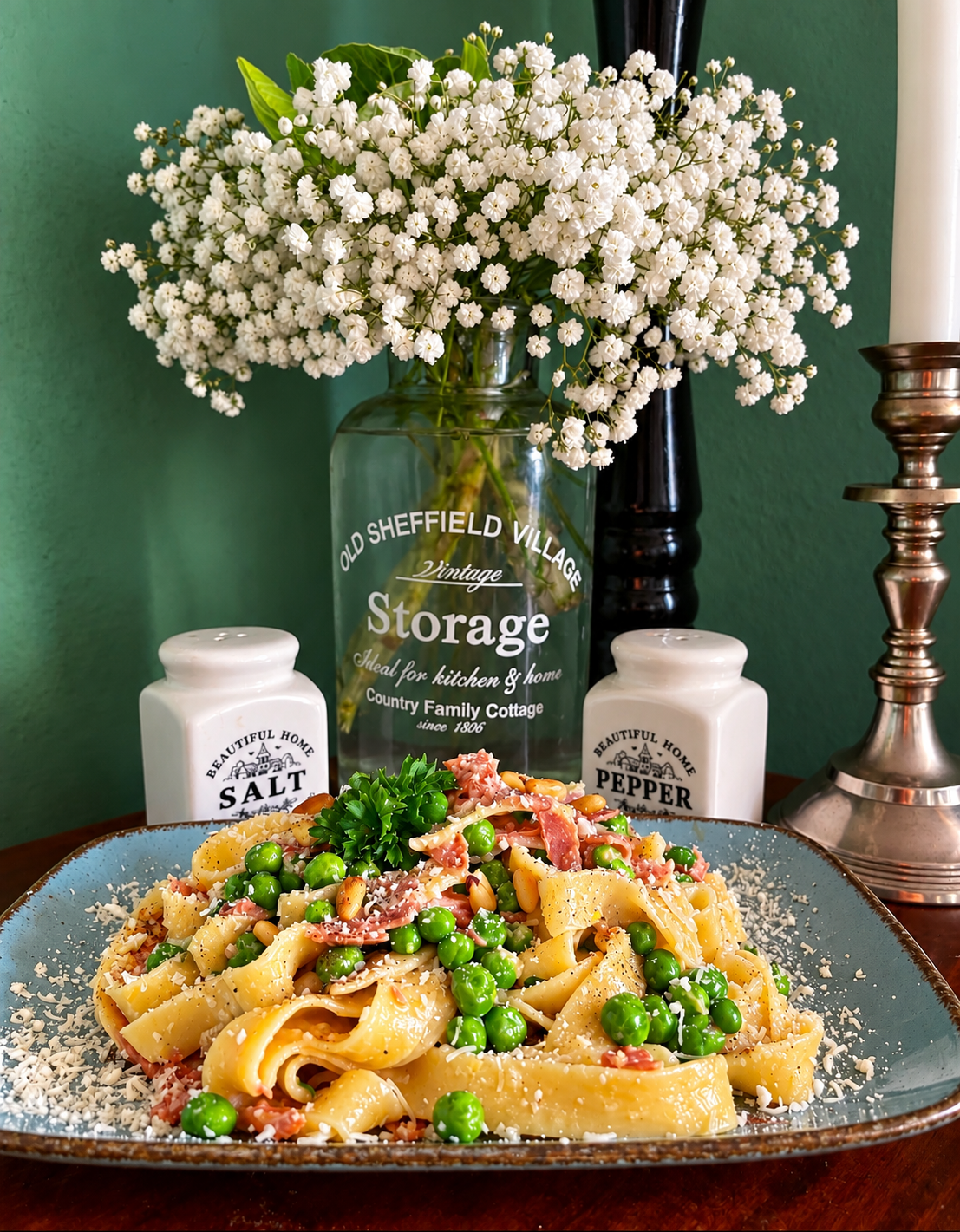
Vatican City – The World's Smallest Independent StateVatican City is an independent city-state surrounded by Rome, Italy. It is the smallest sovereign state in the world by both area and population and serves as the headquarters of the Roman Catholic Church. Its culinary surroundings are unmistakably Roman: pasta, seasonal vegetables, olive oil and traditional Italian cooking are part of the wider food culture of the region. Vatican City does not have a completely separate everyday cuisine from Rome, making Roman dishes with papal associations particularly fitting for this destination.
Fettuccine alla Papalina – Pasta Fit for a PopeFettuccine alla Papalina, meaning fettuccine in the papal style, is a Roman pasta dish traditionally associated with Pope Pius XII, although the exact circumstances of its creation are not firmly documented. The classic preparation typically combines egg pasta, cured ham, onion, butter, cheese and eggs, sometimes with cream. My Via Veggie Vegan interpretation replaces the animal-derived ingredients with plant-based alternatives, while sweet peas, vegan ham strips and a delicate creamy sauce give the dish its own colourful character.
Cook this recipe →
Recipe postcard
Czechia – A Country with a Rich Soup Tradition
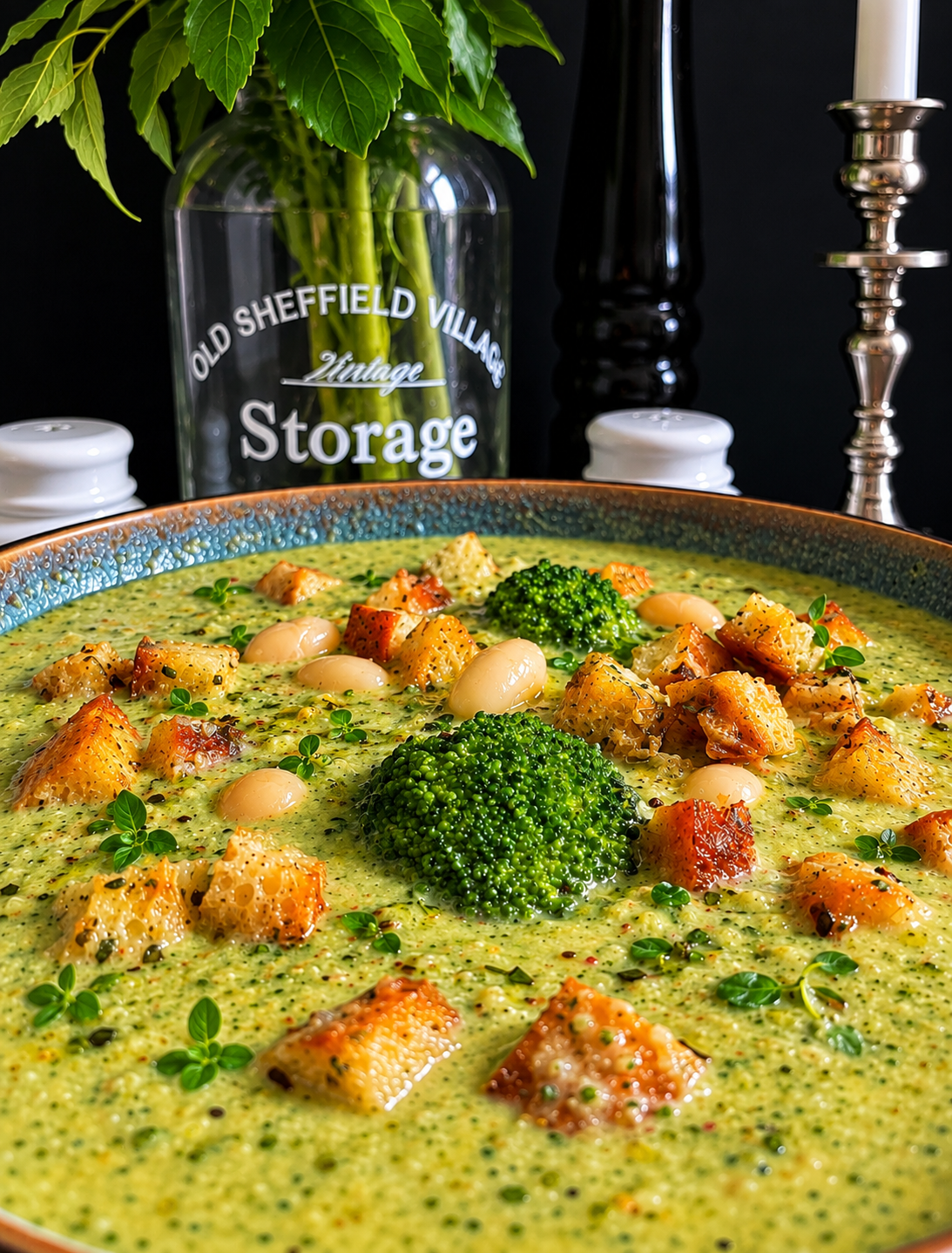
Czechia, also known as the Czech Republic, lies in the heart of Central Europe and is famous for its historic cities, rolling countryside and hearty culinary traditions. Soups, known as polévky, play an important role in Czech home cooking and are frequently served as the first course of a traditional meal. Potatoes, root vegetables, legumes, garlic and aromatic herbs are common ingredients, while marjoram, or majoránka, is one of the country's characteristic soup seasonings.
What Is Brokolicová Polévka s Bílými Fazolemi?
Brokolicová polévka means broccoli soup, while bílé fazole are white beans. This Via Veggie Vegan creation brings these ingredients together in a creamy, satisfying soup inspired by Czech home cooking. White beans provide natural creaminess, nutritional yeast adds savoury depth, and garlic croutons – česnekové krutony – deliver a wonderfully crispy contrast. Instead of using fresh bread, my version gives leftover homemade naan a delicious second life.
Cook this recipe →
Recipe postcard
Nepal – Culinary Traditions from the Himalayas
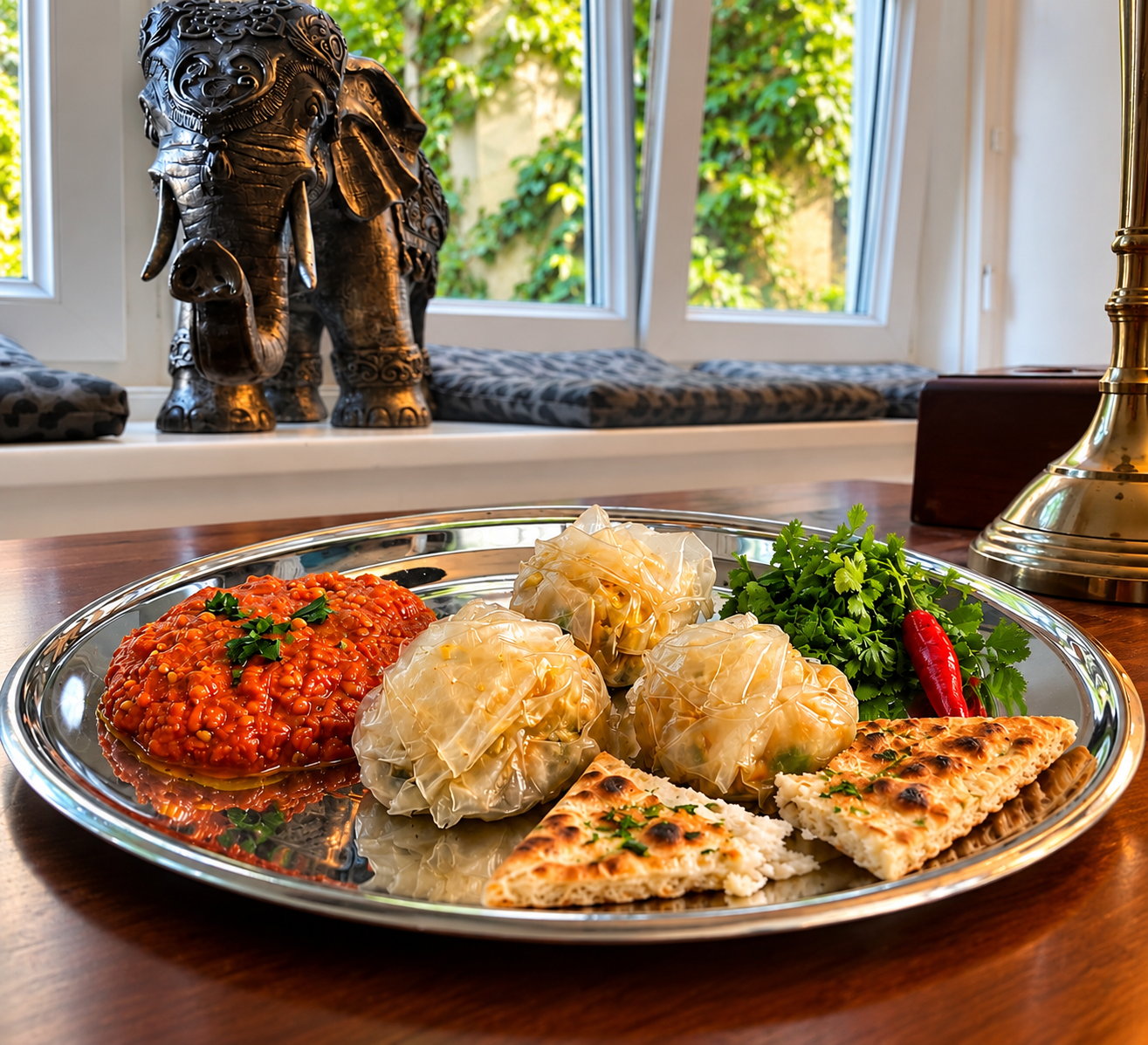
Nepal is a landlocked country in South Asia, home to the Himalayan mountains, including Mount Everest, and a remarkably diverse culinary heritage. Influenced by its geography, ethnic communities and neighbouring Tibetan and Indian food traditions, Nepalese cuisine features aromatic spices, rice, lentils, vegetables, pickles and freshly prepared breads. Food is an important part of family life, celebrations and hospitality.
Momos – Nepal's Beloved Steamed Dumplings
Momos are among Nepal's most popular dishes, with culinary roots closely connected to Tibetan dumpling traditions. These delicate parcels are typically filled with seasoned vegetables or meat, carefully folded by hand and steamed until tender. They are commonly served with a spicy dipping sauce known as achar, often prepared with tomatoes, sesame seeds and chillies. My Via Veggie Vegan version features a homemade vegetable filling, freshly ground Momo Masala and a fiery tomato sesame achar.
Cook this recipe →
Recipe postcard
Cyprus – An Island of Mediterranean Flavours
Located in the eastern Mediterranean, Cyprus has a rich culinary heritage shaped by its geography, agricultural traditions and centuries of cultural exchange. Fresh vegetables, olive oil, herbs, citrus fruits and legumes are essential ingredients in everyday cooking. Family meals often celebrate seasonal produce and dishes designed to be shared around the table.
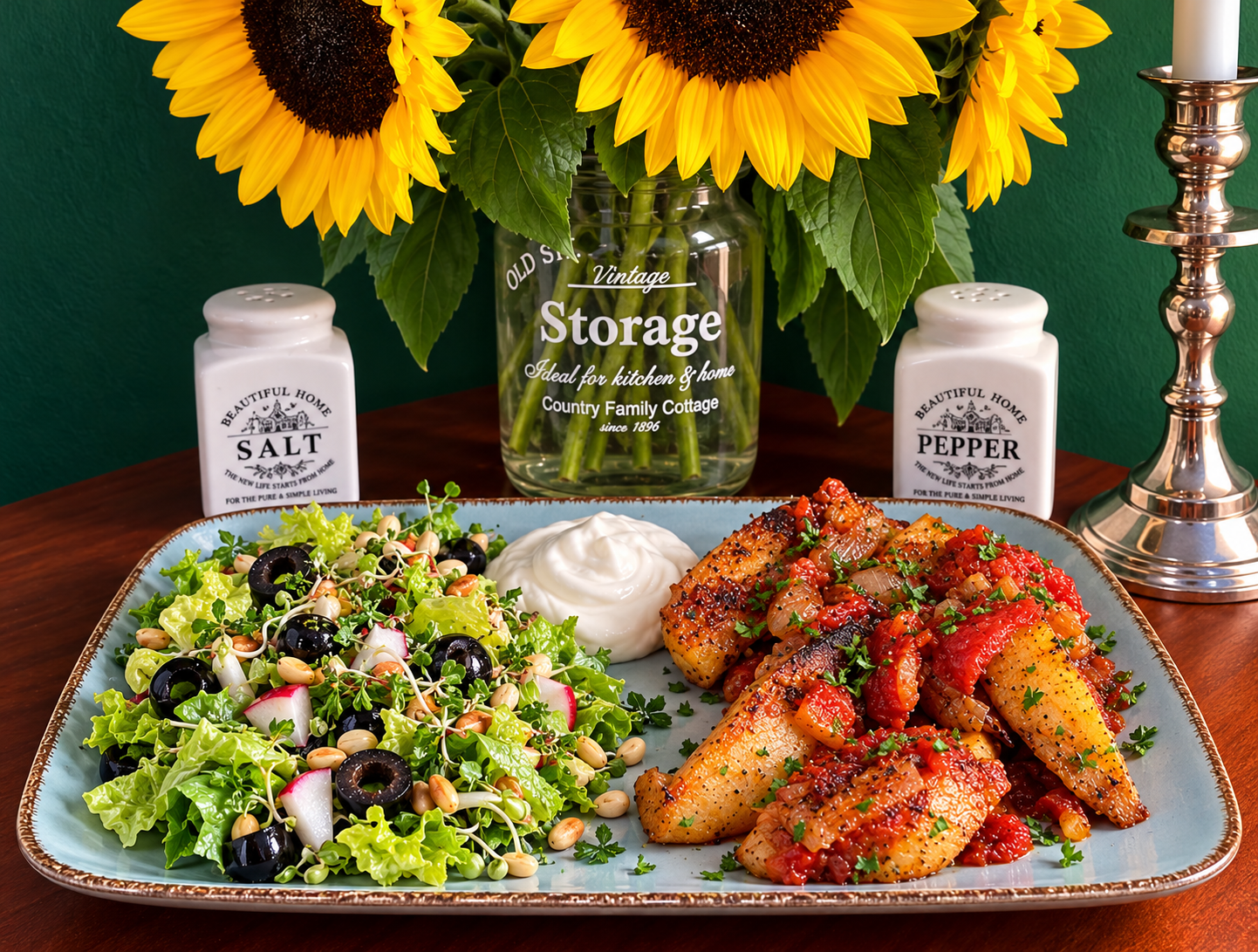
Patates tou Fournou – Traditional Cypriot Oven Potatoes
Patates tou Fournou (Πατάτες του Φούρνου) literally means oven potatoes. Unlike ordinary roasted potatoes, this traditional Cypriot speciality is slowly cooked with olive oil, aromatic oregano, tomatoes, onions and a little liquid. The potatoes first become tender through gentle steaming and braising before developing beautifully golden edges during the final uncovered roasting stage. A wonderfully rustic Mediterranean dish that is naturally vegan when prepared with vegetable stock.
Cook this recipe →
Recipe postcard
Cyprus – A Mediterranean Island with a Rich Culinary Heritage
Cyprus is an island in the eastern Mediterranean, famous for its beautiful coastline, mountainous landscapes and a cuisine shaped by centuries of Greek, Turkish and wider Mediterranean influences. Olive oil, potatoes, pulses, fresh herbs, citrus fruits and sesame-based sauces play important roles in Cypriot cooking. Sharing several small dishes, known as meze, is an especially cherished part of the island's food culture.
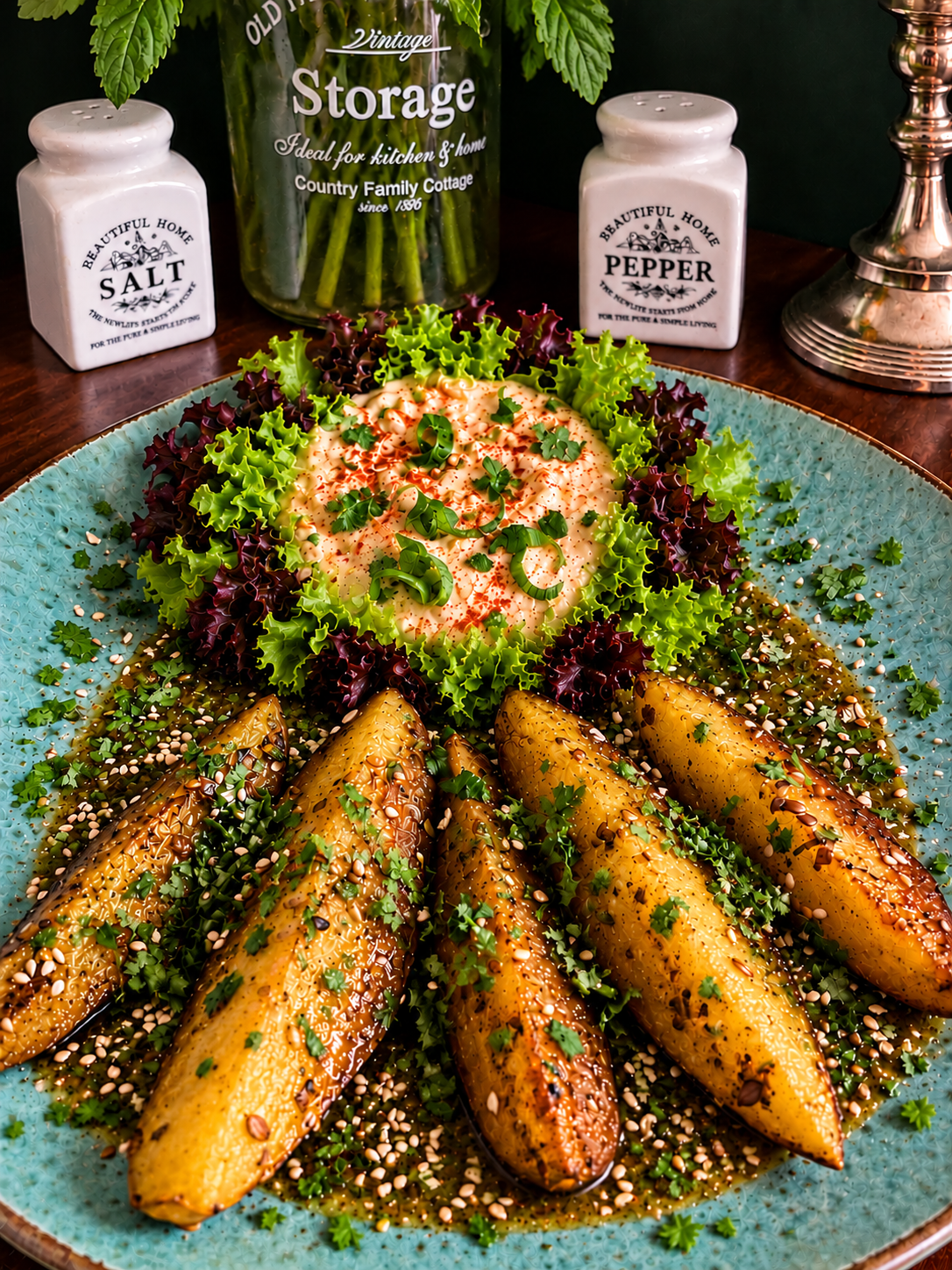
Patátes Antinahtés – Cyprus's Famous Shaken Potatoes
Patátes Antinahtés are a traditional Cypriot potato speciality, typically prepared with crushed coriander seeds and dry red wine. The name refers to the shaking or tossing technique used to coat the potatoes in their aromatic cooking juices. My Via Veggie Vegan interpretation replaces the wine with pomegranate juice and balsamic vinegar, roasts the potatoes in the oven and pairs them with a creamy soy yoghurt and tahini dip. The result is a colourful, completely plant-based variation inspired by this beloved Cypriot classic.
Cook this recipe →
