Nepal – Culinary Traditions from the Himalayas
Nepal is a landlocked country in South Asia, home to the Himalayan mountains, including Mount Everest, and a remarkably diverse culinary heritage. Influenced by its geography, ethnic communities and neighbouring Tibetan and Indian food traditions, Nepalese cuisine features aromatic spices, rice, lentils, vegetables, pickles and freshly prepared breads. Food is an important part of family life, celebrations and hospitality.
Momos – Nepal's Beloved Steamed Dumplings
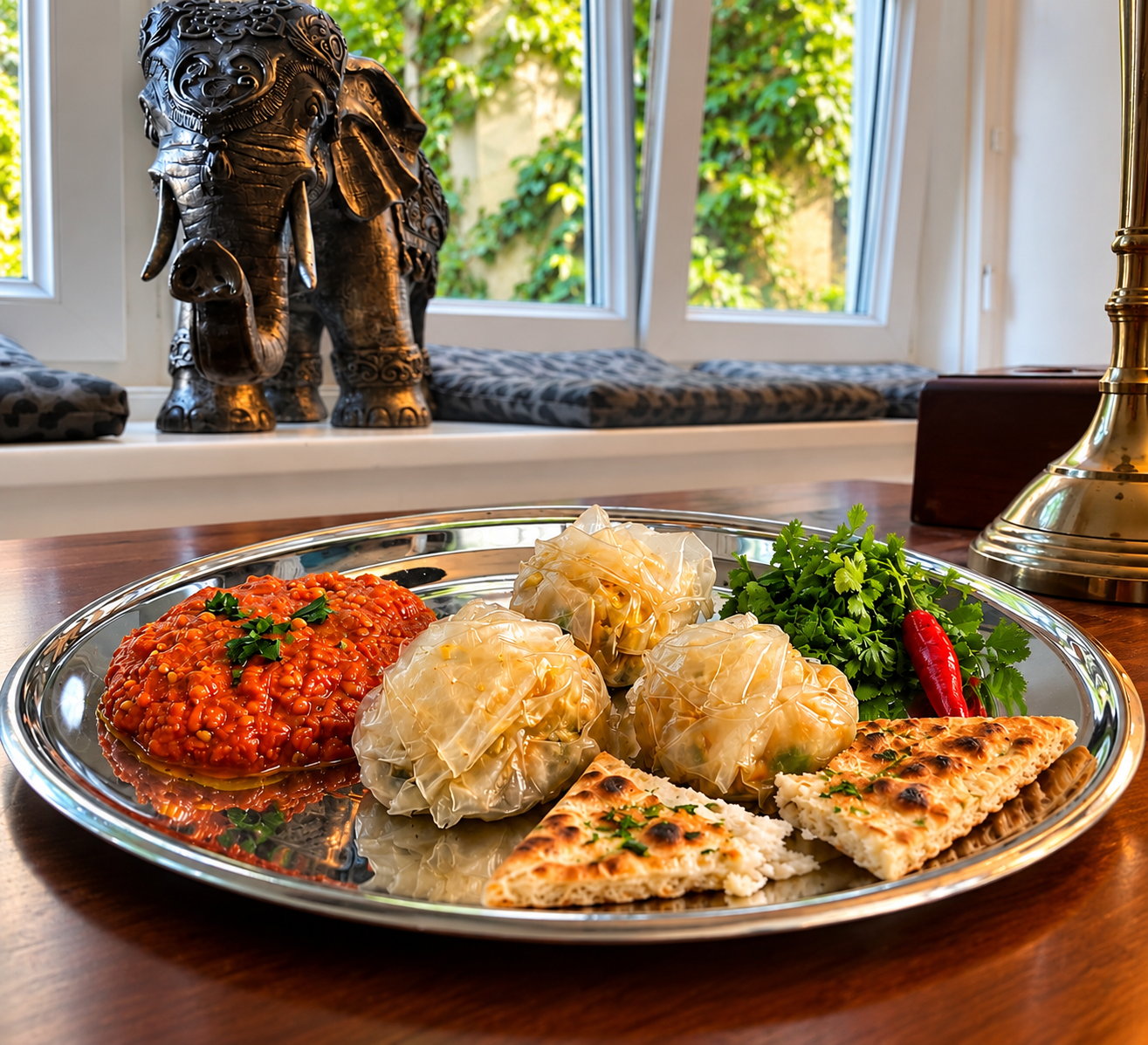
Momos are among Nepal's most popular dishes, with culinary roots closely connected to Tibetan dumpling traditions. These delicate parcels are typically filled with seasoned vegetables or meat, carefully folded by hand and steamed until tender. They are commonly served with a spicy dipping sauce known as achar, often prepared with tomatoes, sesame seeds and chillies. My Via Veggie Vegan version features a homemade vegetable filling, freshly ground Momo Masala and a fiery tomato sesame achar.
▣ Ingredients (2 servings)
- 300 g wheat flour, Type 405 or 550
- 300 g white cabbage
- 1 carrot
- 1 onion
- 1 red onion
- 2 spring onions
- 1 tbsp freshly grated ginger, plus 1.5 cm fresh ginger for the achar
- 3 ripe tomatoes
- 2 fresh red chilis
- 1-2 dried red chilis
- 5 cloves garlic
- 3 tbsp white sesame seeds
- 1 tsp cumin seeds
- 1 tsp coriander seeds
- 1/2 tsp black peppercorns
- 2 cloves
- 1 cinnamon stick
- 4 green cardamom pods
- 3/4 tsp ground turmeric, divided
- 1/4 tsp chilli powder
- 1/2 ground cumin
- 1/2 tsp ground coriander
- 1/4 tsp Sichuan pepper (Timur), optional
- 1 pinch freshly grated nutmeg
- 1 bunch fresh coriander, including tender stems
- 1 tbsp Kachi Ghani food-grade mustard oil or neutral vegetable oil, for the filling
- 1 1/2 tbsp neutral vegetable oil, for the achar
- 150 ml lukewarm water, for the dough
- 1 tbsp freshly squeezed lemon or lime juice
- to taste freshly ground black pepper
- Homemade vegan Garlic Naan
♨ Preparation
- 8. Prepare the Momo Dough
Combine the wheat flour, a pinch of salt and approximately 150 ml lukewarm water in a large mixing bowl.
Knead for 8–10 minutes until the dough becomes smooth, elastic and pliable.
Cover with a clean kitchen towel or reusable food wrap and leave to rest at room temperature for 30 minutes. - 2. Prepare the Cabbage
Finely shred the white cabbage and sprinkle with a little salt.
Leave to rest for approximately 10 minutes, then squeeze out as much excess moisture as possible.
This prevents the vegetable filling from becoming watery and helps the dumplings retain their shape during steaming. - 3. Make the Homemade Momo Masala
Heat a dry frying pan over low to medium heat.
Add the cumin seeds, coriander seeds, black peppercorns, optional cloves, cinnamon and green cardamom pods.
Toast gently until fragrant, taking care not to burn the spices.
Allow to cool slightly, remove the cardamom husks and grind the spices finely.
Stir in ¼ tsp turmeric, the chilli powder, freshly grated nutmeg and a little salt. - 4. Prepare the Vegetable Filling
Combine the prepared cabbage, grated carrot, finely diced small onion, spring onions, 2 minced garlic cloves and 1 tbsp freshly grated ginger in a mixing bowl.
Add the homemade Momo Masala and 1 tbsp food-grade mustard oil or neutral vegetable oil.
Mix thoroughly until the vegetables are evenly coated with the aromatic spices.
Taste and adjust the seasoning if necessary. - 5. Shape the Momos
Divide the rested dough into small, evenly sized portions.
Roll each portion into a thin circle, keeping the centre slightly thicker than the edges.
Place approximately 1 teaspoon of vegetable filling in the centre.
Carefully lift the edges and fold them into small pleats, pinching firmly to seal the dumpling.
Repeat until all the dough and filling have been used. - 6. Steam the Momos
Lightly grease the steaming basket or line it with perforated baking parchment.
Arrange the momos with a little space between them to prevent sticking.
Steam over gently simmering water for approximately 10–12 minutes, until the wrappers are tender and the vegetable filling is cooked through.
Depending on their size and thickness, slightly larger momos may need a few additional minutes. - 7. Prepare the Spicy Tomato Sesame Achar
Dry-toast the white sesame seeds in a small frying pan until lightly golden and fragrant.
Heat 1½ tbsp neutral vegetable oil in a separate pan.
Add the roughly chopped red onion, 3 garlic cloves, fresh ginger, dried red chillies and fresh red chillies.
Sauté briefly, then add the diced tomatoes.
Season with ½ tsp turmeric, ground cumin, ground coriander, optional Timur and salt.
Cook gently for approximately 6–8 minutes, until the tomatoes soften and release their juices.
Allow the mixture to cool slightly.
Transfer to a blender, add the toasted sesame seeds and lemon or lime juice, then blend until thick, smooth and creamy.
Adjust the consistency with a small splash of warm water if necessary. - 8. Prepare the Garlic Naan
Prepare the homemade vegan Garlic Naan according to the separate Garlic Naan recipe on Via Veggie Vegan.
For the best serving experience, keep the freshly cooked naan warm while the momos finish steaming. - 9. Assemble the Nepalese Platter
Arrange the freshly steamed momos on a serving platter.
Add a generous portion of the homemade spicy tomato sesame achar.
Garnish with fresh coriander and, if desired, a whole red chilli.
Serve with pieces of warm homemade vegan Garlic Naan.
Enjoy immediately while the dumplings are tender and the chutney is beautifully aromatic.
Food Story
Three Attempts, One Very Determined Cook
Some recipes look wonderfully simple until you actually try making them yourself. Nepalese momos are definitely one of those recipes! Rolling out the dough, adding the filling and creating those beautiful little folds requires considerably more patience and coordination than I originally expected. But here’s the funny part: my very first attempt worked beautifully! I was practically ready to open my own little momo kitchen.
When the Dumplings Fight Back
Then came my second attempt. And suddenly, nothing seemed to work anymore. The dough, the folding, the sealing – everything that had gone so smoothly the first time turned into a rather frustrating kitchen adventure. I was genuinely close to despair. But sometimes the best ideas arrive precisely when you’re wondering why you ever thought making something from scratch was a good idea.
Rice Paper to the Rescue!
And then it hit me: rice paper! Why not use softened rice paper as a shortcut when traditional momo dough refuses to cooperate? What a wonderful little kitchen revelation. By the third attempt, I had found my rhythm again and everything worked beautifully. So this Nepalese feast became much more than a plate of homemade dumplings, spicy tomato sesame achar and Garlic Naan. It became a reminder that cooking isn’t always about getting everything perfect the first time. Sometimes it’s about improvising, laughing at yourself and refusing to let a stubborn little dumpling win.
♨ Nutrition per serving
Nutritional values are approximate and may vary depending on the ingredients and products used.
Good to Know
Why Are Momos So Popular in Nepal?
Momos are more than a convenient street food. They are enjoyed at home, in restaurants, at social gatherings and during celebrations. Their popularity reflects Nepal's cultural diversity and the long history of culinary exchange across the Himalayan region. Different communities have developed their own fillings, shapes, seasonings and accompanying sauces.
What Does Momo Achar Mean?
Achar is a broad term used across South Asian cuisines for pickles, chutneys and strongly flavoured accompaniments. Nepalese momo achar is commonly prepared with tomatoes, sesame seeds, chillies and spices. Its tangy, spicy flavour provides a wonderful contrast to the relatively mild dumpling wrappers and savoury vegetable filling.
Why Sesame Seeds Make Such a Creamy Chutney
Sesame seeds contain natural oils, protein and fibre. When toasted and finely blended with softened tomatoes, they help create a rich, creamy texture without dairy or added cream. Toasting also develops nutty aromas through heat-driven flavour reactions, giving the finished achar greater depth.
Mustard Oil – Choose the Right Product
Mustard oil is used in various South Asian culinary traditions and contributes a distinctive pungent flavour. However, some mustard oils sold in European shops are labelled for external use only and should not be used for cooking. Choose a product specifically sold as food-grade and suitable for culinary use, or substitute a neutral vegetable oil.
Timur – A Himalayan Spice with a Tingling Twist
Timur is a Nepalese spice related to Sichuan pepper. Despite its name, it is not a true peppercorn. Its distinctive citrus-like aroma and tingling sensation come from naturally occurring aromatic compounds. A small amount can add complexity to momo achar, but it is entirely optional.
Why Resting the Dough Matters
Resting wheat dough allows the flour to hydrate more evenly and the gluten network to relax. This makes the dough easier to roll thinly without excessive shrinking. A smooth, elastic dough is especially helpful when creating the delicate pleats traditionally associated with momos.
Steaming Versus Frying
Steaming cooks food using hot water vapour and generally requires little additional fat. It helps preserve the soft texture of the momo wrappers while gently cooking the vegetable filling. However, the overall nutritional value of the meal still depends on the ingredients, portion size and accompanying sauces.
Cabbage – An Affordable Nutritional Powerhouse
White cabbage belongs to the cruciferous vegetable family. It provides fibre, vitamin C and vitamin K while being relatively low in calories. Its mild flavour makes it an excellent base for aromatic fillings, and its finely shredded texture works particularly well inside steamed dumplings.
Carrots and Beta-Carotene
Carrots are rich in beta-carotene, a plant pigment that the body can convert into vitamin A as needed. Vitamin A contributes to normal vision, immune function and cell growth. Combining carrots with a little dietary fat can support the absorption of fat-soluble carotenoids.
Garlic, Ginger and Aromatic Depth
Garlic and ginger are widely used in Nepalese and neighbouring cuisines. Their distinctive flavours come from naturally occurring aromatic compounds. While both ingredients are frequently discussed for their potential health properties, the amounts used in ordinary cooking should primarily be appreciated for their culinary contribution rather than treated as medicine.
What Makes Homemade Momo Masala Special?
Freshly toasted whole spices release a particularly intense aroma when ground shortly before use. Cumin contributes earthiness, coriander seeds add citrus-like warmth, cardamom brings floral notes and cloves provide a powerful sweet-spicy fragrance. Making your own blend allows you to adjust the balance according to your preferences.
Can You Freeze Homemade Momos?
Yes. Arrange uncooked momos individually on a tray and freeze until firm. Transfer them to a freezer-safe container or bag, separating layers if necessary. Steam directly from frozen, allowing additional cooking time until the filling is thoroughly cooked. Freezing them individually first helps prevent the dumplings from sticking together.
Rice Paper Is a Shortcut, Not a Traditional Wrapper
Traditional Nepalese momos are generally made with wheat-based dough. Rice paper provides a convenient alternative when time, patience or dough-handling skills are limited, but the finished texture is different. Rice paper becomes more translucent and chewy, while traditional momo dough has a softer, elastic bite.
Plant-Based Protein and Meal Balance
The vegetables and wheat flour provide some protein, while sesame seeds contribute additional protein and unsaturated fats. However, momos made primarily from flour and vegetables are not necessarily a high-protein meal. Serving them alongside lentils, beans or tofu can increase the protein content and create a more balanced plate.
Homemade Doesn't Automatically Mean Low-Calorie
Preparing everything from scratch gives you control over ingredients, seasoning and portion sizes. However, flour-based dumplings, sesame-rich chutney and additional bread all contribute energy. The nutritional balance depends on the quantities consumed, especially when serving momos together with Garlic Naan.
Zero Waste – Make the Most of Your Cabbage
If you have leftover white cabbage, use it in soups, stir-fries, salads or vegetable fritters. Tender cabbage leaves and usable vegetable trimmings can also contribute flavour to homemade vegetable stock. Search for cabbage recipes on Via Veggie Vegan to discover more ways to use the remaining ingredients.
Garlic Naan – A Delicious Extra
Garlic Naan is not a traditional requirement for serving Nepalese momos, but it makes a delicious addition to this homemade feast. Its soft, lightly charred texture is perfect for scooping up the spicy tomato sesame achar. Find the separate vegan Garlic Naan recipe on Via Veggie Vegan for the full ingredients and preparation method.