Cyprus – An Island of Mediterranean Flavours
Located in the eastern Mediterranean, Cyprus has a rich culinary heritage shaped by its geography, agricultural traditions and centuries of cultural exchange. Fresh vegetables, olive oil, herbs, citrus fruits and legumes are essential ingredients in everyday cooking. Family meals often celebrate seasonal produce and dishes designed to be shared around the table.
Patates tou Fournou – Traditional Cypriot Oven Potatoes
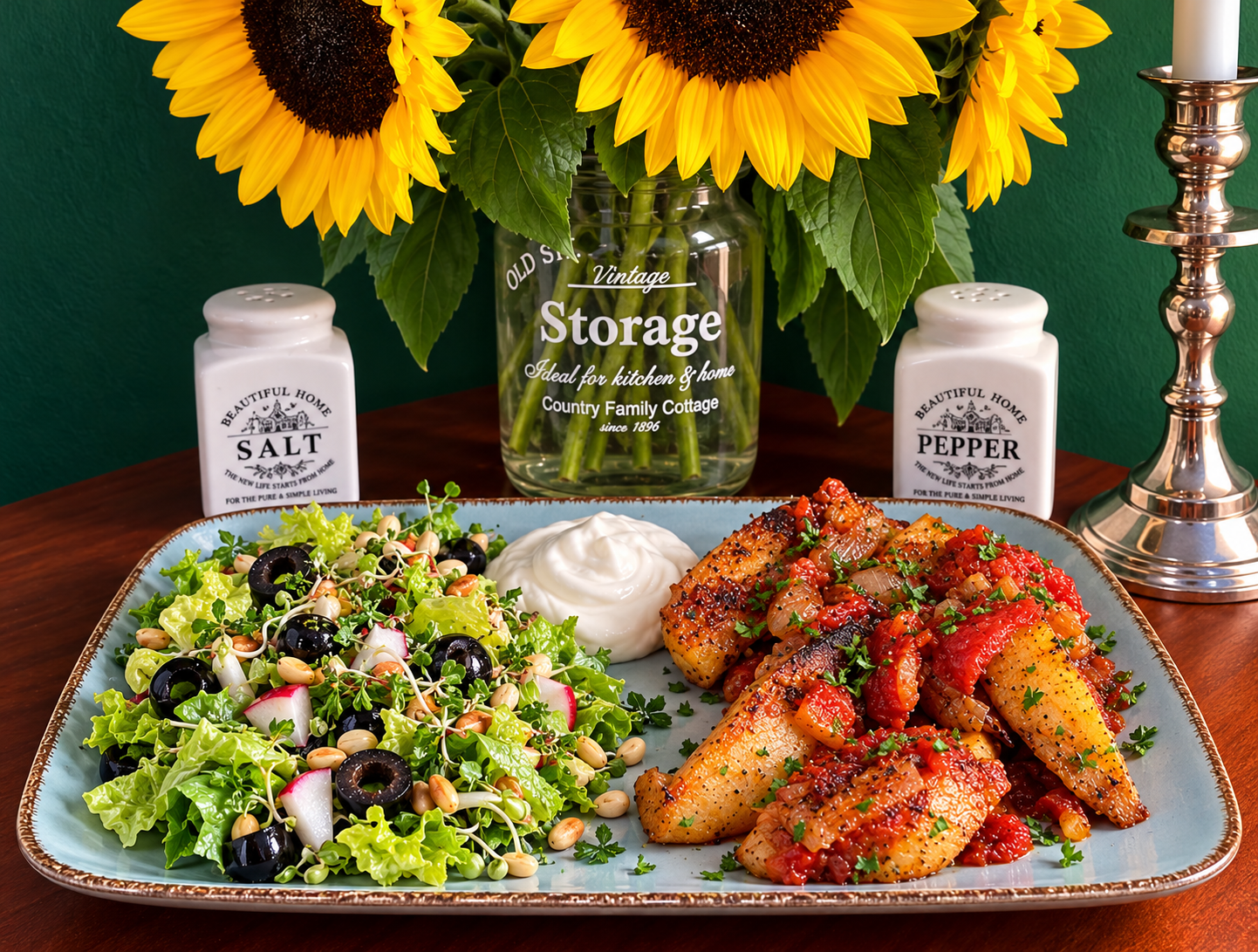
Patates tou Fournou (Πατάτες του Φούρνου) literally means oven potatoes. Unlike ordinary roasted potatoes, this traditional Cypriot speciality is slowly cooked with olive oil, aromatic oregano, tomatoes, onions and a little liquid. The potatoes first become tender through gentle steaming and braising before developing beautifully golden edges during the final uncovered roasting stage. A wonderfully rustic Mediterranean dish that is naturally vegan when prepared with vegetable stock.
▣ Ingredients (2 servings)
- 700 g waxy or all-purpose potatoes
- 1 onion
- 1 ripe tomato
- 1 clove garlic
- 1 tsp dried oregano
- 60 ml extra virgin olive oil
- 60-80 ml homemade vegetable stock
- 1 squeeze fresh lemon juice
- to taste salt & freshly ground black pepper
♨ Preparation
- Preheat the Oven
Preheat the oven to 180°C fan / 200°C conventional heat. - 9. Prepare the Vegetables
Peel the potatoes and cut them into thick, evenly sized wedges. Cut the onion into coarse strips or rings. Grate or finely dice the ripe tomato.
Place the potatoes, onions and tomatoes directly into a suitable ovenproof casserole dish or small roasting tray. - 3. Season the Potatoes
Pour the extra virgin olive oil over the vegetables.
Add the dried oregano, salt, freshly ground black pepper and, if using, the finely chopped garlic.
Mix everything thoroughly with your hands or two large spoons until every potato wedge is evenly coated with oil, herbs and seasonings. - 4. Add the Vegetable Stock
Carefully pour the homemade vegetable stock around the edges of the dish.
The liquid should cover the bottom of the roasting dish without completely submerging the potatoes. - 5. Cover and Slow-Roast
Cover the casserole dish tightly with a suitable ovenproof lid or aluminium foil.
Place in the preheated oven and cook for approximately 45 minutes.
During this stage, the potatoes gently steam and braise in the aromatic tomato, onion and oregano mixture, becoming wonderfully tender and absorbing the Mediterranean flavours. - 6. Roast Until Golden
Carefully remove the lid or foil, allowing the hot steam to escape away from you.
Increase the oven temperature to 200°C fan.
Continue roasting uncovered for another 20–25 minutes, until most of the liquid has evaporated and the potatoes develop golden, slightly caramelised edges.
If necessary, carefully turn the potato wedges once to encourage even browning. - 7. Finish and Serve
Remove the roasted potatoes from the oven.
Spoon the remaining tomato and onion juices from the roasting dish over the golden potato wedges.
If desired, finish with a small squeeze of fresh lemon juice.
Serve hot, either as a Mediterranean main course with a fresh salad and vegan yoghurt dip or as a delicious side dish.
Food Story
A Little Cyprus Sunshine in My Kitchen
There are certain dishes that immediately make me think of sunshine, warm evenings and long Mediterranean meals. Patates tou Fournou is definitely one of them. Golden potatoes, juicy tomatoes, sweet onions, plenty of oregano and good olive oil – honestly, what more could a potato lover ask for? Sometimes the simplest recipes are the ones that make me happiest.
A Special Travel Companion – At Least in Spirit
Someone I have come to really appreciate through our regular group sessions is heading off to Cyprus soon with his girlfriend. He loves Cypriot cuisine just as much as I do, so I couldn’t resist bringing a little taste of the island into my own kitchen. I hope the two of them have a wonderful holiday, discover plenty of delicious local food and enjoy every minute of their time together.
Bon Voyage – But We’ll Miss You!
Of course, there’s just one tiny problem with his holiday plans: our group sessions are going to be considerably less entertaining without him! So while he’s enjoying the Mediterranean sunshine, I’ll be here roasting potatoes and trying not to be too jealous. Have a fantastic time in Cyprus, enjoy the food, the sunshine and the company – and don’t forget to come back. We need you to keep our sessions interesting!
♨ Nutrition per serving
Nutritional values are approximate and may vary depending on the ingredients and products used.
Good to Know
Why Are Cypriot Oven Potatoes Different?
Unlike many roasted potato recipes that rely primarily on dry heat, Patates tou Fournou combines roasting with gentle braising. The potatoes cook slowly with olive oil, tomatoes, onions, oregano and a little vegetable stock. During the covered stage, they become wonderfully tender and absorb the aromatic cooking juices. Removing the cover towards the end allows excess moisture to evaporate and the edges to turn golden. This traditional Mediterranean cooking method creates a beautifully soft interior and concentrated flavour.
The Mediterranean Tradition of Oven Cooking
Slow-cooked oven dishes are an important part of Cypriot home cooking. Potatoes, seasonal vegetables, olive oil and fragrant herbs are often prepared together, allowing their flavours to develop gradually. Family recipes vary, and dishes are frequently made in generous quantities for Sunday lunches and shared meals. Patates tou Fournou is a wonderful example of how a few everyday ingredients can become something special through patient cooking.
Potatoes – Nutrition Beyond Carbohydrates
Potatoes provide carbohydrates, potassium, vitamin B6 and vitamin C. They are naturally low in fat, although the final nutritional composition depends on how they are prepared. During cooking, their starch granules absorb water and swell through a process called starch gelatinisation, producing a soft, creamy texture. When cooked potatoes are cooled, some starch can become resistant starch, which is not fully digested in the small intestine and may be fermented by gut bacteria. The amount varies according to the potato variety, cooking method and cooling conditions.
Oregano – The Fragrance of the Mediterranean
Oregano is one of the characteristic herbs of eastern Mediterranean cuisine. Its warm, aromatic flavour makes it particularly suitable for slow-roasted potatoes and tomato-based dishes. Dried oregano has a concentrated aroma and withstands prolonged cooking particularly well. Naturally occurring compounds such as carvacrol and thymol contribute to its distinctive fragrance. Although these compounds have attracted scientific interest, ordinary culinary amounts of oregano should not be considered a medical treatment.
Tomatoes, Onions and Natural Sweetness
As tomatoes cook, some of their moisture evaporates, concentrating their natural flavour. Their acidity balances the richness of the olive oil, while slowly cooked onions develop a softer, sweeter taste. Together, they create a wonderfully savoury sauce without cream, butter or added sugar. The remaining cooking juices are especially delicious spooned over the finished potatoes, making every drop worth saving.
Extra Virgin Olive Oil and Heart Health
Extra virgin olive oil is rich in monounsaturated fatty acids, particularly oleic acid. Replacing some saturated fats with unsaturated fats can help improve blood cholesterol levels. Elevated LDL cholesterol is an established cardiovascular risk factor, while HDL participates in cholesterol transport without automatically guaranteeing protection. Olive oil is nevertheless energy-dense, providing approximately 9 kcal per gram of fat. The generous amount used in this recipe contributes significantly to its overall calorie content.
Potatoes, Blood Sugar and Balanced Meals
Potatoes contain starch that is broken down into glucose during digestion. The resulting blood sugar response depends on the variety, cooking method, portion size and accompanying foods. Combining Patates tou Fournou with vegetables, chickpeas, white beans or another protein-rich plant-based ingredient can create a more balanced meal. Individual dietary needs may vary, particularly for people managing diabetes. These potatoes are delicious as either a main course or part of a Mediterranean meal with several shared dishes.
A Naturally Vegan Cypriot Classic
The combination of potatoes, tomatoes, onions, oregano, olive oil and vegetable stock requires no animal-derived ingredients. Patates tou Fournou therefore demonstrates how traditional Mediterranean cooking can be naturally vegan without relying on meat or dairy substitutes. For a fully plant-based version, use vegetable rather than meat stock. Serve the potatoes with a crisp green salad, black olives, lemony vegetables, chickpeas or a creamy vegan yoghurt dip.
Food Safety – Storing and Reheating Potatoes
Cooked potatoes should be cooled promptly and refrigerated in a covered container within two hours. Properly refrigerated leftovers can generally be enjoyed within three to four days and should be reheated thoroughly. Avoid leaving cooked potatoes at room temperature for extended periods. If preparing the dish in advance, store the potatoes and their tomato-onion sauce together to help preserve moisture during reheating.
Zero Waste – Every Potato and Every Drop Counts
Potato skins are edible when the potatoes are clean and suitable for consumption, so peeling is not always necessary. Avoid green or heavily sprouted potato parts because they may contain elevated levels of naturally occurring glycoalkaloids. Suitable onion trimmings and tomato offcuts can be used for homemade vegetable stock. Any remaining tomato and oregano sauce can enrich a vegetable stew, pasta sauce or bean dish the following day. And those delicious roasting juices? Definitely too good to waste. Zero Waste, Full Flavour!