Uruguay – A Small Country with a Big Grilling Tradition
Uruguay lies on the Atlantic coast of southeastern South America, between Argentina and Brazil. Its food culture has been shaped by cattle ranching, European immigration and the traditions of the Río de la Plata region. Asado, the preparation of food over a grill or open fire, is deeply rooted in Uruguayan social life. Sharing grilled food with family and friends is about much more than eating: it is an important expression of hospitality and community.
What Is Churrasco con Papas Fritas y Chimichurri?
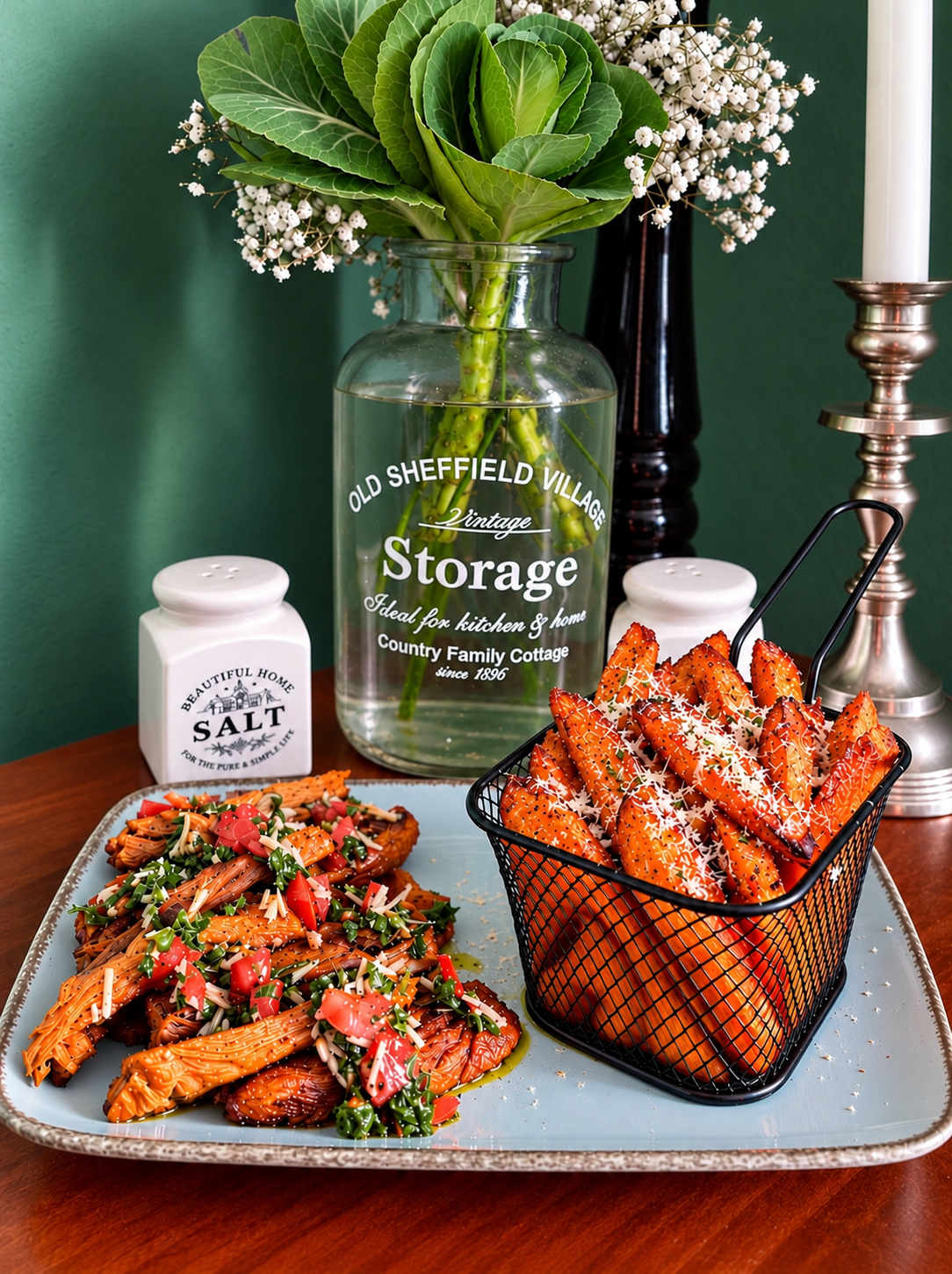
Churrasco generally refers to a steak, often grilled or pan-seared, while papas fritas are French fries. Chimichurri is a fragrant condiment associated with the Río de la Plata region, especially Uruguay and Argentina. It traditionally combines chopped parsley, garlic, oregano, vinegar and oil, sometimes with chili. This Via Veggie Vegan version replaces beef with plant-based steak, uses oven-baked sweet potato fries instead of conventional potato fries and adds fresh tomato to the chimichurri. Vegan Parmesan provides a final savory touch. It is a contemporary vegan interpretation of a familiar steak-and-fries combination rather than a traditional Uruguayan recipe.
▣ Ingredients (2 servings)
- 2 pieces plant-based steak (approx. 200–250 g each)
- 500 g sweet potatoes
- 1 tomato
- 2 cloves garlic
- 1/2 bunch flat-leaf parsley
- 1/2 tsp dried oregano
- 1/4 tsp chili flakes
- 1/2 tsp cornstarch
- 1/2 tbsp sea salt
- 1/2 tsp coarse salt
- 1 pinch salt
- 1 pinch black pepper
- 2 tbsp vegan Parmesan
- 1 tbsp vegetable oil
- 9 tbsp olive oil
- 2 tbsp red vinegar
- to taste salt & freshly ground black pepper
♨ Preparation
- 8. Prepare the Homemade Tomato Chimichurri
Finely chop the flat-leaf parsley and garlic. Dice the tomato into small pieces.
Combine the parsley, garlic, oregano and chili flakes in a bowl. Add the red wine vinegar and coarse salt, stirring until the salt begins to dissolve.
Gradually stir in the olive oil, then gently fold in the diced tomato. Season with black pepper.
Cover and set aside to allow the flavours to develop. For a more intense flavour, let the chimichurri rest for approximately one hour. - 2. Prepare the Sweet Potato Fries
Preheat the oven to 180°C fan (356°F convection) and line a baking tray with parchment paper.
Peel the sweet potatoes and cut them into evenly sized fries, approximately 1 cm thick and 6–8 cm long.
Thoroughly dry the sweet potato fries, then toss them with cornstarch, olive oil and sea salt until evenly coated.
Arrange the fries in a single layer on the baking tray, leaving enough space between them. - 3. Bake the Sweet Potato Fries
Bake for approximately 10–15 minutes, then carefully turn the fries.
Continue baking for another 10 minutes until golden and lightly crisp.
During the final five minutes, sprinkle the vegan Parmesan over the fries.
Switch off the oven and leave the fries inside for another 4–5 minutes before serving. - 4. Prepare the Plant-Based Churrasco
Remove the plant-based steaks from the refrigerator approximately 30 minutes before cooking, if recommended by the manufacturer.
Heat a cast-iron skillet or grill pan over medium-high to high heat.
Season the steaks with salt and freshly ground black pepper.
Add the vegetable oil to the pan and sear the steaks for approximately 2–4 minutes per side, depending on their thickness and the manufacturer’s cooking instructions.
Cook until nicely browned and heated through.
Remove from the pan and allow to rest briefly before serving. - 5. Assemble and Serve
Arrange the plant-based steaks on two plates alongside the golden sweet potato fries.
Generously spoon the homemade tomato chimichurri over the steaks.
Finish with any remaining vegan Parmesan and serve immediately while the fries are hot.
Food Story
Uruguay – Where Steak Is Almost a National Institution
My culinary journey around the world has brought me to Uruguay, a country where grilling is practically an art form. And what better way to celebrate that tradition than with a proper churrasco? Well, a proper vegan churrasco, of course. No cattle were invited to this dinner. Instead, two juicy plant-based steaks took centre stage, accompanied by a generous helping of homemade chimichurri. Parsley, garlic, oregano, chili, vinegar and olive oil – all the wonderfully bold ingredients that make this South American condiment so irresistible. And because I love adding a little freshness and color, I invited a ripe tomato to the party as well.
Sweet Potatoes Get the Golden Treatment
A steak dinner without fries? Not in my kitchen. But rather than preparing classic potato fries, I decided to give sweet potatoes the starring role. Cut into generous wedges, coated with olive oil and a little cornstarch, they went straight into the oven. Their natural sweetness makes a wonderful contrast to the garlicky, tangy chimichurri. And then came the vegan Parmesan. Was it strictly necessary? Probably not. Did I add it anyway? Absolutely. A little extra savory flavor never hurt a good plate of fries. Especially when those fries are already beautifully golden and waiting for their big moment.
One Steak Dinner. Absolutely No Beef.
When everything was ready, the plate looked like a proper feast. The plant-based steaks were generously covered with fresh tomato chimichurri, and the sweet potato fries had received their final Parmesan treatment. There was garlic, there was color, there was plenty of flavor – and not a single animal ingredient in sight. Uruguay may be famous for its beef, but this dinner proves that the pleasure of a hearty steak-and-fries meal doesn’t have to depend on meat. One more country on my Via Veggie Vegan journey, one more traditional combination reimagined with plants. And yes, Team Garlic was very pleased with the result.
♨ Nutrition per serving
Nutritional values are approximate and may vary depending on the ingredients and products used.
Good to Know
Uruguay – The Country Between Two Giants
Uruguay is located between Brazil and Argentina, with the Río de la Plata forming part of its southern boundary. Although relatively small compared with its neighbors, the country has a distinctive cultural identity shaped by its geography, history and traditions. Montevideo, the capital, lies on the northern shore of the Río de la Plata.
Montevideo – Uruguay's Capital
Montevideo is Uruguay's largest city and an important cultural and economic centre. Its historic districts, waterfront promenade and food markets reflect the country's connection to the Río de la Plata. Traditional grilling establishments and contemporary restaurants coexist within its diverse food scene.
What Is Churrasco?
Churrasco is a term used in several South American countries for grilled or pan-cooked meat, particularly steak. The exact meaning and preparation vary by country and region. In Uruguay, steak dishes are closely associated with the country's strong cattle-ranching and grilling traditions.
What Is Asado?
Asado refers both to a style of cooking over a grill or fire and to the social gathering surrounding the meal. In Uruguay, asado is an important culinary and social tradition. The preparation often involves a parrilla, a metal grill used over embers.
The Parrilla – Heart of the Grill
A parrilla is a traditional grilling setup commonly used in Uruguay and Argentina. Cooking over embers rather than direct flames allows greater control over heat and encourages gradual browning. The method is central to many regional barbecue traditions.
Uruguay's Cattle-Ranching Heritage
Cattle raising has played a major role in Uruguay's agricultural history and economy. Extensive grasslands have supported livestock production for generations. This history helps explain why beef and grilled dishes occupy such a prominent place in traditional Uruguayan food culture.
The Pampas and Uruguay's Grasslands
Much of Uruguay consists of rolling grasslands, part of the broader Río de la Plata grassland region. These ecosystems support diverse plant communities and wildlife. They have also been extensively used for agriculture and livestock grazing.
What Is Chimichurri?
Chimichurri is a herb-based condiment widely associated with Uruguay and Argentina. It typically contains parsley, garlic, oregano, vinegar and oil, with optional chili or other seasonings. Its fresh, sharp flavor makes it a popular accompaniment to grilled foods.
Is Chimichurri Traditionally Vegan?
A basic chimichurri made from herbs, garlic, vinegar, oil and spices is naturally vegan. Individual commercial products or household variations may contain additional ingredients, so checking the recipe or label is sensible when purchasing prepared sauces.
Why Chimichurri Is Chopped Rather Than Blended
Finely chopping the herbs and garlic produces a loose, rustic condiment with distinct pieces of parsley and seasonings. Blending creates a more homogeneous texture and can change the sauce's appearance. Both approaches are possible, but hand chopping is well suited to this traditional-style preparation.
Why Add Tomato to Chimichurri?
Fresh tomato is a personal variation rather than an essential ingredient in classic chimichurri. It contributes sweetness, juiciness and a brighter color. A firm, ripe tomato helps preserve the condiment's texture without introducing excessive liquid.
Parsley – The Green Heart of Chimichurri
Flat-leaf parsley provides a fresh, slightly peppery flavor that balances garlic, vinegar and oil. It also contributes vitamin K and various plant compounds. Chopping parsley shortly before preparing the sauce helps preserve its fresh aroma.
Garlic – Small Ingredient, Big Personality
Garlic contains sulfur compounds responsible for much of its distinctive aroma. Chopping or crushing garlic triggers enzymatic reactions that create pungent flavor compounds. In an uncooked condiment such as chimichurri, garlic retains a particularly noticeable sharpness.
Oregano – A Classic Chimichurri Seasoning
Dried oregano adds earthy, aromatic notes to chimichurri. Its concentrated flavor complements parsley and garlic. Allowing the sauce to rest gives the dried herb time to absorb some moisture and release its aroma.
Why Vinegar Matters
Red wine vinegar provides acidity that balances the richness of oil and plant-based steak. It also brightens the overall flavor of the condiment. The acidity contributes to taste but does not make homemade chimichurri shelf-stable.
Olive Oil – Flavor and Texture
Olive oil carries the flavors of the herbs, garlic and spices while giving chimichurri its characteristic consistency. It is relatively rich in monounsaturated fatty acids. The type of olive oil used can influence the final flavor, from mild and buttery to peppery and robust.
Chili Flakes – A Gentle Kick
Chili flakes contain capsaicinoids, the compounds responsible for the sensation of chili heat. The amount of heat depends on the variety and quantity used. In this recipe, a small amount adds warmth without dominating the fresh herb flavors.
Why Chimichurri Benefits from Resting
Resting allows the herbs, garlic, oregano and chili to mingle with the oil and vinegar. The dried oregano also has time to hydrate. This can create a more integrated flavor, although the sauce is enjoyable immediately after preparation.
Sweet Potatoes – Not Actually Potatoes
Sweet potatoes belong to the species Ipomoea batatas, while ordinary potatoes belong to Solanum tuberosum. Despite their similar names and culinary uses, they are botanically distinct plants. Sweet potatoes are members of the morning glory family.
Sweet Potatoes and Beta-Carotene
Orange-fleshed sweet potatoes contain beta-carotene, a carotenoid that the body can convert into vitamin A as needed. Vitamin A contributes to normal vision, immune function and the maintenance of healthy skin and mucous membranes. The amount of beta-carotene varies between sweet potato varieties.
Why Sweet Potato Fries Behave Differently
Sweet potatoes differ from ordinary potatoes in their sugar, starch and moisture composition. Their natural sweetness encourages browning, while moisture can make achieving a crisp exterior more challenging. Thin, evenly sized pieces and sufficient space on the baking tray help improve the result.
What Does Cornstarch Do?
A thin coating of cornstarch can help create a lightly crisp surface on oven-baked sweet potato fries. It absorbs some surface moisture and forms a coating during cooking. The fries still require sufficient heat and space to brown effectively.
Why Drying the Fries Matters
Excess surface moisture must evaporate before browning can develop effectively. Drying the cut sweet potatoes before adding oil and cornstarch helps reduce unwanted steaming and encourages a better exterior texture.
Why Oven Space Is Important
Crowding a baking tray traps moisture between the fries and reduces direct exposure to hot air. Leaving space between pieces improves air circulation and promotes more even cooking. Two trays may be preferable to one overcrowded tray.
Why Sweet Potato Fries Are Often Softer
Even when carefully prepared, oven-baked sweet potato fries frequently remain softer than conventional deep-fried potato fries. Their texture depends on the variety, cut thickness, moisture content and cooking method. A lightly crisp exterior with a tender centre is a realistic goal.
Vegan Parmesan – A Savory Finishing Touch
Vegan Parmesan alternatives can be made from nuts, seeds, nutritional yeast, starches or other plant ingredients. Their flavor, texture and nutritional composition vary by brand. Adding the Parmesan near the end of baking helps protect delicate ingredients from excessive browning.
Plant-Based Steaks – What Are They Made From?
Plant-based steaks may contain proteins derived from soy, peas, wheat or other plant sources. Manufacturers use different techniques to create fibrous textures and savory flavors. Protein content, sodium levels and saturated fat content vary considerably between products.
Why Browning Improves Steak Flavor
Browning plant-based steak can create roasted and savory aromas through heat-driven reactions between sugars and amino compounds. The manufacturer's cooking instructions should take priority, since different products respond differently to heat.
Plant-Based Protein and a Balanced Diet
Plant-based meat alternatives can contribute protein to a vegan diet. Their nutritional quality depends on the ingredients, fortification and processing. A varied vegan diet can also obtain protein from legumes, soy foods, grains, nuts and seeds.
Saturated and Unsaturated Fatty Acids
Saturated and unsaturated fats differ in their chemical structures and effects on blood lipids. Replacing some saturated fats with unsaturated fats can help reduce LDL cholesterol. Olive oil is rich in monounsaturated fats, while some plant-based meat and cheese alternatives may contain more saturated fat, depending on their ingredients.
Understanding LDL and HDL Cholesterol
LDL and HDL are lipoproteins that transport cholesterol through the bloodstream. Elevated LDL cholesterol contributes to atherosclerosis and cardiovascular risk. HDL helps transport cholesterol back toward the liver, but high HDL levels alone do not guarantee protection against cardiovascular disease. Overall dietary patterns and other individual factors matter.
Dietary Fiber – Supporting Digestion
Sweet potatoes, tomatoes, garlic and parsley contribute varying amounts of dietary fiber. Fiber supports normal bowel function, and some types are fermented by intestinal microorganisms. A varied diet containing vegetables, legumes and whole grains helps support digestive health.
Uruguay's Atlantic Coast
Uruguay has a long coastline with beaches, dunes, wetlands and estuarine habitats. These environments support birds, fish and other wildlife. Coastal ecosystems are also important for tourism, recreation and conservation.
José Ignacio and Punta del Este
Punta del Este and José Ignacio are well-known coastal destinations in southeastern Uruguay. Their beaches and seaside landscapes attract visitors, particularly during the Southern Hemisphere summer. The region illustrates another side of Uruguay beyond its ranching traditions.
Cabo Polonio – Dunes and Wildlife
Cabo Polonio is a coastal area known for its sand dunes, beaches and distinctive natural environment. Nearby rocky shores provide habitat for South American sea lions and fur seals. Protecting coastal habitats is important for maintaining this biodiversity.
South American Sea Lions
South American sea lions inhabit coastal areas around Uruguay and other parts of South America. They are social marine mammals that gather in colonies on rocky shores and islands. Their presence is one of the notable wildlife features of Uruguay's Atlantic coast.
Uruguay's Wetlands
Wetlands in Uruguay provide habitats for waterbirds, fish, amphibians and other wildlife. They also contribute to water regulation and ecological diversity. Agricultural development, pollution and habitat alteration can place pressure on these environments.
The Greater Rhea – A Bird of the Grasslands
The greater rhea is a large, flightless bird native to parts of South America, including Uruguay. It inhabits open grasslands and agricultural landscapes. Habitat changes and hunting pressure have affected populations in parts of its range.
The Capybara – South America's Giant Rodent
Capybaras are the world's largest living rodents and occur in suitable wetland habitats across much of South America, including Uruguay. They are highly social animals and spend considerable time near water. Their semi-aquatic lifestyle makes them well adapted to rivers, marshes and lagoons.
The Southern Lapwing – Uruguay's National Bird
The southern lapwing, known locally as the tero, is Uruguay's national bird. It is recognizable by its loud calls and distinctive appearance. The species is commonly found in open landscapes, grasslands and agricultural areas.
Mate – Uruguay's Everyday Tradition
Mate is a traditional South American infusion prepared from the leaves of yerba mate. In Uruguay, drinking mate is deeply embedded in everyday social life. It is commonly carried in a gourd with a metal straw called a bombilla, often alongside a thermos of hot water.
Candombe – A Distinctive Uruguayan Tradition
Candombe is an Afro-Uruguayan musical and cultural tradition centered on drumming, dance and community expression. It is especially associated with Montevideo and forms an important part of Uruguay's cultural heritage. Its rhythms and public performances reflect the country's diverse historical influences.
Zero Waste – Use Every Last Drop of Chimichurri
Leftover chimichurri can be used as a dressing for roasted vegetables, potatoes or grain bowls. Because this version contains fresh tomato and herbs, refrigerate it promptly in a clean, airtight container and use it within a short period rather than leaving it at room temperature for extended storage.
Creative Uses for Sweet Potato Scraps
If the sweet potatoes are thoroughly washed, suitable clean peelings can be roasted until crisp or added to homemade vegetable stock. Alternatively, keep the peelings for composting where appropriate. Avoid using damaged or spoiled material.
How to Store Leftover Vegan Churrasco
Refrigerate leftovers promptly in airtight containers and consume within approximately 2–3 days. Store the chimichurri separately from the steak and fries where practical. Reheat the fries in an oven or air fryer to help restore some of their exterior texture, and reheat the plant-based steak according to the manufacturer's guidance.