Iraq – A Culinary Heritage Between Two Rivers
Iraq lies in the historic region of Mesopotamia, between the Tigris and Euphrates rivers, where some of the world's earliest urban civilizations developed. Its cuisine reflects centuries of Arab, Persian, Kurdish, Turkish and other regional influences, combining hearty stews, vegetables, legumes, rice and aromatic spices. Garlic, cumin, coriander and tomato-based sauces are familiar elements of Iraqi home cooking. The Arabic word "maraq" refers to a broth or stew, while "qarnabit" means cauliflower. Together, they describe a comforting cauliflower dish rooted in the broader traditions of Iraqi cuisine.
Maraq Qarnabit – Iraqi Cauliflower Stew with a Spooky Vegan Twist
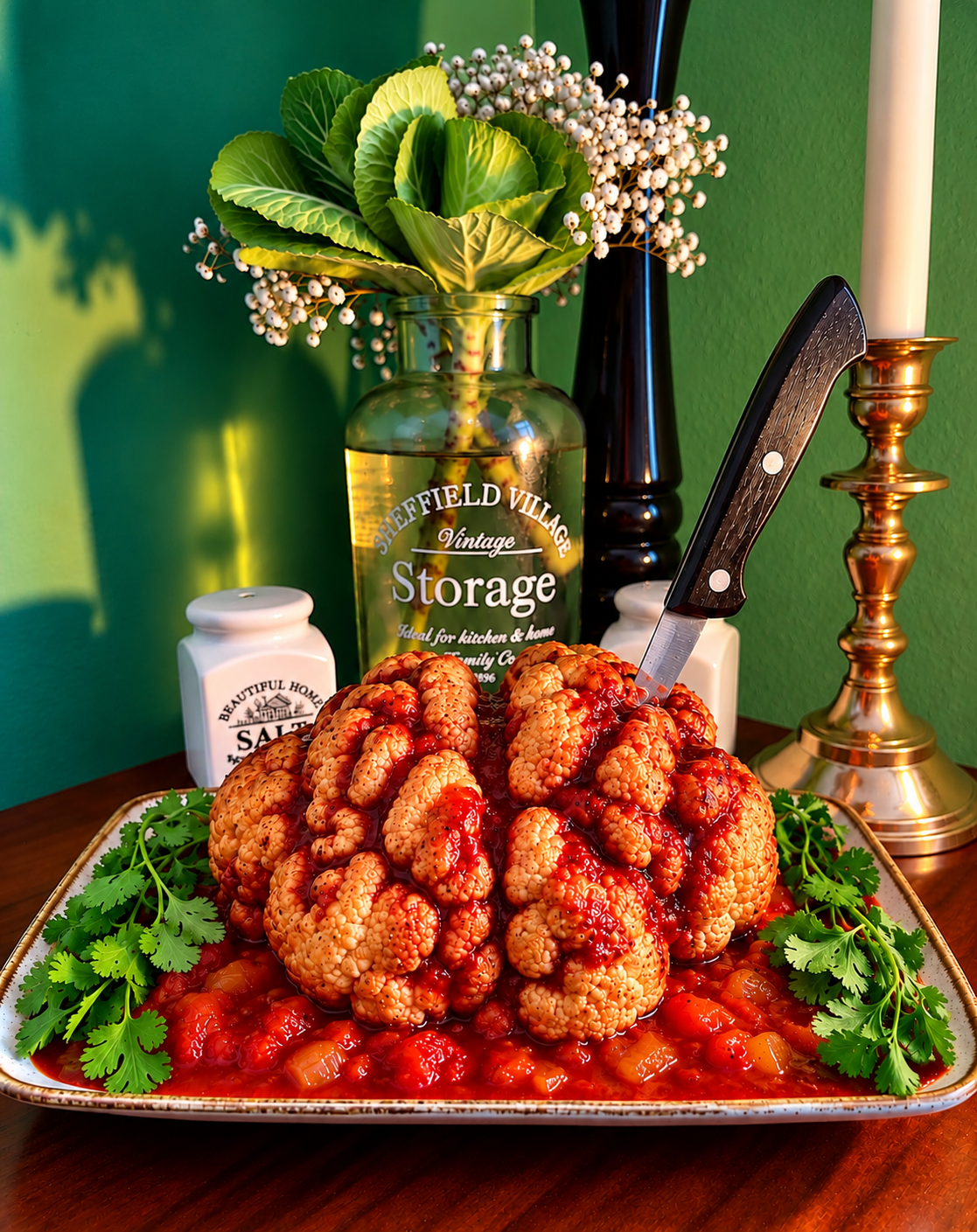
Traditional Iraqi cauliflower stews can feature cauliflower simmered in a seasoned tomato-based broth, sometimes alongside meat and other vegetables. My Vegan Iraqi Maraq Qarnabit takes inspiration from these flavors but transforms the familiar stew into a completely plant-based Halloween centerpiece. Instead of cutting the cauliflower into florets, I cook it whole and carefully shape its surface to resemble a human brain. A rich tomato sauce seasoned with garlic, cumin, coriander, paprika and chili forms the base, while beetroot juice adds a dramatic blood-red finish. Fresh coriander and a punchy garlic-lemon drizzle complete the dish. It is a creative Iraqi-inspired interpretation rather than a traditional presentation – where comforting Middle Eastern flavors meet a deliciously wicked Halloween imagination.
▣ Ingredients (2 servings)
- 1 whole cauliflower, approx. 1.000 g
- 1 inion
- 2 cloves garlic (for the tomato sauce)
- 2 cloves garlic (for the garlic-lemon finish)
- 2 tbsp tomato paste
- 200 g chopped tomatoes
- 200-300 ml hot vegetable stock
- 2 tbsp vegetable oil
- 1/2 tsp chili flakes ((Pul Biber))
- 1/2 tsp ground cumin
- 1/2 tsp sweet paprika
- 3 sprigs fresh coriander
- 50 ml beetroot juice
- 1 tbsp freshly squeezed lemon juice
- to taste salt & freshly ground black pepper
♨ Preparation
- Prepare the Cauliflower
Remove the outer leaves from the cauliflower and trim the bottom of the stem just enough to create a flat, stable base. Keep the cauliflower whole and leave as much of the edible stem intact as possible.
Rinse thoroughly. Fill a large pot with water, add a generous amount of salt and bring to a boil. - Cook the Whole Cauliflower
Carefully lower the cauliflower into the boiling water and cook for approximately 20 minutes, depending on its size.
Turn it occasionally to ensure even cooking. The cauliflower should be tender enough to pierce with a knife while remaining firm enough to hold its shape.
Remove carefully, drain thoroughly and allow to cool slightly before carving. - Prepare the Aromatic Base
While the cauliflower cooks, peel and finely chop the onion and the 2 garlic cloves intended for the tomato sauce.
Heat the vegetable oil in a large frying pan or saucepan over medium heat. Add the onion and sauté until translucent.
Add the garlic and cook briefly until fragrant, taking care not to burn it. - Roast the Tomato Paste and Activate the Spices
Stir the tomato paste into the onion and garlic mixture and roast for approximately 1 minute to develop a deeper, richer flavour.
Add the chilli flakes, cumin, ground coriander and paprika. Stir continuously for approximately 30 seconds, allowing the spices to bloom in the warm oil and release their aromas. - Simmer the Spicy Tomato Sauce
Add the chopped tomatoes and gradually pour in 200–300 ml of hot vegetable stock, depending on your preferred consistency.
Stir well, bring to a gentle simmer and cook uncovered for approximately 10–15 minutes, until the sauce thickens and the flavours combine.
Season with salt, freshly ground black pepper and a squeeze of fresh lemon juice. - Create the Cauliflower Brain
Place the slightly cooled cauliflower on a stable cutting board.
Using the handle of a wooden spoon, gently press a deep groove down the centre to divide the cauliflower visually into two brain hemispheres.
For additional brain-like folds, carefully create shallow, winding indentations across the surface using a clean, food-safe, blunt kitchen utensil.
Work slowly and gently to preserve the natural structure of the cauliflower. - Prepare the Garlic-Lemon Finish
Peel and finely crush the 2 additional garlic cloves.
Combine with 1 tablespoon of freshly squeezed lemon juice and stir until well mixed.
Allow the mixture to stand briefly so the flavours can develop. - Create the Bloody Halloween Sauce
Transfer a small portion of the finished tomato sauce into a separate bowl.
Add approximately 50 ml beetroot juice and stir until evenly combined. The mixture should develop a deep red colour suitable for the Halloween blood effect.
If necessary, briefly warm the mixture and reduce it slightly until it is thick enough to cling to the cauliflower. - Assemble the Halloween Brain
Spoon the spicy tomato sauce generously onto a large serving plate, creating a rich red base.
Carefully place the whole cauliflower brain in the centre, ensuring that it stands securely on its trimmed stem.
Slowly drizzle the beetroot-tinted tomato sauce over the cauliflower, allowing it to run naturally into the carved grooves and folds.
Finish with the garlic-lemon mixture and garnish with fresh coriander sprigs.
Serve warm – preferably with a suitably dramatic Halloween presentation!
Food Story
Two Brain Hemispheres, One Very Spooky Dish
Two brain hemispheres. One very spooky dish. And one slightly overexcited cook armed with a cauliflower, a wooden spoon and a rather questionable collection of kitchen tools. Welcome to another Halloween experiment in my Via Veggie Vegan kitchen! When I discovered Iraqi Maraq Qarnabit, I loved the idea of cauliflower in a rich, aromatic tomato sauce. But since Halloween was approaching, simply cutting the cauliflower into florets seemed terribly ordinary. Why not serve the entire thing as a human brain instead? A perfectly reasonable culinary decision, wouldn’t you agree?
When Creativity Meets a Serious Test of Patience
My right brain hemisphere – the one supposedly responsible for creativity – was having the time of its life. My left hemisphere, meanwhile, was apparently in charge of patience, and believe me, it had its work cut out! Turning an innocent cauliflower into a convincing brain required a steady hand, a little improvisation and several moments of wondering whether I’d completely lost my mind. Armed with a wooden spoon and a few improvised carving tools, I carefully shaped the two hemispheres and their winding folds. All while a wonderfully spicy tomato sauce was bubbling away with garlic, cumin, coriander, paprika and chili. At least dinner smelled fantastic, even if my kitchen temporarily resembled a rather unusual anatomy laboratory!
A Little Beetroot Blood and a Very Happy Cook
And then came the grand finale! I placed my cauliflower brain on its bed of spicy Iraqi-inspired tomato sauce and drizzled beetroot-tinted sauce into every little groove. A splash of garlic and lemon, a few sprigs of fresh coriander, and suddenly my Halloween experiment was staring back at me in all its gloriously gruesome beauty. Was it slightly ridiculous? Absolutely. Was I ridiculously pleased with myself? Even more so! The cauliflower was tender, the sauce rich and spicy, and the entire creation was completely vegan. Sometimes the best kitchen adventures begin with a completely crazy idea. And sometimes all you need is a cauliflower, a little imagination and the courage to use your brain!
♨ Nutrition per serving
Nutritional values are approximate and may vary depending on the ingredients and products used.
Good to Know
What Is Iraqi Maraq Qarnabit?
Maraq Qarnabit is an Iraqi-inspired cauliflower stew. The Arabic word "maraq" refers to a broth or stew, while "qarnabit" means cauliflower. Iraqi home cooking features many comforting vegetable stews, often prepared with aromatic spices and tomato-based sauces. Depending on the household and recipe, cauliflower may be combined with other vegetables or meat. This Via Veggie Vegan version uses the familiar flavor combination of cauliflower, tomatoes, garlic and spices but transforms the dish into a completely plant-based Halloween centerpiece.
Why Is Iraqi Cuisine So Diverse?
Iraq lies in the historic region of Mesopotamia, between the Tigris and Euphrates rivers. Its culinary traditions have developed through centuries of cultural exchange and reflect Arab, Kurdish, Persian, Turkish and other regional influences. Stews, rice dishes, vegetables, legumes, herbs and aromatic spices play important roles in everyday cooking. Recipes often vary between regions and families, making Iraqi cuisine wonderfully diverse.
Why Keep the Cauliflower Whole?
Traditional cauliflower stews generally use florets or pieces that cook directly in the sauce. Keeping the cauliflower whole is a creative Halloween adaptation rather than a traditional Iraqi preparation. The compact structure of a whole cauliflower makes it ideal for carving into a brain-like shape. Its naturally curved florets already resemble the folds of a human brain, so only a few carefully placed grooves are needed to create the spooky effect.
Can You Eat the Entire Cauliflower?
Almost the entire cauliflower is edible, including its florets, central stem and tender leaves. The stem has a slightly firmer texture but becomes tender when cooked. The leaves can be sautéed, roasted or added to soups. Only damaged or excessively tough parts need to be removed. Using more of the vegetable reduces food waste and makes the most of its nutritional value.
Why Is Cauliflower So Nutritious?
Cauliflower belongs to the Brassica family, alongside broccoli, Brussels sprouts, kale and cabbage. It provides dietary fiber, vitamin C, vitamin K and folate while being relatively low in calories. Vitamin C contributes to normal immune function and helps protect cells from oxidative stress. Folate supports normal cell division, while dietary fiber contributes to digestive health. Cooking can reduce some heat-sensitive nutrients, but cauliflower remains a valuable part of a varied plant-based diet.
Cauliflower and Glucosinolates
Like other cruciferous vegetables, cauliflower naturally contains glucosinolates. These sulfur-containing plant compounds contribute to the characteristic flavor of cabbage-family vegetables. When plant tissues are damaged by cutting or chewing, glucosinolates can be converted into various breakdown products, including isothiocyanates. These compounds are being studied for their potential biological effects, although laboratory findings do not establish that eating cauliflower prevents or treats disease. Including cruciferous vegetables regularly is a sensible part of a balanced diet.
Why Does Cauliflower Develop a Strong Smell When Cooked?
Cauliflower contains sulfur-containing compounds that can release noticeable aromas during cooking. Prolonged boiling can make these odors more pronounced and soften the vegetable excessively. Cooking the cauliflower only until tender helps preserve its structure and produces a more pleasant texture. For this recipe, keeping the cauliflower firm enough to carve is especially important.
How Do You Prevent the Cauliflower Brain from Falling Apart?
The cauliflower should be cooked until a knife can penetrate the thickest part of the stem without excessive resistance, but the florets should remain firmly attached. Cooking time varies depending on the size and density of the cauliflower. Lift it carefully from the water, drain thoroughly and allow it to cool slightly before shaping. Use a blunt, food-safe utensil to press shallow grooves rather than cutting deeply between the florets.
What Makes Tomato Paste So Flavorful?
Tomato paste is concentrated tomato pulp with much of its water removed. This gives it an intense tomato flavor and a thicker consistency than canned chopped tomatoes. Briefly cooking tomato paste in oil before adding liquid develops a richer flavor through heating and concentration. Some browning reactions may also contribute, depending on temperature and moisture. Stir continuously and avoid burning the paste, which can create unpleasant bitterness.
Why Bloom Spices in Warm Oil?
Many aromatic compounds in spices are fat-soluble, meaning they disperse readily into oil. Briefly heating cumin, coriander, paprika and chili flakes in warm oil helps distribute their flavors throughout the sauce. This technique is commonly called blooming. Moderate heat is essential because ground spices can burn quickly. Approximately 30 seconds is usually sufficient before adding tomatoes and vegetable stock.
Cumin and Coriander – Two Different Spice Personalities
Although they are frequently used together, cumin and coriander have very different flavor profiles. Ground cumin contributes earthy, warm and slightly bitter notes, while ground coriander seed tastes milder, with citrus-like and subtly sweet aromas. Their combination creates a balanced aromatic foundation for the tomato sauce. Fresh coriander leaves add a separate, brighter herbal flavor at the end.
Ground Coriander vs. Fresh Coriander
Ground coriander is made from the dried seeds of the coriander plant, while fresh coriander refers to its green leaves and tender stems. The seeds and leaves have distinctly different flavors and are not direct substitutes. In this recipe, ground coriander contributes warmth to the sauce, while fresh coriander provides a fragrant finishing touch. Both can be used together without overwhelming the dish.
What Is Pul Biber?
Pul Biber is a Turkish term for crushed red pepper flakes, often associated with varieties such as Aleppo-style pepper. Depending on the product, the flakes may have a fruity, mildly smoky or moderately spicy character. Their heat can vary considerably. In this recipe, Pul Biber adds warmth to the tomato sauce without needing to dominate the other spices. Start with a smaller quantity if you prefer a milder result.
Why Does Chili Feel Hot?
The burning sensation produced by chili peppers comes mainly from capsaicinoids, including capsaicin. These compounds activate TRPV1 receptors involved in sensing heat and irritation. This creates a sensation of warmth even when the food itself is not physically hot. Capsaicin does not literally burn the tongue at normal culinary concentrations, although highly concentrated chili products can cause significant irritation. Individual tolerance varies, so the amount of chili should always be adjusted to taste.
Sweet Paprika or Smoked Paprika?
Sweet paprika contributes gentle pepper flavor and red color without much heat. Smoked paprika adds a distinctive smoky aroma because the peppers are dried using smoke. Both work well in this cauliflower stew, but they produce slightly different results. Sweet paprika keeps the tomato sauce closer to a straightforward vegetable stew, while smoked paprika introduces an additional roasted character.
Why Add Lemon Juice to Tomato Sauce?
Tomatoes already contain natural acids, but a small squeeze of fresh lemon juice can brighten a rich sauce and enhance the perception of its other flavors. The goal is balance rather than noticeable sourness. Add lemon juice toward the end of cooking and taste before adding more. Its freshness works particularly well with garlic, cumin, coriander and chili.
Raw Garlic and Cooked Garlic – Why Do They Taste Different?
Garlic develops its characteristic pungency when its cells are crushed or chopped. This activates enzymatic reactions that produce sulfur-containing compounds, including allicin. Heating changes these compounds and generally creates a sweeter, mellower flavor. The cooked garlic in the tomato sauce therefore provides a rounded savory base, while the freshly crushed garlic in the lemon finish adds a sharper, more intense aroma.
Why Let the Garlic-Lemon Mixture Rest?
Crushing garlic and allowing it to stand briefly gives its characteristic sulfur compounds time to develop before the mixture is added to the dish. Combining the garlic with lemon juice creates a bright, punchy finishing sauce that contrasts with the warm tomato base. Because raw garlic can be quite intense, the amount can be adjusted according to personal preference.
Beetroot Juice – Nature's Halloween Food Coloring
Beetroot gets much of its striking red-purple color from natural pigments called betalains, particularly betacyanins. These water-soluble pigments make beetroot juice a useful ingredient for naturally coloring sauces and other foods. In this recipe, beetroot juice transforms a small portion of tomato sauce into a dramatic Halloween blood effect without artificial food coloring. The result also adds a subtle earthy sweetness.
Why Does Beetroot Color Sometimes Change During Cooking?
Betalain pigments are sensitive to factors such as heat, oxygen, light and acidity. Prolonged heating can reduce their color intensity or shift their appearance. For the strongest red effect, add beetroot juice toward the end of cooking and avoid simmering the colored sauce unnecessarily. A slightly thick sauce will cling more effectively to the cauliflower's carved grooves.
How to Create the Perfect Bloody Brain Effect
The visual effect works best when the cauliflower is pale and the beetroot-tinted tomato sauce is deep red. Arrange the whole cauliflower on a generous bed of thick tomato sauce, then slowly drizzle the red mixture into the carved folds. Allow it to flow naturally rather than covering the entire cauliflower. Leaving some pale florets visible creates stronger contrast and makes the brain shape more recognizable.
Is Beetroot Juice Nutritious?
Beetroot juice contains natural pigments and varying amounts of potassium and dietary nitrate. Dietary nitrate can be converted in the body through pathways involving nitric oxide, a molecule involved in blood vessel function. Research has examined the effects of beetroot juice on blood pressure and exercise performance, but results depend on dose and individual circumstances. The small quantity used in this recipe is primarily intended for color and flavor, not as a therapeutic ingredient.
Tomatoes and Lycopene
Tomatoes contain lycopene, a carotenoid pigment responsible for much of their red color. Cooking and processing can make lycopene more accessible for absorption, particularly when tomatoes are consumed with some dietary fat. The vegetable oil in this recipe helps create a flavorful sauce and can support absorption of fat-soluble carotenoids. Lycopene is studied for its potential role in health, but no single tomato-based dish should be considered a treatment or prevention for disease.
Why Is Vegetable Stock Better Than Plain Water?
Vegetable stock adds additional savory flavor to the tomato sauce. Depending on its ingredients, it may contain aromas from onions, carrots, celery, herbs and spices. Homemade stock allows greater control over salt content and flavor intensity. Because commercially prepared stock can contain considerable sodium, taste the sauce before adding extra salt.
Zero Waste – Turn Vegetable Scraps into Homemade Stock
Clean, suitable vegetable trimmings can be collected in a reusable container in the freezer until there is enough to prepare stock. Onion skins, carrot peelings, celery ends and herb stems can contribute flavor, provided they are clean and in good condition. Avoid spoiled scraps, heavily soiled peels and vegetables with unpleasant bitterness. Simmer the collected ingredients in water, strain and use the resulting stock in soups, sauces and stews.
Can You Make Vegetable Stock Powder from Leftovers?
Vegetable stock powder can be prepared by thoroughly dehydrating suitable cooked or fresh vegetables and grinding them into a fine powder. However, moisture control is essential for safe storage. Cooked vegetable solids must be dried completely using a suitable dehydrator or carefully controlled oven process. If dryness cannot be reliably achieved, refrigerate or freeze the mixture instead of storing it at room temperature. Homemade stock powder should not be assumed to have the same shelf life as commercially manufactured products.
Why Is This Recipe Naturally Vegan?
The ingredients used in this cauliflower dish are plant-based by nature. Cauliflower, tomatoes, garlic, onion, spices, lemon juice, beetroot juice and vegetable oil contain no animal-derived ingredients. Unlike recipes that require replacing meat, eggs or dairy, this interpretation can be prepared without specialized vegan substitutes. If using packaged vegetable stock, simply check the ingredient list to confirm that it is plant-based.
Plant-Based Protein – What Does This Dish Provide?
Cauliflower contains some protein, but it is not as protein-dense as legumes, tofu or seitan. The estimated protein content of this recipe is approximately 13 g per serving, depending on the cauliflower's size and the exact ingredients used. For a more protein-rich meal, serve the cauliflower with chickpeas, lentils or a suitable bean-based side dish. Combining different plant foods across the day helps provide a varied amino acid intake.
Dietary Fiber and Digestive Health
Cauliflower, tomatoes and onions contribute dietary fiber, which supports normal bowel function and helps nourish the gut microbiota. Cruciferous vegetables can cause bloating in some people because they contain fermentable carbohydrates and fiber. Cooking cauliflower until tender may improve its tolerability, although individual responses vary. Smaller portions and gradual increases in fiber intake can also help.
Is This a Low-Fat Main Course?
Compared with many rich, cream-based casseroles, this cauliflower dish uses relatively little added fat. Most of its fat comes from the vegetable oil used to prepare the sauce. The estimated nutritional values are approximately 300 calories and 12 g fat per serving, although actual values depend on ingredient quantities and portion sizes. Choosing an oil rich in unsaturated fats can be part of a heart-conscious dietary pattern.
Saturated and Unsaturated Fats – Why the Difference Matters
Unsaturated fats are found in foods such as olive oil, rapeseed oil, nuts and seeds. Replacing saturated fats with unsaturated fats generally helps reduce LDL cholesterol, an established cardiovascular risk factor. This recipe can be prepared with olive or rapeseed oil to provide predominantly unsaturated fats. Overall dietary habits matter more than the fat content of any single meal.
What Is the Difference Between LDL and HDL Cholesterol?
LDL particles transport cholesterol through the bloodstream, and elevated LDL cholesterol contributes to the development of atherosclerosis. HDL particles participate in transporting cholesterol from tissues toward the liver, but a high HDL measurement alone does not guarantee protection against cardiovascular disease. Plant foods naturally contain no cholesterol, yet the types of fat in the overall diet can still influence blood cholesterol levels. Favoring unsaturated fats and eating plenty of fiber-rich plant foods are useful general strategies.
Why This Halloween Dish Is More Than Just Food Art
The cauliflower brain may look wonderfully gruesome, but underneath the Halloween presentation is a straightforward vegetable dish built around aromatic spices, garlic and a rich tomato sauce. The whole cauliflower provides texture and visual drama, while the beetroot juice adds natural color without changing the basic character of the recipe. It is an example of how familiar ingredients can become something memorable through creative presentation.
Can the Cauliflower Brain Be Prepared in Advance?
Yes. The tomato sauce can be prepared ahead and refrigerated in a covered container. The cauliflower can also be cooked in advance, cooled promptly and stored separately in the refrigerator. For the best presentation, carve the grooves and assemble the dish shortly before serving. Reheat the cauliflower thoroughly and warm the tomato sauce before adding the beetroot-colored finish, garlic-lemon mixture and fresh coriander.
How Should Leftovers Be Stored?
Refrigerate leftovers promptly in covered containers and use them within approximately two to three days. Reheat thoroughly until hot throughout. The cauliflower may become softer after reheating, so handle it carefully if you want to preserve the carved brain shape. The garlic-lemon finish and fresh coriander are best added after reheating to maintain their flavor and appearance.
Traditional Inspiration Meets Halloween Imagination
Vegan Iraqi Maraq Qarnabit – Spooky Cauliflower Brain is not a traditional Halloween dish from Iraq. It is my own creative interpretation of Iraqi-inspired cauliflower stew, using familiar ingredients and aromatic flavors in an entirely new presentation. The whole cauliflower brain, beetroot blood effect and dramatic plating belong to the playful world of Via Veggie Vegan Food Art. The result is a delicious meeting of culinary inspiration, plant-based cooking and a little spooky-season madness.