
Myanmar – Aromatic Curries and the Art of Si Pyan
Myanmar, also known as Burma, is a Southeast Asian country with a diverse culinary heritage shaped by regional traditions and neighbouring food cultures. Onion, garlic, ginger, turmeric and chili are important ingredients in many Burmese curries. A characteristic technique in several Burmese curry preparations is known as si pyan, often translated as "the oil returns". As the curry cooks and moisture evaporates, the seasoned oil becomes visible again, signalling that the sauce has reduced and its flavours have concentrated.
What Is Aloo Hin?
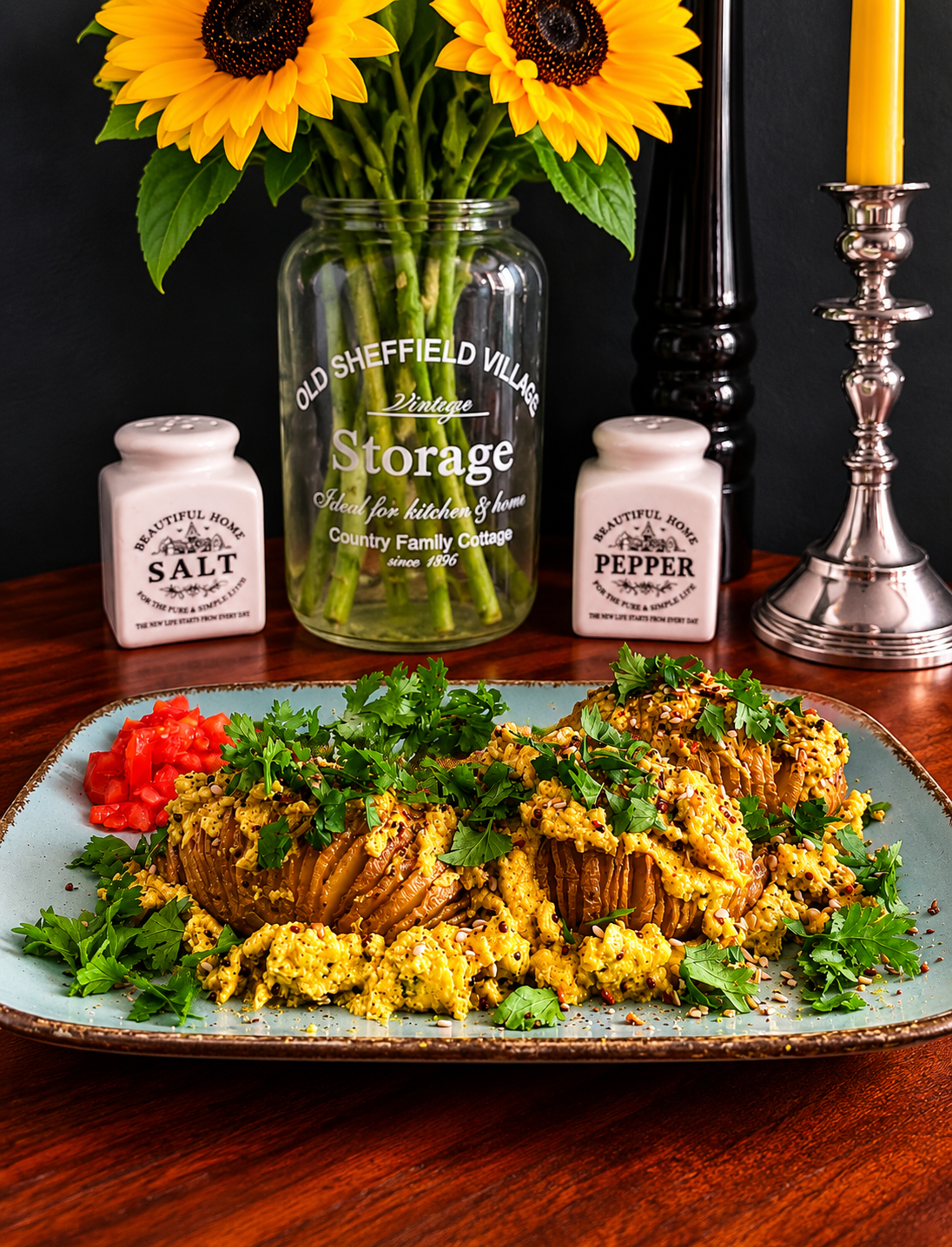
Aloo Hin is a Burmese-style potato curry. The name combines aloo, meaning potato, with hin, a Burmese term for curry or a cooked dish. Traditional preparations vary, but potatoes are commonly cooked with aromatic ingredients and spices until tender and well coated in the sauce. My Via Veggie Vegan version takes a deliberately creative approach by replacing ordinary potato pieces with slow-baked Hasselback potatoes. Black mustard seeds, mustard oil, sesame oil, vegan fish sauce and a garnish of coriander, sesame seeds and fresh tomato complete this fully plant-based, Burmese-inspired interpretation.
▣ Ingredients (2 servings)
- 500 g waxy potatoes
- 1 yellow onion
- 3 cloves garlic
- 1 cm fresh ginger
- 1 ripe tomato
- 1 tbsp black mustard seeds
- 1/2 tsp ground turmeric
- 1/2 tsp mild chili powder
- 1 handfu fresh coriander
- 1 tsp vegan fish sauce
- 1 tsp light sesame seeeds
- 25 ml neutral vegetable oil
- 25 ml mustard oil, food-grade
- 1/2 tsp sesame oil
- 150-200 ml water
- 1 tbsp chili oil
- to tste salt & freshly ground black pepper
♨ Preparation
- Step 1 – Prepare the Aromatic Spice Paste
Peel and roughly chop the yellow onion, garlic cloves and ginger. Place them in a blender or food processor and blend until a thick, smooth paste forms, adding only as much water as absolutely necessary. Stir in the ground turmeric and mild chili powder. The mixture should resemble a concentrated paste rather than a thin sauce. - Cook the Curry Base
Heat the neutral vegetable oil and food-grade mustard oil in a frying pan or small saucepan over medium heat. Add the aromatic paste, followed by the black mustard seeds. Cook for approximately 8–10 minutes, stirring regularly, until much of the moisture has evaporated and the paste becomes golden and intensely fragrant. Reduce the heat if necessary to prevent the spices from burning. - Prepare the Hasselback Potatoes
Wash the waxy potatoes thoroughly. Using a sharp knife, cut thin, closely spaced slices across each potato without cutting all the way through, creating the characteristic Hasselback fan shape. Brush generously with chili oil, making sure some oil reaches between the slices. - Bake the Potatoes in Two Stages
Preheat the oven to 100°C. Arrange the Hasselback potatoes in an ovenproof dish and bake for approximately 1 hour. Remove them from the oven and allow them to cool completely. Return the potatoes to the oven at 100°C and bake for another hour. Check the centre of each potato with a small knife. If the potatoes are not completely tender, continue baking until cooked through. The exact time depends on their size and the thickness of the slices. - Combine the Potatoes and Curry Base
Carefully transfer the cooked Hasselback potatoes into the prepared curry base. Add the sesame oil and vegan fish sauce, followed by 150–200 ml water, or enough to create a sauce. Gently spoon the sauce over and between the potato slices, taking care not to break the delicate fans. - Create the Si Pyan Finish
Simmer the curry gently until the sauce reduces and becomes concentrated. Stir the sauce around the potatoes carefully rather than moving the potatoes unnecessarily. Continue cooking until the seasoned oil begins to separate visibly from the reduced curry mixture and return to the surface. Season with salt and freshly ground black pepper to taste. - Wash and finely chop the fresh coriander. Dice the ripe tomato into small pieces and prepare the light sesame seeds.
- Arrange and Serve
Carefully arrange the Hasselback potatoes on serving plates and spoon the rich curry sauce generously over and around them. Finish with fresh coriander, light sesame seeds and finely diced tomato. Serve immediately
Food Story
Aloo Hin – But Make It Hasselback!
My Via Veggie Vegan version took a few liberties with the original – and this time, quite deliberately. Traditionally, Aloo Hin keeps the potatoes much simpler. Mine went full Hasselback instead. Because the eye eats too – and apparently mine wanted potato fans. And if there’s one thing I love, it’s giving a familiar ingredient a completely different appearance. Potatoes are already wonderful. But potatoes dressed up for a special occasion? Even better!
A Few Extra Ingredients and a Little Colour Coordination
Then came black mustard seeds, vegan fish sauce and a sprinkle of sesame seeds – none of them essential to the traditional recipe, but all very welcome in my kitchen. The aromatic curry base was slowly cooked until the flavours became beautifully concentrated, while my Hasselback potatoes enjoyed their own two-stage oven adventure. And the tomato? Pure vanity. The curry is gloriously yellow from the turmeric, and apparently I decided it needed a little red on top. Because authenticity matters. But apparently, so does colour coordination!
Productive Procrastination with Potatoes
And don’t let the two-hour Hasselback situation scare you. They need very little attention. Mine spent their first hour in the oven while I had breakfast, cooled down while I got some housework done, then went back in for round two. Meanwhile, the curry base was waiting for its grand finale: si pyan, the moment when the seasoned oil returns to the surface. A little coriander, some sesame seeds, fresh tomato and garlic naan on the side – and my Burmese-inspired potato creation was ready. Sometimes slow cooking is really just productive procrastination with potatoes!
♨ Nutrition per serving
Nutritional values are approximate and may vary depending on the ingredients and products used.
Good to Know
What Is Aloo Hin?
Aloo Hin is a Burmese-style potato curry. The word aloo is used for potatoes in several South Asian culinary languages, while hin refers to curry or a cooked dish in Burmese. Recipes vary between households and regions, and there is no single universal preparation. Potatoes are typically combined with aromatic ingredients and spices to create a savoury, comforting dish. This recipe uses a modern fusion presentation with Hasselback potatoes rather than claiming to reproduce one exact traditional version.
Myanmar's Culinary Heritage
Myanmar's cuisine reflects the country's diverse communities, regional agriculture and geographical connections with India, China, Thailand and other neighbouring countries. Rice, vegetables, legumes, herbs, fermented ingredients and aromatic seasonings appear in many local dishes. Burmese curries can differ significantly in consistency, spicing and oil content. The use of concentrated onion-based pastes and careful reduction contributes to the distinctive character of several curry preparations.
Si Pyan – The Oil Returns
Si pyan is a Burmese cooking technique often translated as "the oil returns". As a curry simmers, water gradually evaporates and the sauce becomes more concentrated. The cooking oil, which was previously dispersed throughout the mixture, becomes increasingly visible and may separate at the surface. This stage is associated with a rich, developed flavour and a characteristic glossy appearance. The technique requires controlled heat and attention to avoid burning the aromatics.
Hasselback Potatoes – A Scandinavian Connection
Hasselback potatoes are associated with Sweden and are named after the Hasselbacken restaurant in Stockholm. Their distinctive appearance comes from making thin cuts across a potato without slicing all the way through. The result resembles a fan or accordion. In this recipe, the Swedish-inspired cutting technique is combined with a Burmese-style curry, creating an intentional culinary fusion. The slices also provide additional surfaces for the aromatic sauce to cling to.
Waxy Potatoes – Why They Work Well
Waxy potatoes generally contain less starch and retain their shape better during cooking than floury varieties. This makes them particularly useful for Hasselback preparations, where the thin slices need to remain connected. Potatoes provide carbohydrates, potassium, vitamin C and dietary fibre, although their nutritional composition depends on variety and preparation. Leaving the skin on, when suitable and thoroughly washed, can help reduce food waste and preserve some of the fibre.
Mustard Oil – Aroma, Flavour and Safe Use
Mustard oil has a distinctive pungent aroma associated with compounds formed from mustard seed constituents. Its flavour can become more rounded during cooking and adds character to aromatic curry preparations. However, mustard oils vary in composition and regulatory status. Some products sold in Europe are labelled for external use only because of concerns about erucic acid content. Use only mustard oil specifically labelled as suitable for food preparation and follow the manufacturer's instructions.
Black Mustard Seeds – Small Seeds, Big Flavour
Black mustard seeds have a sharp, aromatic character and are used in various South Asian and neighbouring culinary traditions. Heating them in oil releases fragrant compounds and can create a subtle nutty quality. Mustard seeds also contain dietary fibre and plant compounds, although the quantities used as seasoning are relatively small. Their pungency comes from naturally occurring glucosinolates and related compounds. Mustard is a recognised allergen and should be clearly identified when serving the dish to others.
Turmeric, Chili and the Golden Curry Colour
Turmeric gives the curry its distinctive golden-yellow appearance. Its colour comes primarily from curcuminoids, including curcumin. Chili powder adds warmth through capsaicinoids, although mild varieties may contribute more colour than heat. Combining these spices with onion, garlic and ginger produces an aromatic base with several layers of flavour. Turmeric is best appreciated here as a culinary ingredient rather than as a treatment for any medical condition.
Vegan Fish Sauce and Savoury Depth
Traditional fish sauce is made from fermented fish and is not suitable for vegan cooking. Plant-based alternatives often use ingredients such as seaweed, mushrooms, soy products or fermented seasonings to create a savoury, umami-rich flavour. The exact composition varies between brands. In this recipe, one teaspoon of vegan fish sauce adds depth to the curry without using animal products. Check the packaging for allergens, particularly soy or wheat, and adjust the final salt level because some products are highly seasoned.
Zero Waste – Making the Most of Potatoes and Aromatics
This recipe offers several opportunities to reduce food waste. Suitable potato skins can be left on after thorough washing, while small leftover potato pieces can be roasted or added to another vegetable dish. Tender coriander stems can be finely chopped and incorporated into the curry base instead of being discarded. Any remaining curry sauce can be cooled promptly, refrigerated in an airtight container and used within approximately two days. Reheat thoroughly before serving. Leftover sauce also works beautifully with vegetables, tofu or chickpeas. Zero Waste, Full Flavor!
You may also like
♡
You may also like
Pakistani Aloo Gobi Palak – Vegan Potato, Cauliflower & Spinach Curry with Garlic Naan
You may also like
Aloo Bharta – Bangladeshi Spiced Mashed Potatoes with Mustard Oil

You may also like