
Pakistan – A Rich Tradition of Aromatic Home Cooking
Pakistan's diverse culinary traditions feature fragrant spices, fresh vegetables, lentils, breads and richly seasoned curries. Everyday dishes often combine simple ingredients with carefully developed layers of flavour. Potatoes, cauliflower and spinach are familiar ingredients in Pakistani home cooking, while flatbreads such as naan and roti are popular accompaniments to vegetable curries.
What Is Aloo Gobi Palak?
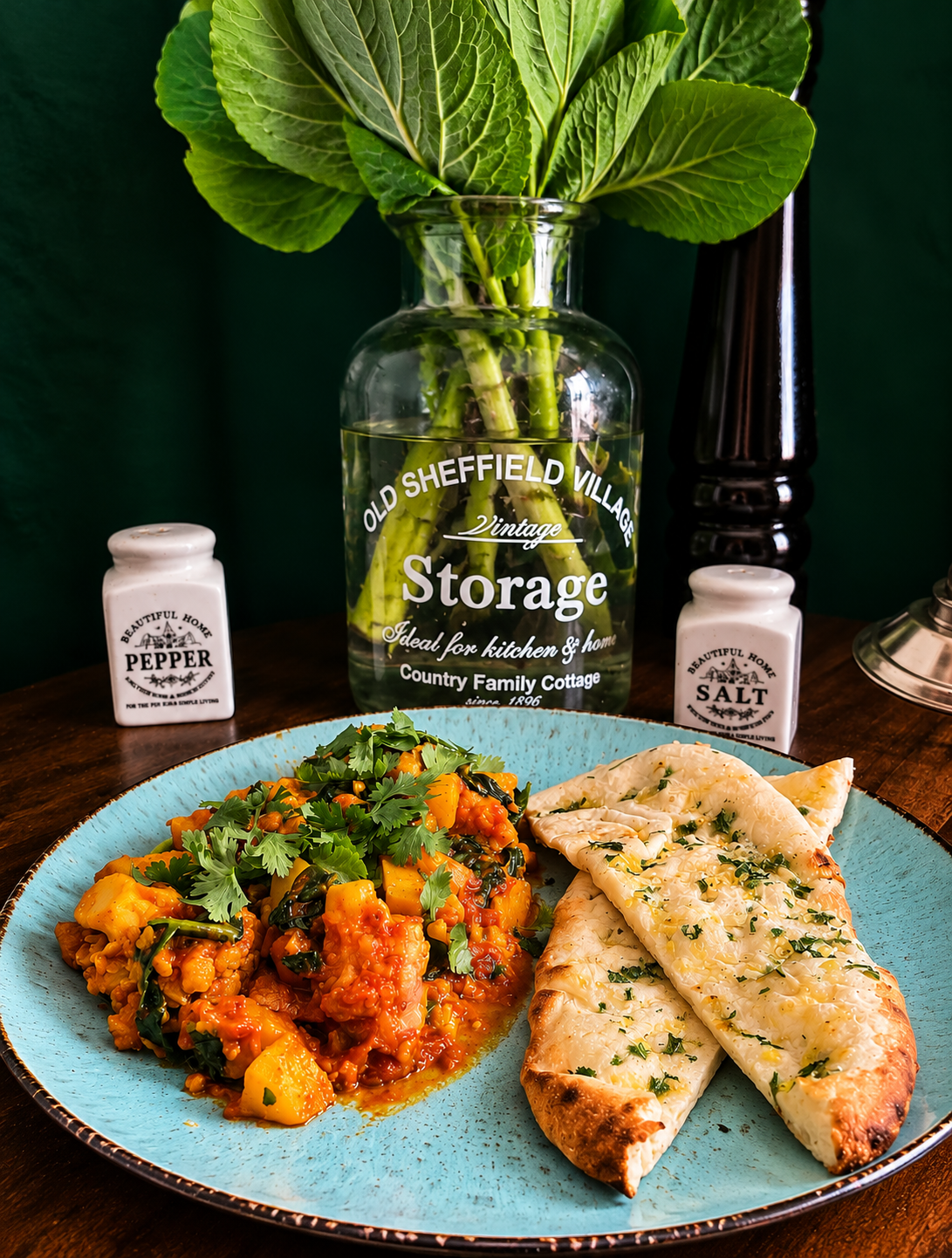
The name describes the three main ingredients: aloo means potato, gobi means cauliflower and palak means spinach. Aloo Gobi and Aloo Palak are both familiar vegetable preparations across Pakistan and the wider Indian subcontinent. This Via Veggie Vegan recipe combines all three vegetables in a fragrant tomato-based masala with cumin, coriander, turmeric, ginger, garlic and chilli. Homemade Garlic Naan, brushed with vegan butter and fresh garlic, completes this comforting plant-based interpretation.
▣ Ingredients (2 servings)
- 300 g potatoes
- 1/2 cauliflower
- 250 g fresh spinach
- 1 onion
- 1 tomato
- 1 green chili
- 4 cloves garlic
- 3 cm fresh ginger
- 1 tsp cumin seeds
- 1 tsp ground coriander
- 1/2 tsp ground turmeric
- 1/2 tsp garam masala
- 1/2 tsp chili powder
- 1/2 tsp baking powder
- 1/2 bunch fresh garlic
- 200 g plain flour
- 100 g unsweetened plant-based yoghurt
- 1/2 tsp sugar
- 1 tbsp vegan butter alternative
- 2 tbsp vegetable oil
- 2-3 tbsp lukewarm water
- 1 splash water
- to taste salt & freshly ground black pepper
♨ Preparation
- Prepare the Vegetables and Aromatics
Peel and dice the potatoes, divide the cauliflower into small florets and thoroughly wash and roughly chop the spinach. Finely chop the onion and 2 garlic cloves, grate the ginger, dice the tomato and slice the green chilli. Reserve the remaining 2 garlic cloves for the naan topping. Wash and chop the fresh coriander. - Prepare the Garlic Naan Dough
Combine the flour, baking powder, sugar and ½ teaspoon salt in a mixing bowl. Add the plant-based yoghurt and 1 tablespoon vegetable oil. Gradually incorporate 2–3 tablespoons lukewarm water until a soft, smooth dough forms. Knead for a few minutes, cover and leave to rest for approximately 20 minutes while preparing the curry. - Build the Aromatic Curry Base
Heat 1 tablespoon vegetable oil in a large frying pan or saucepan over medium heat. Add the cumin seeds and allow them to sizzle briefly. Add the onion and sauté until softened and lightly golden. Stir in the chopped garlic, grated ginger and green chilli, then cook for another minute. Add the ground coriander, turmeric and chilli powder, stirring briefly without allowing the spices to burn. - Cook the Potatoes and Cauliflower
Add the diced tomato and cook until it softens into a thick, fragrant masala. Stir in the potatoes and cauliflower, coating them thoroughly with the spices. Add a small splash of water, cover and simmer over medium-low heat until the vegetables are almost tender, stirring occasionally and adding a little more water only if necessary - Add the Spinach and Finish the Curry
Add the fresh spinach in batches, allowing each handful to wilt before adding more. Stir gently and continue cooking uncovered until the vegetables are tender and excess moisture has evaporated. Add the garam masala and season with salt and freshly ground black pepper. Cook for another 1–2 minutes, then finish with plenty of fresh coriander. - Cook the Garlic Naan
Divide the rested dough into portions and roll each one into a thin oval. Heat a dry frying pan over medium-high to high heat. Cook the naan individually until bubbles form and golden-brown spots appear underneath. Turn and cook the other side until lightly browned and cooked through. - Prepare the Garlic Butter and Serve
Finely chop the remaining 2 garlic cloves and mix them with the melted vegan butter alternative. Brush the hot naan generously with the garlic butter and sprinkle with fresh coriander. Arrange the Aloo Gobi Palak on two plates and serve immediately with the warm Garlic Naan.
Food Story
Simple Vegetables, Extraordinary Flavour
This is exactly the kind of recipe that shows why vegetable-based cooking never has to feel like a compromise. Potatoes and cauliflower are wonderfully humble ingredients on their own, but once they meet cumin, coriander, turmeric, ginger, garlic and chilli, everything changes. Suddenly, an everyday combination becomes a fragrant, comforting curry full of colour and character. And honestly, what more could Team Garlic ask for?
Three Vegetables, One Beautiful Masala
I love how the spinach almost melts into the tomato masala, wrapping itself around the tender potatoes and cauliflower. Every spoonful brings something different: soft potatoes, slightly firmer cauliflower, earthy spinach and all those beautiful spices. Nothing complicated, nothing extravagant – just good ingredients doing what they do best. Sometimes the simplest dishes are the ones that make me happiest in the kitchen.
And Then There Was Garlic Naan!
Of course, I couldn’t possibly leave the naan out of this story. Freshly cooked flatbread, brushed with melted vegan butter, garlic and coriander – what’s not to love? Tear off a warm piece, scoop up the spicy vegetables and make sure you catch every last bit of masala from the plate. Simple ingredients. Big flavour. Very Via Veggie Vegan. And yes, I may have gone a little overboard with the garlic. As if that’s even possible!
♨ Nutrition per serving
Nutritional values are approximate and may vary depending on the ingredients and products used.
Good to Know
What Does Aloo Gobi Palak Mean?
The name comes from three commonly used South Asian food terms: aloo means potato, gobi means cauliflower and palak means spinach. Together, they describe the three main vegetables in this dish. Aloo Gobi and Aloo Palak are established preparations across Pakistan and neighbouring regions, while combining all three ingredients creates a delicious variation with different textures and flavours.
Pakistani Home Cooking and Vegetable Curries
Pakistani cuisine includes a wide variety of vegetable-based dishes, commonly prepared with onions, tomatoes, ginger, garlic and spices. Cooking methods and seasonings vary considerably between regions and households. Everyday vegetable curries may be relatively dry or contain more sauce, depending on the dish and personal preference. This Aloo Gobi Palak is prepared as a thick, aromatic vegetable curry rather than a soup-like dish.
Potatoes – Comfort and Energy
Potatoes provide carbohydrates, dietary fibre, potassium and vitamin C, although nutrient levels depend on variety and preparation. They absorb the aromatic masala beautifully while contributing a soft, comforting texture. Waxy or all-purpose potatoes are particularly suitable for curries where the pieces should retain their shape during cooking. Cutting them into evenly sized cubes helps ensure consistent results.
Cauliflower – More Than Just a Side Vegetable
Cauliflower belongs to the Brassica family and provides vitamin C, folate and dietary fibre. Its mild flavour makes it particularly good at absorbing spices and aromatic sauces. The florets become tender during simmering while retaining a little bite when cooked carefully. Cauliflower also contains naturally occurring glucosinolates, compounds found in cruciferous vegetables.
Spinach – The Green Ingredient
Spinach contributes folate, vitamin K and carotenoids, along with dietary fibre and several minerals. It reduces considerably in volume during cooking, making it easy to incorporate a generous quantity into a curry. Spinach also contains oxalates, which can influence the absorption of some minerals. A varied plant-based diet helps provide a broad range of nutrients from different sources.
Cumin, Coriander and Turmeric
Cumin seeds provide a warm, earthy aroma, especially when briefly heated in oil. Ground coriander adds a mild citrus-like and slightly nutty character, while turmeric contributes a distinctive golden colour and earthy flavour. Together, these spices create an aromatic foundation commonly found in South Asian cooking. Briefly heating them in oil helps distribute their flavours throughout the masala.
Garam Masala – The Finishing Touch
Garam masala is a blend of aromatic spices used in many South Asian cuisines. Its exact composition varies and may include cumin, coriander, cardamom, cinnamon, cloves, black pepper and other ingredients. Adding garam masala towards the end of cooking helps preserve its fragrant character. Different commercial blends can vary significantly in intensity, so the quantity may be adjusted to taste.
Why Ginger, Garlic and Chilli Work So Well Together
Fresh ginger adds pungent warmth, garlic contributes savoury depth and green chilli provides freshness and heat. These ingredients are commonly combined in Pakistani and other South Asian dishes. The intensity of fresh chilli varies by variety, so tasting and adjusting is important. Cooking the aromatics gently before adding the vegetables helps create a balanced flavour base without allowing the garlic to burn.
Homemade Garlic Naan Without Yeast
Traditional naan recipes vary and may use yeast, yoghurt or other leavening methods. This simplified homemade version uses baking powder and plant-based yoghurt to create a soft dough without yeast. The naan is cooked in a hot frying pan rather than a traditional tandoor oven. Brushing it with melted vegan butter, garlic and fresh coriander adds flavour and keeps the surface pleasantly soft.
Zero Waste – Use More of Your Vegetables
Cauliflower leaves and tender stems can be incorporated into the curry or saved for other dishes. Suitable spinach stems can be finely chopped and cooked with the leaves. Leftover coriander stems add flavour to sauces, soups and chutneys. Cooked curry should be cooled promptly, refrigerated in a covered container and used within approximately two days. Leftover naan can be reheated briefly in a frying pan or oven. Zero Waste, Full Flavor!
You may also like
♡
You may also like
Myanmar Aloo Hin – Vegan Burmese Potato Curry with Hasselback Potatoes
You may also like
Aloo Bharta – Bangladeshi Spiced Mashed Potatoes with Mustard Oil
You may also like