
5. SHORT DESCRIPTION / ORIGIN
India – A Country of Many Religions and Culinary Traditions
India is a vast South Asian country with an extraordinarily diverse culinary heritage. Its regional cuisines reflect differences in geography, climate, history, religion and local ingredients. While cows are revered in many Hindu traditions and beef is avoided by many Hindus, dietary practices vary considerably across India. Hindu, Muslim, Christian and other communities have developed distinct food traditions over centuries. Kerala, on India's southwestern Malabar Coast, is particularly known for its coconut-based dishes, fragrant curry leaves, black pepper and aromatic spices. Its cuisine reflects the region's long history of maritime trade and its religious and cultural diversity.
Beef Ularthiyathu – Kerala's Famous Beef Fry
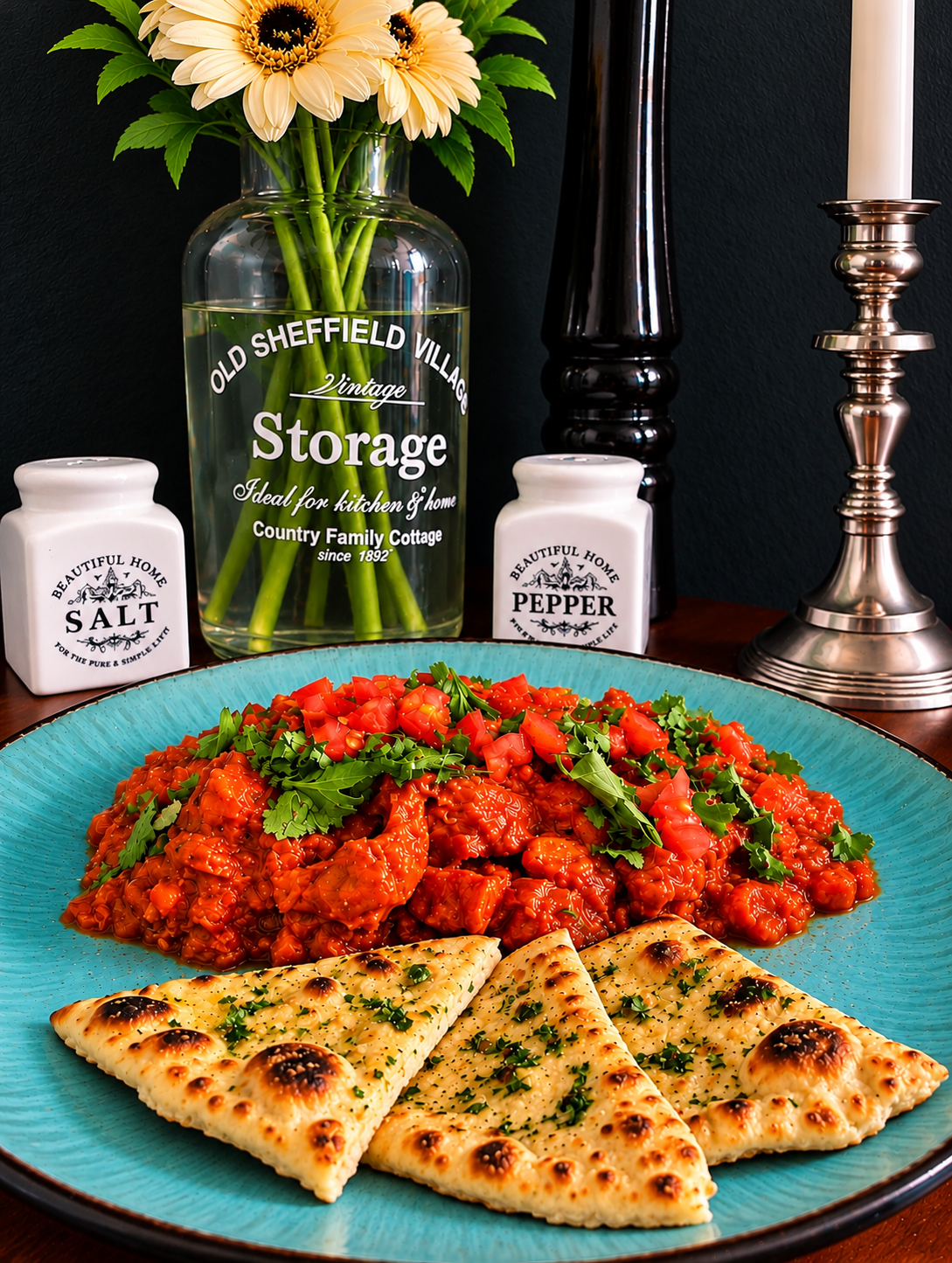
Beef Ularthiyathu, also known as Kerala Beef Fry, is a well-known preparation associated with Kerala's regional food culture. The Malayalam term ularthiyathu describes a cooking technique in which ingredients are sautéed or roasted while moisture is reduced, concentrating their flavors. Traditional versions commonly combine beef with shallots, garlic, ginger, curry leaves, black pepper and spices, often with coconut pieces. The finished dish is generally relatively dry and intensely seasoned. This Via Veggie Vegan interpretation replaces beef with LikeMeat plant-based pieces and adds fresh tomatoes, tomato paste and coconut milk for a richer, saucier result. It preserves the aromatic inspiration of Kerala cuisine while giving the dish a completely plant-based makeover.
▣ Ingredients (2 servings)
- 1 pack plant-based beef-style pieces
- 1 tbsp coconut oil
- 1/2 cup shallots
- 2 cloves garlic
- 2 cm fresh ginger
- 1 sprig fresh curry leaves
- 2 ripe tomatoes
- 1 tbsp tomato paste
- 150 ml coconut milk
- 1 pinch ground tumeric
- 1/4 tsp ground coriander
- 1/2 tsp kashmiri chili powder
- 1/2 tsp ground cumin
- 1/2 tsp freshly ground pepper
- 1/4 tsp garam malasa
- 2 tsp unsweetened coconut flakes
- to taste salt
♨ Preparation
- Prepare the Aromatics
Peel the shallots and slice them thinly.
Peel and finely chop the garlic cloves.
Peel and grate the fresh ginger.
Wash the tomatoes and cut them into small cubes.
Rinse the fresh curry leaves if necessary and gently pat them dry.
Keep the curry leaf sprig intact so it can be removed easily before serving.
Heat the Coconut Oil
Heat the coconut oil in a large frying pan over medium heat.
Allow the oil to melt completely and warm through. - Sauté the Shallots
Add the sliced shallots to the pan.
Sauté gently until softened and beginning to turn golden.
Stir regularly to prevent burning.
Add the Garlic, Ginger and Curry Leaves
Add the chopped garlic, grated ginger and whole curry leaf sprig.
Cook gently until fragrant.
The warm coconut oil will help release the characteristic aroma of the curry leaves. - Toast the Ground Spices
Add the turmeric, ground coriander, Kashmiri chili powder, cumin and black pepper.
Stir briefly until the spices become fragrant.
Keep the heat moderate and avoid burning the spices.
Reserve the garam masala for the very end of cooking. - Brown the Plant-Based Beef
Add the LikeMeat plant-based beef-style pieces to the pan.
Stir thoroughly until the pieces are evenly coated with the aromatic shallots and spices.
Fry until lightly browned, following the manufacturer's cooking instructions where applicable.
Add the Fresh Tomatoes
Add the diced tomatoes and tomato paste.
Stir well to combine everything.
Continue cooking until the tomatoes begin to soften and release their juices. - Add the Coconut Milk
Pour the coconut milk into the pan.
Stir gently until the tomatoes, spices and coconut milk form a rich, aromatic sauce.
Reduce the heat slightly. - Reduce the Sauce
Allow the mixture to simmer gently until the sauce thickens and coats the plant-based beef pieces.
Stir occasionally to prevent sticking.
The finished dish should have a concentrated consistency rather than a thin, watery sauce. - Add the Coconut Flakes
Stir the unsweetened coconut flakes into the sauce.
Allow them to absorb some of the liquid and contribute their texture and coconut flavor. - Finish with Garam Masala
Season the dish with salt and additional freshly ground black pepper to taste.
Switch off the heat completely.
Sprinkle the garam masala over the finished dish.
Stir gently until the spice blend is evenly distributed.
Allow the dish to rest, covered, so the residual heat can release the aroma of the garam masala without prolonged cooking. - Let the Flavors Develop
Leave the Vegan Kerala Beef Ularthiyathu covered for at least 10 minutes before serving if possible.
For an even more developed flavor, prepare the dish in advance and allow it to rest longer.
If preparing it several hours ahead or the day before, cool it promptly and refrigerate it rather than leaving it at room temperature.
Reheat gently before serving, following the plant-based meat manufacturer's instructions. - Remove the Curry Leaves
Carefully remove the whole curry leaf sprig.
If individual leaves have detached, they may remain in the dish if tender and suitable for eating.
Remove the woody stem. - Serve the Vegan Kerala Beef Ularthiyathu
Divide the warm dish between two plates.
Serve with freshly prepared garlic flatbread or another accompaniment of your choice.
Enjoy the rich tomato-coconut sauce, aromatic spices and tender plant-based beef pieces.
Food Story
Holy Cows, Beef Curry and a Very Confused Vegan
I’ve traveled to India several times, and for a long time, there was one thing I simply couldn’t wrap my head around. Cows are sacred in India, right? So why on earth was beef being served in some restaurants? I genuinely found that confusing. It took me a while to understand that India isn’t one religion, one culture or one set of food rules. It’s an incredibly diverse country, and what is sacred or forbidden to one community may be perfectly normal to another. Kerala is a fascinating example of that diversity.
Those Eyes. Those Eyelashes!
But here’s the thing: whenever I think about cows, I don’t think about beef. I think about those enormous, gentle eyes and their ridiculously beautiful, long eyelashes. Seriously, have you ever looked closely at a cow? Some of them have lashes that would make a mascara advertisement look embarrassing. And calves? Don’t even get me started. They’re simply adorable. So I’m especially happy that no calf – and no cow – had to die for my version of Kerala Beef Ularthiyathu. All the flavor, none of the animal suffering. That’s exactly how I like my food.
Goa, a Mother Cow and My Very Short Career as a Cow Whisperer
And speaking of cows, I suddenly remember a little adventure from Goa, probably twenty or thirty years ago. I spotted a mother cow with her calf. Naturally, I wanted to go over and say hello. Because apparently, in my world, every animal deserves a personal greeting. Unfortunately, the mother cow had a slightly different opinion. She wasn’t particularly interested in making friends with a strange woman approaching her baby. In fact, she became rather protective and started coming towards me at a surprisingly determined pace.
When Team Animal Lover Became Team Sprint
Let’s just say I suddenly discovered athletic abilities I didn’t know I possessed. One moment I was admiring an adorable calf, the next I was running for my life – or at least that’s how it felt at the time! Looking back, I can hardly blame her. She was simply protecting her baby. Lesson learned: admire calves, respect their mothers and keep a sensible distance. Preferably one that doesn’t require an emergency sprint.
Back in My Kitchen – Kerala Without the Cow
Fortunately, preparing this Vegan Kerala Beef Ularthiyathu was a much more peaceful experience. I used LikeMeat instead of beef, combined it with shallots, ginger, garlic, fresh curry leaves and all those wonderful spices, then added tomatoes and coconut milk for a rich, aromatic sauce. A little garam masala at the end, some time to let the flavors develop, and dinner was ready. No cows were disturbed, no calves were frightened, and nobody had to run away. Well, except perhaps anyone who doesn’t like spicy food. Kerala meets Via Veggie Vegan – and this time, everybody wins!
♨ Nutrition per serving
Nutritional values are approximate and may vary depending on the ingredients and products used.
Good to Know
The Sacred Cow – Why Is Beef Still Eaten in India?
In many Hindu traditions, cows are revered as symbols of nourishment, generosity and motherhood. Avoiding beef is therefore an important religious and cultural practice for many Hindus. However, India is home to numerous religious and cultural communities, including Hindus, Muslims, Christians, Sikhs, Buddhists and others. Dietary practices vary considerably between regions, families and individuals. Some communities eat beef, while others avoid it for religious, cultural or personal reasons. The idea that nobody in India eats beef is therefore incorrect. Religious diversity is an important part of understanding the country's food culture.
Why Is Beef Ularthiyathu Associated with Kerala?
Kerala, on India's southwestern coast, has a distinctive culinary heritage influenced by its tropical climate, maritime trade and religious diversity. Beef dishes have an established place in the food traditions of some Kerala communities, particularly among Christians and Muslims, although individual practices vary. Beef Ularthiyathu is one of the region's recognizable preparations. It is commonly associated with fragrant curry leaves, shallots, ginger, garlic, black pepper and coconut. Its rich, concentrated flavor makes it a popular accompaniment to Kerala-style flatbreads and other staples.
What Does Ularthiyathu Mean?
Ularthiyathu is a Malayalam culinary term associated with sautéing or roasting ingredients while reducing their moisture. In traditional Beef Ularthiyathu, the meat is typically cooked until tender and then roasted with spices and aromatics until relatively dry and intensely flavored. This cooking technique distinguishes the dish from curries containing large amounts of liquid. The Via Veggie Vegan version takes inspiration from these flavors but intentionally retains a thicker tomato-coconut sauce.
What Is Garam Masala?
Masala is a term used in Indian cooking for a mixture of spices, although its meaning can vary depending on the dish and context. Garam masala is a fragrant blend that often contains ingredients such as cumin, coriander, cardamom, cinnamon, cloves and black pepper. The exact composition differs between regions, households and manufacturers. The word garam refers to warmth rather than necessarily meaning extreme chili heat. Garam masala adds aromatic complexity rather than simply making a dish hotter. In this recipe, it is stirred in after the heat has been switched off to preserve its fragrant finishing notes.
Curry Leaves Are Not Curry Powder
Fresh curry leaves come from the curry leaf tree, Murraya koenigii, and are widely used in South Indian cuisine. Despite their name, they are not the same as curry powder, which is a blended seasoning. Curry leaves have a distinctive, fragrant aroma with citrusy, herbal and slightly nutty notes. Heating them gently in oil helps release their aromatic compounds. Fresh curry leaves generally provide a more pronounced flavor than dried ones. Any unused fresh leaves can be frozen in a suitable airtight container for future recipes.
Why Is Coconut So Important in Kerala Cuisine?
Kerala's tropical climate supports coconut cultivation, and coconut appears in many forms throughout the region's cooking. Coconut oil is used for frying and flavor, coconut milk provides richness, and grated coconut or coconut pieces contribute texture. This recipe uses coconut oil, coconut milk and unsweetened coconut flakes to create several layers of coconut flavor. Coconut milk also softens the sharpness of tomatoes and spices, helping create a balanced sauce. Traditional versions of Beef Ularthiyathu often use coconut pieces rather than a creamy coconut-milk sauce.
What Is Kashmiri Chili Powder?
Kashmiri chili powder is valued in Indian cooking for its vibrant red color and characteristic chili flavor. It is often milder than some other chili powders, although the actual heat varies considerably between products. Its red pigments help give the sauce an appealing color, while black pepper and other spices contribute additional warmth. If substituting another chili powder, start with a smaller quantity and adjust according to its strength.
Why Does the Dish Taste Better After Resting?
Resting gives the ingredients time to reach a more even distribution of flavors throughout the sauce. The tomato-coconut mixture also changes in consistency as it cools slightly, which can make the seasoning seem more integrated. Many spiced stews and curries taste particularly harmonious after being refrigerated overnight and reheated. This does not mean they should be left at room temperature for extended periods. Cool leftovers promptly, refrigerate them and reheat thoroughly before serving.
Plant-Based Beef, Protein and Cholesterol
Plant-based beef alternatives are generally made from ingredients such as soy protein, pea protein or other plant-derived components, depending on the product. Their protein content, fat composition and salt levels vary between brands, so checking the packaging is useful. Plant-based ingredients do not naturally contain dietary cholesterol. However, coconut oil and coconut milk contain substantial amounts of saturated fatty acids, which can raise LDL cholesterol when consumed in excess. LDL particles transport cholesterol through the bloodstream, and elevated LDL cholesterol is a recognized cardiovascular risk factor. HDL participates in cholesterol transport, but a high HDL level does not automatically cancel out the risks associated with elevated LDL. A balanced vegan diet benefits from a variety of protein sources and predominantly unsaturated fats.
Zero Waste – Make the Most of Your Ingredients
Unused fresh curry leaves can be frozen in an airtight container and added directly to future curries. Leftover coconut milk can also be frozen in small portions for soups, sauces and stews, although its texture may change after thawing. Suitable garlic and shallot trimmings can be collected for homemade vegetable stock, provided they are clean and food-safe. Leftover Vegan Kerala Beef Ularthiyathu makes a flavorful filling for wraps or flatbreads. Refrigerate leftovers promptly and use them within approximately two days, following the storage guidance for the plant-based meat product.
You may also like
♡
You may also like
Fijian Kaddu Tarkari – Vegan Roasted Pumpkin Curry with Two Halloween Rice Pumpkins
You may also like
Hungarian Vegan Goulash with Galuska – Hearty Paprika Stew & Egg-Free Dumplings
You may also like