Recipe postcard
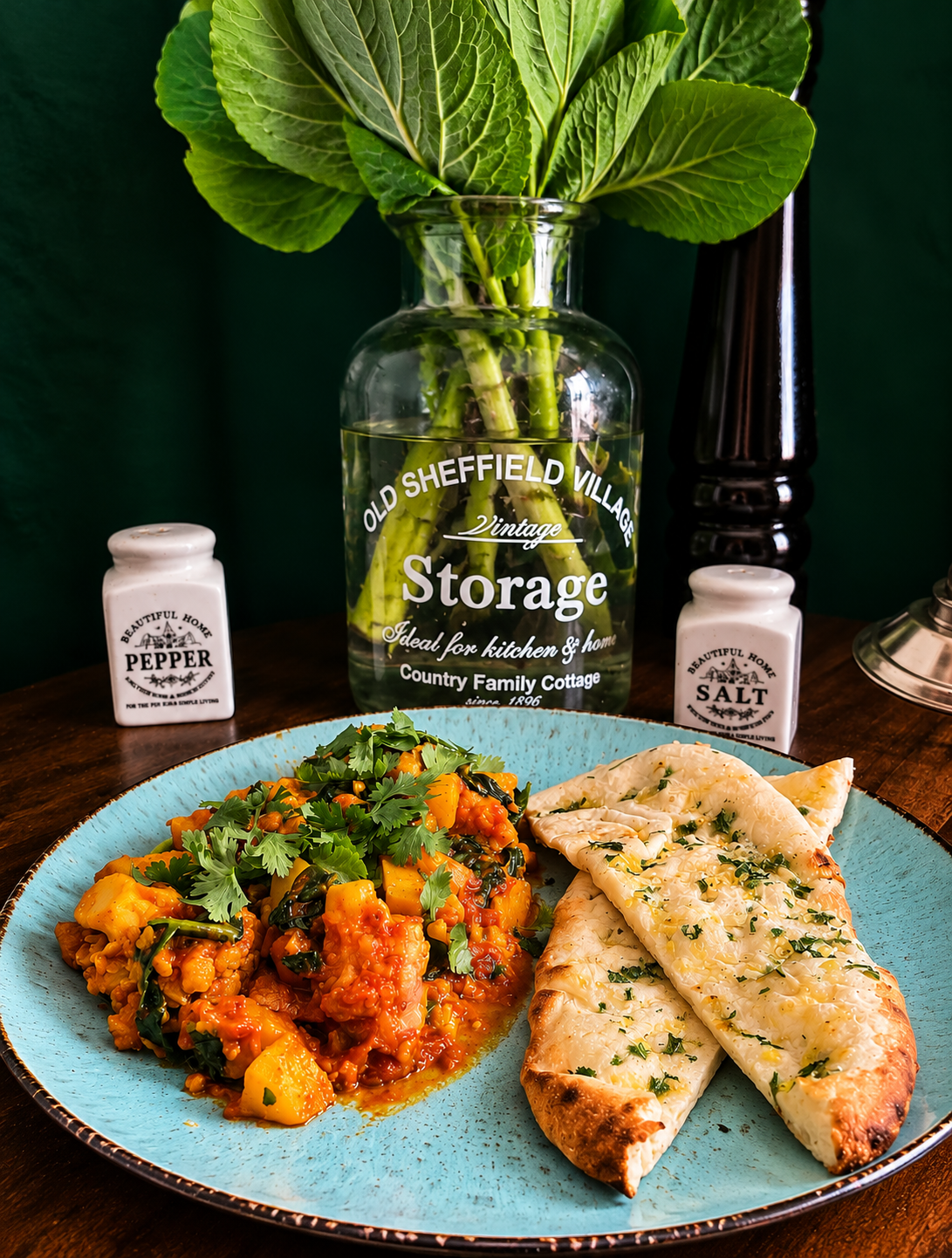
Pakistan – A Rich Tradition of Aromatic Home CookingPakistan's diverse culinary traditions feature fragrant spices, fresh vegetables, lentils, breads and richly seasoned curries. Everyday dishes often combine simple ingredients with carefully developed layers of flavour. Potatoes, cauliflower and spinach are familiar ingredients in Pakistani home cooking, while flatbreads such as naan and roti are popular accompaniments to vegetable curries.
What Is Aloo Gobi Palak?The name describes the three main ingredients: aloo means potato, gobi means cauliflower and palak means spinach. Aloo Gobi and Aloo Palak are both familiar vegetable preparations across Pakistan and the wider Indian subcontinent. This Via Veggie Vegan recipe combines all three vegetables in a fragrant tomato-based masala with cumin, coriander, turmeric, ginger, garlic and chilli. Homemade Garlic Naan, brushed with vegan butter and fresh garlic, completes this comforting plant-based interpretation.
Cook this recipe →
Recipe postcard
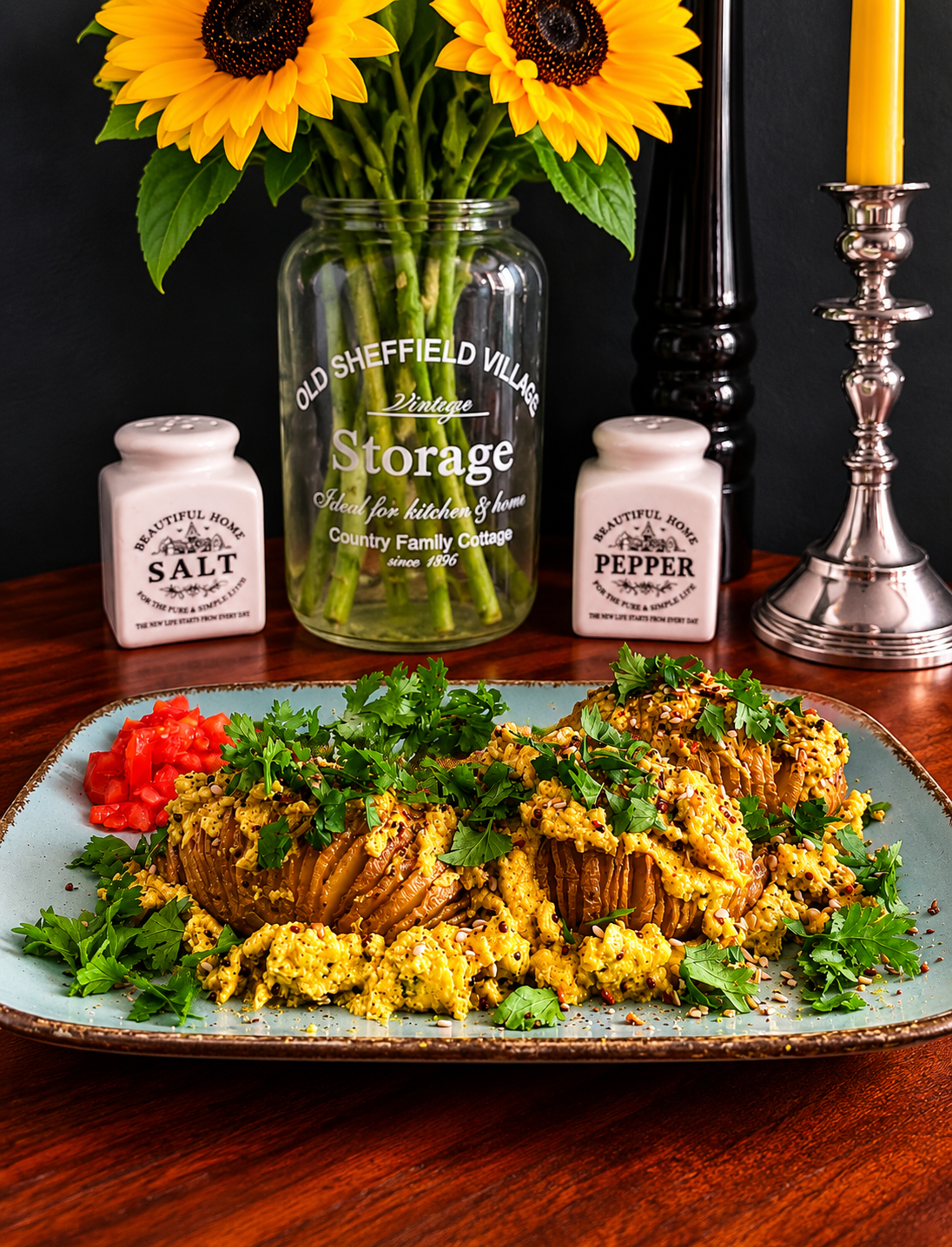
Myanmar – Aromatic Curries and the Art of Si PyanMyanmar, also known as Burma, is a Southeast Asian country with a diverse culinary heritage shaped by regional traditions and neighbouring food cultures. Onion, garlic, ginger, turmeric and chili are important ingredients in many Burmese curries. A characteristic technique in several Burmese curry preparations is known as si pyan, often translated as "the oil returns". As the curry cooks and moisture evaporates, the seasoned oil becomes visible again, signalling that the sauce has reduced and its flavours have concentrated.
What Is Aloo Hin?Aloo Hin is a Burmese-style potato curry. The name combines aloo, meaning potato, with hin, a Burmese term for curry or a cooked dish. Traditional preparations vary, but potatoes are commonly cooked with aromatic ingredients and spices until tender and well coated in the sauce. My Via Veggie Vegan version takes a deliberately creative approach by replacing ordinary potato pieces with slow-baked Hasselback potatoes. Black mustard seeds, mustard oil, sesame oil, vegan fish sauce and a garnish of coriander, sesame seeds and fresh tomato complete this fully plant-based, Burmese-inspired interpretation.
Cook this recipe →
Recipe postcard
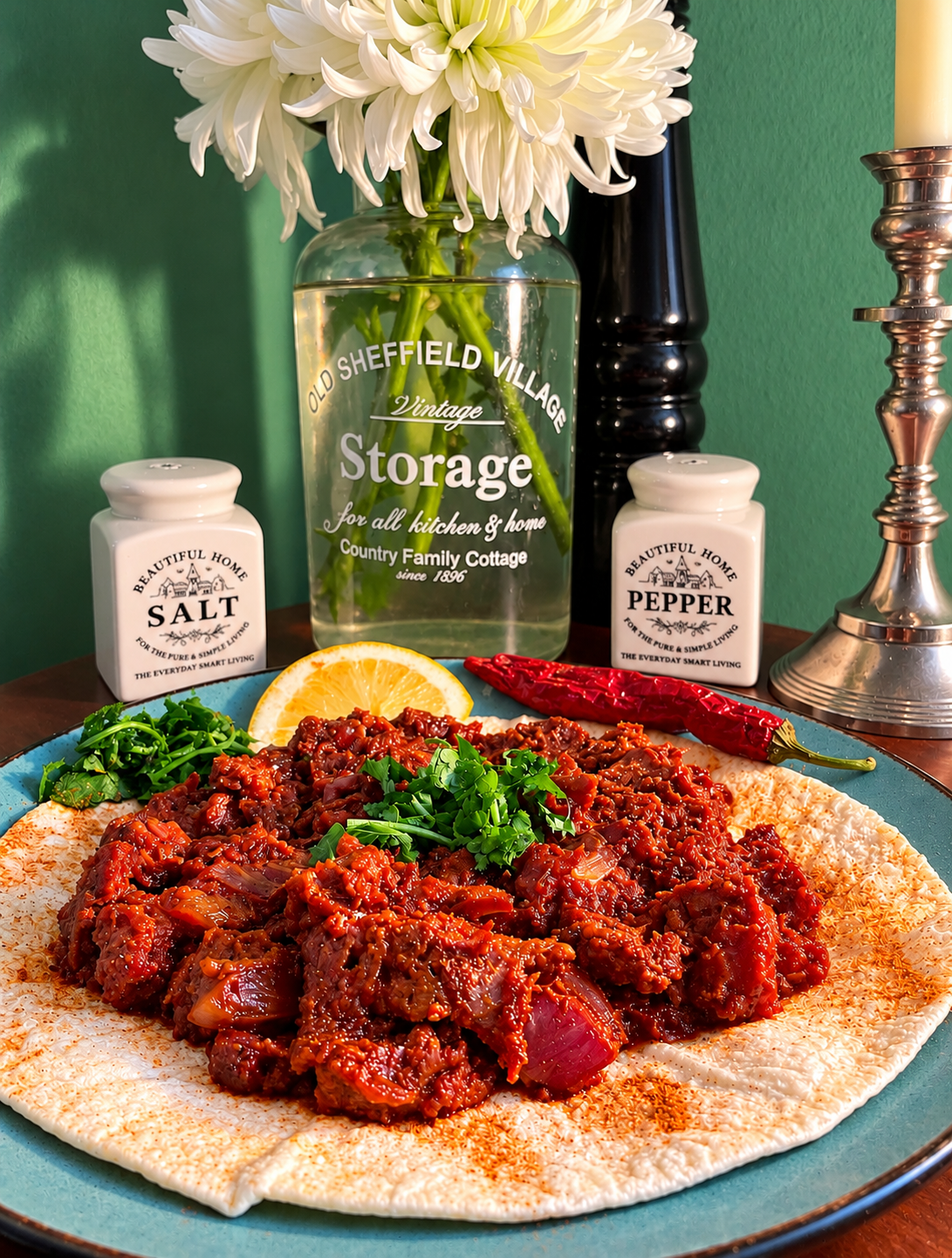
Eritrea – A Culinary Heritage of Spices and Shared TraditionsLocated in the Horn of Africa along the Red Sea, Eritrea has a diverse culinary heritage shaped by regional traditions, agriculture and centuries of cultural exchange. Aromatic spices, lentils, vegetables and richly flavoured stews play an important role in Eritrean cooking. Many traditional dishes are served with Injera, a soft, fermented flatbread that forms the foundation of a shared meal. Berbere, a distinctive chilli-based spice blend, is one of the country's most characteristic seasonings.
Zigni – Eritrea's Rich and Spicy Traditional StewZigni is one of Eritrea's best-known traditional dishes, typically prepared with beef simmered in a deeply flavoured tomato and onion sauce seasoned with Berbere. The generous quantity of slowly cooked onions creates natural sweetness and richness, while the spice mixture adds warmth, heat and complexity. My Via Veggie Vegan version replaces beef with plant-based steak strips and traditional spiced butter with vegan butter. Fresh tomatoes, homemade Berbere-inspired spices, plum syrup and a small piece of dark chocolate give the sauce its own deliciously intense character.
Cook this recipe →
Recipe postcard
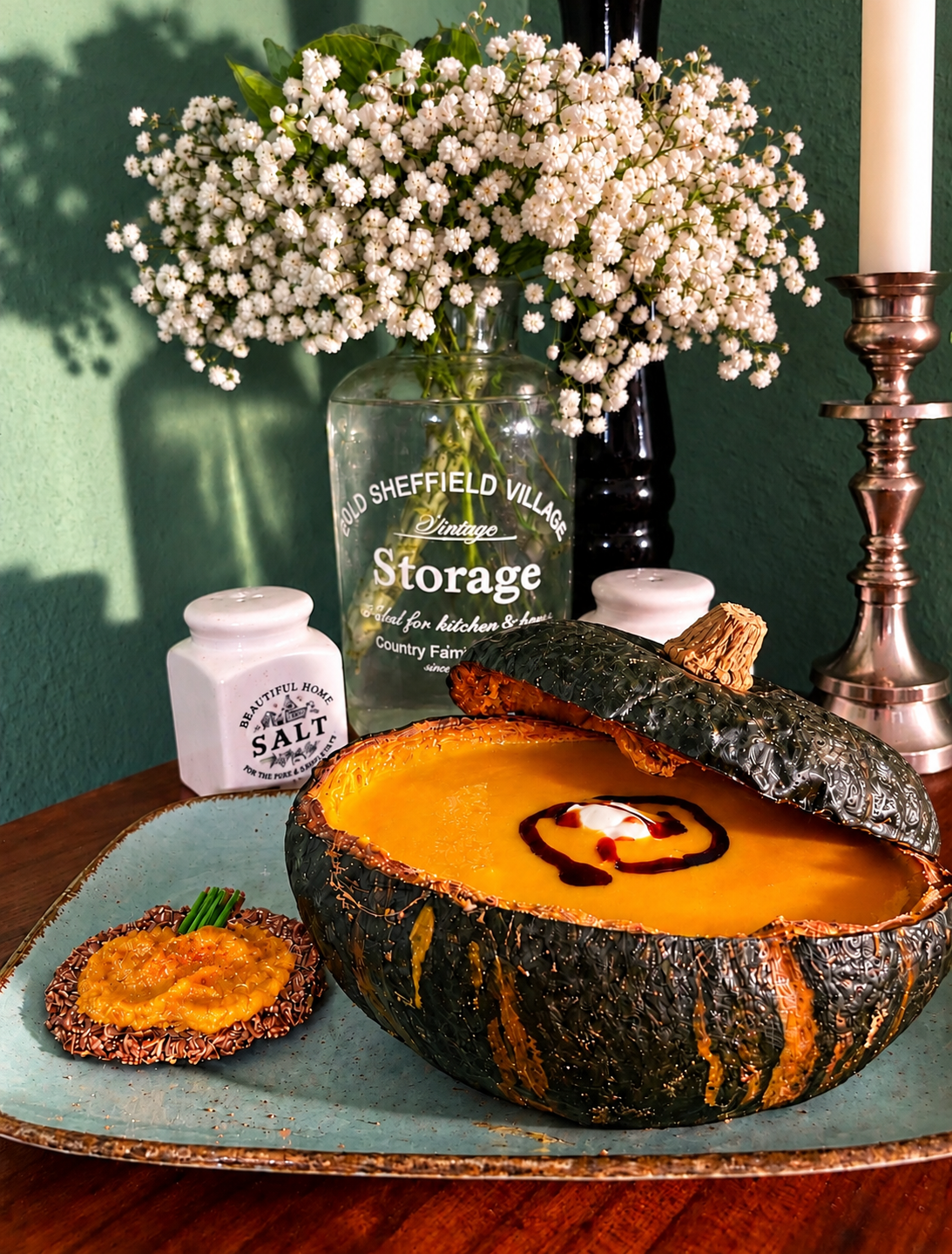
Saint Lucia – A Caribbean Island of Culinary InfluencesSaint Lucia is a beautiful island nation in the eastern Caribbean, known for its volcanic landscapes, tropical climate and rich cultural heritage. Its cuisine reflects African, Indigenous Caribbean, European and South Asian influences, with fresh local produce, aromatic spices, root vegetables and chilies playing important roles. Pumpkin and other varieties of squash are familiar ingredients in Caribbean home cooking, appearing in soups, stews and hearty vegetable dishes. The island's culinary traditions combine comforting ingredients with bold, fragrant flavors.
Soupe de Citrouille – A Caribbean-Inspired Pumpkin SoupSoupe de Citrouille translates from French as pumpkin soup, although there is no single definitive Saint Lucian recipe under this name. My Via Veggie Vegan interpretation combines tender pumpkin with garlic, ginger, Caribbean-style curry spices, coconut milk and freshly squeezed orange juice. Instead of serving the soup in ordinary bowls, I hollowed out two small green Hokkaido pumpkins, roasted them with chili oil and transformed them into edible serving bowls. A swirl of vegan sour cream and pumpkin seed oil completes this warming, aromatic and entirely plant-based Caribbean-inspired creation.
Cook this recipe →
Recipe postcard
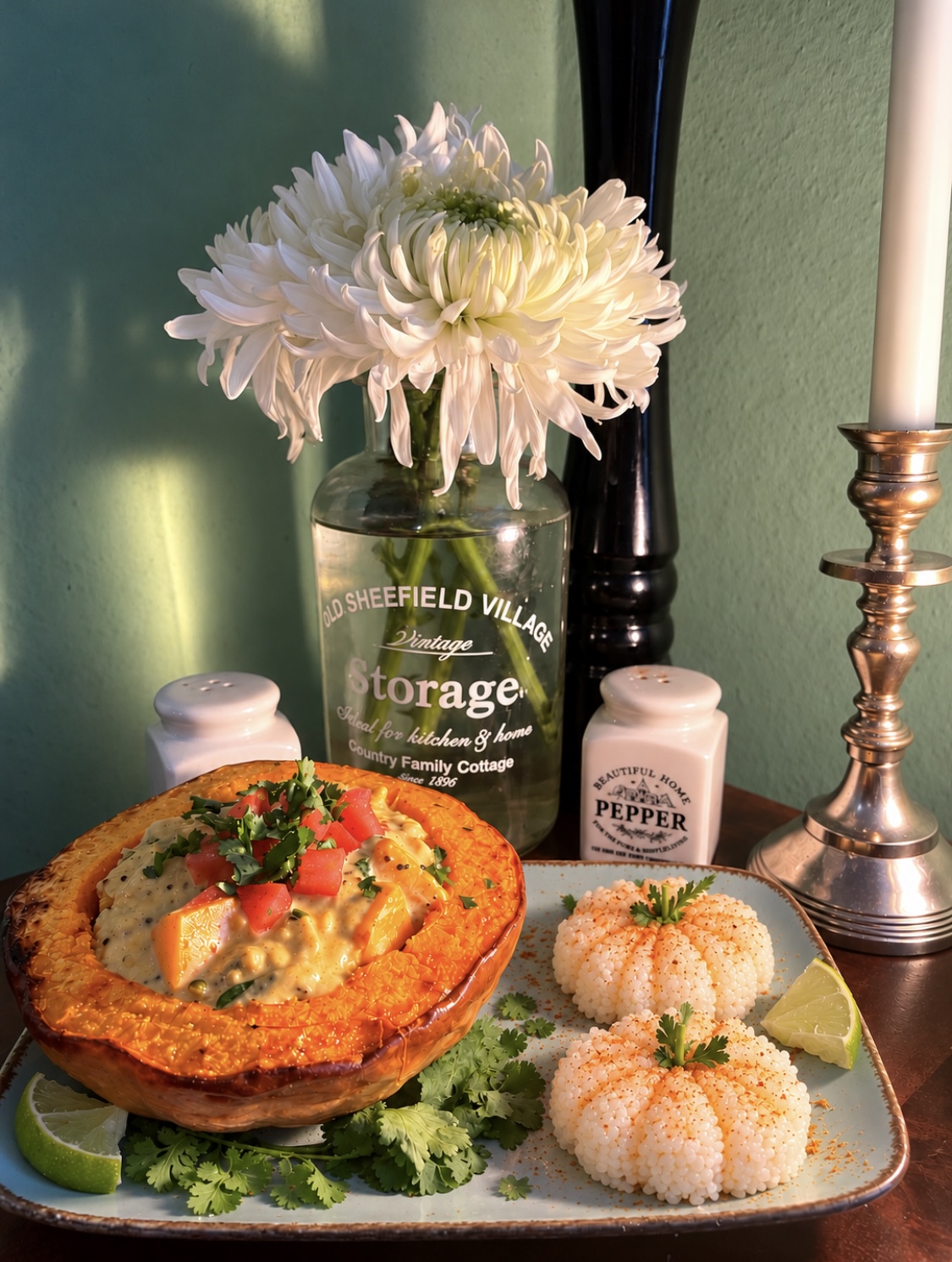
Fiji – A South Pacific Island Nation with a Remarkable Culinary HeritageFiji is an island nation in the South Pacific, consisting of more than 300 islands. Its cuisine reflects Indigenous Fijian traditions alongside Indian and other cultural influences. Root vegetables, tropical fruits, leafy greens and coconut feature in many local food traditions, while Indo-Fijian cuisine is especially known for aromatic vegetable curries, roti, dhal and carefully balanced spice mixtures. Beginning in 1879, Indian indentured labourers were brought to Fiji during the British colonial period. Over generations, their culinary traditions evolved alongside local ingredients and food cultures, creating the distinctive Indo-Fijian cuisine enjoyed today.
Kaddu Tarkari – Indo-Fijian Pumpkin Curry with a Creative Halloween TwistKaddu means pumpkin or squash in Hindi, while tarkari refers to a vegetable dish or curry. Indo-Fijian pumpkin curry is commonly prepared with pumpkin, onions, garlic, chilli and aromatic spices, often using relatively little liquid. As the pumpkin softens, some of the flesh breaks down and creates a naturally thick texture. My Via Veggie Vegan version takes inspiration from these flavours but introduces a few personal twists: a whole muscat pumpkin roasted with chilli oil, a creamy coconut milk sauce and two decorative pumpkins shaped from leftover basmati rice. The roasted pumpkin becomes both an ingredient and an edible serving vessel. This is a creative Indo-Fijian-inspired interpretation rather than a traditional Fijian presentation.
Cook this recipe →

Recipe postcard
Madagascar – The Island of Extraordinary FlavoursMadagascar, the world's fourth-largest island, lies in the Indian Ocean off the southeastern coast of Africa. Its remarkable culinary heritage reflects African, Asian and European influences, shaped by centuries of migration, trade and local traditions. Rice is central to everyday Malagasy food culture and is commonly served with vegetables, legumes, sauces or meat. Fresh ingredients, ginger, garlic, chilli and aromatic herbs contribute to the distinctive flavours of the island's cuisine.
Lasary Voatabia – Madagascar's Refreshing Tomato SaladLasary Voatabia is a traditional Malagasy tomato salad, typically prepared with fresh tomatoes, onions and a tangy dressing. Depending on the household and region, ginger, lime juice, vinegar, chilli and herbs may be added. The salad is commonly served as a refreshing accompaniment to rice and other savoury dishes. My Via Veggie Vegan interpretation combines the traditional tomato salad with tender French green beans and fresh coriander. A handmade Halloween skull shaped from sticky white rice adds a playful seasonal twist while celebrating rice's important place in Malagasy food culture.
Cook this recipe →
Recipe postcard
Nepal – Culinary Traditions from the Himalayas
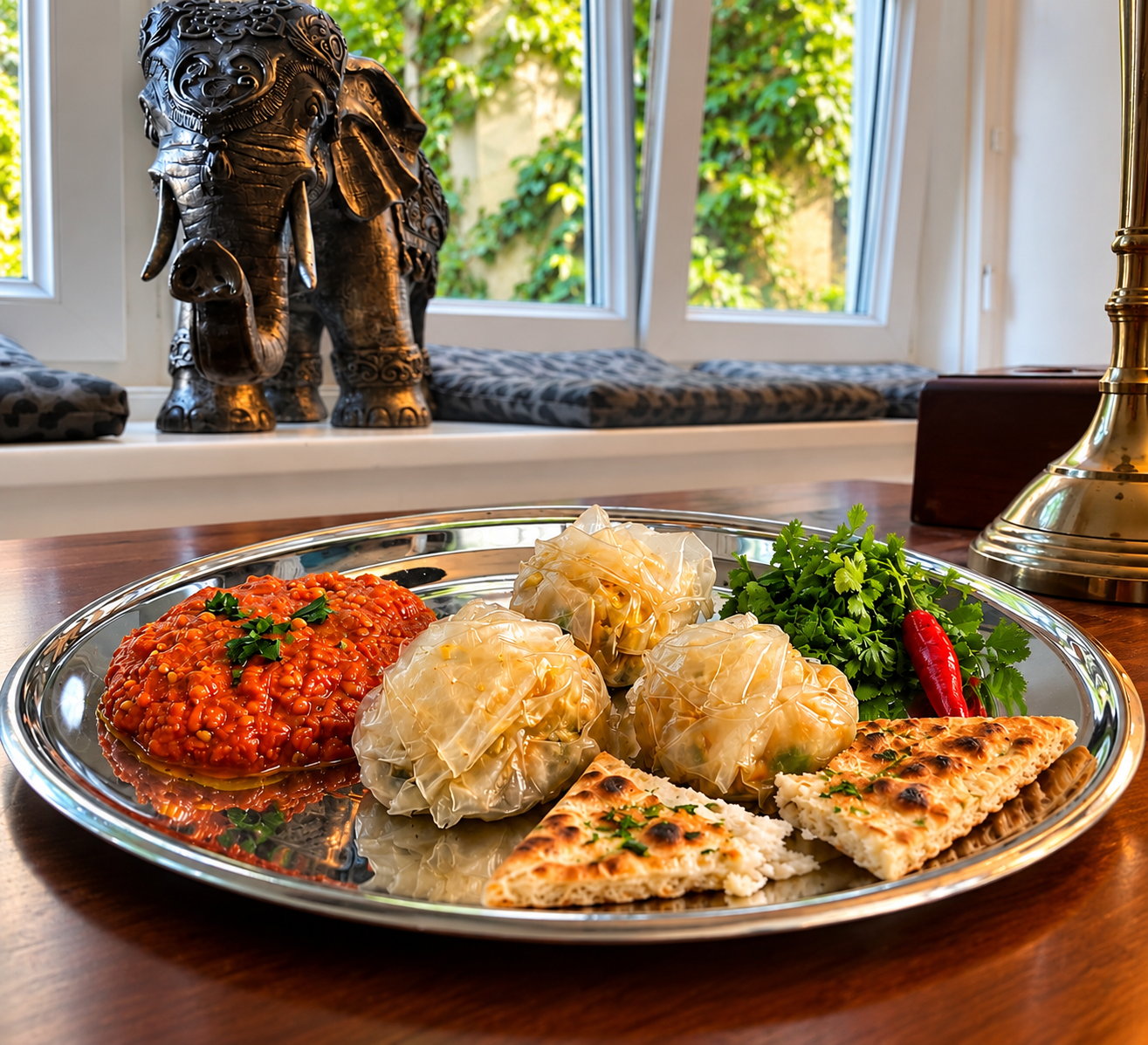
Nepal is a landlocked country in South Asia, home to the Himalayan mountains, including Mount Everest, and a remarkably diverse culinary heritage. Influenced by its geography, ethnic communities and neighbouring Tibetan and Indian food traditions, Nepalese cuisine features aromatic spices, rice, lentils, vegetables, pickles and freshly prepared breads. Food is an important part of family life, celebrations and hospitality.
Momos – Nepal's Beloved Steamed Dumplings
Momos are among Nepal's most popular dishes, with culinary roots closely connected to Tibetan dumpling traditions. These delicate parcels are typically filled with seasoned vegetables or meat, carefully folded by hand and steamed until tender. They are commonly served with a spicy dipping sauce known as achar, often prepared with tomatoes, sesame seeds and chillies. My Via Veggie Vegan version features a homemade vegetable filling, freshly ground Momo Masala and a fiery tomato sesame achar.
Cook this recipe →
Recipe postcard
Via Veggie Vegan Vunderland – A Culinary Destination Beyond Borders
Not every destination on my culinary journey needs a passport. Via Veggie Vegan Vunderland is my very own little wonderland, where creativity, imagination and personal memories are just as important as the ingredients on the plate. It exists alongside the 195 countries of Via Veggie Vegan as a special destination for recipes that cannot be assigned to one particular country. Here, familiar dishes become personal creations, seasonal ingredients inspire playful food art, and the stories behind a recipe are sometimes even more meaningful than the recipe itself. Because some culinary journeys take us around the world, while others lead us straight back to the people and animals we love.
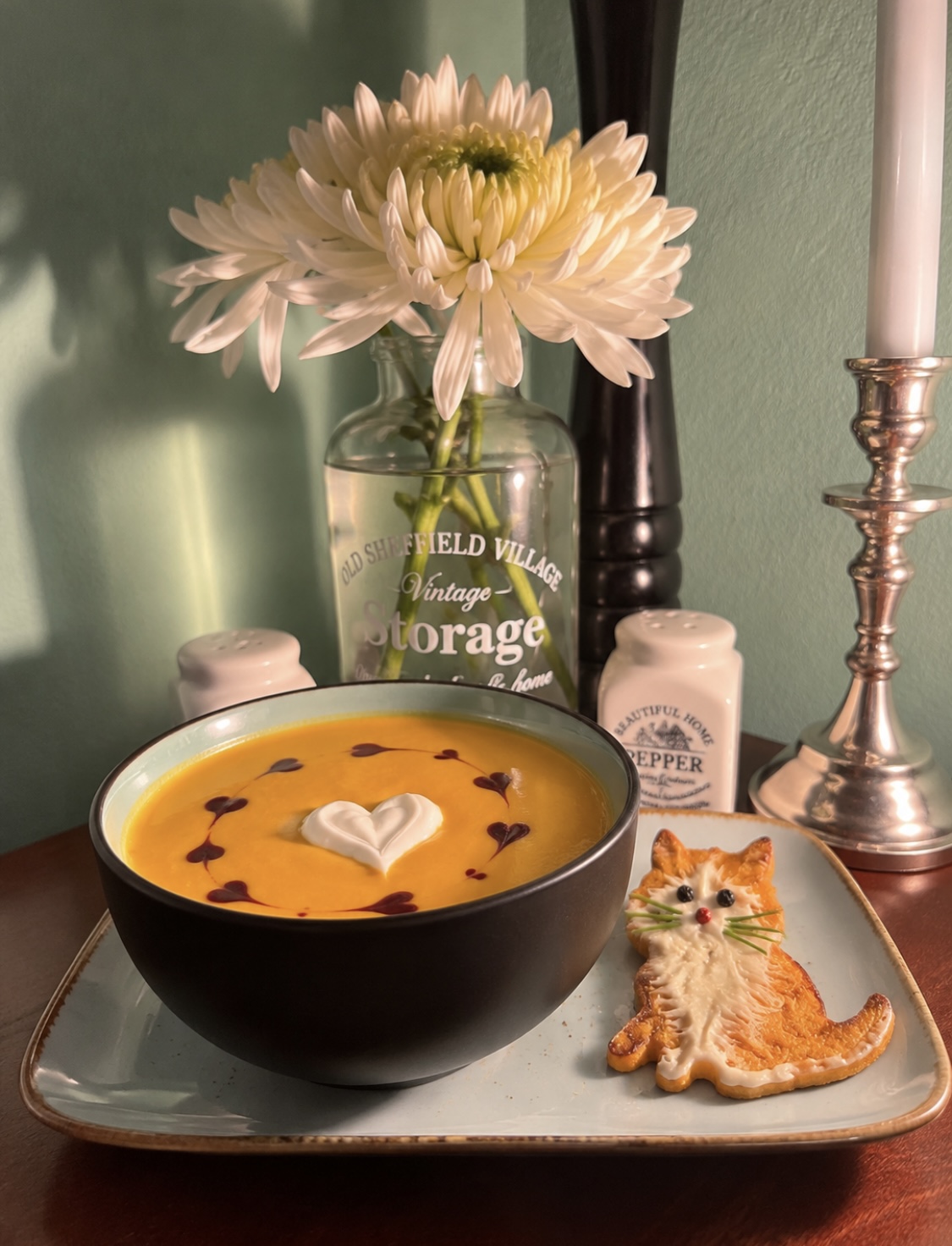
What Makes Smurfy’s Magic Pumpkin Orange Soup Special?
Smurfy’s Magic Pumpkin Orange Soup combines roasted Hokkaido pumpkin with fragrant Madras curry, fresh ginger, garlic and the bright citrus aroma of orange. A touch of oat cream gives the soup its beautifully velvety consistency, while vegan sour cream and nutty pumpkin seed oil add a delicious finishing touch. Homemade pumpkin fritters shaped into little cats transform the garnish into a loving tribute to Smurfy, my beloved feline companion who gave this recipe its name. Inspired by a memorable visit to Leipzig, years of experimenting in my kitchen and an extraordinary friendship during a difficult time, this completely plant-based soup is much more than autumn comfort food. It's a bowl full of love, gratitude and precious memories.
Cook this recipe →
Recipe postcard
Malaysia – A Country of Tropical Rainforests, Islands and Culinary Diversity
Malaysia is a Southeast Asian country divided between Peninsular Malaysia and Malaysian Borneo. Its culinary traditions reflect centuries of cultural exchange between Malay, Chinese, Indian and Indigenous communities, alongside influences from regional trade routes. Coconut milk, lemongrass, turmeric, ginger, galangal and chili are important ingredients in many Malaysian dishes. From bustling street-food markets to traditional family kitchens, Malaysian cuisine is celebrated for its aromatic spice combinations, rich sauces and remarkable regional diversity.
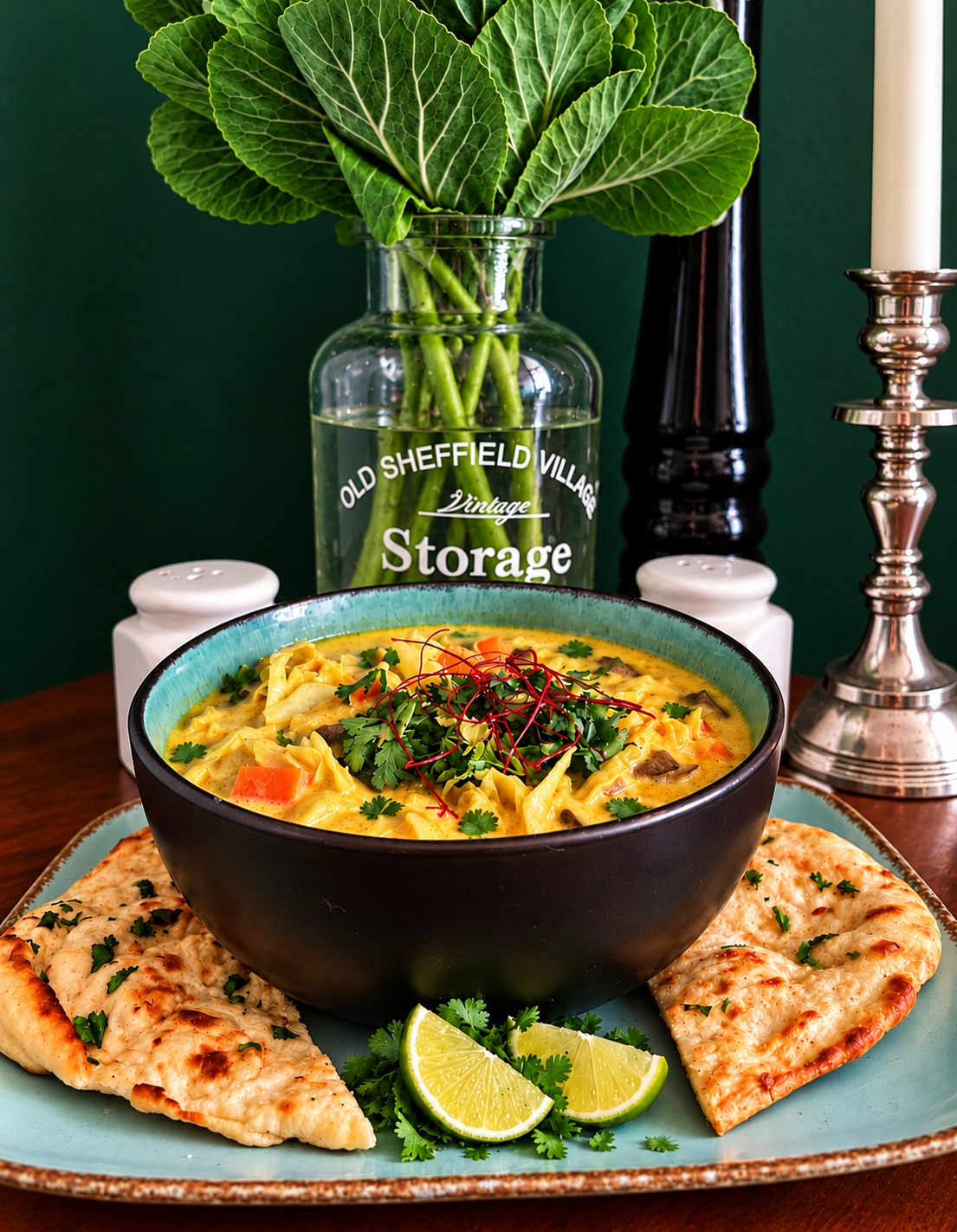
What Is Sayur Lodeh?
Sayur Lodeh is a vegetable dish cooked in a fragrant coconut milk broth, particularly associated with Indonesian and Malaysian cuisine. In Malaysia, it is also commonly known as Sayur Lemak Lodeh, referring to its rich, creamy character. Depending on the region and household, it may contain cabbage, long beans, carrots, tofu, tempeh and other vegetables. Some traditional preparations include shrimp-based seasonings for additional umami. This Via Veggie Vegan version uses white miso instead, creating a completely plant-based interpretation with a homemade rempah spice paste, golden coconut broth and a colorful mixture of vegetables.
Cook this recipe →
Recipe postcard
Japan – A Culinary Tradition of Precision and Umami
Japan is an East Asian island nation celebrated for its diverse regional cuisines, seasonal ingredients and careful attention to flavor and presentation. Japanese cooking frequently highlights the natural character of ingredients, with fermented foods such as miso and soy sauce playing an important role. From traditional noodle shops to modern ramen restaurants, comforting bowls of noodles are an essential part of everyday food culture.
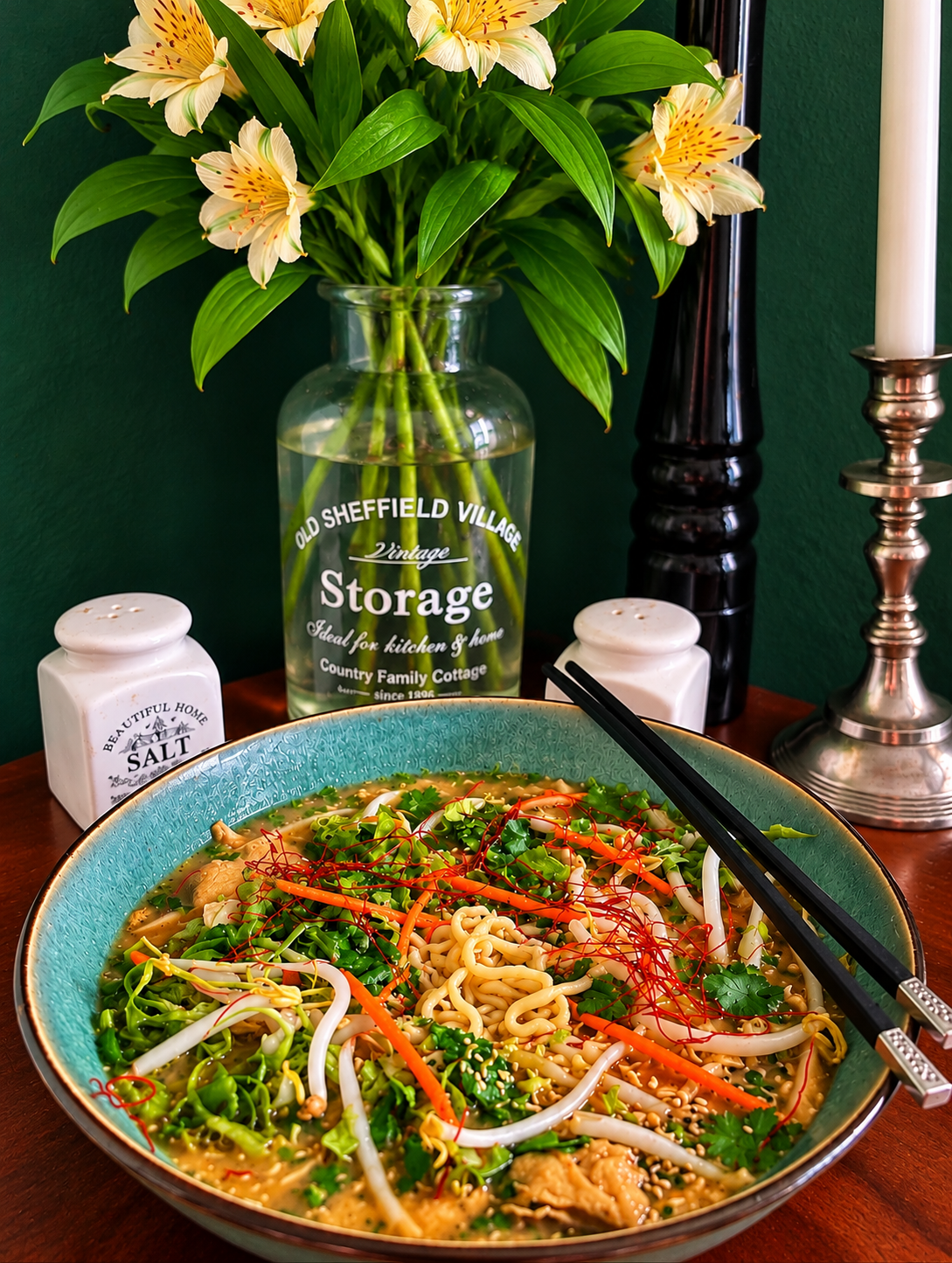
What Is Spicy Miso Ramen?
Ramen developed in Japan under the influence of Chinese wheat noodle traditions and has evolved into numerous regional styles. Miso ramen is particularly associated with Sapporo in Hokkaido, where miso-based ramen became popular during the twentieth century. This Via Veggie Vegan interpretation combines white miso, vegetable stock, soy milk, garlic, ginger and chili crisp to create a creamy, spicy broth. Ramen noodles, tofu, plant-based chicken and plenty of vegetables turn it into a generous, satisfying plant-based meal.
Cook this recipe →
