
A Taste of Cambodia
Somlor Kari, also spelled Samlor Kari, refers to a Cambodian curry preparation. Cambodian curries combine fragrant aromatic pastes with ingredients such as coconut milk, vegetables and, in many traditional versions, meat.
Halloween Meets Cambodian-Inspired Cooking
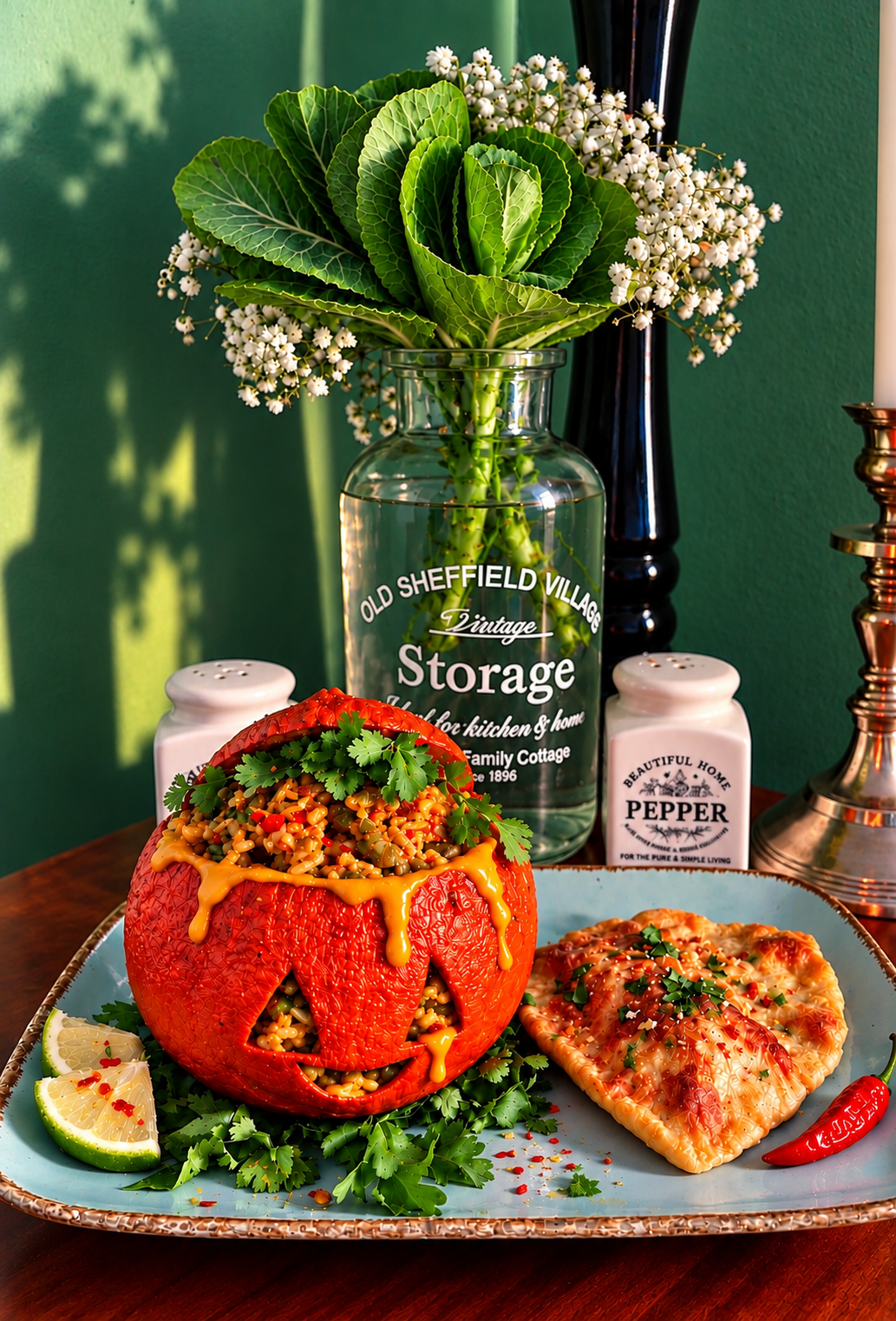
The smiling jack-o'-lantern presentation is my own creative addition rather than a traditional Cambodian serving style. The roasted Hokkaido becomes both an edible bowl and an ingredient, making this dish a playful celebration of aromatic cooking and zero-waste creativity.
▣ Ingredients (2 servings)
- 1 hokkaido pumpkin (medium size)
- 1 tbsp chili oil
- 2 stalks lemongrass
- 20 g fresh tumeric
- 10 g fresh galangal
- 2 leaves makrut lime leaves
- 3 cloves garlic
- 1 shallot (large)
- 300 g hokkaido pumpkin flesh
- 200 g firm tofu
- 200 ml full-fat coconut milk
- 150 ml vegetable broth
- 1 tbsp browm sugar
- 1 1/2 tbsp light soy sauce
- 1 tbsp vegetable oil
- 1 handful fresh thai basil
- 120 g jasmine rice
- 1 handful fresh coriander
- to taste salt & freshly ground black pepper
♨ Preparation
- Prepare the Halloween Pumpkin
Preheat the oven to 180°C / 356°F conventional heat.
Wash the Hokkaido pumpkin thoroughly and dry it.
Carefully cut off the top to create a removable lid.
Scoop out the seeds and stringy fibers.
Remove some of the pumpkin flesh with a spoon, leaving sufficiently thick walls so the pumpkin keeps its shape.
Set the pumpkin flesh aside for the curry. You will need approximately 300 g. If the pumpkin does not provide enough, use additional Hokkaido pumpkin.
Brush the inside of the hollowed-out pumpkin, its cut edges and the underside of the lid with chili oil.
Place the pumpkin and its lid on a baking tray.
Roast for approximately 30 minutes, checking regularly.
The pumpkin should be about three-quarters cooked: tender enough to carve but still firm enough to support the filling.
Remove from the oven and allow to cool slightly. - Prepare the Homemade Yellow Kroeung
Remove the tough outer layers from the lemongrass and finely chop the tender inner sections.
Peel and finely chop the fresh turmeric and galangal.
Remove the tough central ribs from the makrut lime leaves and finely shred the leaves.
Peel the garlic and shallot.
Place the lemongrass, turmeric, galangal and makrut lime leaves in a mortar or food processor.
Pound or blend until finely broken down.
Add the garlic and shallot and continue processing until a fragrant yellow paste forms.
Set aside approximately 2–3 heaped tablespoons for the curry. Freeze any remaining paste for another recipe. - Cook the Jasmine Rice
Rinse the jasmine rice thoroughly under cold running water.
Cook according to the package instructions until tender and fluffy.
Keep warm until the curry is ready. - Prepare the Curry
Cut the reserved Hokkaido pumpkin flesh into small, even cubes.
Cut the tofu into bite-sized pieces.
Heat the vegetable oil in a saucepan over medium heat.
Add 2–3 heaped tablespoons of homemade yellow Kroeung.
Fry for approximately 1–2 minutes until fragrant, stirring regularly.
Add the tofu and gently toss until evenly coated with the aromatic paste.
Stir in 1 tablespoon of brown sugar and allow it to dissolve.
Add the diced pumpkin, vegetable broth and approximately half the coconut milk.
Stir in the light soy sauce.
Bring to a gentle simmer and cook for approximately 12–15 minutes, or until the pumpkin is tender.
Add the remaining coconut milk and heat gently for another minute.
Taste and adjust the seasoning with a little additional soy sauce or brown sugar if needed.
Turn off the heat and fold in the fresh Thai basil.
The finished curry should be creamy and aromatic, with enough body to coat the rice without becoming excessively liquid. - Carve the Halloween Face
Once the roasted Hokkaido has cooled enough to handle safely, place it on a stable cutting board.
Using a small sharp knife or carving tool, carefully cut out two eyes, a nose and a smiling mouth.
Work gently around the lower edges to prevent the pumpkin from breaking.
Keep the carved pumpkin upright until ready to fill. - Combine the Curry and Rice
Add the cooked jasmine rice to the prepared curry.
Gently fold everything together until the rice is evenly coated with the yellow Kroeung and coconut sauce.
Check the consistency. The filling should be creamy and moist rather than soupy. - Fill and Serve
Place the carved Halloween Hokkaido on a serving plate.
Carefully spoon the curry and rice mixture into the pumpkin.
Fill generously, allowing the colorful filling to rise slightly above the opening.
Garnish with plenty of fresh coriander.
Position the pumpkin lid on top or slightly behind the opening.
Serve immediately.
The roasted Hokkaido shell is edible and can be enjoyed together with the curry and rice.
Food Story
A Smiling Halloween Pumpkin Meets Cambodian Curry
Who says Halloween pumpkins always have to be scary? Mine decided to smile! For my Cambodian-inspired Somlor Kari, I wanted to combine fragrant international cooking with a little Halloween creativity. So instead of using an ordinary bowl, I turned a whole Hokkaido pumpkin into an edible jack-o’-lantern. After hollowing it out, I brushed it with chilli oil, roasted it until just tender and carefully carved a cheerful face. And naturally, the scooped-out pumpkin flesh went straight into the curry. Nothing delicious gets thrown away in my kitchen!
Homemade Kroeung, Coconut Curry & Halloween Magic
Meanwhile, my kitchen filled with the wonderful aromas of homemade yellow Kroeung. Fresh lemongrass, turmeric, galangal, garlic, shallot and makrut lime leaves created the fragrant foundation for a creamy coconut curry with tofu, pumpkin and Thai basil. I folded the jasmine rice directly into the finished curry, spooned the colourful filling into my smiling Hokkaido and added plenty of fresh coriander. A little spooky, a little cheeky and absolutely delicious. Who needs a scary pumpkin when you can have an edible one?
Zero Waste, Full Flavour
One pumpkin, several delicious possibilities! The flesh becomes part of the curry, the roasted shell serves as an edible bowl, and the cleaned seeds can be roasted with a little oil and spices for a crunchy snack. Any leftover homemade yellow Kroeung goes straight into the freezer for another Cambodian-inspired creation. That’s my kind of Halloween magic: plenty of flavour, a happy pumpkin and absolutely no reason to waste the good bits! Via Veggie Vegan – A Culinary Journey Around the World.
♨ Nutrition per serving
Nutritional values are approximate and may vary depending on the ingredients and products used.
Good to Know
What Is Somlor Kari?
Somlor Kari, also spelled Samlor Kari, refers to a Cambodian curry preparation. Traditional versions often combine fragrant aromatic pastes with coconut milk, vegetables and meat. Ingredients and preparation methods vary between regions and households. This recipe is a vegan, Cambodian-inspired interpretation with tofu, pumpkin and jasmine rice.
Yellow Kroeung – The Heart of Khmer Curry
Kroeung is a traditional Cambodian aromatic paste made by pounding or blending fresh herbs, roots and spices. Yellow Kroeung gets its characteristic golden colour from turmeric. Lemongrass, galangal, garlic and shallots create a fragrant foundation, while additional ingredients vary according to the recipe. Unlike dry curry powder, Kroeung is prepared as a fresh paste.
Galangal & Makrut Lime Leaves – Essential Aromatics
Galangal contributes peppery, citrusy and slightly pine-like notes that differ from the warmth of ginger. Makrut lime leaves add an intense citrus fragrance without introducing acidity. Remove the tough central ribs before finely chopping the leaves for a smoother Kroeung. Fresh or frozen ingredients work particularly well.
Turmeric – The Secret Behind the Golden Colour
Fresh turmeric contains natural pigments called curcuminoids, including curcumin, which give yellow Kroeung its vibrant colour. It also contributes an earthy, slightly bitter flavour. Although curcumin has been studied for potential health benefits, ordinary culinary quantities should not be regarded as medical treatment. Fresh turmeric can stain hands and kitchen surfaces.
Why Use Hokkaido Pumpkin?
Hokkaido squash has naturally sweet, slightly nutty flesh and an edible skin that softens during roasting. This makes it ideal for creating an edible Halloween serving bowl. Leaving thick walls and roasting the pumpkin only until partially tender helps preserve its shape for carving and filling. Hokkaido is a creative substitution rather than a traditional Cambodian serving ingredient.
Tofu – A Plant-Based Protein Source
Firm tofu provides plant-based protein and absorbs the flavours of homemade Kroeung and coconut sauce. Soy protein contains all nine essential amino acids. Depending on the coagulant used during production, tofu may also provide calcium. Check the packaging for the nutritional values of your chosen product.
Coconut Milk & Saturated Fat
Full-fat coconut milk gives the curry its rich, creamy texture and naturally contains no dairy or dietary cholesterol. However, it is relatively high in saturated fat, which can raise LDL cholesterol when consumed in excess. Replacing some saturated fats with unsaturated fats can support cardiovascular health as part of a balanced diet.
Why Add Jasmine Rice to the Curry?
Jasmine rice has a delicate fragrance and soft texture that complement aromatic coconut curries. In this recipe, the cooked rice is folded directly into the sauce rather than served separately. This creates a creamy, cohesive filling that can be spooned into the carved pumpkin. Keep the sauce thick enough to prevent it from leaking through the Halloween face.
Brown Sugar Instead of Palm Sugar
Palm sugar is commonly used in Southeast Asian cooking to balance savoury and aromatic ingredients. Brown sugar provides a convenient alternative with gentle caramel notes, although its flavour is not identical. Combined with light soy sauce, it helps balance the sweetness, saltiness and fragrant spices of the curry.
Zero Waste – One Pumpkin, Several Possibilities
The hollowed-out Hokkaido serves as an edible Halloween bowl, while the scooped-out flesh becomes part of the curry. Cleaned pumpkin seeds can be dried and roasted with a little oil and spices for a crunchy snack. Leftover homemade yellow Kroeung can be frozen in small portions for future recipes. One pumpkin, plenty of possibilities. Zero Waste, Full Flavour!
You may also like
♡
You may also like
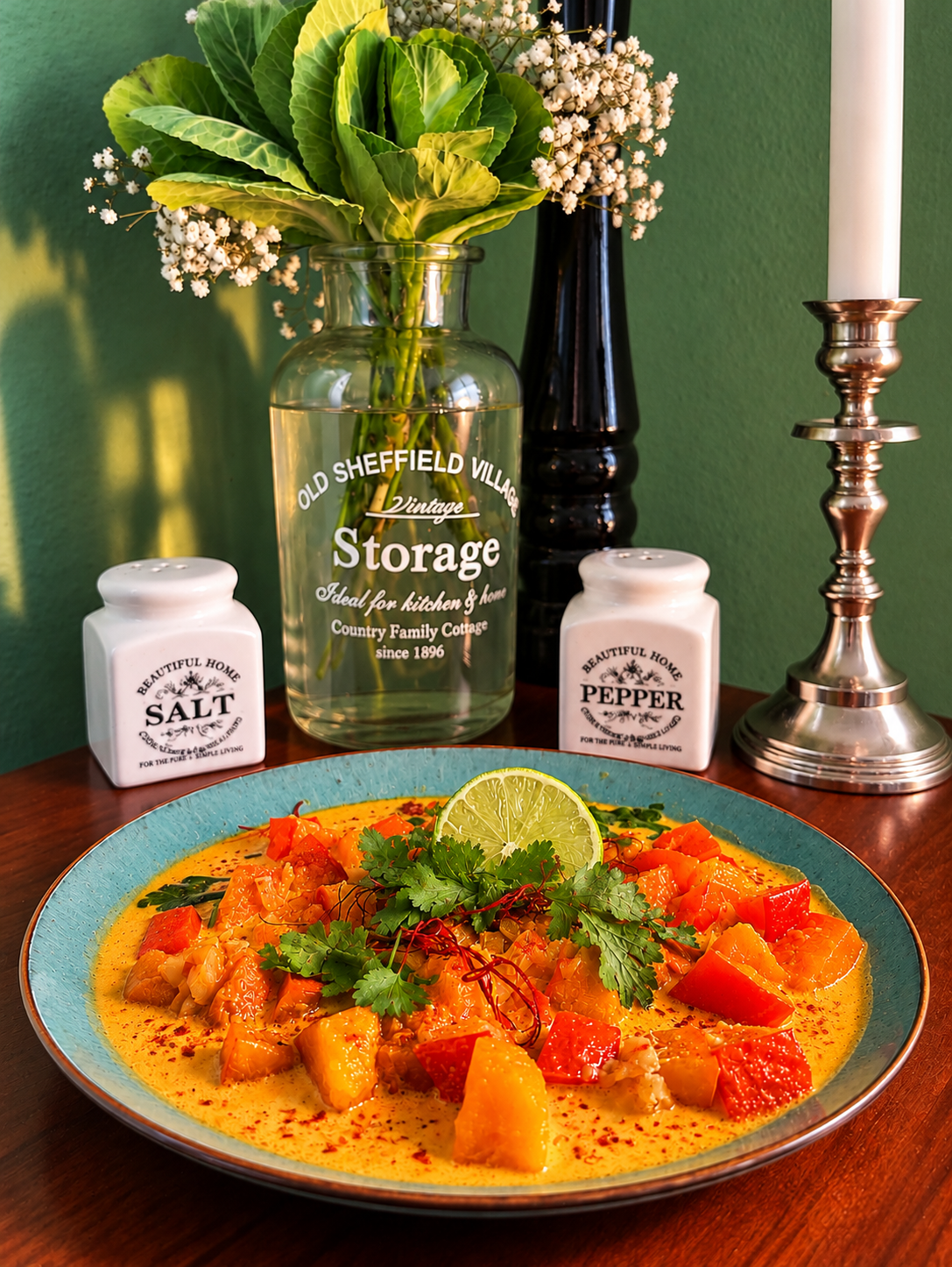
Khmer Pumpkin Curry with Coconut Milk
You may also like
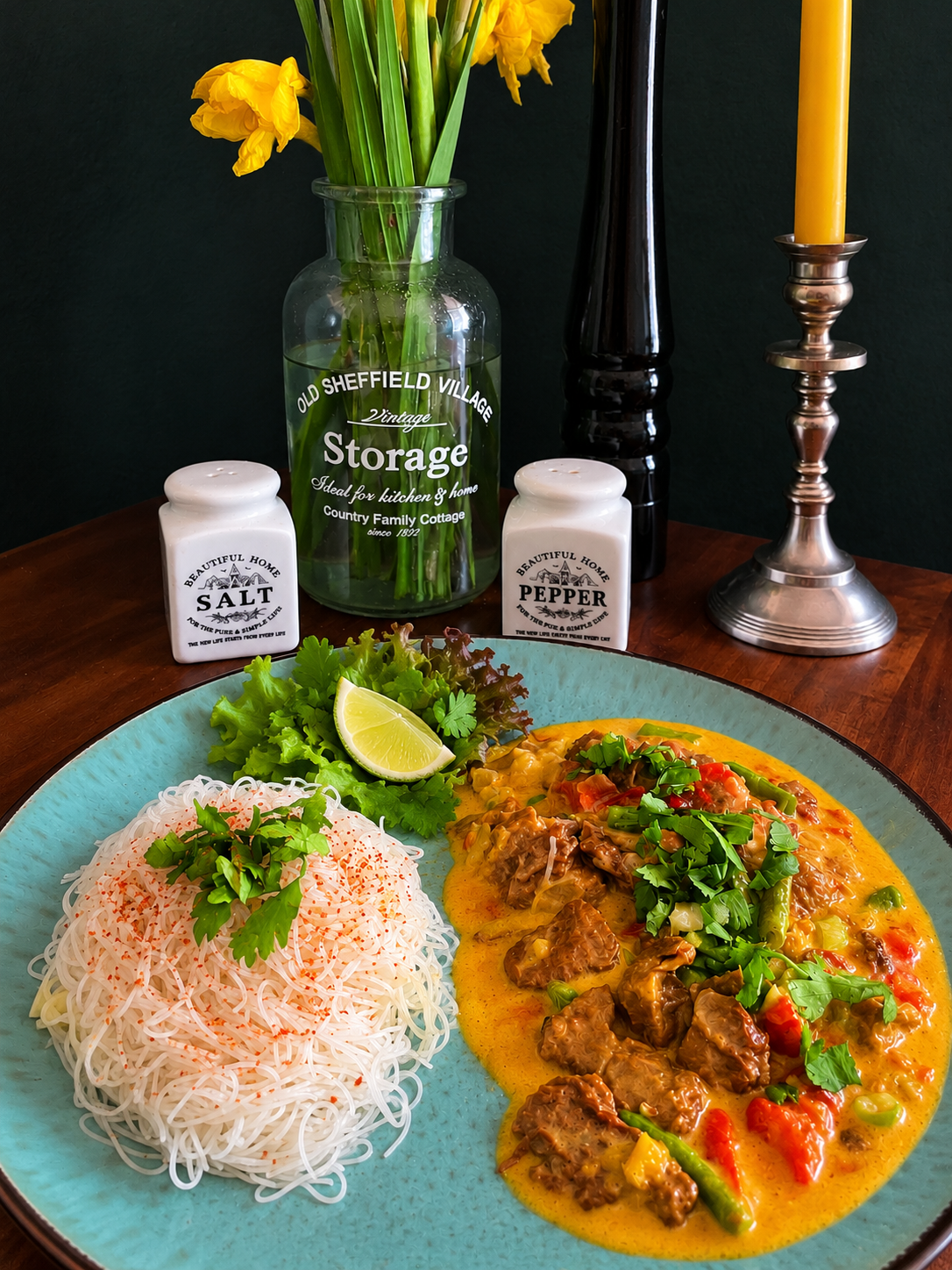
Laos – Lemongrass & Coconut Curry with Mock Duck and Rice Noodles
You may also like