Cambodia – The Aromatic World of Khmer Cuisine
Cambodia's culinary heritage is shaped by regional traditions, fresh ingredients and influences from neighbouring Southeast Asian countries. Khmer cuisine is known for its fragrant combinations of lemongrass, galangal, turmeric, garlic and fresh herbs. Cambodian curries often emphasise aromatic flavours and a balance of savoury, sweet and sour notes rather than intense chilli heat.
What Is Khmer Pumpkin Curry?
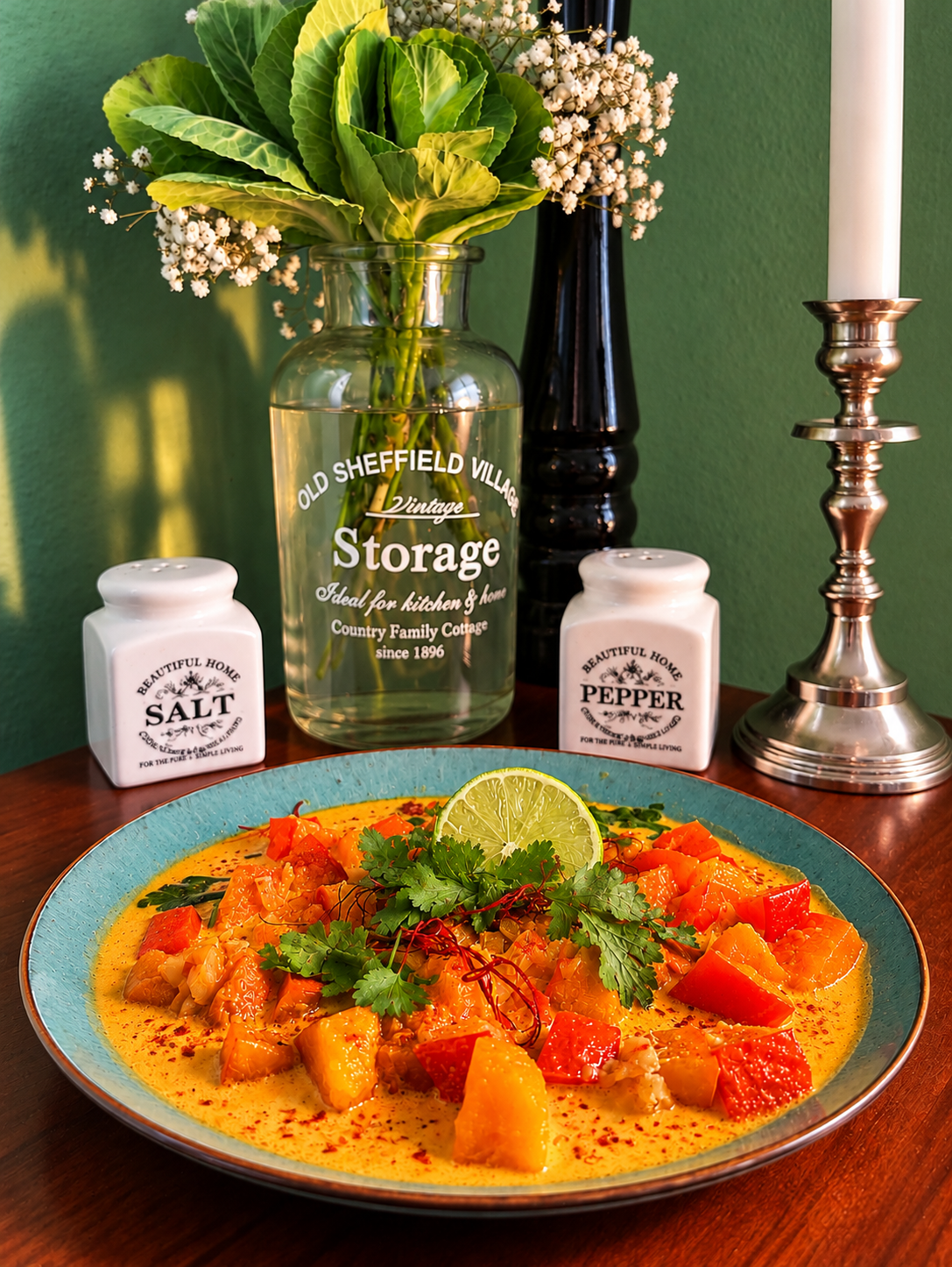
Khmer Pumpkin Curry is a Cambodian-inspired dish combining tender pumpkin with fragrant aromatics and creamy coconut milk. My Via Veggie Vegan interpretation uses Hokkaido squash, fresh lemongrass, galangal, ginger, turmeric, garlic, vegan fish sauce and lime. The naturally sweet pumpkin complements the golden coconut sauce beautifully. This is a personal plant-based interpretation of Cambodian curry traditions rather than a reproduction of one specific traditional recipe.
▣ Ingredients (2 servings)
- 500 g hokkaido pumpkin
- 400 ml coconut milk
- 2 stalks lemon grass
- 2 spring onion
- 3 cloves garlic
- 1 lime
- 1/2 thumb-sized fresh ingwer
- 1/2 thumb-sized fresh turmeric
- 1/2 thumb-sized fresh galangal
- 1 tsp vegan fish sauce
- 1/2 tsp chili powder
- to taste fresh red chili threads, for garnish
- 4 sprigs fresh coriander
- 1 splash cooking oil, for sautéing
- to taste jasmine rice (optional)
- to taste salt & freshly ground black pepper
♨ Preparation
- Prepare the Pumpkin
Cut the Hokkaido pumpkin in half and remove the seeds.
Cut the pumpkin flesh into bite-sized pieces. The skin of Hokkaido pumpkin is edible and can be left on if thoroughly washed.
Place the pumpkin pieces in a saucepan with a little salted water.
Cook for approximately 10 minutes until just tender but still holding their shape.
Drain thoroughly and allow to cool slightly. - Prepare the Aromatics
Trim the tough ends of the lemongrass stalks and remove any dry outer layers.
Cut the tender stalks in half and gently bruise them to release their aroma.
Slice the spring onions into thin rings.
Finely chop the garlic, fresh ginger, galangal and turmeric. - Sauté the Aromatics
Heat a little neutral cooking oil in a large pan over medium heat.
Add the spring onions, lemongrass, garlic, ginger, galangal and turmeric.
Sauté gently for approximately 3 minutes until fragrant, stirring regularly.
Take care not to burn the garlic or fresh spices. - Prepare the Coconut Curry
Deglaze the pan with a splash of vegan fish sauce.
Pour in the coconut milk and stir well.
Season with the chili powder, salt and freshly ground black pepper.
Allow the sauce to warm through gently.
Remove the lemongrass stalks before serving. - Add the Pumpkin
Carefully fold the pre-cooked Hokkaido pumpkin into the coconut sauce.
Allow the curry to simmer gently for approximately 5 minutes so the pumpkin absorbs the aromatic flavors.
Stir occasionally, taking care not to break up the tender pumpkin pieces. - Balance the Flavors
Stir in the freshly squeezed lime juice.
Taste the curry and adjust the seasoning with a little cane sugar or additional vegan fish sauce if needed.
The finished sauce should taste creamy, fragrant and gently spicy, with a pleasant balance of sweetness, acidity and savory depth. - Garnish and Serve
Transfer the Khmer Pumpkin Curry to serving bowls or deep plates.
Garnish generously with fresh coriander and delicate red chili threads.
Add a slice of fresh lime if desired.
Serve immediately.
Food Story
When Pumpkin Meets Khmer Aromatics
Some dishes need a long list of spices to impress. Others simply need the right ingredients in the right company! My Khmer Pumpkin Curry belongs to the second category. Fresh lemongrass, ginger, galangal, turmeric, garlic and creamy coconut milk turn an everyday pumpkin into something wonderfully aromatic. Another delicious stop on my culinary journey around the world – without leaving my kitchen!
Hokkaido Takes a Little Trip to Cambodia
Hokkaido isn’t the pumpkin variety traditionally used in Cambodian cooking, but its sweet, slightly nutty flavour works beautifully with coconut milk and fresh aromatics. And since its skin is edible, there’s no peeling required. Less work, less waste and more pumpkin on the plate! Naturally, three cloves of garlic had to join the party. Team Garlic wouldn’t have it any other way, and Team Coriander was equally delighted to contribute a generous handful of fresh herbs.
Rice? Not This Time!
Jasmine rice would certainly make a lovely accompaniment, but I decided to skip it. With all that tender pumpkin in a fragrant golden coconut sauce, I honestly didn’t need anything else. A few delicate chilli threads added the finishing touch. Cambodian inspiration, Hokkaido pumpkin, plenty of garlic and absolutely no plane ticket required! Via Veggie Vegan – A Culinary Journey Around the World.
♨ Nutrition per serving
Nutritional values are approximate and may vary depending on the ingredients and products used.
Good to Know
Khmer Cuisine – Cambodia's Culinary Heritage
Khmer cuisine is the traditional food culture of Cambodia, known for its fragrant herbs, aromatic roots, fresh vegetables and balanced flavours. Many dishes combine savoury, sweet and sour elements, with ingredients such as lemongrass, galangal, turmeric and garlic playing important roles.
What Makes Cambodian Curry Special?
Cambodian curries often emphasise aromatic ingredients rather than intense chilli heat. Some contain coconut milk, while others rely on fragrant spice pastes or broths. Recipes vary between regions and households. This pumpkin curry is a personal vegan interpretation inspired by Cambodian cooking traditions.
Hokkaido Pumpkin – A Delicious Alternative
Hokkaido squash is not a traditional Cambodian pumpkin variety, but its naturally sweet, slightly nutty flesh works beautifully with coconut milk and aromatic spices. Its skin becomes tender during cooking, eliminating the need for peeling and helping reduce food waste.
Turmeric & Black Pepper
Fresh turmeric contains curcuminoids, including curcumin, which contribute to its golden colour. Piperine, a compound found in black pepper, can increase curcumin absorption under certain conditions. However, studies often use concentrated extracts, so the effects of ordinary culinary quantities should not be overstated.
Galangal vs. Ginger – What's the Difference?
Although galangal and ginger belong to the same botanical family, their flavours differ. Ginger is warm and pungent, while galangal has peppery, citrusy and slightly pine-like notes. Using both creates a complex aromatic foundation for the coconut curry.
Lemongrass – Fragrance Without Acidity
Lemongrass provides a fresh, lemon-like aroma without the acidity of citrus juice. Its characteristic fragrance comes partly from citral. Lightly bruising the stalks helps release their aromatic compounds. Remove tough lemongrass pieces before serving.
Coconut Milk & Saturated Fat
Coconut milk creates the rich, creamy texture of this curry. Although naturally dairy-free and cholesterol-free, full-fat coconut milk contains substantial amounts of saturated fat. Replacing some saturated fats with unsaturated fats can help lower LDL cholesterol as part of a balanced diet.
Vegan Fish Sauce – Plant-Based Umami
Traditional fish sauce contributes concentrated salty and savoury flavours. Vegan alternatives use ingredients such as soy, seaweed or fermented plant-based seasonings to create a similar umami effect. Check the product label for allergens and gluten-containing ingredients.
Why Add Lime at the End?
Fresh lime juice balances the sweetness of pumpkin and the richness of coconut milk with refreshing acidity. Adding it near the end of cooking helps preserve its bright citrus flavour. A little cane sugar can be added if the sauce needs additional sweetness.
Naturally Dairy-Free & Zero Waste
Coconut milk provides creaminess without dairy products, while vegan fish sauce keeps this curry entirely plant-based. Hokkaido pumpkin can be cooked with its skin, reducing preparation time and food waste. The cleaned pumpkin seeds can also be roasted separately for a crunchy snack. Zero Waste, Full Flavor.