
Laos – A Cuisine Built Around Fresh Herbs and Bold Flavors
Laos is a landlocked Southeast Asian country with a rich culinary heritage shaped by fresh herbs, fragrant aromatics and the balance of spicy, salty, sour and subtly sweet flavors. Lemongrass, galangal, chilies, makrut lime leaves and coriander play important roles in many dishes. One of the country's most important staples is sticky rice, known as khao niao, traditionally eaten with a wide variety of vegetables, dips, salads and savory dishes.
Lemongrass & Coconut Curry – A Lao-Inspired Vegan Interpretation
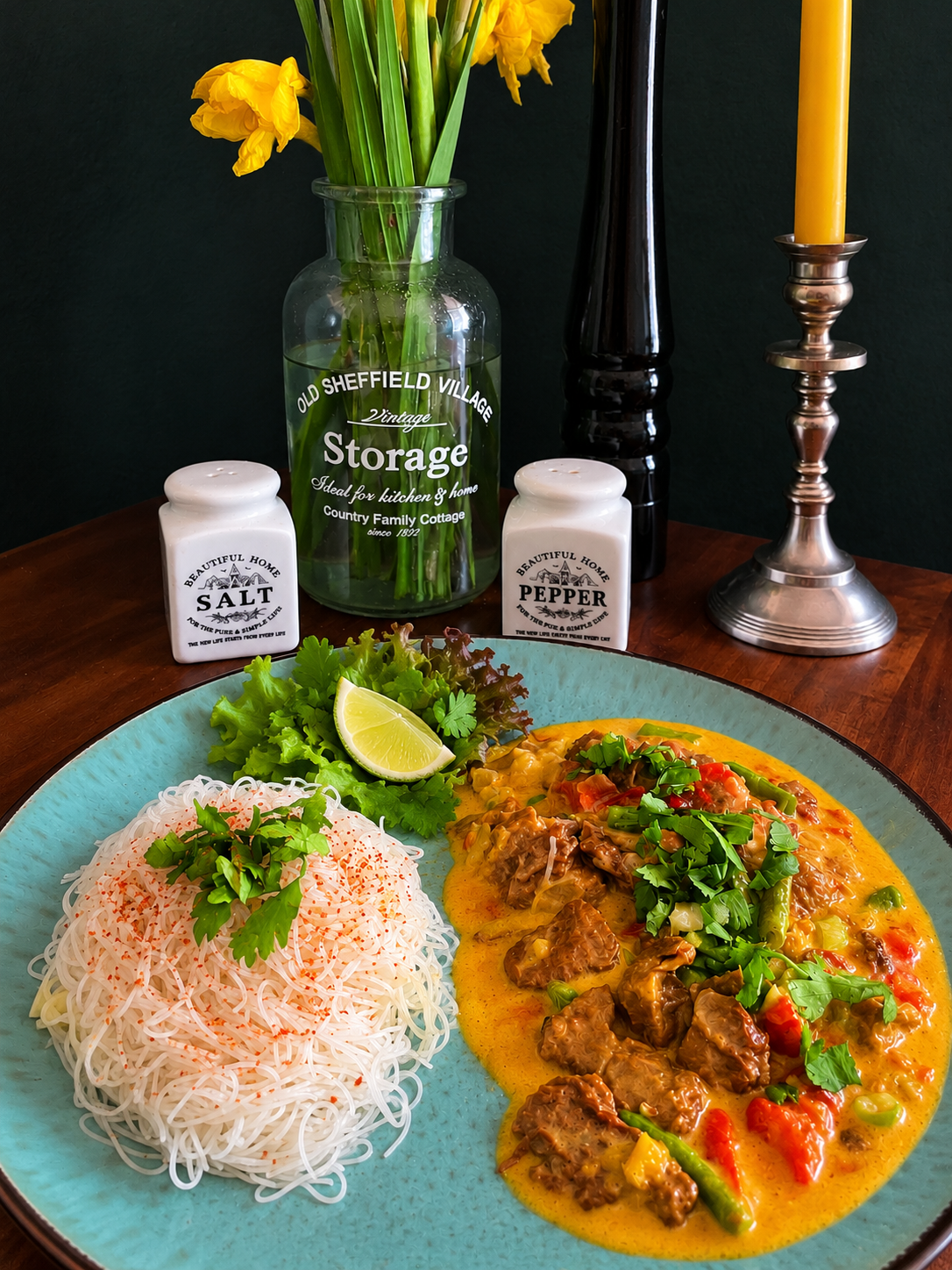
This Lemongrass & Coconut Curry is my own plant-based interpretation of characteristic Lao flavors rather than a recreation of one particular traditional dish. A homemade curry paste combines lemongrass, galangal, garlic, shallots and dried chilies, while coconut milk creates a silky, aromatic sauce. Mock Duck adds a satisfying, meaty texture, and fresh vegetables bring color and freshness. Instead of the more traditional sticky rice, I serve my curry with delicate rice noodles – a delicious little twist inspired by the contents of my kitchen.
▣ Ingredients (2 servings)
- 2 1/2 stalks fresh lemongrass (2 for the curry, ½ for the paste)
- 1 onion
- 1 shallot
- 2 cloves garlic
- 1 slice fresh galangal, approximately ½ cm
- 100 g g snake beans or green beans
- 6-8 cherry tomatoes
- 1/2 lime (additional lime wedge, for serving)
- 2 fresh lettuce leaf (for garnish)
- 2-3 3 dried red chilies
- 3-4 makrut lime leaves
- 1/2 tsp ground coriander seeds
- 1/2 tsp salt
- 1 tsp brown sugar
- 1 pinch chili powder, for the rice noodles
- 4 leaves fresh Thai basil
- 4-8 sprigs fresh coriander, for garnish
- 1 can Mock Duck, approximately 280 g drained weight
- 150 g thin rice noodles, dry weight
- 1 tbsp vegetable oil, such as rapeseed or peanut oil
- 400 ml coconut milk
- 100 ml vegetable broth
- 1 1/2 tbsp light soy sauce
- 1-2 tbsp coconut milk from the measured amount, if needed for blending the paste
- to taste salt & freshly ground black pepper
♨ Preparation
- Prepare the Vegetables and Aromatics
Dice the onion and shallot, chop the garlic and grate the galangal. Cut the green beans into approximately 3 cm pieces and halve the cherry tomatoes. Finely chop the white lower half of one lemongrass stalk for the curry paste. Lightly crush the remaining two stalks with the back of a knife and cut them into large pieces. - Make the Homemade Curry Paste
Place the dried chilies, finely chopped lemongrass, shallot, garlic, galangal, ground coriander, cumin, salt and ½ tbsp soy sauce in a small blender. Process into a fine, aromatic paste. If necessary, add 1–2 tbsp of the measured coconut milk to help the blades catch the ingredients. - – Brown the Mock Duck
Drain the Mock Duck thoroughly and tear or cut it into bite-sized pieces. Heat the vegetable oil in a wok or deep frying pan and fry the Mock Duck for 3–4 minutes until lightly browned and crisp around the edges. Remove from the pan and set aside. - Build the Aromatic Curry Base
Add the diced onion, homemade curry paste and crushed lemongrass to the remaining oil. Fry gently for 1–2 minutes until fragrant. Pour in the coconut milk and vegetable broth, then add the lightly torn makrut lime leaves. Bring to a gentle simmer. - Simmer the Curry
Add the green beans and browned Mock Duck. Cover and simmer gently for approximately 10 minutes until the beans are tender but still have a little bite. Add the halved cherry tomatoes during the final 3 minutes, followed by the Thai basil. - Cook the Rice Noodles
Meanwhile, prepare the thin rice noodles according to the package instructions. Drain thoroughly and gently loosen with a fork to prevent clumping. - Season and Finish
Season the curry with the remaining 1 tbsp soy sauce, cane or palm sugar and fresh lime juice. Taste and adjust the balance of spicy, salty, sour and sweet flavors. Remove the large lemongrass pieces and makrut lime leaves before serving. - Plate and Garnish
Arrange the rice noodles on one side of each plate and sprinkle lightly with chili powder. Spoon the creamy Mock Duck curry alongside, keeping the sauce in a generous, rounded pool. Finish with freshly chopped coriander and a small lettuce boat holding a lime wedge.
Food Story
Running Out of Rice – For a Very Good Reason
When I started preparing this Lao-inspired curry, sticky rice would have been the obvious traditional companion. There was just one tiny problem: I was running out of rice. And considering that rice has never been one of my favorite foods, that probably explains why there wasn’t much left in my kitchen in the first place. Apparently, even my pantry knows my preferences!
Sometimes the Best Ideas Come from the Pantry
Instead of rushing to the supermarket, I reached for a package of thin rice noodles. And what a delicious decision that turned out to be! The delicate noodles were absolutely wonderful with the creamy coconut sauce, soaking up the fragrant flavors of lemongrass, galangal, chili and makrut lime. A little fresh coriander, a squeeze of lime and a sprinkle of chili powder made everything come together beautifully.
195 Countries, One Kitchen – And a Little Improvisation
Would sticky rice have been the more traditional choice? Absolutely. Did I miss it? Not for a second! That’s one of the things I love most about my culinary journey around the world: discovering different food cultures, learning about their ingredients and traditions, and sometimes giving a dish my own little twist. This time, a nearly empty rice container led to a wonderfully comforting curry dinner. No regrets – and definitely no emergency rice shopping!
♨ Nutrition per serving
Nutritional values are approximate and may vary depending on the ingredients and products used.
Good to Know
What Exactly Is Mock Duck?
Mock Duck is a traditional plant-based meat substitute commonly made from wheat gluten, also known as seitan. Despite its name, it contains no duck meat. Its distinctive layered, fibrous texture is designed to resemble the appearance and chewiness of cooked meat. Canned Mock Duck is particularly popular in Asian-inspired vegetarian cooking and works beautifully in aromatic curries, stir-fries and savory sauces.
Why Is Mock Duck So Rich in Protein?
Wheat gluten is the concentrated protein component of wheat. When hydrated and cooked, it develops an elastic, chewy structure. This makes seitan-based products an interesting plant-based protein source, although their exact protein content depends on the manufacturer and preparation method. Mock Duck is not suitable for people with celiac disease or wheat allergies. Always check the product label, particularly for gluten, soy and other allergens.
Is Mock Duck a Complete Protein?
Wheat gluten contains substantial amounts of protein but is relatively low in the essential amino acid lysine. Combining different plant protein sources throughout the day, including legumes and soy products, helps provide a varied amino acid profile. Individual meals do not need to contain every essential amino acid in perfectly balanced proportions.
What Makes Lemongrass So Aromatic?
Lemongrass contains aromatic compounds, particularly citral, responsible for its characteristic citrus fragrance. Unlike lemon juice, lemongrass contributes a fresh, fragrant flavor without adding pronounced acidity. The tender lower white part can be finely chopped and blended into curry paste, while tougher stalks are best crushed, simmered in the sauce and removed before serving.
What Are Makrut Lime Leaves?
Makrut lime leaves are intensely fragrant citrus leaves widely used in Southeast Asian cooking. Their distinctive aroma comes from naturally occurring essential oils, including citronellal. The leaves are usually torn or gently crushed before being added to curries and soups. Whole leaves can be tough and are generally removed before eating.
Sticky Rice and Food Culture in Laos
Sticky rice, or khao niao, is central to everyday eating in Laos. It is traditionally steamed and often eaten by hand, shaped into small portions and used to pick up accompanying dishes. Its cultural importance extends far beyond being a simple side dish. Rice noodles are not a direct traditional replacement for sticky rice, but they work wonderfully in this modern, Lao-inspired interpretation.
Coconut Milk and Saturated Fat
Coconut milk gives this curry its luxurious, creamy consistency. It also contains a relatively high proportion of saturated fatty acids, which can raise LDL cholesterol when consumed in excess, depending on the overall diet and the fats they replace. LDL transports cholesterol through the bloodstream, while HDL helps transport cholesterol back toward the liver. Replacing some saturated fats with unsaturated fats, such as those found in nuts, seeds and many vegetable oils, can support cardiovascular health. Coconut milk can still be enjoyed as part of a varied, balanced plant-based diet.
Why Add Lime Juice at the End?
Fresh lime juice contributes acidity that balances the richness of coconut milk and enhances the perception of the other seasonings. Adding it towards the end of cooking preserves its brighter citrus character. This balance of sour, salty, spicy and subtly sweet flavors is particularly important in Southeast Asian-inspired cooking.
You may also like
♡
You may also like
Thai Red Curry Hasselback Butternut Squash – Homemade Curry Paste
You may also like
Somlor Kari – Vegan Cambodian Pumpkin Curry in a Halloween Hokkaido
You may also like