
Lithuania – A Baltic Country of Forests, Lakes and Culinary Traditions
Lithuania is one of the three Baltic states, situated along the southeastern coast of the Baltic Sea. Its landscapes are characterized by forests, lakes, rivers, wetlands and gently rolling countryside. Agriculture and seasonal ingredients have shaped Lithuanian food culture for centuries. Potatoes, rye, cabbage, beets, mushrooms and root vegetables are important elements of traditional cooking, particularly in hearty dishes designed to provide warmth and nourishment during the colder seasons.
What Is Ropių Sriuba?
Ropių Sriuba literally means turnip soup in Lithuanian. Rather than referring to one strictly standardized national recipe, the name describes a traditional style of vegetable soup built around turnips and other seasonal ingredients. Turnips were cultivated in the Baltic region long before potatoes became a dominant staple. Combined with potatoes, carrots, leek and aromatic herbs, they create a satisfying rustic soup. This Via Veggie Vegan interpretation uses vegetable broth and vegan sour cream for a completely plant-based version of this comforting dish.
▣ Ingredients (2 servings)
- 1/2 turnip
- 1 potato
- 1/2 carrot
- 1/2 leek
- 1/2 tbsp vegetable oil
- 750 ml vegetable broth
- 1 bay leaf
- 1/2 tsp dried majoran
- to taste fresh dill
- 2 tbsp vegan sour creme
- 2 slices dark rye bread
- to taste salt & freshly ground black pepper
♨ Preparation
- – Prepare the Vegetables
Peel the turnip and potato.
Cut both into evenly sized cubes so they cook at approximately the same rate.
Peel the carrot and cut it into small pieces or grate it coarsely.
Wash the leek thoroughly, removing any soil trapped between its layers.
Slice the leek into thin rings. - Sauté the Vegetables
Heat the vegetable oil in a large saucepan over medium heat.
Add the sliced leek and sauté gently for approximately 3–4 minutes until softened.
Avoid browning the leek.
Add the carrot and continue cooking for another 2 minutes.
Stir occasionally. - Simmer the Soup
Pour the vegetable broth into the saucepan.
Add the diced turnip, potato and bay leaf.
Bring everything to a boil.
Reduce the heat and simmer gently for approximately 15–20 minutes.
The vegetables should become completely tender while still holding their shape. - Season
Add the dried marjoram.
Season with salt and freshly ground black pepper to taste.
Remove the bay leaf.
Taste the broth and adjust the seasoning if necessary. - – Let the Soup Rest
Remove the saucepan from the heat.
Allow the soup to rest for approximately 10 minutes.
This gives the flavors time to settle while the vegetables remain pleasantly tender. - Serve
Ladle the hot Ropių Sriuba into two bowls.
Finish each portion with a spoonful of vegan sour cream.
Scatter freshly chopped parsley over the soup.
Serve with dark rye bread on the side.
Food Story
A Humble Vegetable with a Long History
Sometimes an ingredient tells you something about a country’s food history before you have even taken the first bite. For Lithuania, that ingredient is the humble turnip. Long before potatoes became such an important part of Baltic cooking, turnips were already doing the hard work. Inexpensive, sturdy and well suited to colder climates, they were exactly the kind of vegetable that could help feed families through long winters. And yet, despite their impressive history, turnips rarely receive the culinary attention they deserve. Perhaps it is time to give this modest root vegetable a little more recognition.
Rustic Comfort, Lithuanian Style
For my Ropių Sriuba, I wanted the vegetables to remain the stars rather than disappear into a blender. Turnip, potato, carrot and leek come together with bay leaf and marjoram, creating a wonderfully comforting combination of earthy and gently sweet flavors. A spoonful of vegan sour cream adds creaminess, while fresh herbs provide a lovely contrast. The beauty of this dish lies in its simplicity. There is no elaborate vegan reconstruction, no complicated technique and no long list of unusual ingredients. Just honest, old-fashioned vegetable cooking with a little Via Veggie Vegan personality.
Giving the Humble Turnip Its Moment
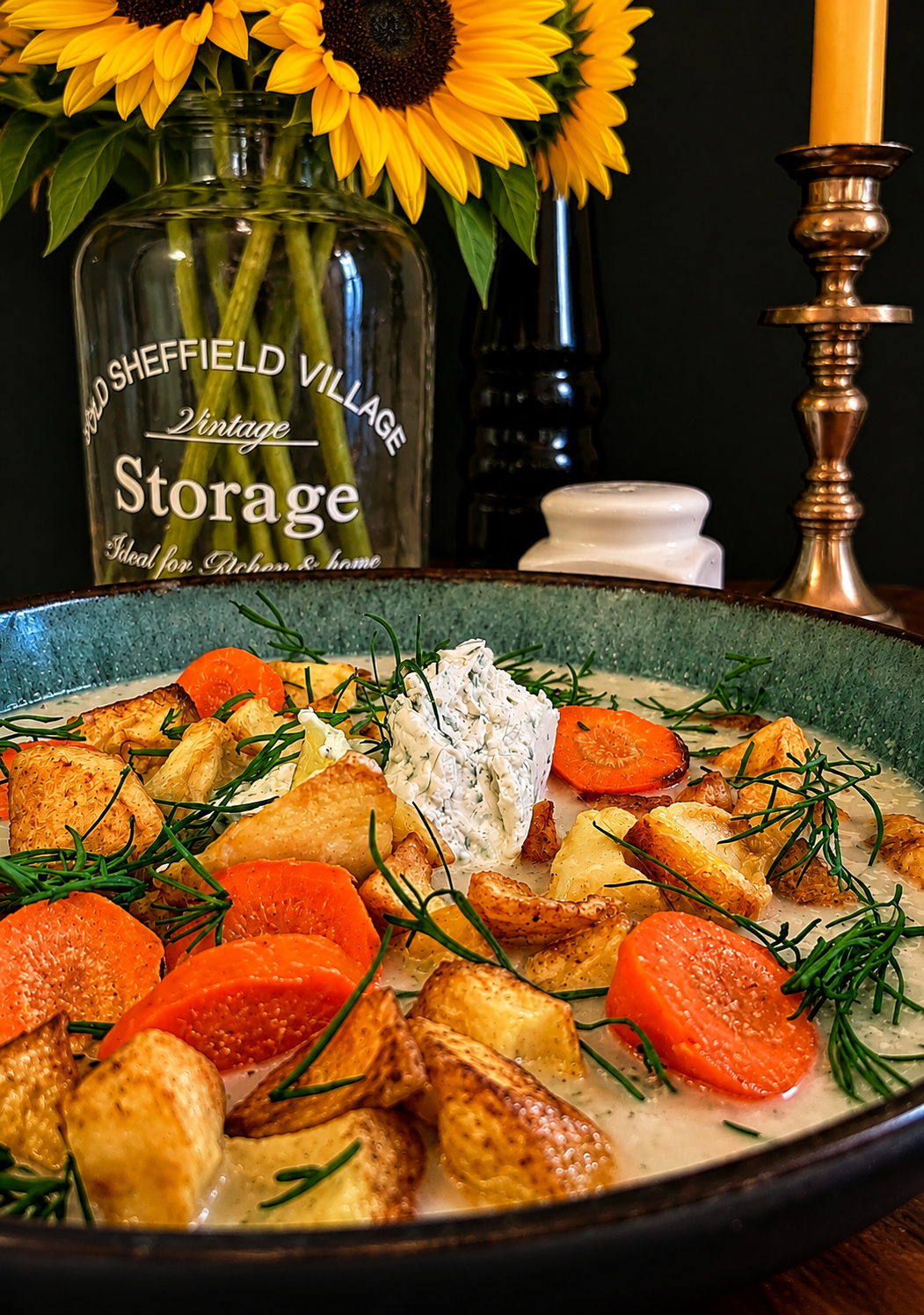
I particularly love the way traditional dishes can turn everyday ingredients into something worth celebrating. For the photograph, the golden vegetable pieces, bright orange carrots and generous scattering of fresh herbs make this rustic soup look anything but ordinary. And that is exactly what I enjoy about my culinary journey around the world: discovering that a dish does not need expensive ingredients or elaborate presentation to have character. Sometimes all it takes is a turnip, a few vegetables and a good bowl of homemade soup. The humble turnip may never become a glamorous celebrity vegetable, but in my kitchen, it certainly deserves its moment in the spotlight.
♨ Nutrition per serving
Nutritional values are approximate and may vary depending on the ingredients and products used.
Good to Know
Turnips Before Potatoes – A Glimpse into Baltic Food History
Turnips were cultivated in northern and eastern Europe long before potatoes became widespread. Their ability to grow in relatively cool conditions and remain suitable for storage made them valuable in traditional agricultural societies. Potatoes gradually became an increasingly important staple in Lithuania after their introduction to Europe, but older root vegetables continued to have a place in regional cooking.
Why Root Vegetables Are Important in Lithuanian Cuisine
Lithuania's seasonal climate historically encouraged the cultivation and storage of vegetables that could remain available throughout autumn and winter. Turnips, carrots, beets and potatoes are well suited to hearty soups, stews and other warming dishes. Traditional recipes often reflect the practical use of locally available ingredients rather than elaborate preparation techniques.
Lithuanian Cuisine and Fasting Traditions
Roman Catholic traditions have influenced Lithuanian food culture, including periods when meatless meals were customary. Vegetable soups, grains and other simple dishes could be adapted to such occasions. However, historical meatless cooking was not necessarily vegan, since dairy products and other animal-derived ingredients could still be used depending on the occasion and household.
Lithuania – The Land of Forests and Lakes
Forests cover approximately one-third of Lithuania's territory, and the country is home to thousands of lakes. These natural environments contribute to its biodiversity and cultural identity. Forests have traditionally provided berries, mushrooms, herbs and other seasonal foods, while lakes and rivers have shaped local landscapes and settlement patterns.
The European Bison – Lithuania's Impressive Forest Resident
The European bison, also known as the wisent, is Europe's largest surviving wild land mammal. Following severe historical population declines, conservation and reintroduction programs have helped the species recover in several European countries, including Lithuania. These powerful herbivores are associated with woodland and forest-edge habitats and represent an important conservation success story, although their populations still require careful management.
Storks – A Familiar Sight in the Lithuanian Countryside
The white stork is Lithuania's national bird and an important symbol in local culture. These large migratory birds are commonly seen nesting near villages, farmland and wetlands. Their return in spring is traditionally associated with the changing seasons. White storks feed on a variety of small animals, including insects, amphibians and rodents.
Wetlands, Bogs and Rare Plants
Lithuania contains important wetlands and peatland ecosystems that provide habitats for specialized plants, birds and other wildlife. Peatlands also store significant quantities of carbon. Protecting and restoring these environments supports biodiversity and helps maintain valuable ecosystem functions.
The Curonian Spit – A Remarkable Baltic Landscape
The Curonian Spit is a narrow sand-dune peninsula shared by Lithuania and Russia's Kaliningrad region. Recognized as a UNESCO World Heritage Site, it is known for its distinctive dunes, forests, coastal habitats and long history of human interaction with the landscape. Its natural environment is particularly sensitive to erosion and disturbance.
Turnips – Nutritional Benefits of a Traditional Root Vegetable
Turnips are relatively low in calories and provide vitamin C, fiber and potassium. Vitamin C contributes to normal immune function and collagen formation, while potassium supports normal muscle function and blood pressure regulation. The actual nutrient content varies depending on the vegetable's size, variety and cooking method.
What Makes Turnips Slightly Peppery?
Turnips belong to the Brassica family, which also includes cabbage, broccoli and mustard greens. They contain glucosinolates, naturally occurring sulfur-containing plant compounds associated with the characteristic flavors of many cruciferous vegetables. Cooking generally softens the sharper taste of turnips, producing a milder and more rounded flavor.
Glucosinolates and Their Breakdown Products
Glucosinolates can be converted into biologically active compounds when plant tissues are chopped, chewed or otherwise damaged. These substances are being studied for their possible roles in human health. However, laboratory findings should not be interpreted as proof that eating turnips prevents or treats specific diseases.
Potatoes – Energy, Potassium and Vitamin C
Potatoes provide carbohydrates that the body uses for energy, along with potassium and vitamin C. Their contribution to a balanced diet depends partly on how they are prepared. In this soup, potatoes provide both substance and a naturally creamy texture without requiring large quantities of added fat.
Carrots and Beta-Carotene
Carrots are a source of beta-carotene, a pigment that the body can convert into vitamin A when needed. Vitamin A contributes to normal vision, immune function and the maintenance of healthy skin and mucous membranes. Cooking carrots with a small quantity of oil can help make their carotenoids more available for absorption.
Leek – A Member of the Allium Family
Leek belongs to the same botanical group as onions, garlic and chives. Its flavor is generally milder and sweeter than that of raw onions, especially after gentle cooking. Leek contributes aromatic depth to vegetable soups and provides fiber and various micronutrients.
Marjoram – A Traditional European Kitchen Herb
Marjoram has a warm, slightly sweet and aromatic flavor that complements potatoes, root vegetables and legumes. It is commonly used in Central and Eastern European cooking. Adding dried marjoram towards the end of cooking helps preserve its delicate aroma.
Fresh Parsley – More Than a Garnish
Parsley contributes freshness, color and a lightly herbal flavor. It also contains vitamin K and vitamin C, although the amount of nutrients obtained from a small garnish is modest. Vitamin K plays an important role in normal blood clotting and bone health.
Vegan Sour Cream – What Changes Nutritionally?
Plant-based sour cream alternatives vary considerably in composition. Some are based on soy or oats, while others use coconut fat or vegetable oils. Products made with soy may contain more protein, while coconut-based alternatives can contain relatively high levels of saturated fat. Checking the ingredient list and nutritional label helps identify the option best suited to individual preferences.
Understanding Saturated and Unsaturated Fats
Dietary fats differ in their fatty acid composition. Replacing saturated fatty acids with unsaturated fatty acids can help lower LDL cholesterol. Vegetable oils rich in unsaturated fats can therefore be useful alternatives to fats high in saturated fatty acids. However, the nutritional quality of an entire meal depends on more than one ingredient.
What Are LDL and HDL Cholesterol?
LDL and HDL are lipoproteins that transport cholesterol through the bloodstream. Elevated LDL cholesterol contributes to the development of atherosclerosis, increasing cardiovascular risk. HDL helps transport cholesterol away from tissues, but higher HDL levels alone do not guarantee protection against cardiovascular disease. Overall cardiovascular health is influenced by many factors, including blood pressure, physical activity, smoking and dietary patterns.
Why Resting a Soup Can Improve Its Flavor
Allowing soup to rest briefly after cooking gives the temperature and flavors time to become more evenly distributed. Aromatic ingredients continue to infuse the broth, while the vegetables remain tender. Resting does not necessarily make every soup more flavorful, but it can help create a more harmonious overall taste.
Why Rye Bread Is Popular in Lithuania
Dark rye bread is an important part of Lithuanian culinary heritage. Rye grows relatively well in cooler climates and has traditionally been used to produce dense, flavorful breads. Lithuanian rye bread is often associated with everyday meals, family traditions and regional baking methods.
Fiber and Digestive Health
Turnips, potatoes, carrots, leek and rye bread all contribute dietary fiber. Fiber supports normal digestive function, and certain types of fiber can help maintain healthy blood cholesterol levels. The exact fiber content depends on the quantities and varieties of vegetables used, as well as whether the rye bread is included.
Zero Waste – Make the Most of Your Vegetables
Clean carrot ends, suitable turnip peelings and the green parts of leeks can be collected for homemade vegetable broth. Wash vegetables thoroughly before trimming and freeze suitable scraps until enough have accumulated. Avoid using spoiled or excessively bitter vegetable parts. Leftover cooked turnips and potatoes can also be mashed, seasoned and shaped into small patties for another meal.
Optional Roasted Vegetable Presentation
The recipe photograph features golden vegetable pieces that create additional color and texture. For a similar presentation, a portion of the turnip, potato and carrot can be roasted separately until golden and added to the finished soup. Fresh dill can replace or complement parsley as a garnish. This is an optional presentation variation rather than part of the original simmered preparation.
You may also like
♡
You may also like
Romanian Leek Soup – Vegan Ciorbă de Praz de Post with Fresh Chives
You may also like
Serbian Zucchini & Carrot Soup – Vegan Čorba sa Tikvicama i Šargarepom
You may also like