
Palava Sauce is a well-known dish in Ghanaian cuisine and part of the wider culinary traditions of West Africa. At its heart are leafy greens cooked in a rich, savory sauce with tomatoes, onions and aromatic seasonings.
In Ghana, Palava Sauce is commonly prepared with kontomire, the leaves of cocoyam. These leafy greens are widely used in Ghanaian cooking and contribute a distinctive flavor and texture to traditional vegetable dishes.
Recipes vary between regions and households. Depending on the preparation, Palava Sauce may contain additional ingredients such as ground seeds, fish or other sources of protein. It is commonly served with a starchy accompaniment that balances the rich vegetable sauce.
This plant-based version replaces traditional kontomire with fresh spinach, which is more readily available outside West Africa. Tomatoes, onions, garlic, ginger and chili create an aromatic base, while peanut butter adds creaminess and a nutty flavor.
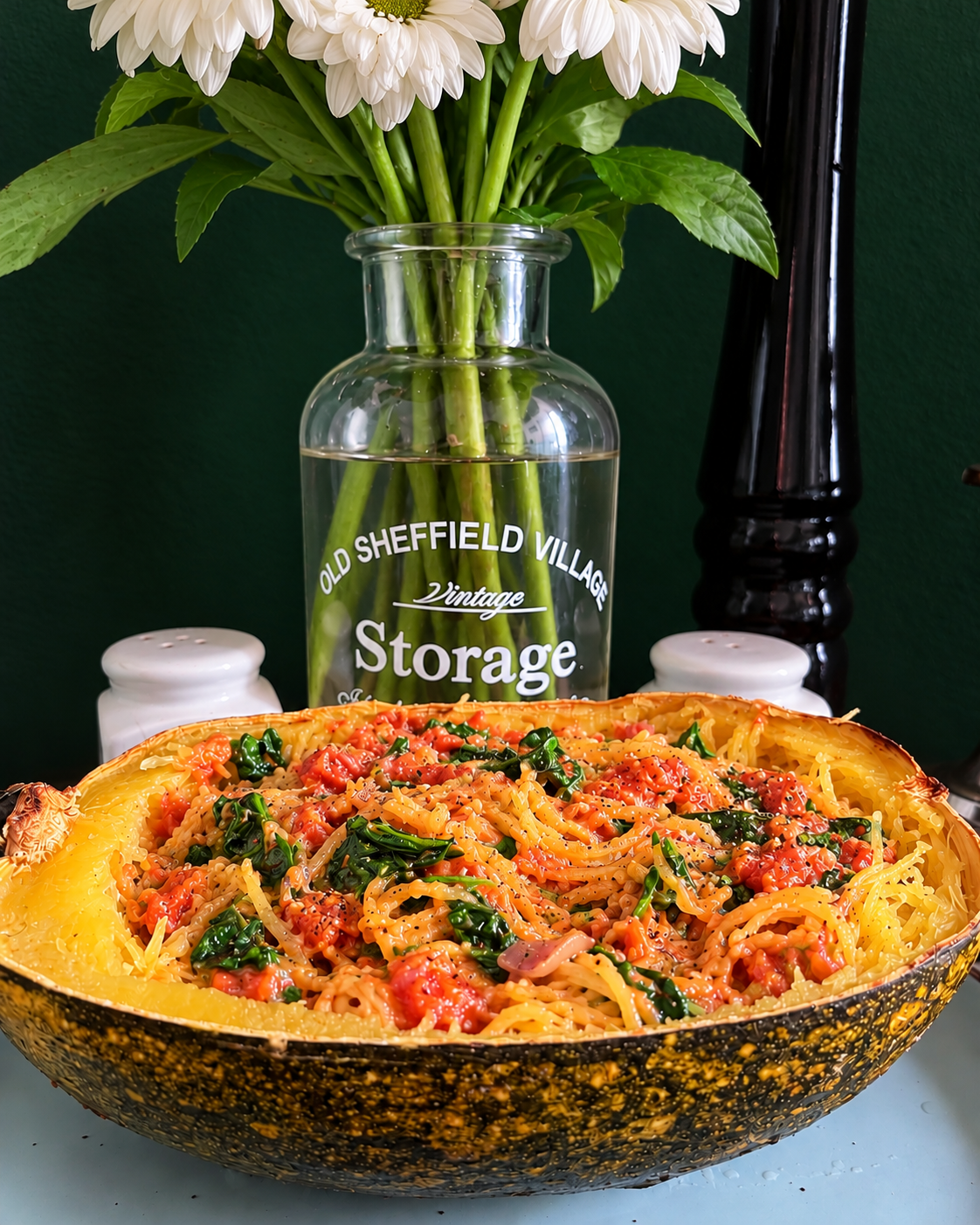
Instead of serving the sauce with a traditional Ghanaian accompaniment, this version pairs it with roasted spaghetti squash. The squash develops tender, golden strands that resemble spaghetti when loosened with a fork.
Served directly inside the roasted squash halves, the dish combines a Ghanaian-inspired spinach sauce with a creative vegetable-based presentation. The mild sweetness of the squash complements the savory, slightly spicy Palava Sauce.
▣ Ingredients (2 servings)
- 1 spaghetti sqash
- 2 tsp olive oil
- 300 g fresh spinach
- 2 tbsp peanut oil
- 1 onion
- 2 tomatoes
- 2 tbsp tomato paste
- 3 tbsp unsweetened creamy peanut butter
- 3 cloves garlic
- 1 tsp fresh ginger
- 1 red chili
- 100 ml water
- to taste salt & freshly ground black pepper
♨ Preparation
- Prepare the Spaghetti Squash
Preheat the oven to 200°C conventional heat. Wash the spaghetti squash and carefully cut it in half lengthwise. Remove the seeds and fibrous center with a spoon, keeping the squash halves intact. Brush the cut surfaces and insides lightly with olive oil and season with salt. - Roast the Spaghetti Squash
Place the squash halves cut-side down on a baking tray lined with baking parchment. Roast for approximately 35–40 minutes until the flesh is tender. Check towards the end of cooking. A fork should easily separate the flesh into spaghetti-like strands while the outer shells remain firm enough to serve as edible bowls. - Prepare the Aromatic Base
Peel and finely dice the onion. Finely chop the garlic and grate the fresh ginger. Dice the tomatoes and finely chop the chili. Heat the peanut oil in a large frying pan over medium heat. Add the onion and sauté until soft and translucent. - Build the Tomato Sauce
Add the garlic, ginger, diced tomatoes and tomato paste to the pan. Stir thoroughly and cook for approximately 5–7 minutes, stirring occasionally, until the tomatoes soften and the mixture develops into a rich, aromatic sauce. - Add the Spinach
Wash the fresh spinach thoroughly and drain well. Add it gradually to the tomato mixture, allowing the leaves to wilt before adding more. Stir gently until the spinach is evenly distributed throughout the sauce. - Add the Peanut Butter and Chili
Mix the peanut butter with a few tablespoons of warm water until smooth and creamy. Stir the mixture into the spinach and tomato sauce. Add the chopped chili and mix thoroughly. Allow the Palava Sauce to simmer gently for approximately 10 minutes, stirring occasionally. Add small amounts of the remaining water as needed until the sauce reaches a creamy consistency. Season with salt to taste. - Prepare the Spaghetti Squash Strands
Remove the roasted spaghetti squash from the oven and allow it to cool slightly until safe to handle. Turn the halves cut-side up. Use a fork to gently loosen the flesh into long, spaghetti-like strands, keeping the outer shells intact. Leave the strands inside the squash halves to create individual edible serving bowls. - Fill and Serve
Place each roasted spaghetti squash half on a serving plate. Spoon the warm Palava Sauce generously over the golden squash strands. Gently combine some of the sauce with the squash using a fork, allowing the strands to absorb the aromatic flavors. Serve immediately while the squash and sauce are warm.
Food Story
Ghana on My Culinary Bucket List
My culinary journey around the world has already introduced me to so many wonderful dishes, and Ghana is another country whose food traditions I find fascinating. I haven’t actually visited Ghana yet, but I would absolutely love to experience its vibrant markets, local ingredients and authentic home cooking one day.
For my Via Veggie Vegan version of Palava Sauce, I used fresh spinach instead of traditional kontomire leaves, along with tomatoes, garlic, ginger, chili and creamy peanut butter. And because my love affair with pumpkins and squash seems to have no end, I decided to serve everything inside a beautifully roasted spaghetti squash. Who needs an ordinary bowl when nature provides one?
Of course, I know that my interpretation is quite different from a traditional Ghanaian serving. And that’s exactly why I’d love to taste authentic Palava Sauce in Ghana one day. Until then, I’ll keep exploring the country’s flavors from my own kitchen – one delicious plant-based experiment at a time!
♨ Nutrition per serving
Nutritional values are approximate and may vary depending on the ingredients and products used.
Good to Know
Kontomire – The Leafy Heart of Ghanaian Cooking
Kontomire refers to the leaves of cocoyam, a tropical plant widely used in Ghanaian cuisine. These greens are a key ingredient in traditional dishes such as kontomire stew and many versions of Palava Sauce. They provide dietary fiber, minerals and various plant compounds. Fresh spinach makes a convenient substitute outside West Africa, although its flavor and texture are not identical. Cocoyam leaves must be properly cooked before eating because they naturally contain calcium oxalate crystals that can cause irritation.
Peanuts in West African Cuisine
Peanuts, often called groundnuts, play an important role in many West African food traditions. They are used in soups, stews, sauces and snacks, contributing richness and a distinctive nutty flavor. Peanut butter also provides plant-based protein and predominantly unsaturated fats. While this recipe uses peanut butter for creaminess, traditional Ghanaian Palava Sauce may instead be thickened with ground melon seeds, commonly known as agushie or egusi. The peanut-based sauce in this recipe is therefore a creative variation rather than a universal traditional preparation.
Spaghetti Squash – Nature's Vegetable Noodles
Spaghetti squash belongs to the winter squash family and develops its characteristic string-like texture when cooked. Unlike ordinary pasta, its strands are naturally part of the vegetable's flesh. Spaghetti squash contains water, dietary fiber and various vitamins and minerals, including potassium. Its mild flavor makes it particularly suitable for strongly seasoned sauces, while the intact roasted shell provides a practical edible serving bowl.
You may also like
♡
You may also like
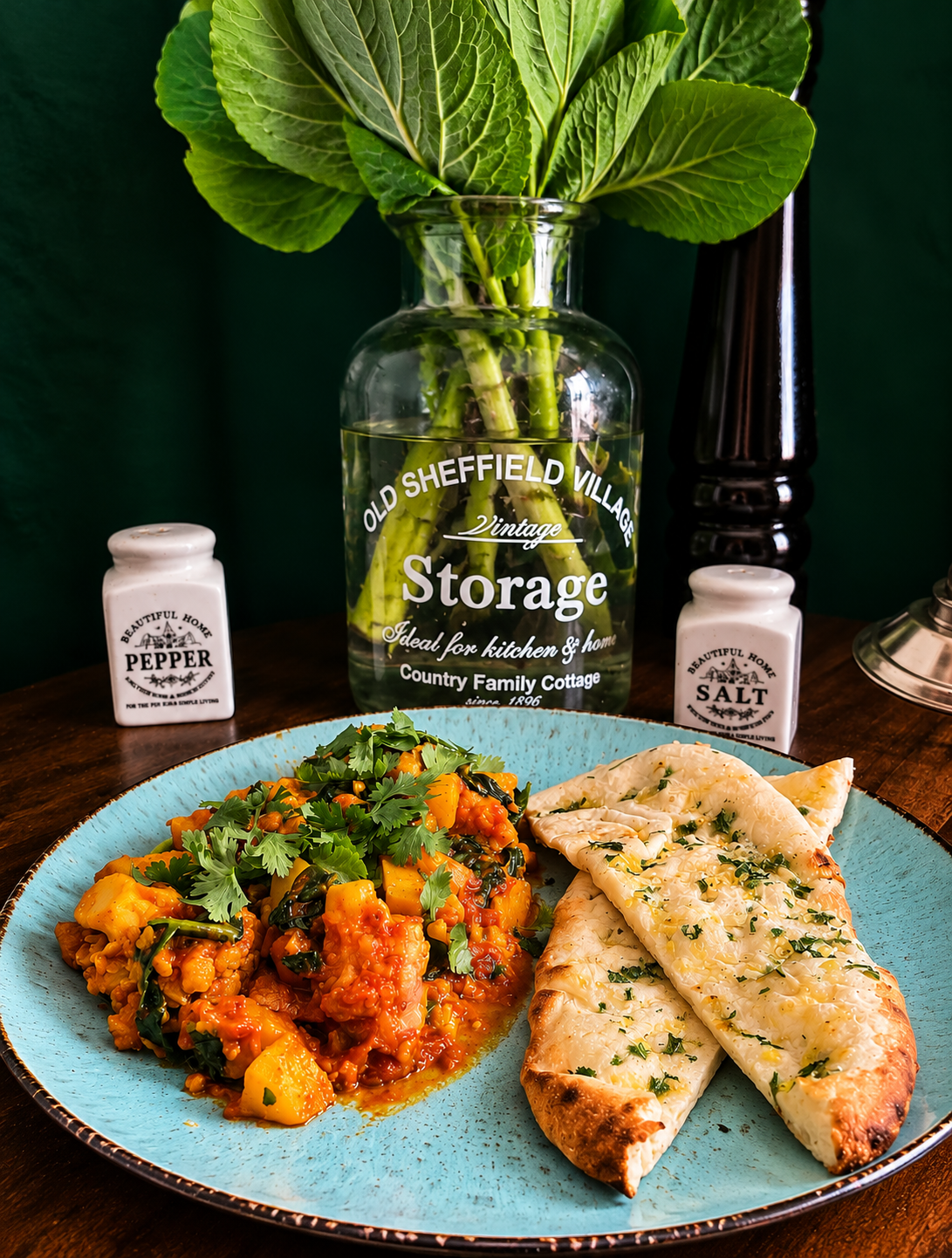
Pakistani Aloo Gobi Palak – Vegan Potato, Cauliflower & Spinach Curry with Garlic Naan
You may also like
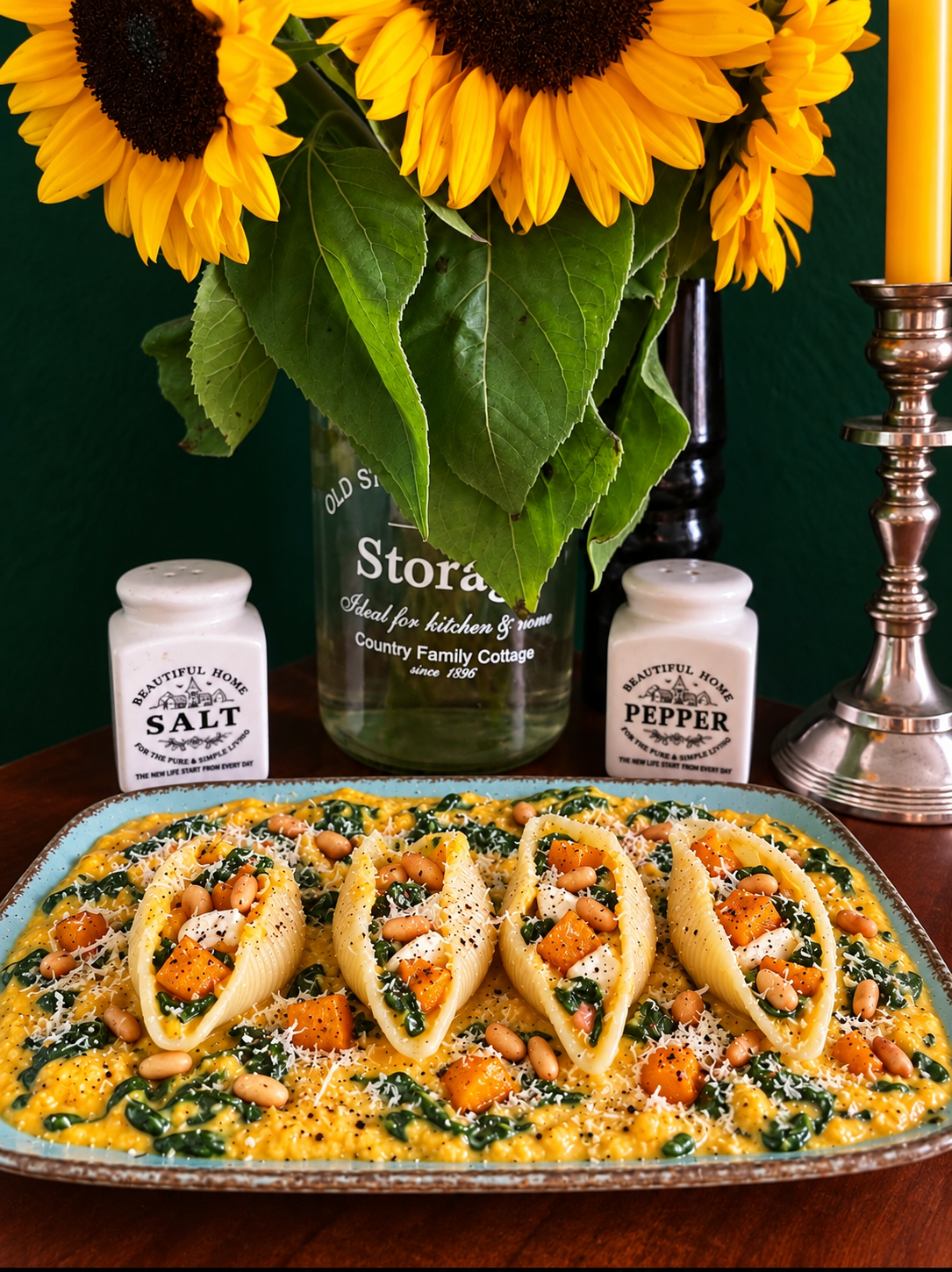
Butternut & Spinach Stuffed Conchiglioni – Creamy Vegan Pasta with Lemon & Orange Zest
You may also like