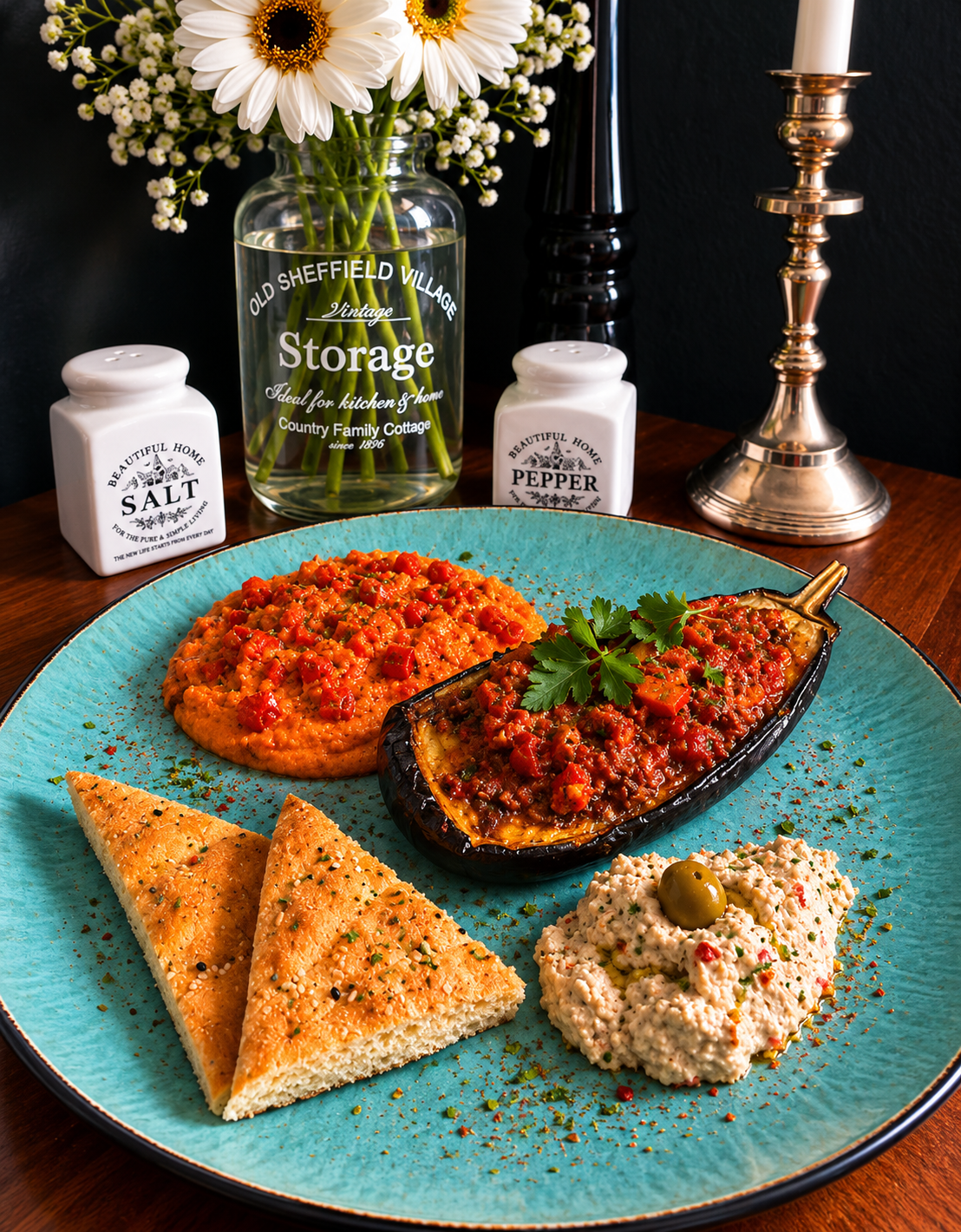
Egypt – A Rich Culinary Tradition
Egyptian cuisine is known for its comforting vegetable dishes, aromatic spices and richly seasoned sauces. Eggplant plays an important role in many traditional recipes, often combined with tomatoes, garlic, onions and cumin. Egyptian home cooking offers numerous regional and family variations, including naturally plant-based dishes.
What Is Egyptian Messa'a?
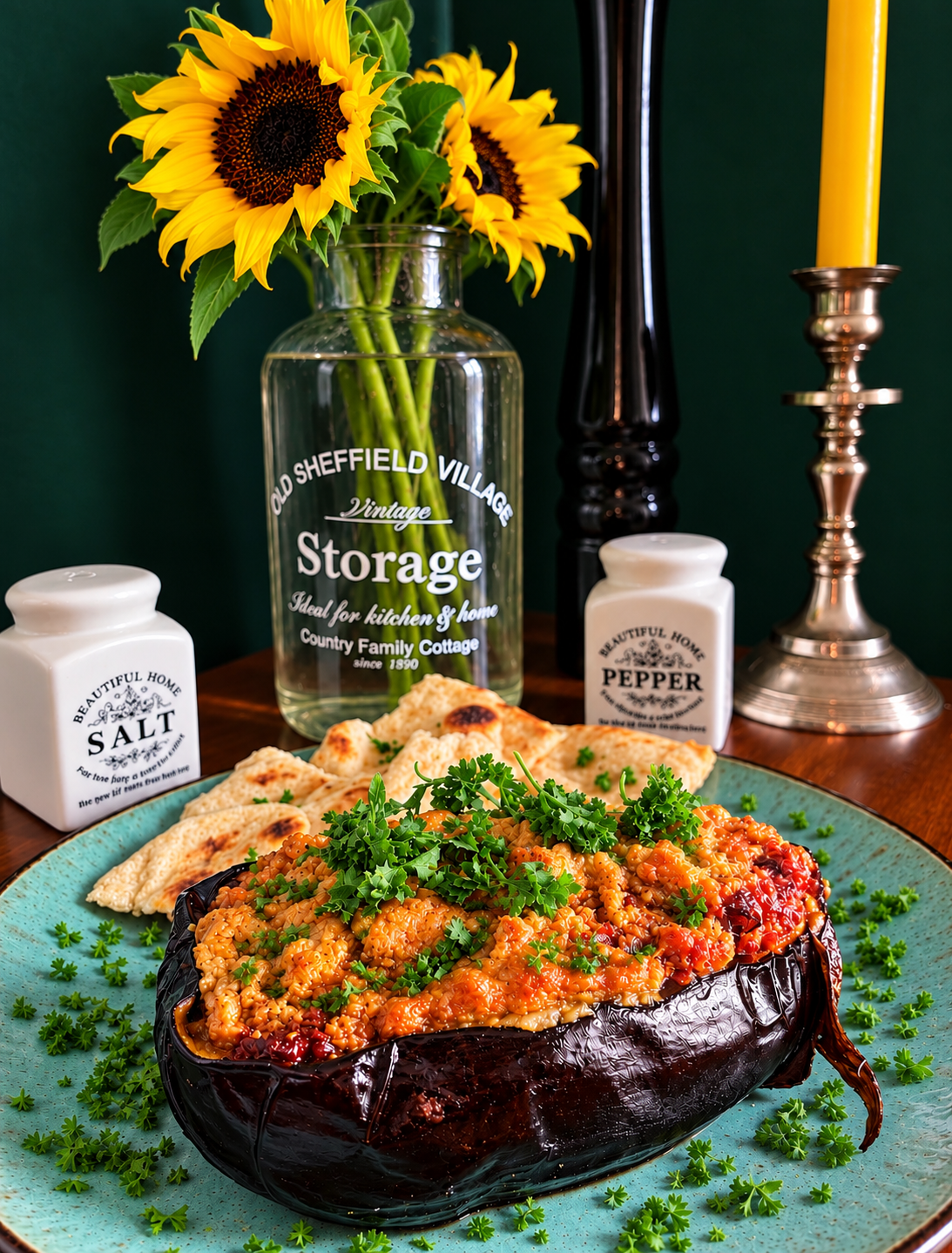
Egyptian Messa'a (مسقعة) is a traditional eggplant dish prepared with a richly seasoned tomato sauce. Unlike Greek moussaka, Egyptian versions often contain no potatoes and may be served warm or at room temperature. Some variations include meat or béchamel, while others focus on vegetables and aromatic spices. My Via Veggie Vegan interpretation transforms roasted eggplant halves into edible bowls filled with spiced tomato sauce and the scooped-out eggplant flesh. A generous layer of creamy vegan béchamel completes this Egyptian-inspired dish with a creative plant-based twist.
▣ Ingredients (2 servings)
- 1 eggplant (large)
- 2 tbsp olive oil
- to taste salt
- to taste freshly ground black pepper
- 1 onion
- 2-3 cloves garlic
- 2 tomatoes
- 1 tbsp tomato paste
- 1/2 tsp ground cumin
- 1/2 tsp sweet paprika
- 1 pinch ground cinnamon
- to taste chili flakes
- 2-3 sprig fresh parsley
- 20 g vegan butter
- 20 g all-purpose flour
- 250 ml unsweetened plant-based milk
- 1 tpsp nutritional yeast
- 1 pinch freshly grated nutmeg
♨ Preparation
- Prepare the Eggplant
Preheat the oven to 200°C fan/convection.
Cut the eggplant in half lengthwise.
Lightly sprinkle the cut surfaces with salt and leave for approximately 10 minutes.
Pat dry with kitchen paper.
Brush the cut sides with 1 tbsp olive oil and season with freshly ground black pepper.
Place the eggplant halves cut-side up on a baking tray lined with baking paper.
Roast for approximately 20 minutes, until the flesh begins to soften but the eggplant halves still hold their shape.
Meanwhile, prepare the tomato filling and béchamel. - Make the Spiced Tomato Filling
Heat 1 tbsp olive oil in a frying pan over medium heat.
Add the finely diced onion and sauté for approximately 2–3 minutes, until translucent.
Add the garlic and cook briefly until fragrant.
Stir in the tomato paste and cook for approximately 1 minute to deepen its flavor.
Add the chopped tomatoes, cumin, paprika, cinnamon and chili flakes.
Season with salt and freshly ground black pepper.
Simmer gently for 10–15 minutes, stirring occasionally, until the tomato sauce has thickened.
If using fresh parsley, stir it into the finished sauce. - Prepare the Vegan Béchamel
Melt the vegan butter in a small saucepan over medium heat.
Add the flour and whisk continuously for approximately 1 minute, forming a smooth roux.
Gradually pour in the unsweetened plant-based milk, whisking constantly to prevent lumps.
Simmer gently for approximately 3–5 minutes, until the sauce becomes smooth, creamy and thick enough to coat the back of a spoon.
Stir in the nutritional yeast.
Season with freshly grated nutmeg, salt and black pepper.
If the béchamel becomes too thick, add a small splash of plant-based milk. - Fill the Eggplant
Remove the roasted eggplant halves from the oven.
Allow them to cool briefly until safe to handle.
Using a spoon, carefully scoop out some of the softened flesh, leaving enough around the edges and at the bottom to keep the shells intact.
Roughly chop the scooped-out eggplant flesh.
Fold it into the prepared tomato filling and stir gently to combine.
Spoon the filling generously back into the hollowed eggplant halves.
Spread the vegan béchamel evenly over the top. - Bake Until Golden
Return the stuffed eggplant halves to the oven.
Bake at 200°C fan/convection for another 15–20 minutes, until the eggplant is completely tender and the béchamel is lightly golden.
If the topping needs a little more color, briefly use the oven's grill function, watching carefully to prevent burning. - Rest and Serve
Remove the stuffed eggplant from the oven and allow it to rest for approximately 5 minutes.
This helps the filling settle and makes the eggplant easier to serve.
Place one stuffed eggplant half on each plate.
Finish with a little freshly ground black pepper and fresh parsley, if desired.
Serve warm.
Food Story
Better Late Than Never – My Egyptian Eggplant Story
My very first boyfriend was half Egyptian, so Egyptian culture and cuisine were already part of my life many years ago. Looking back, there’s just one little problem: I didn’t like eggplant back then. Not even a little bit! And considering how important eggplant is in Egyptian cooking, I probably missed out on some seriously delicious homemade dishes.
Some Culinary Decisions Don’t Age Well!
What a shame! I could have enjoyed authentic Egyptian eggplant prepared by someone who really knew the cuisine. But instead, my younger self was busy avoiding aubergines altogether. Some culinary decisions really don’t age well!
Better Late Than Never – Especially with Béchamel!
Fast-forward a few decades, and here I am, making my very own Egyptian-inspired moussaka. Naturally vegan, generously seasoned and served inside the roasted eggplant itself. It may not be the traditional presentation, but it’s my little tribute to a cuisine I wish I’d appreciated more back then. Better late than never – especially when there’s creamy béchamel involved!
♨ Nutrition per serving
Nutritional values are approximate and may vary depending on the ingredients and products used.
Good to Know
Egyptian Messa'a vs. Greek Moussaka
Although their names sound similar, Egyptian Messa'a and Greek moussaka can be quite different. Greek moussaka is commonly prepared as a layered, oven-baked casserole with eggplant, often potatoes, a meat-based filling and a thick béchamel topping. Egyptian Messa'a frequently features eggplant cooked with seasoned tomato sauce and may be served warm or at room temperature. Béchamel appears in some Egyptian baked variations but isn't a defining ingredient of every Messa'a recipe. The stuffed eggplant presentation in this recipe is a Via Veggie Vegan interpretation rather than a traditional Egyptian preparation.
Eggplant – More Than Just a Purple Vegetable
Eggplant is naturally low in calories and provides dietary fibre, potassium and various plant compounds. Its deep purple skin contains anthocyanins, including nasunin, which have antioxidant properties. Keeping the skin intact helps preserve these compounds while providing the structure needed for the stuffed presentation. Eggplant also absorbs surrounding flavours particularly well, making it an excellent partner for tomatoes, garlic and aromatic spices.
Understanding Fats in a Plant-Based Béchamel
Traditional béchamel contains butter and dairy milk, while this vegan version uses a plant-based butter alternative and unsweetened plant-based milk. Unsaturated fats, commonly found in olive oil, nuts and seeds, can help lower LDL cholesterol when they replace saturated fats in the diet. Some vegan butter alternatives contain substantial amounts of saturated fat, particularly those based on coconut or palm fat. Choosing products with a higher proportion of unsaturated fats can make a meaningful nutritional difference.
Why Roast the Eggplant Instead of Frying It?
Eggplant has a porous, sponge-like structure that can absorb considerable amounts of oil during frying. Roasting it with a measured amount of olive oil helps control the fat content while developing a tender texture and concentrated flavour. The first roasting stage softens the flesh enough to scoop out, while the second bake finishes cooking the stuffed eggplant and allows the béchamel topping to develop a lightly golden surface.
Tomatoes and Lycopene – A Colourful Combination
Tomatoes provide vitamin C, potassium and lycopene, a carotenoid responsible for their characteristic red colour. Lycopene has antioxidant properties, and its availability to the body can increase when tomatoes are cooked and combined with a little fat. Simmering the tomatoes with olive oil, onion, garlic and tomato paste creates a rich, aromatic filling while bringing together several valuable plant nutrients.
Cumin, Paprika and Cinnamon – The Power of Spices
Ground cumin contributes a warm, earthy flavour that works particularly well with eggplant and tomatoes. Sweet paprika adds colour and gentle sweetness, while a small pinch of cinnamon creates subtle aromatic depth. Chili flakes provide adjustable heat without overwhelming the other ingredients. Together, these spices give the tomato filling its distinctive character. Toasting the tomato paste briefly before adding the tomatoes also helps develop a richer flavour.
How Does Vegan Béchamel Become Thick and Creamy?
Béchamel relies on a simple cooking technique rather than dairy ingredients. Flour is briefly cooked in melted vegan butter alternative to form a roux. When unsweetened plant-based milk is gradually added and heated, the starch granules absorb liquid and swell, thickening the sauce. Continuous whisking helps prevent lumps. Nutritional yeast contributes savoury depth, while freshly grated nutmeg adds a classic béchamel aroma. Different plant-based drinks may produce slightly different textures.
Nutritional Yeast – Savoury Flavour Without Cheese
Nutritional yeast is an inactive yeast commonly used in plant-based cooking for its savoury, slightly nutty flavour. It contains some protein and B vitamins, although vitamin B12 is only present in meaningful amounts when the product has been fortified. Adding nutritional yeast to vegan béchamel creates extra depth without requiring dairy cheese. Always check the packaging if you rely on fortified nutritional yeast as a source of specific vitamins.
Why Is Resting Time Important?
Allowing the stuffed eggplant to rest for approximately five minutes after baking helps the hot filling settle and makes the halves easier to transfer onto plates. The béchamel also becomes slightly firmer as it cools. This short resting period improves the presentation and reduces the risk of the filling spilling out when serving. Fresh parsley adds a final touch of colour and herbal freshness.
Zero Waste – Use Every Delicious Piece of Eggplant
The eggplant flesh removed to create the edible bowls is far too delicious to discard. Chop it and fold it directly into the spiced tomato filling before stuffing the shells. Keeping the edible skin intact provides structure and avoids unnecessary waste. Leftover tomato filling can be used as a sauce for pasta, while any remaining vegan béchamel makes a delicious topping for roasted vegetables. Small, thoughtful kitchen habits help make the most of every ingredient. Zero Waste, Full Flavor!