England – The Home of Fish and Chips
England is famous for its comforting pub food, seaside traditions and classic dishes enjoyed across generations. One of the country's best-known culinary symbols is fish and chips, traditionally consisting of battered fried fish served with thick-cut fried potatoes. The dish became especially popular during the nineteenth century, when fish-and-chip shops developed into an important part of British everyday food culture. Today, fish and chips remain closely associated with seaside holidays, takeaway meals and traditional British comfort food.
From Fish and Chips to Vegan Fish & Crisps
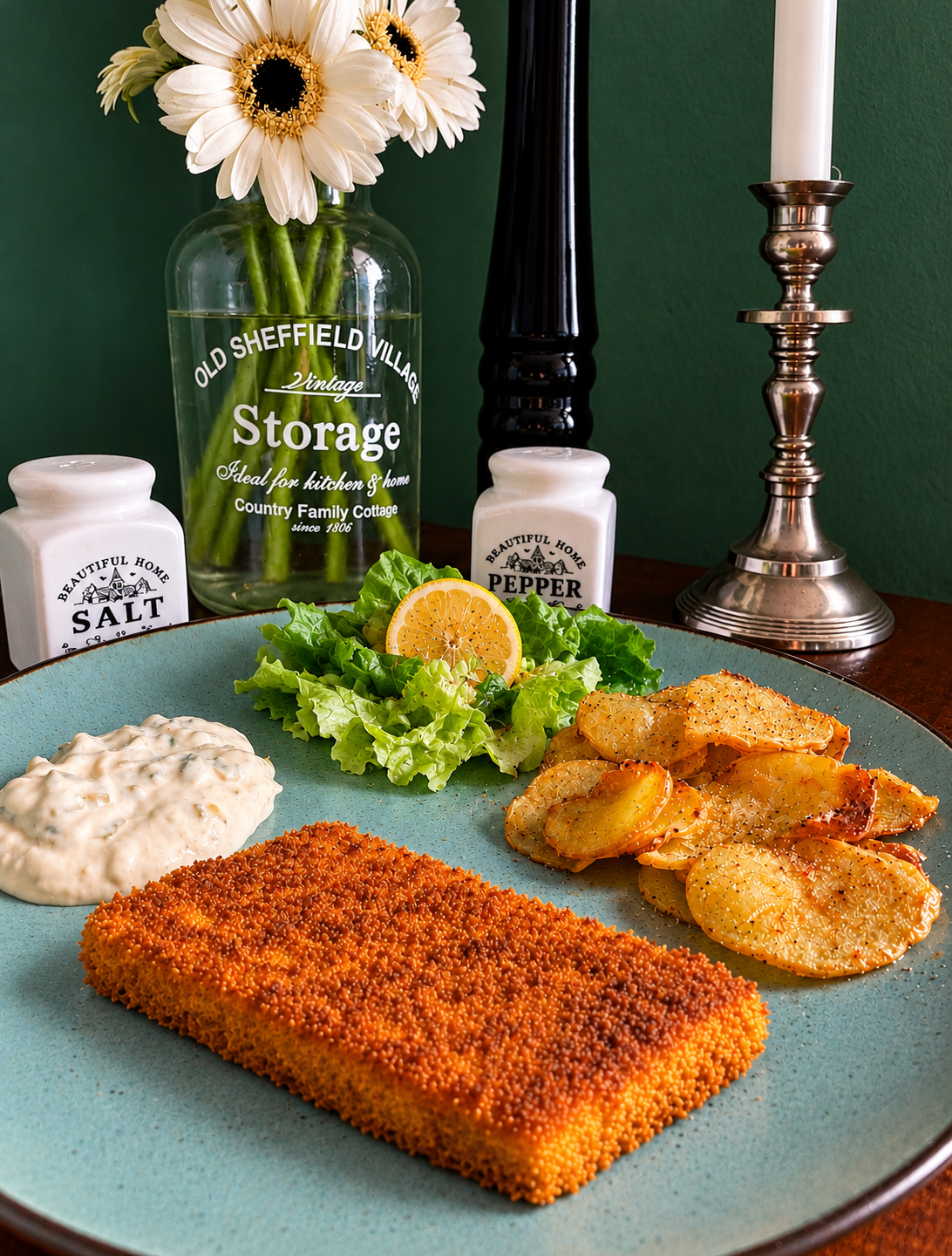
Traditional British fish and chips usually features white fish such as cod or haddock, coated in batter and fried until golden. In this Via Veggie Vegan interpretation, firm tofu replaces the fish, while nori seaweed, lemon juice and soy sauce provide a savoury, sea-inspired flavour. Instead of a conventional batter-only coating, the tofu receives a crunchy breadcrumb crust. And here's the twist: British chips are thick-cut fries, whereas thin potato chips are called crisps. My accidental interpretation of the famous dish therefore became Vegan Fish & Crisps, served with homemade vegan remoulade.
▣ Ingredients (2 servings)
- 400 g firm natural tofu
- 400 g potatoes, preferably waxy, for thin potato crisps
- fresh lettuce leaves, for serving
- 1 organic lemon
- 50 g cornichons
- A little finely grated organic lemon zest, for the remoulade
- 1 nori sheet
- 1 tsp dried dill
- 1/2 tsp garlic powder
- 1/4 tsp salt, for the remoulade
- 1 pinch salt, for the batter
- 1/2 tsp medium-hot mustard, for the remoulade
- 1 tsp nutritional yeast, for the remoulade
- 60 g plain wheat flour, for the batter
- 80 g breadcrumbs, approximately, for coating
- 3 tbsp light soy sauce
- 3 tbsp lemon juice, for the tofu marinade
- 1/4 tbsp tbsp lemon juice, for the remoulade
- 50 ml water, for the tofu marinade
- 100 ml unsweetened soy drink, at room temperature, for the remoulade
- 100 ml unsweetened oat drink or water, approximately, for the batter
- 220 g rapeseed oil, for the remoulade
- 1-2 tbsp cornichon brine, to taste
- 1 tbsp rapeseed oil, for the potato crisps
- 3 tbsp neutral vegetable oil, for frying the tofu, plus more if needed
- to taste salt & freshly ground black pepper
♨ Preparation
- Press the Tofu
Remove the firm tofu from its packaging and drain thoroughly. Cut the entire block lengthwise into two thick, equally sized fillets. Place the fillets between two wooden kitchen boards, using a clean kitchen towel or absorbent paper to catch the moisture. Position a large, heavy saucepan filled with water on top and leave the tofu to press for approximately 15–20 minutes. - Prepare the Sea-Inspired Marinade
Finely chop the nori sheet. In a shallow dish, combine 3 tablespoons of lemon juice, 3 tablespoons of light soy sauce, 1 teaspoon of mustard, the dried dill, approximately ¼ teaspoon of garlic powder and 50 ml water. Add the chopped nori and mix thoroughly. - Marinate the Tofu
Place the pressed tofu fillets in the marinade and turn carefully to coat all sides. Leave to marinate for at least 30–45 minutes, turning occasionally so the flavours are absorbed evenly. - Prepare the Potato Crisps
Preheat the oven to 200°C conventional heat or 180°C fan. Wash the potatoes and slice them very thinly, approximately 2 mm thick. Pat the slices thoroughly dry, toss with 1 tablespoon of rapeseed oil and season lightly with salt and freshly ground black pepper. - Bake the Potato Crisps
Arrange the potato slices in a single layer on lined baking trays, avoiding excessive overlap. Bake for approximately 15–25 minutes, turning as necessary, until golden and crisp. Check regularly and remove thinner slices earlier if they brown faster. Cooking time depends on the thickness of the slices and the oven. - Prepare the Vegan Remoulade Base
Pour the room-temperature unsweetened soy drink into a suitable blender container. Add the medium-hot mustard, ¼ teaspoon salt, ¼ tablespoon lemon juice, a little freshly grated lemon zest, 1 teaspoon nutritional yeast, the rapeseed oil and 1 tablespoon cornichon brine. - Blend the Remoulade
Blend at high speed until the ingredients form a thick, creamy emulsion. If necessary, continue blending briefly until the sauce reaches the desired consistency. Taste and add a little more cornichon brine if needed. - Add the Cornichons
Finely dice approximately 50 g cornichons and fold them into the creamy remoulade by hand. Do not blend them, as the small cucumber pieces should remain visible and provide texture. Refrigerate the remoulade until serving. - Prepare the Batter
In a shallow bowl, combine 60 g plain wheat flour, approximately 100 ml unsweetened oat drink or water, the remaining garlic powder and a pinch of salt. Whisk until a smooth, thick batter forms. Add a little more liquid if necessary. Place the breadcrumbs in a second shallow bowl. - Coat the Tofu
Remove the tofu fillets from the marinade and allow excess liquid to drip off. Dip each fillet into the thick flour batter, coating all sides. Transfer to the breadcrumbs and press gently until the entire surface is evenly covered. - Fry the Vegan Fish
Heat the neutral vegetable oil in a large frying pan over medium heat. Carefully add the breaded tofu fillets and fry for approximately 3–5 minutes per side, until deeply golden and crispy. Turn gently to avoid damaging the coating. Transfer to a plate lined with absorbent paper if necessary. - Arrange the Plate
Place one crispy tofu fillet on each plate. Add a portion of the golden potato crisps and a generous spoonful of homemade vegan remoulade. Arrange the fresh lettuce leaves and lemon alongside the dish. - Serve
Serve the Vegan Fish & Crisps immediately while the tofu coating and potato slices are still beautifully crunchy. Offer additional remoulade separately if desired.
Food Story
Fish and Chips – Or So I Thought!
Sometimes my cooking enthusiasm moves a little faster than my brain. I had decided to prepare one of Britain’s most famous dishes: Fish and Chips, completely vegan, of course. A beautiful piece of breaded tofu, homemade remoulade and crispy potatoes sounded absolutely perfect. And somewhere between planning, preparing and cooking, I managed to interpret the word “chips” in a completely different way. Instead of making traditional British fries, I made actual potato chips! Or, as the British would correctly call them, crisps. Well, at least I can confidently say that I created my very own version of a classic.
Giving Tofu the Full Fish Treatment
For the vegan fish, I started with a whole block of firm tofu, cut it lengthwise into two thick fillets and placed them between two wooden kitchen boards. Then I put a large saucepan filled with water on top to press out the excess moisture. Not exactly sophisticated kitchen equipment, but wonderfully effective! After that came the marinade with nori, soy sauce, lemon juice, mustard and dill, followed by a thick batter and a generous coating of breadcrumbs. The result was a beautifully golden, crispy piece of Tofish.
A Happy Little Kitchen Accident
And because homemade food always deserves a little extra love, I also prepared my own vegan remoulade with soy drink, rapeseed oil, mustard, lemon and crunchy cornichons. By the time everything landed on my plate, I had crispy tofu, crispy potato slices and a generous spoonful of creamy sauce. Was it traditional British Fish and Chips? Not quite. Was it delicious? Absolutely! Sometimes the best recipes happen when you accidentally take a wrong turn in the kitchen. Welcome to Via Veggie Vegan, where even a misunderstanding can turn into dinner!
♨ Nutrition per serving
Nutritional values are approximate and may vary depending on the ingredients and products used.
Good to Know
Fish and Chips – A British Culinary Institution
Fish and chips became widely popular in Britain during the nineteenth century. The combination of fried fish and potatoes developed into an affordable, filling meal, particularly for working-class communities. Fish-and-chip shops became a familiar feature of British towns and seaside destinations.
What's the Difference Between Chips and Crisps?
British English uses the word chips for what Americans generally call French fries. Thin, crunchy potato slices sold as a snack are called crisps in Britain. In American English, those same thin slices are potato chips. This linguistic difference explains why Vegan Fish & Crisps is a particularly fitting name for this recipe.
Why Use Tofu as a Fish Alternative?
Firm tofu has a mild flavour and a structure that can be sliced into substantial fillets. Pressing it removes some moisture, while marinating introduces savoury and aromatic flavours. Its relatively neutral taste makes tofu suitable for recreating the flavour profile of various dishes without using animal products.
Nori – The Secret Behind the Sea-Inspired Flavour
Nori is a type of edible seaweed commonly used in Japanese cuisine. Its characteristic marine aroma makes it useful in plant-based interpretations of fish dishes. A small amount can add a noticeable sea-inspired flavour without overpowering the other ingredients.
Does Nori Contain Iodine?
Seaweeds can contain iodine, an essential mineral required for normal thyroid hormone production. The amount varies considerably between species and products. Nori generally contains less iodine than some brown seaweeds, such as kombu, but iodine content is not standardized. People who need to monitor iodine intake should check the product information.
Tofu and Plant-Based Protein
Tofu is made from soybeans and provides a useful source of plant protein. Soy protein contains all nine essential amino acids, making tofu a valuable ingredient in a varied vegan diet. Firm tofu may also provide calcium, particularly when prepared using calcium-containing coagulants.
Why Does Pressing Tofu Help?
Removing some water from firm tofu can improve its ability to absorb marinade and helps create a less wet surface for breading. The amount of moisture released depends on the type and firmness of the tofu. Very firm or previously pressed tofu may require less pressing time.
What Makes Breadcrumb Coatings Crispy?
A crunchy coating develops as moisture evaporates and the surface browns during frying. Breadcrumbs create an uneven surface with many small edges, contributing to the crisp texture. Maintaining a moderate oil temperature helps the coating brown without burning.
The Role of Mustard in the Marinade
Mustard contributes acidity, savouriness and mild pungency. Combined with soy sauce, lemon juice and dill, it helps create a balanced flavour profile for the tofu. It does not make the tofu taste exactly like fish, but it adds complexity to the marinade.
Why Dill Works with Sea-Inspired Dishes
Dill has a fresh, slightly grassy and aromatic flavour traditionally associated with many European fish preparations. In vegan cooking, it can evoke familiar seasoning combinations without using fish.
Potatoes – More Than Just Carbohydrates
Potatoes provide carbohydrates for energy, along with potassium and some vitamin C. Their nutritional composition depends on the variety, preparation method and whether the skin is retained. Thin slices can become especially crisp when moisture is reduced during cooking.
Rapeseed Oil – A Useful Plant-Based Fat
Rapeseed oil, also called canola oil in some countries, contains predominantly unsaturated fatty acids. It provides monounsaturated fats and some omega-3 alpha-linolenic acid. Its relatively neutral flavour makes it suitable for both cooking and preparing vegan mayonnaise-style sauces.
How Does Vegan Remoulade Become Creamy?
The creamy base is an emulsion, meaning tiny droplets of oil are dispersed throughout a water-based mixture. Soy proteins and other components can help stabilize this mixture. Blending combines the ingredients and creates the characteristic thick texture of a mayonnaise-style sauce.
Why Room-Temperature Soy Drink Matters
Using soy drink at room temperature can make emulsification more predictable, particularly when the other ingredients are at a similar temperature. Unsweetened soy drink is important because sweetened varieties can alter the flavour of the remoulade.
What If the Remoulade Doesn't Thicken?
An emulsion can fail if the oil and liquid do not combine into sufficiently small, stable droplets. A narrow container and immersion blender often produce reliable results with soy-based mayonnaise. If a standard blender struggles, adding the oil gradually rather than all at once may help.
Cornichons – Small Cucumbers with Big Flavour
Cornichons are small pickled cucumbers known for their crisp texture and tangy flavour. They add acidity and crunch to creamy sauces. A little cornichon brine can also brighten the sauce, although its salt and acidity levels vary between products.
Why Add Nutritional Yeast?
Nutritional yeast contributes a savoury, umami-rich flavour. It is often used in vegan cooking to add depth to sauces, dressings and cheese-style preparations. Some brands are fortified with vitamins, including vitamin B12, while others are not. Check the label if using it as a nutritional source.
Homemade Remoulade and Food Safety
This recipe contains no raw eggs, but homemade vegan mayonnaise-style sauces still require careful handling. Use clean utensils, refrigerate promptly and avoid leaving the sauce at room temperature for extended periods. Because homemade emulsions have variable acidity and no validated preservation process, prepare them in manageable quantities.
How Long Does Homemade Vegan Remoulade Keep?
Store the remoulade in a clean, covered container in the refrigerator at 4°C or below. As a cautious home-kitchen guideline, use it within approximately 2–3 days. Do not assume that the absence of eggs makes the sauce shelf-stable, and discard it if storage conditions have been unsuitable.
Cholesterol and Plant-Based Alternatives
Tofu, potatoes, rapeseed oil and other plant ingredients do not naturally contain cholesterol. However, a plant-based meal can still be relatively high in calories or fat depending on its preparation. The amount of oil used for frying and in the remoulade is particularly important when considering the nutritional profile of this dish.
Saturated and Unsaturated Fatty Acids
Rapeseed oil is relatively rich in unsaturated fats, which can support healthy LDL cholesterol levels when used in place of saturated fats. Nevertheless, all oils are energy-dense. Portion size remains relevant, especially in dishes combining fried foods and mayonnaise-style sauces.
What About Fish and Omega-3?
Fish is commonly discussed as a source of long-chain omega-3 fatty acids, especially EPA and DHA. Tofu does not provide equivalent amounts of these fatty acids. Rapeseed oil contains alpha-linolenic acid, a plant-based omega-3 fatty acid, but conversion to EPA and DHA in the body is limited. Algae-derived supplements are a direct vegan source of EPA and DHA.
Zero Waste – Use What You Have
Leftover cornichon brine can add flavour to dressings and sauces. Suitable potato peels may be baked into a snack after thorough washing, while unused lemon zest can flavour other dishes. Reusing ingredients thoughtfully helps reduce unnecessary kitchen waste.
Serving Suggestions
A fresh green salad and lemon provide a refreshing contrast to the crispy tofu and potatoes. The homemade remoulade can also be served with roasted vegetables, sandwiches or other plant-based dishes.