
Denmark – Nordic Comfort Food and Seasonal Ingredients
Denmark is a Scandinavian country known for its coastal landscapes, agricultural traditions and appreciation of simple, seasonal food. Danish cuisine has long made use of root vegetables, potatoes, cabbage, rye bread, fresh herbs and creamy sauces. From traditional home cooking to modern Nordic cuisine, familiar ingredients are often transformed into satisfying dishes that celebrate flavour, texture and seasonality. Celeriac is particularly well suited to this style of cooking, offering a delicate, earthy flavour and a wonderfully tender texture when prepared correctly.
From Danish Dildsovs to Crispy Celeriac with Curry Mayo
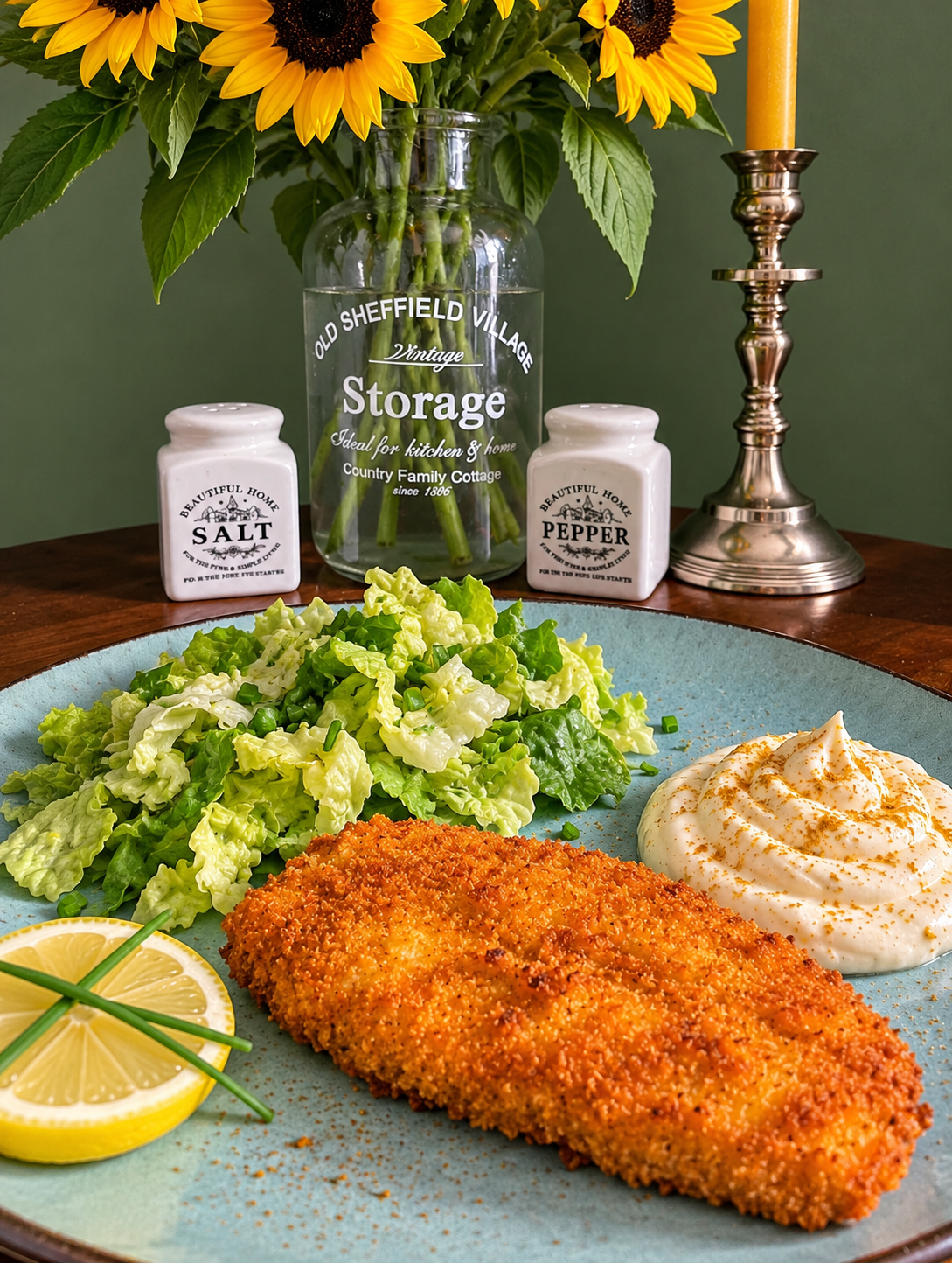
Dildsovs is a traditional Danish dill sauce, often prepared with a light roux, fresh dill and a creamy liquid. It is commonly associated with fish and other classic Danish meals. This Via Veggie Vegan recipe began with the idea of pairing celeriac with a Danish-inspired sauce, but the final plate took a different direction: breaded, golden-fried celeriac served with homemade vegan curry mayonnaise. Curry-flavoured dressings and remoulade-style sauces are familiar accompaniments in Danish food culture, particularly with certain sandwiches, fish dishes and fried foods. My version combines that flavour inspiration with a completely plant-based, egg-free mayonnaise and a fresh green salad.
▣ Ingredients (2 servings)
- 1 medium celeriac, approximately 600–700 g before peeling
- 100 g fresh lettuce leaves, approximately, finely cut
- 1/2 organic lemon, for serving
- 6 few fresh chive stems
- 1/2 tsp mild sweet curry powder, for the mayonnaise
- 1 tsp homemade vegetable broth granules
- 1/4 tsp garlic powder, optional, for the coating
- 1/4 tsp salt, for the mayonnaise
- 1/2 tsp medium-hot mustard, for the mayonnaise
- 1 tsp nutritional yeast, for the mayonnaise
- 60 g plain wheat flour, for the coating
- 80 g breadcrumbs, approximately, for the coating
- 1/4 tsp finely grated organic lemon zest, for the mayonnaise
- 1/4 tsp lemon juice, for the mayonnaise
- 100 ml unsweetened soy drink, at room temperature
- 220 g rapeseed oil, for the mayonnaise
- 100 ml unsweetened oat drink or water, for the coating
- 2 tbsp vegan butter alternative, for frying the celeriac
- water, for simmering the celeriac
- to taste salt & freshly ground black pepper
♨ Preparation
- Prepare the Celeriac
Wash and peel the celeriac thoroughly, removing any particularly tough or woody areas. Cut it into approximately 2 cm thick slices. Depending on the size of the celeriac, aim for two generous schnitzel-sized portions or four smaller slices. - Simmer the Celeriac
Bring a saucepan of water to a boil and add the homemade vegetable broth granules. Carefully lower the celeriac slices into the broth and simmer gently for approximately 10–15 minutes, depending on their thickness. The slices should become tender enough to pierce with a knife while remaining firm enough to handle without breaking. - Drain and Cool
Remove the celeriac slices from the broth and allow them to drain thoroughly. Pat them dry carefully with kitchen paper or a clean towel. Let them cool slightly before coating, as excessive surface moisture can prevent the breading from sticking properly. - Prepare the Vegan Mayonnaise Base
Pour the room-temperature unsweetened soy drink into a tall, narrow mixing container. Add the medium-hot mustard, salt, lemon juice, finely grated lemon zest, nutritional yeast and rapeseed oil. - Blend Until Creamy
Using an immersion blender, blend the ingredients until a thick, smooth mayonnaise forms. Start with the blender head close to the bottom of the container and gradually lift it as the mixture emulsifies. Continue blending until the desired consistency is reached. - Prepare the Curry Mayonnaise
Transfer approximately 80 g of the freshly prepared vegan mayonnaise to a separate small bowl. Stir in the mild curry powder gradually, tasting as you go. Start with approximately ¼ teaspoon and increase to ½ teaspoon if desired. Keep the remaining plain mayonnaise in a separate clean container and refrigerate promptly. - Prepare the Breading
In a shallow bowl, whisk the plain wheat flour with approximately 100 ml unsweetened oat drink or water, a pinch of salt, freshly ground black pepper and the optional garlic powder until a smooth, thick batter forms. Place the breadcrumbs in a second shallow bowl. - Coat the Celeriac
Dip each cooled celeriac slice into the flour batter, allowing any excess to drip off. Transfer it to the breadcrumbs and press gently until all sides are evenly coated. Handle the slices carefully to keep them intact. - Fry Until Golden
Melt the vegan butter alternative in a large non-stick frying pan over medium heat. Add the breaded celeriac slices and fry for approximately 3–5 minutes on each side until the coating is golden brown and crispy. Adjust the heat as necessary to prevent the breadcrumbs from burning. - Prepare the Fresh Salad
Wash the lettuce thoroughly and dry it well. Cut or tear the leaves into bite-sized pieces and combine them with finely chopped fresh chives. Season lightly with salt and freshly ground black pepper if desired. Arrange the salad in a generous, gently rounded mound on each plate. - Pipe the Curry Mayonnaise
Transfer the prepared curry mayonnaise into a piping bag fitted with a star-shaped nozzle. Pipe a compact, decorative swirl beside the celeriac schnitzel. If desired, finish with a very light dusting of additional mild curry powder. - Arrange and Serve
Place the golden breaded celeriac beside the fresh salad and curry mayonnaise. Add a lemon slice and arrange two whole chive stems across it for an elegant finishing touch. Serve immediately while the breading is still beautifully crispy.
Food Story
From Humble Root Vegetable to Golden Schnitzel
Celeriac isn’t exactly the most glamorous vegetable in the supermarket. It’s knobbly, a little awkward to peel and certainly doesn’t win any beauty contests. But give it a little attention, simmer it until tender, cover it in breadcrumbs and fry it until golden, and suddenly it becomes the star of the plate! That’s exactly the kind of transformation I love in my Via Veggie Vegan kitchen. A simple root vegetable, a crispy coating and a generous helping of creativity – sometimes that’s all it takes to turn everyday ingredients into something special.
Curry in Mayonnaise? Really?
Now, I have to admit something. When I first came across the idea of adding curry powder to mayonnaise, I wasn’t entirely convinced. Mayonnaise? Absolutely. Curry? Love it. But together? I had my doubts! However, there’s a reason we say that the proof is in the pudding. I made my usual homemade vegan mayonnaise with soy drink, rapeseed oil, mustard, lemon and nutritional yeast, then added a little mild curry powder. And what can I say? Delicious! The curry brings a gentle warmth and aromatic depth without overpowering the creamy sauce. Another reminder that sometimes the combinations you’re most suspicious of turn out to be the ones you love.
A Little Danish Inspiration, a Lot of Via Veggie Vegan
This dish originally started with Danish-inspired celeriac and a creamy dill sauce, but somewhere along the way, my plate developed a personality of its own. Instead of a simple fried slice, I went for a proper crispy breadcrumb coating. Instead of pouring sauce over everything, I piped the homemade curry mayonnaise into a decorative swirl. A fresh lettuce and chive salad, a slice of lemon and a little extra crunch completed the picture. Is it a strictly traditional Danish recipe? No. It’s my plant-based interpretation, inspired by Danish flavours and finished with the usual Via Veggie Vegan enthusiasm. And I certainly won’t be questioning curry mayonnaise again!
♨ Nutrition per serving
Nutritional values are approximate and may vary depending on the ingredients and products used.
Good to Know
What Is Celeriac?
Celeriac, also known as celery root, is a variety of celery cultivated for its enlarged, edible stem base. Despite its common name, the edible round part is not simply the root of ordinary stalk celery. It has a distinctive earthy, slightly nutty flavour that becomes milder and sweeter during cooking.
Celeriac in Northern European Cooking
Celeriac is widely used in Northern and Central European cuisine, especially during autumn and winter. It appears in soups, purées, roasted vegetable dishes, salads and hearty home-style meals. Its firm structure also makes it suitable for slicing and breading.
Why Is Celeriac So Good for Vegan Schnitzel?
Once cooked, celeriac becomes tender while retaining enough structure to hold a breadcrumb coating. Its mild, savoury flavour pairs beautifully with mustard, lemon and creamy sauces. Unlike many softer vegetables, properly prepared celeriac can be sliced into substantial portions that resemble the shape of a schnitzel.
Is Breaded Celeriac a Traditional Danish Dish?
Breaded celeriac is best understood here as a modern plant-based preparation inspired by Nordic ingredients rather than a specific Danish national dish. Denmark has strong traditions of using root vegetables, creamy sauces and mustard-based accompaniments, making the combination a fitting culinary interpretation.
What Is Danish Dildsovs?
Dildsovs is a Danish dill sauce commonly made from a light flour-based sauce enriched with fresh dill. Recipes may include milk, stock, cream, lemon, vinegar or a little sweetness. It is often served with fish or other traditional dishes.
Why Did This Recipe Move Away from Dildsovs?
The original inspiration included a creamy dill sauce, but the finished plate features a separate mayonnaise-style accompaniment instead. A curry mayonnaise provides a different texture and flavour profile, with the advantage that it can be piped into an attractive decorative swirl.
Is Curry Mayonnaise Danish?
Curry-flavoured mayonnaise and remoulade-style sauces are familiar in Danish food culture, particularly in connection with sandwiches, fried foods and certain fish preparations. However, curry mayonnaise should not be described as a universal Danish accompaniment to celeriac. This recipe uses that broader flavour tradition as inspiration.
Danish Remoulade and Curry
Danish-style remoulade is typically a creamy, tangy condiment containing chopped vegetables or pickles, and some versions include curry seasoning for colour and flavour. Recipes vary considerably between households and commercial producers. Curry mayonnaise is related in flavour but is not automatically the same thing as traditional Danish remoulade.
Why Mild Curry Powder Works with Mayonnaise
Mild curry powder usually combines several spices, which may include turmeric, coriander, cumin, fenugreek and other aromatics. When mixed into a creamy mayonnaise, these spices contribute warmth and complexity. The fat in the mayonnaise helps carry and distribute many of their aromatic compounds.
Does Curry Powder Have to Be Spicy?
No. Curry powder is a spice blend rather than a single spice, and its heat depends on the ingredients. Mild sweet curry powder can provide plenty of aroma without significant chilli heat. This makes it suitable for a gently seasoned mayonnaise.
Why Add Curry Powder Gradually?
Spice blends differ in intensity, bitterness and salt content. Adding curry powder little by little makes it easier to achieve the desired flavour without overwhelming the mayonnaise. It also allows the remaining sauce to stay neutral for other recipes.
What Makes Vegan Mayonnaise Creamy?
Mayonnaise is an emulsion, meaning tiny droplets of oil are dispersed throughout a water-based mixture. In vegan mayonnaise, soy proteins and other ingredients can help stabilize the emulsion without eggs. Blending creates the small droplets responsible for its thick, smooth texture.
Why Use Unsweetened Soy Drink?
Unsweetened soy drink provides liquid and proteins that can help form a stable emulsion. Sweetened plant drinks can introduce an unwanted sweetness. Different brands contain different amounts of protein and stabilizers, so results may vary.
Why Room Temperature Matters
Using ingredients at similar temperatures can make emulsification easier and more consistent. Very cold ingredients sometimes make the process less predictable. A tall, narrow container and an immersion blender are especially useful for small homemade mayonnaise batches.
What If the Mayonnaise Doesn't Thicken?
If the mixture remains too liquid, try blending it in a tall, narrow container with the blender head resting near the bottom. In some cases, gradually incorporating the unsuccessful mixture into a small fresh soy-drink base can help form a new emulsion. Results depend on the ingredient ratios and the equipment used.
Why Rapeseed Oil?
Rapeseed oil has a relatively neutral flavour and contains predominantly unsaturated fatty acids. It works well in mayonnaise because it provides a creamy texture without strongly competing with mustard, lemon or curry spices.
Unsaturated Fats and Heart Health
Replacing saturated fats with unsaturated fats can help reduce LDL cholesterol as part of a balanced diet. Rapeseed oil provides monounsaturated fats and some alpha-linolenic acid, a plant-based omega-3 fatty acid. However, all oils are energy-dense, so serving size still matters.
Homemade Mayonnaise Is Not Automatically Low-Calorie
A mayonnaise made with rapeseed oil contains a substantial amount of fat and energy, even though it is entirely plant-based. Vegan describes the ingredients, not the calorie content. Enjoying a moderate portion alongside vegetables is a practical way to balance the meal.
Cholesterol in Plant-Based Foods
Plant foods such as celeriac, soy drink and rapeseed oil do not naturally contain cholesterol. Nevertheless, dietary fat quality remains important. Foods high in saturated fat can affect LDL cholesterol even when they contain no cholesterol themselves.
What Do LDL and HDL Actually Do?
LDL particles transport cholesterol through the bloodstream, and elevated LDL levels contribute to cardiovascular risk. HDL particles participate in transporting cholesterol away from tissues. Both play roles in cholesterol metabolism, but reducing elevated LDL is a particularly important goal in cardiovascular prevention.
Why Pre-Cook the Celeriac?
Celeriac slices approximately 2 cm thick are unlikely to become evenly tender during a short pan-frying period alone. Simmering them first softens the interior, allowing the breading to become golden and crisp without needing to cook the vegetable from raw.
Why Use Homemade Vegetable Broth?
Cooking celeriac in lightly seasoned vegetable broth introduces savoury flavour before breading. Homemade broth granules are also a practical way to use preserved vegetable flavours. The amount of salt depends on the seasoning blend, so additional salt should be added cautiously.
The Secret to a Crispy Breadcrumb Coating
A good coating depends on a relatively dry vegetable surface, a batter that adheres well and a suitable frying temperature. Breadcrumbs create an uneven surface with many small edges that brown and become crisp during cooking.
Why Use a Flour Batter Instead of Egg?
A flour-and-liquid batter provides a plant-based alternative to the traditional egg layer used in many breadcrumb coatings. It helps breadcrumbs adhere to the celeriac without animal ingredients. Chickpea flour can also be used, although it may produce a different texture and flavour.
Vegan Butter Alternative for Frying
A vegan butter alternative can contribute a rich flavour to the breading. Products differ in water content and heat stability, so avoid excessive temperatures that could cause burning. A little neutral cooking oil may be added if needed for more even frying.
Celeriac and Dietary Fibre
Celeriac provides dietary fibre, which supports normal bowel function and contributes to a satisfying meal. Its fibre content makes it a useful vegetable in a varied plant-based diet.
Vitamins and Minerals in Celeriac
Celeriac contains nutrients including vitamin K, potassium and smaller amounts of other vitamins and minerals. The exact amounts vary according to portion size and cooking method. Boiling can reduce some water-soluble nutrients.
Is Celeriac an Allergen?
Yes. Celery, including celeriac, is one of the allergens that must be declared under EU food allergen labelling rules. People with celery allergies should avoid this dish. The recipe may also contain soy, wheat and mustard, depending on the products used.
Fresh Lettuce and Chives
Fresh lettuce provides a crisp, refreshing contrast to the warm breaded celeriac. Chives add a mild onion-like aroma without overpowering the dish. Drying the lettuce thoroughly helps it remain fresh and prevents excess water from spreading across the plate.
Why Lemon Complements Fried Foods
Lemon juice adds acidity that contrasts with rich sauces and fried coatings. A squeeze of lemon immediately before eating can make the dish taste brighter without requiring additional salt.
How to Pipe a Decorative Mayonnaise Swirl
A piping bag with a star-shaped nozzle creates a decorative ridged pattern. Hold the nozzle close to the plate and pipe in a controlled circular motion, building the swirl slightly upwards. Chilling the mayonnaise briefly can help it hold its shape.
How Long Does Homemade Vegan Mayonnaise Keep?
Homemade vegan mayonnaise contains no raw eggs, but it is not automatically shelf-stable. Use clean utensils, refrigerate promptly at 4°C or below and, as a cautious home-kitchen guideline, consume within approximately 2–3 days. Discard it if storage conditions have been unsuitable.
Can Curry Mayonnaise Be Frozen?
Freezing is generally not recommended because mayonnaise-style emulsions can separate when thawed. The sauce may become watery or grainy. Preparing it fresh and refrigerating a manageable amount is preferable.
Zero Waste – Use the Remaining Plain Mayonnaise
Preparing the mayonnaise base without curry first makes it more versatile. The remaining sauce can be used in sandwiches, dressings or dips. Add finely chopped cornichons and a little pickle brine to create a remoulade-style variation, using only the amount you intend to serve.
What Can You Do with Celeriac Trimmings?
Clean, suitable celeriac trimmings can add flavour to homemade vegetable broth. Remove heavily soiled or woody pieces and wash the vegetable thoroughly before preparing it. Celeriac peel is often fibrous, so it is better used for flavouring broth than eaten directly.
Can Breaded Celeriac Be Prepared Ahead?
The celeriac can be simmered in advance, cooled promptly and refrigerated. For the best texture, bread and fry the slices shortly before serving. Previously fried slices can be reheated in an oven or air fryer, although the coating may not become quite as crisp as when freshly prepared.
Serving Suggestions
The breaded celeriac works beautifully with fresh lettuce, chives, lemon and curry mayonnaise. For a more substantial Nordic-inspired meal, serve it with boiled potatoes, roasted potatoes or a seasonal vegetable salad.
You may also like
♡
You may also like
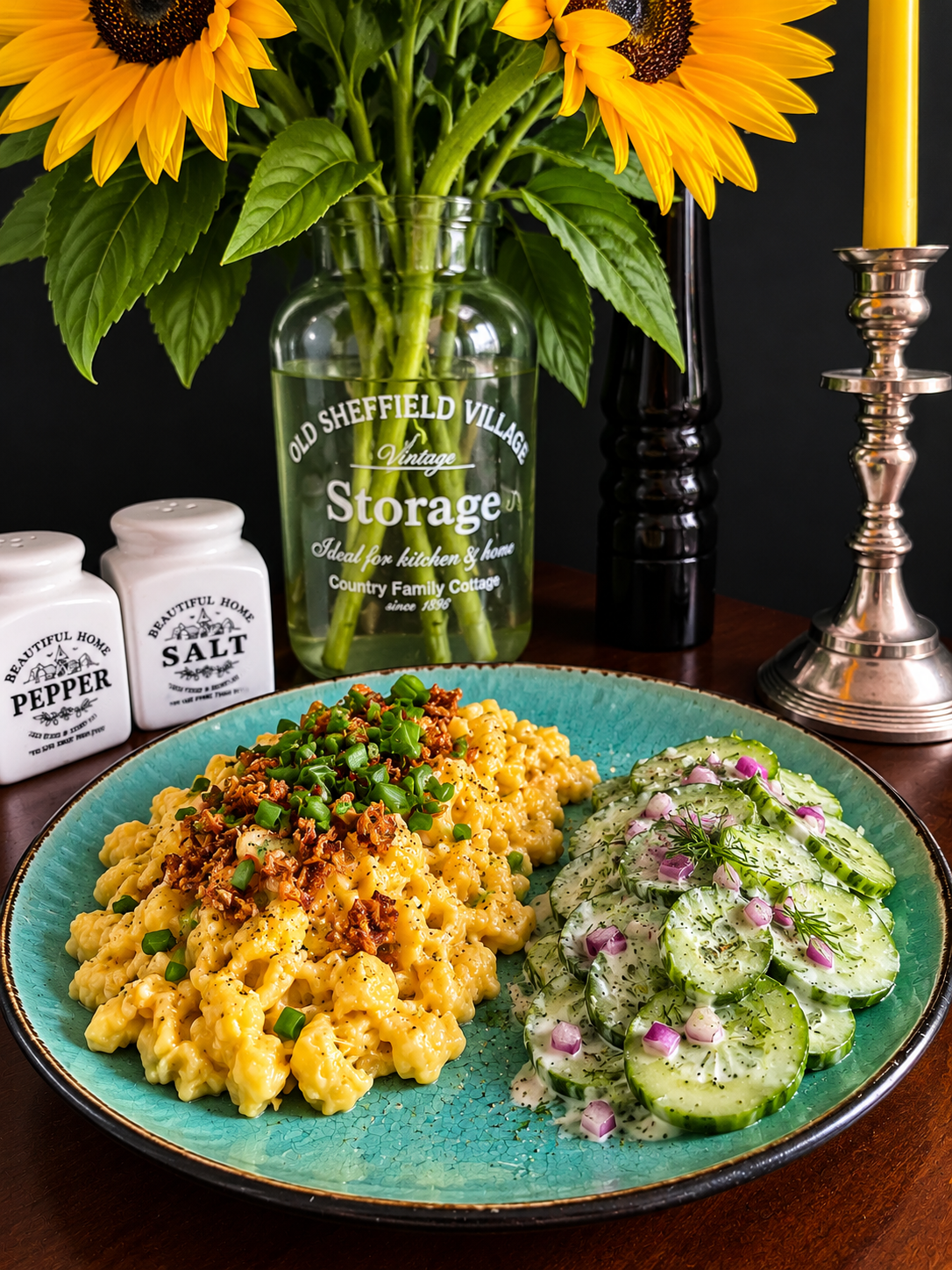
Vegan Swiss Chäschnöpfli – Homemade Cheese Spätzle with Cucumber Dill Salad
You may also like
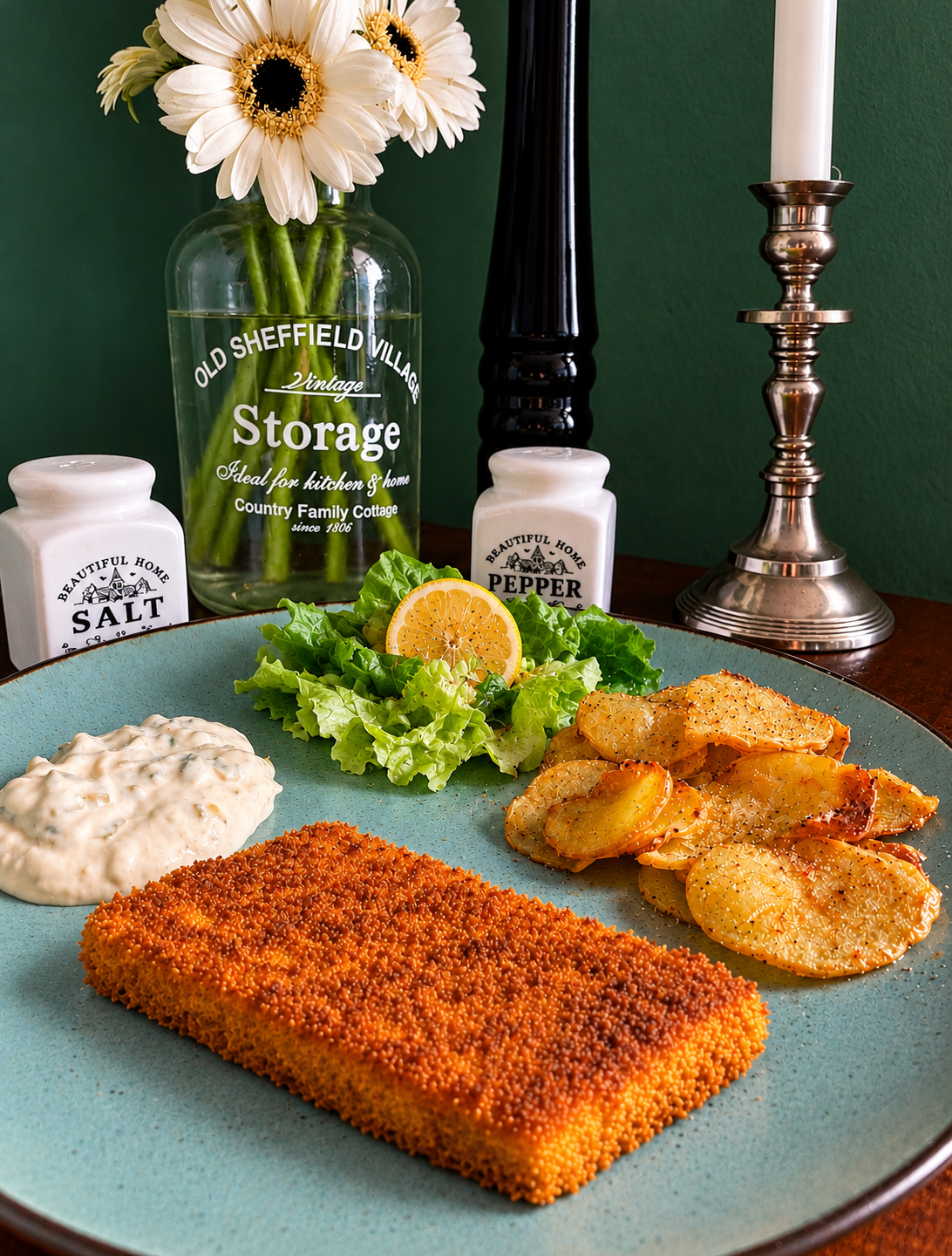
British Vegan Fish & Crisps – Crispy Tofish with Homemade Remoulade
You may also like