
Hungary – The Land of Paprika and Hearty Comfort Food
Hungary is a Central European country with a rich culinary heritage shaped by agricultural traditions, regional influences and a deep appreciation for warming, satisfying food. Hungarian cuisine is particularly famous for its generous use of paprika, onions, peppers and slow-cooked dishes. From the banks of the Danube to the vast Hungarian Great Plain, traditional cooking reflects a love of bold flavours, nourishing meals and hospitality. Goulash, paprikash and various dumpling dishes are among the country's best-known culinary specialities.
Goulash and Galuska – A Hungarian-Inspired Combination
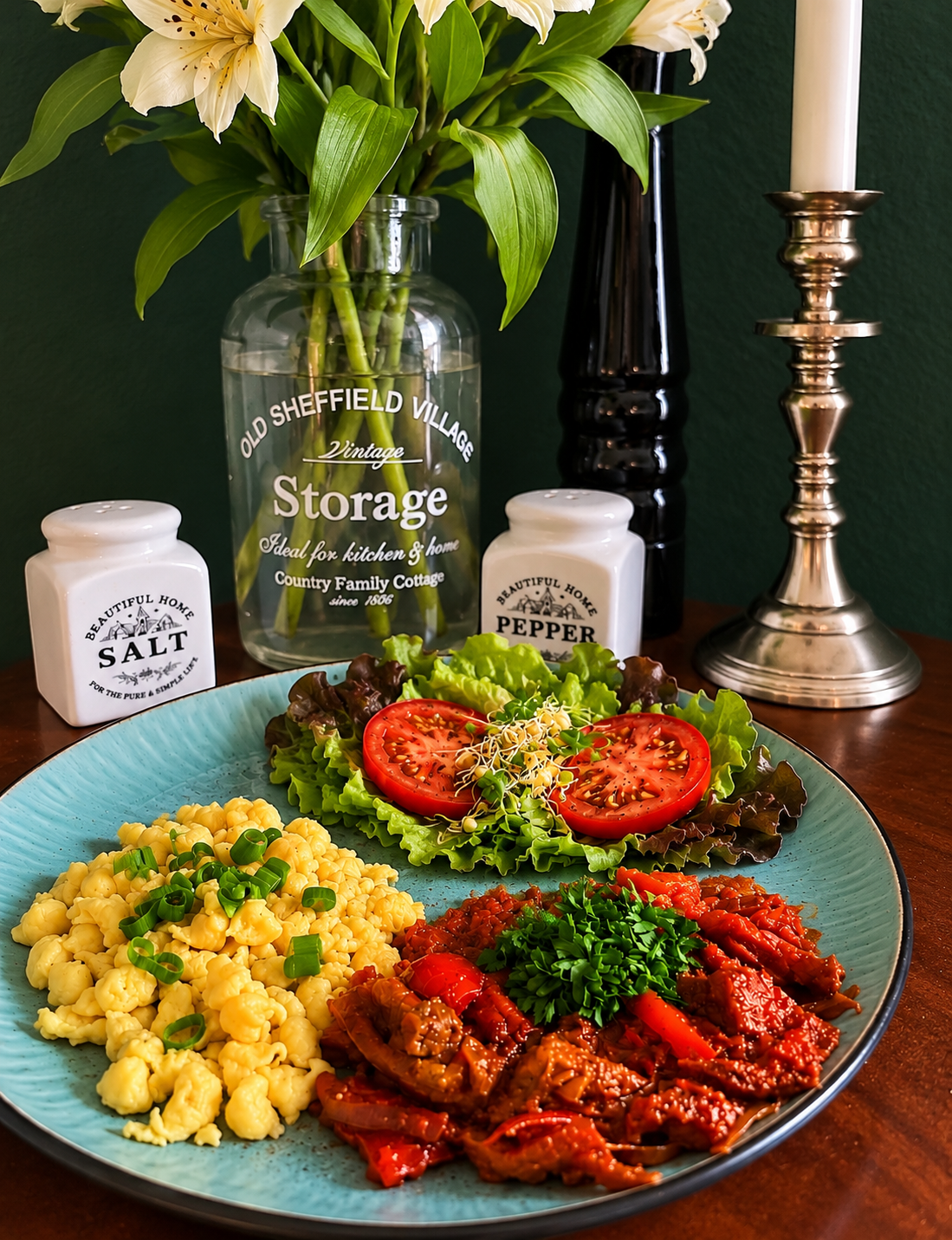
Gulyás, commonly known internationally as goulash, originated in Hungary and is traditionally associated with the cooking of cattle herders. In Hungary, gulyás is usually a substantial soup, while thicker paprika-based meat stews are more closely related to pörkölt. This Via Veggie Vegan version follows the familiar international interpretation of a thick, hearty goulash, replacing meat with a plant-based alternative. It is served with Galuska, also known as nokedli, small Hungarian dumplings traditionally made with flour, water and eggs. My egg-free version uses sparkling water, Kala Namak and a little turmeric to create deliciously tender dumplings without animal ingredients.
▣ Ingredients (2 servings)
- 200 g vegan meat alternative, such as seitan or soy pieces
- 4 ripe tomatoes
- 1 red bell pepper
- 1 onion
- 2 shallots
- 1 clove garlic
- 1 spring onion
- fresh parsley, finely chopped, for garnish
- 1 tbsp sweet paprika powder
- 1 tsp hot paprika powder
- 1 tsp salt, for the Galuska dough
- 1/2 tsp Kala Namak, black salt, for the Galuska dough
- 1 pinch turmeric, for the Galuska dough
- 400 g all-purpose wheat flour, for the Galuska
- 1 tbsp tomato paste
- 1 tbsp vegan butter alternative, for the goulash
- 2 tbsp neutral vegetable oil or vegan butter alternative, for the Galuska
- 50 ml soy sauce
- 1 tsp dark balsamic vinegar
- 1 dash liquid smoke, optional
- 300 ml homemade vegetable stock
- 250-300 ml cold sparkling water, for the Galuska
- additional salted water, for boiling the Galuska
- to taste salt & freshly ground black pepper
♨ Preparation
- Prepare the Vegetables
Peel and finely chop the onion, shallots and garlic. Wash and chop the tomatoes, cut the red bell pepper into strips and finely slice the spring onion. Chop the fresh parsley and set the garnishes aside. - Sauté the Aromatics
Heat the vegan butter alternative in a large saucepan over medium heat. Add the onion, shallots and garlic and sauté for approximately 3–4 minutes, stirring occasionally, until soft and fragrant. - – Roast the Tomato Paste
Add the tomato paste and cook for approximately 1–2 minutes, stirring constantly. Allow it to darken slightly and develop a deeper, more concentrated flavour without burning. - Add the Tomatoes and Soy Sauce
Deglaze the saucepan with the soy sauce, scraping any flavourful browned bits from the bottom. Add the chopped tomatoes and continue cooking for approximately 3 minutes. - Build the Goulash Sauce
Pour in the vegetable stock and bring the mixture to a gentle boil. Add the sweet paprika powder, hot paprika powder and optional liquid smoke. Season with salt and freshly ground black pepper. Reduce the heat and simmer gently for approximately 10 minutes. - Brown the Vegan Meat Alternative
Meanwhile, cut the vegan meat alternative into bite-sized pieces if necessary. Heat a separate non-stick frying pan and cook the pieces until nicely browned on the outside. Follow the product instructions if the chosen meat alternative requires additional preparation. - Add the Bell Pepper and Vegan Meat
Add the red bell pepper strips and browned vegan meat pieces to the goulash sauce. Stir gently and continue simmering for approximately 5 minutes, allowing the flavours to combine. - Finish the Goulash
Stir in the dark balsamic vinegar. Taste and adjust the seasoning with additional salt, black pepper or paprika if needed. Keep the goulash warm over low heat while preparing the Galuska. - Prepare the Galuska Dough
In a large mixing bowl, combine the all-purpose flour, salt, Kala Namak and turmeric. - Add the Sparkling Water
Gradually add 250 ml cold sparkling water and the neutral vegetable oil or melted vegan butter alternative. Stir with a wooden spoon until a smooth, sticky batter forms. Add the remaining sparkling water as needed. The batter should be soft enough to pass through a Spätzle maker but not excessively runny. - – Bring the Water to a Boil
Bring a large saucepan of lightly salted water to a rolling boil. - Shape the Galuska
Press the batter through a Spätzle maker or a suitable coarse perforated sieve directly into the boiling water. Alternatively, place small portions of dough on a damp wooden board and scrape little pieces into the water using a knife. Work in batches to avoid overcrowding. - Cook the Dumplings
Cook the Galuska for approximately 1–2 minutes, until the dumplings float to the surface and are cooked through. Larger pieces may require slightly longer. - Drain the Galuska
Remove the dumplings with a slotted spoon and drain thoroughly. Toss gently with a little additional vegan butter alternative or neutral oil if necessary to prevent sticking. - Arrange the Plates
Divide the warm Galuska between two plates. Add a generous serving of Hungarian-inspired vegan goulash alongside the dumplings. - Garnish and Serve
Finish with finely sliced spring onion and freshly chopped parsley. Serve immediately while the goulash is hot and the Galuska are tender. A small fresh salad with tomatoes and sprouts makes a refreshing accompaniment.
Food Story
Back When Meat Was My Vegetable
There was a time in my life when I would have happily declared that meat was my favourite vegetable. Yes, really! I loved hearty dishes, rich sauces and the kind of comfort food that makes you want to sit at the table for just a little longer. Becoming vegan didn’t magically erase those flavour memories or my appreciation for traditional dishes. What changed was the way I wanted to cook and eat. Today, I genuinely enjoy discovering how familiar classics can be recreated with plant-based ingredients. And a rich Hungarian-inspired goulash seemed like the perfect opportunity to celebrate that transformation.
To Meat Substitute or Not to Meat Substitute?
I’m well aware that meat alternatives are a controversial subject, even within the vegan community. Some people love them because they make the transition to plant-based eating easier and help recreate familiar meals. Others prefer whole vegetables, legumes and minimally processed ingredients. And you know what? I think there’s room for different approaches. For me, vegan cooking isn’t about following one rigid set of culinary rules. It’s about enjoying delicious food without animal products. I was genuinely excited to prepare this goulash with a vegan meat alternative, plenty of paprika and homemade Galuska. And I enjoyed every moment of it.
Cooking Is My Kind of Meditation
There’s something about being in my kitchen that makes the world feel a little quieter. Chopping vegetables, stirring a fragrant sauce, watching paprika transform simple ingredients into something wonderfully rich, and making tiny dumplings from scratch – all of it helps me slow down. Cooking is my personal form of meditation and mindfulness. It relaxes me, brings me into the present moment and gives me the chance to create something with love. Preparing this Hungarian Goulash and its homemade Galuska was exactly that kind of experience. A little patience, a little creativity, plenty of paprika and a whole lot of love on the plate. That’s what Via Veggie Vegan is all about.
♨ Nutrition per serving
Nutritional values are approximate and may vary depending on the ingredients and products used.
Good to Know
What Is Hungarian Goulash?
Goulash is one of Hungary's most internationally recognised dishes. Its Hungarian name, gulyás, is historically associated with cattle herders and their cooking traditions. Over time, different regional and international interpretations developed.
Gulyás or Pörkölt – What's the Difference?
In Hungary, gulyás is typically a hearty soup containing meat, vegetables and paprika. Pörkölt is a thicker meat stew cooked with onions and paprika, usually containing considerably less liquid. What many people outside Hungary call goulash often resembles pörkölt more closely than traditional Hungarian gulyás.
Why Is Paprika So Important in Hungarian Cuisine?
Paprika is a defining seasoning in many Hungarian dishes. It contributes colour, sweetness, aroma and, depending on the variety, heat. Its importance developed over centuries after peppers were introduced to Europe from the Americas.
Sweet Paprika Versus Hot Paprika
Sweet paprika provides a mild, fruity and sometimes slightly smoky flavour, depending on the variety. Hot paprika contains more pungent compounds and adds noticeable heat. Combining the two creates a balanced sauce with depth and warmth.
Why Should Paprika Not Be Burned?
Ground paprika can develop bitter flavours when exposed to excessive heat, especially in hot fat. Adding it with some liquid or briefly stirring it into a moderately heated mixture helps protect its delicate flavour compounds.
The Role of Onions in Goulash
Onions form an important flavour base in many Hungarian paprika dishes. During cooking, their sharpness softens and they contribute natural sweetness and body to the sauce. Slowly sautéed onions help create a more rounded flavour.
Why Roast Tomato Paste?
Tomato paste contains concentrated tomato solids. Briefly cooking it in fat promotes browning and develops a deeper savoury flavour. This is a useful technique for stews, soups and sauces.
Fresh Tomatoes and Red Bell Pepper
Fresh tomatoes contribute moisture, acidity and savouriness, while red bell peppers add natural sweetness and texture. Together they complement the paprika and help create a rich vegetable-based sauce.
What Does Soy Sauce Add?
Soy sauce provides saltiness and umami, the savoury taste associated with compounds such as glutamate. It can add depth to vegan stews that traditionally rely on meat for part of their savoury character.
Why Use Balsamic Vinegar?
A small amount of dark balsamic vinegar adds acidity and subtle sweetness. These flavours can balance a rich tomato-based sauce. This is a modern Via Veggie Vegan addition rather than a defining ingredient of traditional Hungarian goulash.
Liquid Smoke – Optional but Powerful
Liquid smoke is produced by condensing and processing smoke from burning wood. Food-grade products can contribute a smoky aroma to plant-based dishes. Only a small amount is needed, as too much can overwhelm the other flavours.
What Is Galuska?
Galuska, also called nokedli, are small Hungarian flour dumplings commonly served with paprika-based dishes. They resemble German Spätzle in appearance and preparation, although recipes and regional traditions differ.
Galuska and Spätzle – Are They the Same?
Hungarian Galuska and German Spätzle belong to a family of small flour-based dumplings. Both can be made by pushing batter through a perforated utensil or scraping pieces from a board into boiling water. Their ingredients, shape and texture vary according to local traditions.
Traditional Galuska Usually Contains Eggs
Conventional Galuska recipes often combine wheat flour, eggs, water and salt. This version replaces eggs with sparkling water, a little fat, Kala Namak and turmeric. The result is a plant-based adaptation rather than a traditional egg-based dough.
Why Use Sparkling Water?
Sparkling water introduces dissolved carbon dioxide into the batter and can help create a lighter texture. However, the main structure still comes from flour, hydration and mixing. The batter consistency is more important than the amount of carbonation alone.
What Is Kala Namak?
Kala Namak is a South Asian black salt known for its distinctive sulphurous aroma. It is frequently used in vegan cooking to create an egg-like flavour. A small amount can give egg-free dumplings a familiar savoury note.
Why Add Turmeric to the Dumplings?
Turmeric gives the Galuska a gentle yellow colour reminiscent of egg-based dough. Its earthy flavour is subtle when used in a small quantity. Too much turmeric can create an unnecessarily strong taste.
Why Should the Galuska Batter Be Sticky?
The batter needs enough moisture to pass through a Spätzle maker while retaining its shape in boiling water. If it is too thick, shaping becomes difficult. If it is too thin, the dumplings may spread or become overly soft.
Why Cook Galuska in Batches?
Adding too much batter at once can reduce the water temperature and cause the dumplings to stick together. Cooking in smaller batches helps them retain their shape and cook more evenly.
Why Do Dumplings Float?
As dumplings cook, their starches gelatinise and their structure changes. Trapped air and steam can contribute to buoyancy. Floating is a useful sign that cooking is progressing, but larger dumplings should still be checked to ensure the centres are cooked.
Seitan as a Meat Alternative
Seitan is made primarily from wheat gluten and has a firm, chewy texture that works well in hearty stews. It is often rich in protein but is unsuitable for people with coeliac disease or wheat allergies.
Soy Pieces as a Meat Alternative
Soy-based meat alternatives can provide a substantial amount of plant protein. Some products need soaking or rehydrating before cooking, while others can be used directly. Their texture and nutritional composition vary between brands.
Are Meat Alternatives Necessary in Vegan Cooking?
No. A balanced vegan diet can be built around vegetables, legumes, whole grains, nuts, seeds and other plant foods without commercial meat substitutes. However, plant-based alternatives can provide convenience, variety and familiar textures. Their suitability depends on individual preferences, nutritional needs and ingredients.
Processed Doesn't Automatically Mean Unhealthy
Food processing covers a wide range of methods and products. Some processed foods can be useful parts of a balanced diet, while others may contain high amounts of salt or saturated fat. Looking at the actual ingredients and nutritional information is more helpful than judging every product by a single label.
Plant-Based Protein in This Recipe
The vegan meat alternative and wheat flour contribute protein. The amount depends particularly on whether seitan, soy pieces or another product is used. Different alternatives may vary considerably in protein content.
Carbohydrates and Energy
Galuska are primarily made from wheat flour and therefore provide carbohydrates, an important source of energy. Served with a vegetable-rich goulash and a plant-based protein source, they create a substantial meal.
Dietary Fibre
Vegetables and some plant-based meat alternatives provide dietary fibre, which supports normal bowel function. The amount varies with the ingredients used. Whole-grain flour could increase the fibre content of the dumplings, although it would also change their texture.
Iron in Plant-Based Foods
Some soy and wheat-based meat alternatives provide iron. Plant-based iron is non-haem iron, which is generally absorbed less efficiently than haem iron from animal foods. Vitamin C from vegetables such as bell peppers and tomatoes can help improve its absorption.
Vitamin C and Cooking
Red bell peppers and tomatoes contain vitamin C, although some is lost during cooking. Serving a small fresh salad alongside the goulash adds fresh vegetables and can contribute additional vitamin C.
Cholesterol in Vegan Meals
Plant ingredients do not naturally contain cholesterol. Nevertheless, the overall fat composition and nutritional quality of a vegan dish still matter. The absence of animal products does not automatically make every meal low in calories, saturated fat or salt.
LDL and HDL Cholesterol
LDL transports cholesterol through the bloodstream, and elevated LDL levels are associated with increased cardiovascular risk. HDL participates in cholesterol transport back towards the liver. Keeping LDL within a healthy range is an important part of cardiovascular prevention.
Saturated and Unsaturated Fats
Replacing saturated fats with unsaturated fats can help reduce LDL cholesterol. Plant oils such as rapeseed and olive oil generally contain more unsaturated fats than coconut or palm oil. Vegan butter alternatives vary in their fat composition, so checking the label can be useful.
Why Salt Content Matters
Soy sauce, vegetable stock and some vegan meat alternatives can all contain substantial amounts of salt. Taste the sauce before adding extra salt, especially if the stock and meat alternative are already strongly seasoned.
How to Make the Goulash More Spicy
Increase the hot paprika gradually or add a small amount of fresh chilli. Keep the sweet paprika as the main flavour base so the sauce retains its characteristic Hungarian-inspired profile.
How to Make the Goulash Milder
Reduce or omit the hot paprika while keeping the sweet paprika. The dish will still have plenty of flavour from onions, tomatoes, bell pepper and the savoury sauce.
Why Goulash Often Tastes Better the Next Day
During storage, flavours have more time to distribute throughout the sauce. Reheating can make the dish taste more rounded, although the texture of the vegan meat alternative may change depending on the product.
Can the Goulash Be Prepared Ahead?
Yes. The sauce can be prepared in advance, cooled promptly and refrigerated in a covered container. Reheat thoroughly before serving. The Galuska are particularly enjoyable when freshly cooked.
Can Vegan Goulash Be Frozen?
The goulash sauce can generally be frozen in suitable containers after cooling. The texture of some plant-based meat alternatives may change after thawing. Freeze the Galuska separately if desired, although freshly prepared dumplings usually have the best texture.
How to Reheat Galuska
Leftover Galuska can be warmed briefly in a frying pan with a little vegan butter alternative or neutral oil. This can also create lightly golden edges and provide a different, delicious texture.
Zero Waste – Use Leftover Galuska
Leftover dumplings can be transformed into a quick pan-fried meal with vegetables and herbs. They can also be served with another sauce rather than discarded.
Zero Waste – Vegetable Trimmings
Clean onion ends, suitable pepper trimmings and other usable vegetable scraps can be collected in the freezer for homemade vegetable broth. Avoid spoiled scraps and discard inedible or unsuitable parts.
Serving Suggestions
A fresh green salad with tomato slices and sprouts provides a refreshing contrast to the rich paprika sauce and soft dumplings. Pickled vegetables can also complement hearty Hungarian-inspired meals.
Is This an Authentic Hungarian Goulash?
This recipe is inspired by Hungarian paprika-based cooking but includes modern vegan adaptations such as plant-based meat, soy sauce, balsamic vinegar and optional liquid smoke. Its thick consistency also makes it closer to an international goulash interpretation or pörkölt-style stew than to traditional Hungarian gulyás soup.
You may also like
♡
You may also like
Vegan Mongolian Tsuivan – Udon Noodles with Vegetables & Plant-Based Beef
You may also like
Vegan Argentinian Steak with Homemade Salsa Criolla
You may also like