
Trinidad & Tobago – Where Indian and Caribbean Food Traditions Meet
Trinidad and Tobago is a twin-island Caribbean nation whose cuisine reflects African, Indian, Indigenous, European and Chinese influences. Indian indentured labourers began arriving in Trinidad in 1845, bringing culinary techniques and food traditions that gradually became part of the islands' distinctive cuisine. Today, dishes such as roti, doubles and choka are closely associated with Indo-Trinidadian food culture. Garlic, hot peppers, fresh herbs and boldly seasoned vegetables play an important role in everyday cooking.
Tomato Choka – Smoky Roasted Tomatoes with a Sizzling Finish
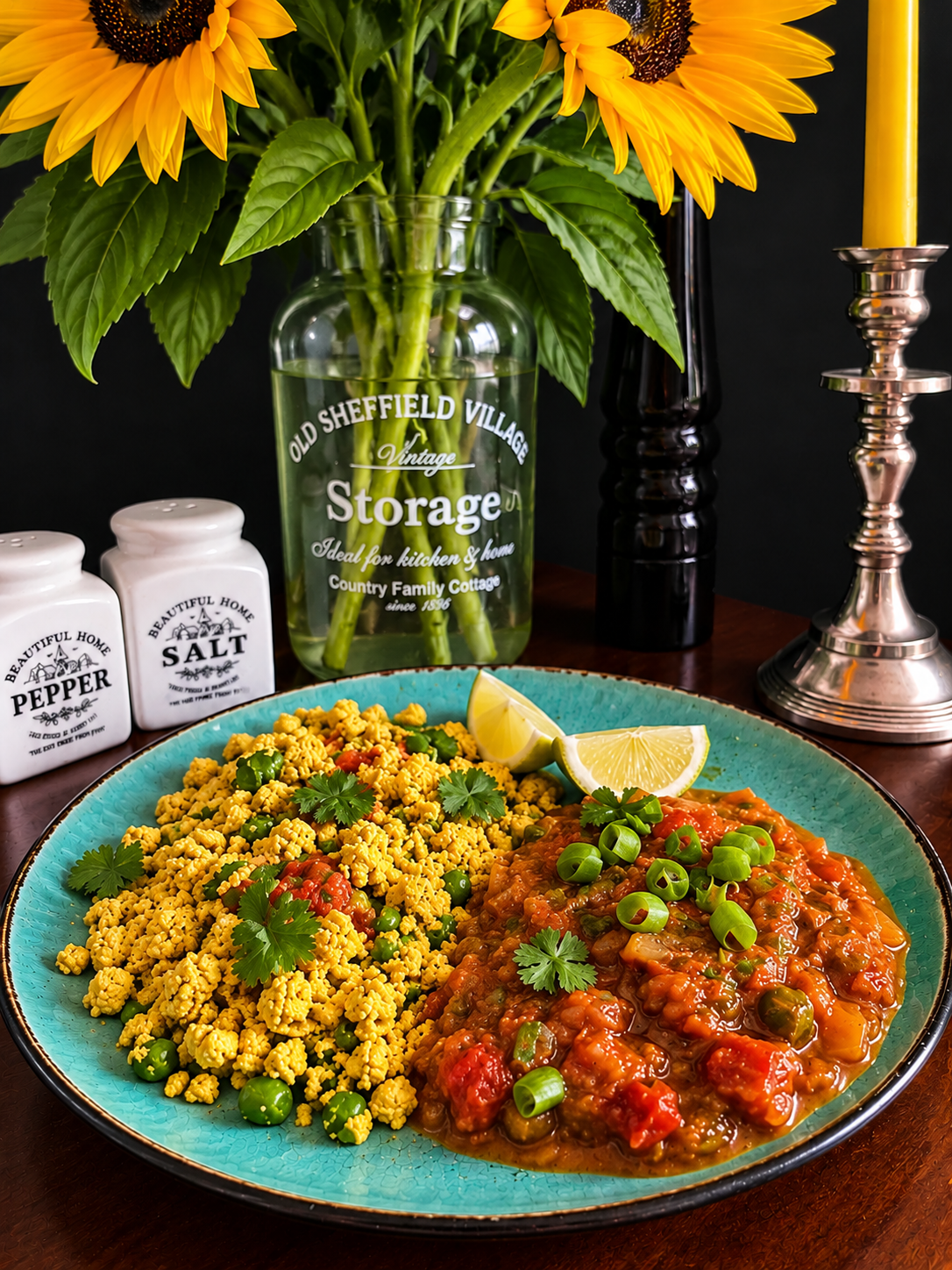
Tomato Choka is a traditional Trinidadian preparation in which ripe tomatoes are roasted until soft and smoky, mashed and combined with garlic, onion and chili. One characteristic technique is known as chunkay: hot oil is poured over the seasoned vegetables to release their aromas. Tomato Choka is commonly enjoyed with Sada Roti, a simple unleavened flatbread. My Via Veggie Vegan version preserves the character of the tomato preparation but pairs it with creamy tofu scramble instead of the traditional bread accompaniment. The result is a completely plant-based breakfast combining authentic Trinidadian inspiration with a modern vegan twist.
▣ Ingredients (2 servings)
- 2 ripe tomatoes
- 1/4 onion
- 1 spring onion
- 2 cloves garlic
- to taste hot chili, such as Scotch Bonnet or Habanero
- 200 g firm tofu
- 1/4 tsp ground turmeric
- 1/4 tsp Kala Namak
- to taste freshly ground black pepper
- 2-4 sprigs fresh coriander
- 1 1/2 tbsp olive oil or avocado oil, for the Tomato Choka
- 1 1/2 tsp olive oil, for the tofu scramble
- 2 tbsp unsweetened soy yogurt
- 2 tbsp water or vegetable broth
- 1 1/2 tsp soy sauce or tamari
♨ Preparation
- Prepare the Vegetables and Aromatics
Wash the tomatoes and pat them dry. Finely chop the garlic, thinly slice the onion and spring onion, and prepare the chili according to your preferred heat level. Wash and chop the fresh coriander, reserving some for the final garnish. - Roast the Tomatoes
Place the whole tomatoes under a hot oven grill or carefully roast them over a gas flame using suitable equipment. Turn them occasionally until the skins blister and darken and the flesh becomes completely soft. The roasting process gives the tomatoes their characteristic smoky aroma. - – Peel and Mash the Tomatoes
Allow the roasted tomatoes to cool just enough to handle safely. Remove the loosened skins and transfer the soft flesh and its juices to a heatproof bowl. Mash with a fork until rustic and slightly chunky. Stir in the chopped garlic, salt, chili and approximately half of the sliced onion. - – Chunkay the Tomato Choka
Heat 1½ tbsp olive oil or avocado oil in a small saucepan until hot and shimmering, without allowing it to smoke. Carefully pour the hot oil over the tomato mixture in a heatproof bowl, keeping your hands and face clear of possible splashes. Stir thoroughly so the warm oil releases the aromas of the garlic, onion and chili. Set aside and keep warm. - Prepare the Tofu Scramble Mixture
Drain the firm tofu and crumble it into small, irregular pieces using your fingers or a fork. In a separate bowl, combine the soy yogurt, water or vegetable broth, soy sauce, turmeric and freshly ground black pepper. Stir until the seasonings are evenly distributed. - Cook the Tofu Scramble
Heat 1½ tsp olive oil in a non-stick frying pan over medium heat. Add the crumbled tofu and sauté for approximately 2 minutes. Pour in the prepared yogurt and seasoning mixture, stir well and continue cooking for 3–4 minutes until the tofu is hot, golden and creamy, with most of the excess liquid absorbed. - – Finish the Scramble with Kala Namak
Reduce the heat and check the seasoning. Add the Kala Namak towards the end of cooking to preserve more of its characteristic egg-like aroma. Stir gently and remove the pan from the heat while the tofu remains pleasantly creamy. - Finish the Tomato Choka
Stir approximately half of the chopped coriander into the warm Tomato Choka. Taste and adjust the salt and chili if necessary. The finished mixture should be soft, smoky, aromatic and slightly rustic rather than completely smooth. - Arrange the Plate
Divide the golden tofu scramble between two serving plates. Spoon the Tomato Choka alongside it, allowing the two preparations to remain visually distinct. Sprinkle the remaining raw onion and sliced spring onion over the tomato mixture. - Garnish and Serve
Finish with the remaining fresh coriander and additional chili if desired. Serve immediately while the tofu scramble and Tomato Choka are warm. For a more traditional accompaniment, add freshly prepared Sada Roti; alternatively, enjoy the dish on its own as a satisfying vegan breakfast or brunch.
Food Story
Five Countries, Five Dishes and Not a Single Egg
When I started exploring vegan alternatives to traditional egg dishes for my World Egg Day collection, Trinidad and Tobago immediately caught my attention. Tomato Choka might not be an egg dish itself, but pairing it with a creamy tofu scramble turned it into exactly the kind of breakfast I love. Golden, spicy, full of garlic and bursting with fresh herbs. Who needs eggs when breakfast can taste this good?
Smoky Tomatoes and a Little Caribbean Heat
There is something wonderfully satisfying about taking a few simple tomatoes and transforming them into a dish with so much character. Roasting brings out their sweetness and smoky flavour, while garlic, onion and chili provide the attitude. And then comes the chunkay – that dramatic moment when hot oil meets the seasoned tomatoes. Suddenly, my kitchen smells like a little Caribbean adventure. Naturally, I couldn’t resist adding plenty of fresh coriander. Team Coriander strikes again!
My Kind of Breakfast – Any Time of Day
I love recipes that refuse to stay in one category. Is this breakfast? Brunch? Lunch? Dinner? Quite frankly, I don’t care. Give me creamy tofu scramble, smoky Tomato Choka and a generous scattering of spring onions, and I’m happy. The bright yellow tofu and rich red tomatoes make a beautiful combination on the plate, but the real magic is in the flavour. Another country, another vegan discovery and another reminder that a wonderful meal doesn’t need complicated ingredients.
♨ Nutrition per serving
Nutritional values are approximate and may vary depending on the ingredients and products used.
Good to Know
What Is Tomato Choka?
Tomato Choka is a traditional preparation from Trinidad and Tobago made with roasted tomatoes, garlic, onion, chili and oil. The tomatoes are softened by roasting, peeled and mashed before being seasoned. Its appeal lies in the contrast between smoky sweetness, fresh aromatics and chili heat. It is commonly eaten with Sada Roti and is part of the country's Indo-Trinidadian culinary heritage.
What Does the Word Choka Mean?
In Trinidadian cooking, choka describes a family of seasoned mashed or crushed vegetable preparations. Tomatoes are particularly popular, but other versions may use roasted eggplant, known locally as baigan, or potatoes. Techniques and seasonings vary between households.
What Is Chunkay?
Chunkay is a Trinidadian cooking technique involving hot oil added to seasoned ingredients, often to release the aromas of garlic, onion or other flavourings. The process resembles tempering techniques found in South Asian cooking. Because hot oil can splash when it contacts moist ingredients, it requires a heatproof vessel and careful handling.
Why Roast the Tomatoes?
Roasting softens the tomatoes, concentrates their flavour through moisture loss and can introduce smoky aromas when the skins char. The softened flesh is easier to mash and develops a different character from raw tomato salsa. The result is richer and more aromatic without requiring a long ingredient list.
Tomatoes and Lycopene
Tomatoes contain lycopene, the carotenoid responsible for much of their red colour. Lycopene has antioxidant properties, and processing or cooking tomatoes can improve its accessibility to the body. Consuming tomatoes with a little dietary fat may also support absorption of fat-soluble carotenoids.
Why Are Scotch Bonnet Peppers So Popular in Caribbean Cooking?
Scotch Bonnet peppers are closely associated with Caribbean cuisine. They are known for their intense heat and distinctive fruity aroma. Habanero peppers can provide a similar level of heat, although their flavour is not identical. Both contain capsaicin, which activates receptors responsible for the sensation of heat. Use sparingly and wash your hands thoroughly after handling.
What Is Sada Roti?
Sada Roti is a traditional Trinidadian unleavened flatbread made primarily from flour, water and leavening ingredients such as baking powder. It is cooked on a hot flat surface and commonly served with choka and other savoury preparations. This recipe replaces the usual bread accompaniment with tofu scramble, creating a different but equally satisfying meal.
Why Use Firm Tofu for Scramble?
Firm tofu holds its structure when crumbled and heated, creating small pieces that resemble scrambled eggs. Its relatively neutral flavour allows turmeric, soy sauce and other seasonings to shine. Softer tofu produces a creamier, more delicate texture but can release more water during cooking.
Tofu – A Valuable Source of Plant Protein
Tofu is made from soybeans and provides high-quality plant protein containing all nine essential amino acids. It also contributes minerals, with calcium content varying depending on the coagulant used during production. Checking the nutritional label is the best way to compare different brands.
Why Add Turmeric?
Turmeric gives the tofu scramble its warm golden colour. Its main yellow pigments are curcuminoids, including curcumin. Turmeric also contributes a mild earthy flavour. In this recipe, only a small amount is needed because the goal is colour and balance rather than a strongly turmeric-flavoured dish.
Turmeric and Black Pepper – What Does the Science Say?
Black pepper contains piperine, a compound that has been shown in some studies to increase the bioavailability of curcumin under particular conditions. However, the effects observed with concentrated supplements cannot simply be assumed for the small amounts used in everyday cooking. The black pepper in this recipe primarily adds flavour; it is not necessary to claim a specific health benefit.
What Is Kala Namak?
Kala Namak is a sulfur-containing salt commonly used in South Asian cooking. Its characteristic aroma is often described as egg-like, making it particularly popular in vegan tofu scrambles and plant-based egg alternatives. Adding it towards the end of cooking helps preserve more of its distinctive aroma. Like other salts, it contributes sodium and should be used in moderation.
Why Add Soy Yogurt to Tofu Scramble?
Unsweetened soy yogurt adds moisture and a gentle tanginess. It helps create a softer, creamier consistency without eggs or dairy products. Choose a plain, unsweetened product to avoid introducing unwanted sweetness into the savoury scramble.
Shado Beni vs. Fresh Coriander
Shado Beni, also called culantro or long coriander, is widely used in Trinidadian and Caribbean cooking. Despite its similar aroma, it is a different plant from cilantro, or coriander leaves. Shado Beni generally has a stronger and more robust flavour. Fresh coriander is a practical substitute when Shado Beni is unavailable, although the flavour will not be exactly the same.
Why Add Spring Onions?
Spring onions provide a fresh, mildly pungent contrast to the soft tomato mixture and creamy tofu. Their green colour also brightens the plate. They are an addition to this Via Veggie Vegan interpretation rather than an essential ingredient in traditional Tomato Choka.
Plant-Based Fats and Cholesterol
Tofu, tomatoes, vegetables and plant oils naturally contain no dietary cholesterol. Olive oil and avocado oil are rich in unsaturated fatty acids. Replacing some saturated fats with unsaturated fats can help maintain healthier LDL cholesterol levels. LDL transports cholesterol through the bloodstream, while HDL participates in cholesterol transport back towards the liver. Cardiovascular health depends on overall dietary patterns and multiple risk factors, not on a single ingredient.
Is This Dish Naturally Vegan?
Traditional Tomato Choka is generally made from plant-based ingredients, although individual preparations can vary. Tofu scramble is also entirely plant-based when prepared with vegan seasonings. This recipe therefore combines a naturally vegan Trinidadian vegetable preparation with a modern vegan breakfast accompaniment.
How Spicy Is This Recipe?
The heat depends almost entirely on the type and quantity of chili used. A small amount of Scotch Bonnet or Habanero can make the dish very hot. Start with less chili than you think you need and increase gradually. Removing the inner membranes can reduce some of the heat, but the pepper may still be intense.
Can Tomato Choka Be Prepared in Advance?
Yes. The roasted tomato mixture can be prepared ahead and refrigerated promptly in a covered container. Add delicate fresh herbs shortly before serving for the best flavour. Reheat the tomato mixture thoroughly if serving it warm. Tofu scramble is best freshly cooked, although leftovers can be refrigerated promptly and reheated until steaming hot.
Zero Waste – Use Every Suitable Part
Clean spring onion greens and tender coriander stems can be chopped and used as garnish rather than discarded. Any leftover roasted tomato juices should be mixed back into the choka for additional flavour. Suitable vegetable trimmings can be saved for homemade vegetable broth.
Food Safety When Using Hot Oil
The chunkay technique involves hot oil coming into contact with moisture-rich vegetables. This can cause sudden bubbling and splashing. Use a stable, heatproof bowl, avoid overheating the oil and pour carefully. Never leave hot oil unattended, and do not use smoking oil.
You may also like
♡
You may also like
Colombian Vegan Huevos Pericos – Golden Tofu Scramble with Tomatoes & Spring Onions
You may also like
Aloo Bharta – Bangladeshi Spiced Mashed Potatoes with Mustard Oil
You may also like