Turkmenistan – A Country of Central Asian Food Traditions
Turkmenistan is a Central Asian country bordered by Kazakhstan, Uzbekistan, Afghanistan, Iran and the Caspian Sea. Much of its landscape is dominated by the Karakum Desert, while agriculture and food traditions are closely connected to fertile oases and irrigated regions. Bread, vegetables, grains, meat dishes and fresh herbs all have a place in Turkmen cuisine. Hospitality and sharing food are important elements of everyday life, and fresh salads provide a welcome contrast to richer dishes.
What Is Turkmen Chopped Summer Salad?
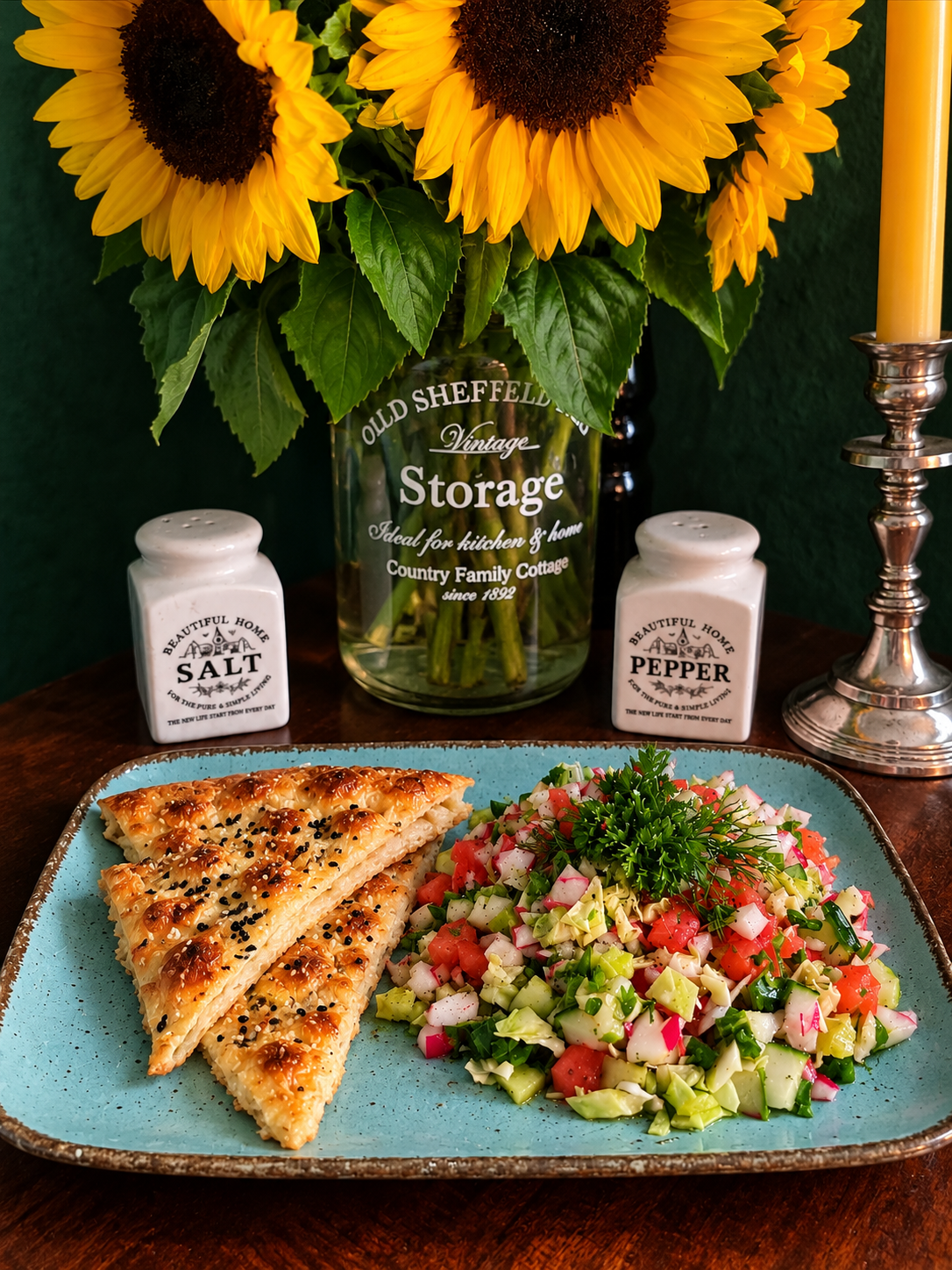
This Turkmen-inspired summer salad combines finely chopped seasonal vegetables with aromatic dill, parsley and a simple dressing. Its fresh character is reminiscent of chopped vegetable salads found throughout Central Asia and neighboring culinary traditions. The combination of cabbage, cucumber, tomatoes, radishes and herbs creates a particularly crunchy texture. My version brings everything together with extra virgin olive oil, freshly squeezed lemon juice, a little vinegar and a gentle touch of chili. Simple ingredients, plenty of freshness and absolutely no complicated cooking required.
▣ Ingredients (2 servings)
- 4 leaves green cabbage leaves (or pointed cabbage)
- 2 ripe tomatoes
- 1 cucumber
- 1 mild green pepper
- 6 radishes
- 2 spring oniony
- 1 clove garlic
- 1 pinch chili flakes (Pul Biber)
- 2 tbsp fresh dill
- 2 tbsp fresh parsley
- 2 tbsp extra virgin olive oil
- 1 tbsp freshly squeezed lemon juice
- 1 tbsp white vinegar
- salt & freshly ground black pepper to taste
♨ Preparation
- Prepare the Vegetables
Wash and dry all vegetables. Remove the tough central ribs from the cabbage leaves and finely shred them. Deseed the tomatoes and cut them, the cucumber, green pepper and radishes into small, even cubes of approximately 5 mm. Thinly slice the spring onions and finely grate the garlic. - Chop the Fresh Herbs
Finely chop the dill and flat-leaf parsley, including the tender stems. Combine all the prepared vegetables, garlic and fresh herbs in a large mixing bowl, leaving enough room to toss everything thoroughly. - Prepare the Dressing
Season the vegetables with salt, freshly ground black pepper and chili flakes. Add the extra virgin olive oil and toss gently until evenly distributed. Finish with the freshly squeezed lemon juice and white vinegar, mixing thoroughly so all the vegetables are lightly coated. - Allow the Flavors to Develop
Let the salad rest for approximately 20 minutes, preferably in the refrigerator. During this time, the vegetables release some of their natural juices, which combine with the olive oil, lemon juice and vinegar to create a fresh, aromatic dressing. Toss again and adjust the seasoning if necessary. - Serve
Divide the salad between four plates or arrange it on a large serving platter. Garnish with a little additional fresh dill or parsley if desired and serve with fresh or toasted flatbread.
Food Story
Raw Vegetables? Count Me In!
Some people associate salads exclusively with summer. Not me! Give me a big bowl of fresh, crunchy raw vegetables and I’m happy – whether it’s the middle of July or a freezing winter day. I absolutely love the combination of finely chopped tomatoes, cucumber, cabbage, radishes and fresh herbs. The more colorful and crunchy, the better. And if there’s a generous helping of freshly ground black pepper involved, you’ve already won me over. Who needs a complicated recipe when a handful of fresh ingredients can taste this good?
Olive Oil, Lemon & a Little Kitchen Happiness
There is one combination I never get tired of: good extra virgin olive oil and freshly squeezed lemon juice. Seriously, I could put that dressing on almost anything! Add fresh dill, parsley, a little garlic and a pinch of chili, and suddenly a simple bowl of vegetables becomes something special. This Turkmen-inspired salad is exactly my kind of food: fresh, uncomplicated, colorful and packed with flavor. No fancy techniques, no long cooking times – just vegetables doing what vegetables do best.
Summer Salad, All Year Round!
Of course, the name says Summer Salad, but I refuse to let the calendar decide when I can enjoy my favorite food. In my Via Veggie Vegan kitchen, this salad is welcome 365 days a year. And because I love a little contrast, I served it with a piece of beautifully crispy flatbread topped with sesame and black seeds. Crunchy vegetables, fragrant herbs, golden bread and that wonderful lemon-and-olive-oil dressing. Sometimes the simplest dishes are the ones that make me happiest. Team Raw Veggies, Team Garlic and Team Fresh Coriander’s equally enthusiastic cousin – Team Dill – are officially invited to the party!
♨ Nutrition per serving
Nutritional values are approximate and may vary depending on the ingredients and products used.
Good to Know
Turkmenistan – A Culinary Crossroads in Central Asia
Turkmenistan lies along historical routes connecting Central Asia, Persia and other regions of Eurasia. Its food culture reflects local agricultural traditions as well as wider regional influences. Bread, grains, vegetables and herbs play important roles alongside hearty cooked dishes. Fresh salads offer a light accompaniment and are especially appealing during warmer months.
Why Finely Chopped Vegetables Taste Different
Cutting vegetables into small, even pieces increases the surface area exposed to the dressing. This allows the oil, lemon juice, vinegar and seasonings to coat the ingredients more evenly. Every bite contains a little of everything, creating a balanced combination of crunch, acidity, sweetness and herbal freshness.
Raw Vegetables – What Happens to the Nutrients?
Raw vegetables retain their natural water content and many heat-sensitive nutrients, including some vitamin C. Cooking can reduce certain nutrients while improving the availability of others. Neither raw nor cooked vegetables are automatically superior in every respect. A varied diet containing both is a practical way to benefit from different vegetables and preparation methods.
Tomatoes – Lycopene and Vitamin C
Tomatoes contain vitamin C, potassium and lycopene, the carotenoid responsible for their red color. Lycopene is often more readily available from processed or cooked tomatoes, but fresh tomatoes still contribute valuable nutrients. Combining them with a little extra virgin olive oil can support the absorption of fat-soluble carotenoids.
Cucumber – Refreshing and Naturally Hydrating
Cucumber consists largely of water, making it a refreshing ingredient in raw salads. It provides relatively few calories while contributing texture, volume and small amounts of micronutrients. Leaving the edible skin on adds color and some additional fiber, provided the cucumber is thoroughly washed.
Cabbage and Radishes – Crunch with Nutritional Benefits
Cabbage and radishes belong to the Brassicaceae family of vegetables. They contain dietary fiber and naturally occurring glucosinolates, compounds that contribute to the characteristic flavors of cruciferous vegetables. Cutting and chewing these vegetables can trigger enzymatic reactions that produce other plant compounds. Their health effects are complex and should not be reduced to claims about a single ingredient.
Extra Virgin Olive Oil – Flavor and Unsaturated Fats
Extra virgin olive oil is produced mechanically from olives and contains predominantly monounsaturated fatty acids, particularly oleic acid. It also provides vitamin E and various minor plant compounds. Replacing some saturated fats with unsaturated fats can support a healthier overall dietary fat profile. One tablespoon adds approximately 120 kcal to the entire salad, so a modest amount delivers plenty of flavor.
Lemon Juice – Bright Flavor and Vitamin C
Freshly squeezed lemon juice adds acidity and a refreshing citrus aroma without requiring a heavy dressing. It also contains vitamin C, although the small quantity used in this recipe contributes only a modest amount. Vitamin C can help improve the absorption of non-heme iron from plant foods when consumed as part of the same meal.
Dill and Parsley – More Than Just Garnish
Dill has a distinctive aromatic flavor that works particularly well with cucumber and fresh vegetables. Flat-leaf parsley contributes a clean, green taste and contains vitamin K, vitamin C and other micronutrients. Although the quantities used in a salad are relatively small, fresh herbs can significantly increase flavor without requiring extra salt.
Fiber, Calories and the Benefits of a Vegetable-Rich Salad
This salad provides dietary fiber from cabbage, tomatoes, cucumber, radishes, peppers, spring onions and herbs. Fiber contributes to normal bowel function and can support satiety as part of a balanced diet. Most of the calories in this recipe come from the extra virgin olive oil, while the vegetables contribute relatively little energy. Served with bread or a protein-rich main dish, the salad can become part of a more substantial meal.