Bulgaria – Fresh Flavours from the Balkans
Bulgaria is a country in southeastern Europe with a rich culinary heritage influenced by Balkan, Mediterranean and Ottoman traditions. Fresh vegetables, herbs, peppers, yogurt and white brined cheese play an important role in Bulgarian cooking. Shopska Salata became widely popular during the 1950s and developed into one of the country's most recognisable dishes. Its combination of red tomatoes, green cucumber and peppers, and white cheese is often associated with the colours of the Bulgarian flag.
What Is Shopska Salata?
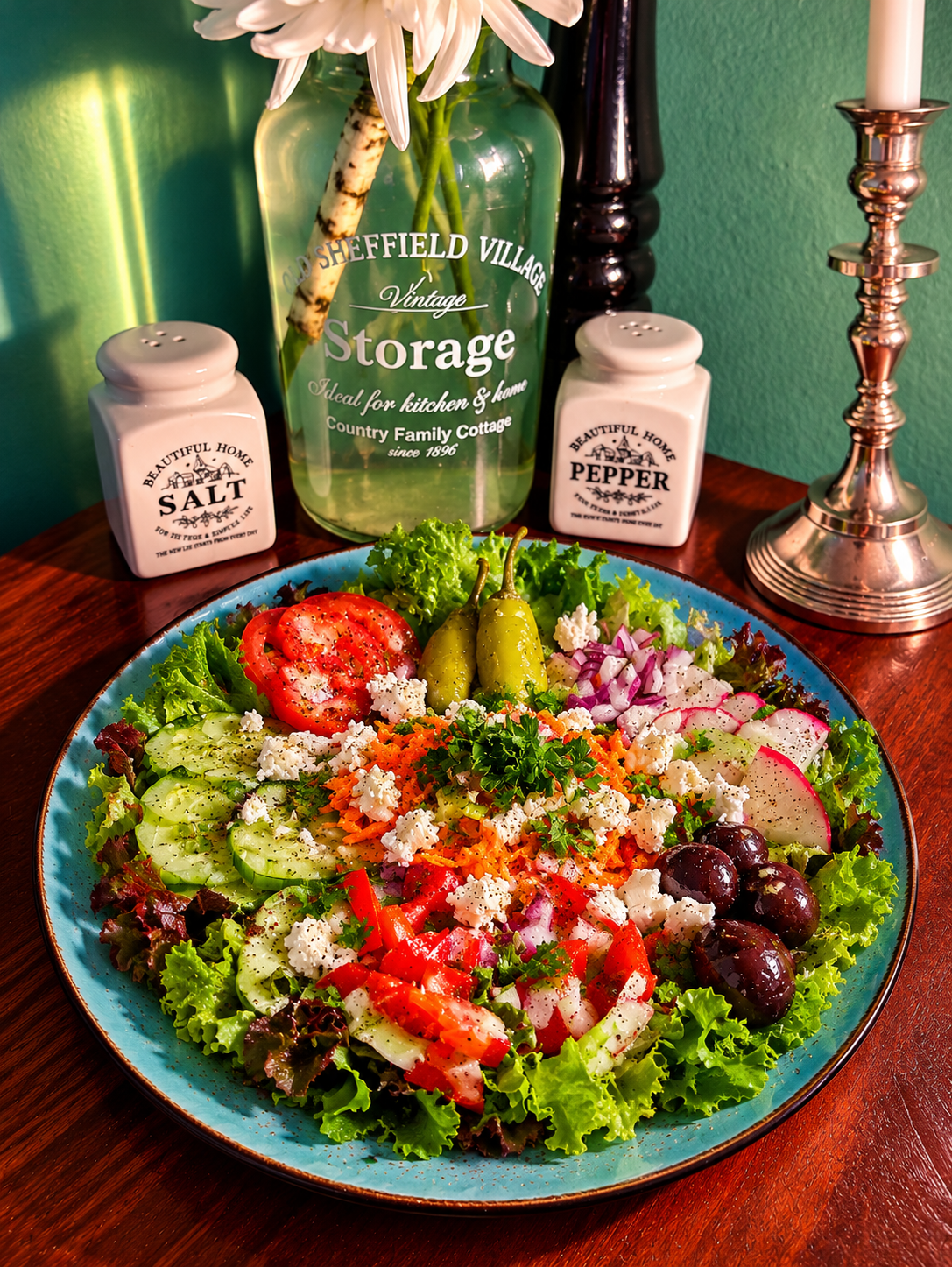
Shopska Salata is a traditional Bulgarian salad usually made with tomatoes, cucumber, peppers, onion, parsley and generously grated Sirene, a white brined cheese. My Via Veggie Vegan interpretation replaces the dairy cheese with a vegan feta alternative and adds leafy greens, radishes, carrots, black olives and mild pickled peppers for extra colour and crunch. Instead of a classic oil-and-vinegar dressing, I prepare a creamy Zero-Waste cucumber dressing using the reserved cucumber peel, unsweetened soy yogurt, garlic, mustard and apple cider vinegar. The result is a refreshing, colourful and fully plant-based version of this beloved Bulgarian classic.
▣ Ingredients (2 servings)
- 1 organic cucumber
- 3 ripe tomatoes
- 1 red bell pepper
- 1 red onion
- 2 spring onions
- 1 handful mixed leafy lettuce
- 4 radieshes
- 1 carrot
- 2 mild green pickled peppers
- 1 clove garlic
- 2 sprigs fresh curly parsley
- 150 g vegan feta alternative
- 1 tsp mustard
- 50 g unsweetened soy yogurt
- 1 tbsp apple cider vinegar
- 1 tsp extra virgin olive oil
- to taste salt & freshly ground black pepper
♨ Preparation
- Prepare the Vegetables
Wash and dry all fresh vegetables and herbs. Peel the cucumber and reserve the peel for the dressing. Slice the cucumber and tomatoes into bite-sized pieces. Cut the red bell pepper into thin strips, finely dice the red onion, slice the spring onions, cut the radishes into thin matchsticks or slices and finely grate the carrot. Wash and dry the leafy lettuce and finely chop the curly parsley. - Prepare the Creamy Zero-Waste Cucumber Dressing
Place the reserved cucumber peel, 150 g unsweetened soy yogurt, garlic clove, mustard, apple cider vinegar and extra virgin olive oil into a blender. Blend until smooth and creamy. Season with salt and freshly ground black pepper. If the dressing is too thick, add a small splash of cold water and blend again until it reaches the desired consistency. - Arrange the Salad Base
Arrange the mixed leafy lettuce across two large serving plates. Distribute the cucumber slices, tomatoes, red bell pepper strips, red onion, spring onions, radishes and grated carrot over the lettuce. Arrange the vegetables attractively so their different colours and textures remain visible. - Add the Traditional and Extra Toppings
Place one mild green pickled pepper onto each salad. Add the black olives and distribute the crumbled vegan feta alternative generously over the vegetables. Sprinkle with freshly chopped curly parsley and freshly ground black pepper. - Dress and Serve
Drizzle a little creamy cucumber dressing over the salad shortly before serving, allowing the colourful vegetables to remain visible. Serve the remaining dressing separately if desired. Enjoy immediately while the lettuce and vegetables are fresh and crisp.
Food Story
Sometimes Simple Is Simply Perfect
Some of the world’s best recipes don’t need complicated techniques, expensive ingredients or hours in the kitchen. Sometimes all you need is a beautiful selection of fresh vegetables and a little creativity. Bulgaria’s famous Shopska Salata is exactly that kind of dish. Juicy tomatoes, crunchy cucumber, sweet peppers, fragrant parsley and creamy white cheese – simple ingredients that come together in a wonderfully colourful combination. And because this is Via Veggie Vegan, the cheese is naturally a vegan feta alternative.
A Little More Colour, Please!
Of course, I couldn’t resist adding a few extra vegetables. Some crunchy radishes, finely grated carrots, fresh leafy greens, black olives and two mild green pickled peppers joined the party. The result? A plate overflowing with colour, texture and freshness. I love arranging vegetables so that every ingredient gets its own little moment in the spotlight. Red, green, orange, purple and white – who needs a rainbow when you can have a Shopska Salad?
Zero Waste, Full Flavor!
And then came the cucumber peel. Throw it away? Absolutely not! Instead, I blended it with creamy soy yogurt, garlic, mustard and apple cider vinegar to create a refreshing dressing. One simple ingredient, two delicious purposes. That’s exactly what I love about creative plant-based cooking: turning everyday vegetables into something special without unnecessary waste. Fresh, colourful, crunchy and delicious. Sometimes the simplest meals really are the ones we come back to again and again. Zero Waste, Full Flavor!
♨ Nutrition per serving
Nutritional values are approximate and may vary depending on the ingredients and products used.
Good to Know
What Is Shopska Salata?
Shopska Salata is one of Bulgaria's best-known salads and a popular dish throughout the Balkans. It is traditionally prepared with tomatoes, cucumber, peppers, onion, parsley and grated white brined cheese. The salad is valued for its freshness, simplicity and colourful appearance. While the classic version uses dairy-based Sirene cheese, this Via Veggie Vegan interpretation uses a vegan feta alternative and adds several extra vegetables.
The History of Bulgaria's Famous Salad
Although Shopska Salata is strongly associated with Bulgarian national cuisine today, the dish became widely promoted during the 1950s as part of Bulgaria's tourism and culinary identity. Its name refers to the Shopluk region and the Shopi people, but its modern popularity is closely linked to twentieth-century Bulgarian gastronomy. The salad's red, green and white ingredients are frequently interpreted as a reflection of the Bulgarian national flag.
Sirene – Bulgaria's Traditional White Cheese
Traditional Shopska Salata is usually finished with grated Sirene, a white brined cheese commonly produced from cow's, sheep's or goat's milk. Its salty, tangy flavour provides a contrast to the fresh vegetables. A vegan feta alternative recreates some of this savoury character without dairy ingredients. Plant-based cheese alternatives vary considerably in protein, fat and calcium content, so nutritional values depend on the product selected.
Why Fresh Vegetables Matter
Tomatoes, cucumber, bell peppers, radishes and leafy greens provide different combinations of vitamins, minerals, water and dietary fibre. Red bell peppers are particularly notable for their vitamin C content, while tomatoes contain lycopene, a naturally occurring carotenoid responsible for their red colour. Using a variety of vegetables increases dietary diversity and creates a more interesting combination of flavours and textures.
Radishes and Carrots – Extra Crunch and Colour
Radishes add a refreshing, mildly peppery bite, while carrots contribute natural sweetness and a bright orange colour. Carrots are a source of beta-carotene, which the body can convert into vitamin A. Both vegetables also provide dietary fibre. Although they are not essential ingredients in traditional Shopska Salata, they make a delicious addition to this modern, vegetable-rich interpretation.
Black Olives and Mild Pickled Peppers
Black olives contribute savoury flavour and contain mostly monounsaturated fats. Mild pickled peppers introduce a pleasant tangy contrast and additional texture. Both ingredients are common in various Mediterranean and Balkan-style preparations, although they are optional additions rather than defining components of classic Shopska Salata. Their salt content can vary significantly, so taste the finished salad before adding more seasoning.
Curly Parsley – More Than Just a Garnish
Fresh curly parsley contributes a clean, herbal flavour and bright green colour. It also provides vitamin K and smaller amounts of other micronutrients. Finely chopping the leaves distributes their flavour throughout the salad. Parsley is a familiar ingredient in Bulgarian and other Balkan cuisines, where fresh herbs are frequently used to complement vegetables and savoury dishes.
Why Unsweetened Soy Yogurt Works in Dressings
Unsweetened soy yogurt creates a creamy dressing without dairy products. Depending on the brand, it may provide plant-based protein and can be fortified with calcium or vitamins. Its mild acidity works well with mustard, garlic and apple cider vinegar. Using an unsweetened variety is important because sweetened yogurt would change the flavour balance of this savoury salad. The finished dressing can be adjusted with a little cold water if necessary.
Mustard, Apple Cider Vinegar and Flavour Balance
Mustard contributes pungency and can help create a cohesive dressing, while apple cider vinegar adds acidity that balances the creamy soy yogurt. Garlic provides a savoury, aromatic note. The combination creates a more complex dressing without requiring large amounts of oil. Mustard may contain allergens, and its ingredients vary by brand. For a strictly vegan recipe, check that the mustard and all other packaged products contain no animal-derived ingredients.
Zero Waste – Give Cucumber Peel a Second Life
Cucumber peel is edible when properly washed and contributes fibre and colour. Instead of discarding it, this recipe blends the peel into a creamy soy yogurt dressing. The cucumber should be washed thoroughly before peeling, especially when the peel will be consumed. Other suitable vegetable scraps, such as tender parsley stems, can also be finely chopped and incorporated into dressings. Store leftover dressing in a clean, airtight container in the refrigerator and use within approximately two days. Zero Waste, Full Flavor!