Country of Origin: Jordan
Jordanian cuisine is deeply rooted in the culinary traditions of the Levant, where mezze plays an important role in everyday meals and social gatherings. Small dishes such as creamy vegetable dips, olives, fresh salads and warm flatbread are often enjoyed together, encouraging everyone around the table to share.
What Are Mutabbal & Maazat Zaytoon?
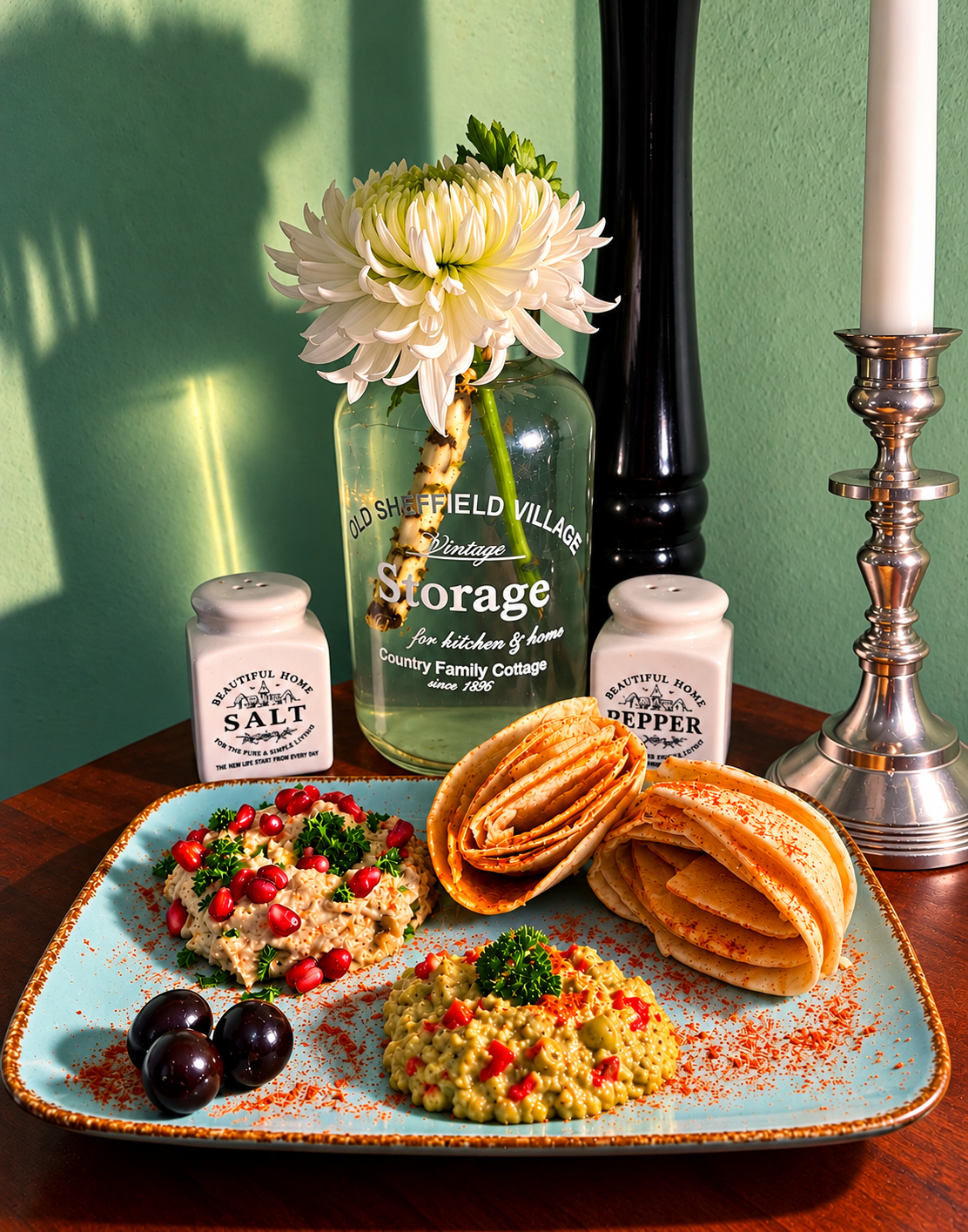
Mutabbal is a traditional Levantine eggplant dip made with roasted eggplant, tahini, garlic and lemon juice. Some Jordanian variations include yogurt for an especially creamy, delicate texture. Maazat Zaytoon, meaning olive appetisers or olive mezze, is used here for a green olive spread flavoured with tahini, lemon, garlic and za’atar. Za’atar is the aromatic herb and sesame seasoning, not the name of the olive paste itself. Both dishes are naturally suited to a plant-based mezze table when prepared with vegan yogurt.
▣ Ingredients (2 servings)
- 1 large eggplant (approx. 400 g)
- 1 clove garlic
- 2 sprigs curly parsley
- 2 tbsp tahini
- 2 tbsp unsweetened plain soy yogurt
- 2 tbsp pomegranate seeds,
- 1-2 tbsp tbsp freshly squeezed lemon juice
- 1 tbsp extra virgin olive oil, for drizzling
- 1/2 tsp salt
- to taste freshly ground black pepper
- 120 g pitted green olives
- 1 tsp za’atar
- 1 pinch cayenne pepper
- 1 1/2 tbsp tahini
- 1 tbsp freshly squeezed lemon juice
- 1 tbsp cold water
- 1/2 tsp salt
- to taste freshly ground black pepper
- 2 pieces flatbreads, warmed
♨ Preparation
- Preheat the oven to 220°C using the grill setting. Prick the eggplant several times with a fork and place it on a baking tray. Roast for approximately 35–45 minutes, turning occasionally, until the skin is wrinkled and blistered and the flesh is completely soft.
- Remove the eggplant from the oven and allow it to cool slightly. Cut it lengthwise and scoop out the soft flesh with a spoon, discarding the skin. Transfer the flesh to a sieve and let any excess liquid drain for approximately 5 minutes.
- Finely chop the roasted eggplant flesh with a knife or mash it with a fork to retain a slightly rustic texture. Transfer to a bowl and mix with the tahini, soy yogurt, garlic, lemon juice and salt until creamy and well combined. Adjust the seasoning to taste.
- Spread the Mutabbal onto a shallow serving plate or into a small bowl. Create a slight indentation with the back of a spoon, drizzle with extra virgin olive oil and garnish with pomegranate seeds and finely chopped curly parsley.
- For the Maazat Zaytoon, place the rinsed green olives, tahini, garlic, lemon juice, za’atar and cayenne pepper or chili flakes into a small food processor. Blend until a smooth but slightly textured paste forms.
- Add a little cold water or extra virgin olive oil if the mixture is too thick. Fold in the finely diced red bell pepper and mix gently to distribute it throughout the olive paste.
- Transfer the olive paste to a small serving bowl or plate. Smooth the surface with a spoon, create a shallow indentation and drizzle with the remaining extra virgin olive oil. Sprinkle with a little additional za’atar if desired.
- Serve both dips together as a Jordanian mezze duo, accompanied by two optional warm flatbreads for dipping and scooping.
Food Story
Two Dips, One Delicious Destination
Today, Via Veggie Vegan is heading to Jordan – and we’re bringing two irresistible mezze favourites to the table! On one side, there’s Mutabbal: smoky roasted eggplant, creamy tahini, a little soy yogurt and fresh lemon, finished with ruby-red pomegranate seeds and curly parsley.
Olive You, Jordan!
On the other side, we have Maazat Zaytoon – a wonderfully savoury green olive paste with garlic, tahini, aromatic za’atar and tiny pieces of red bell pepper. A little salty, a little tangy and packed with Mediterranean and Middle Eastern flavours. And yes, Team Garlic is definitely invited!
Let’s Get Dipping!
Add some warm flatbread, gather around the table and start dipping. No complicated rules, no fancy cutlery – just two delicious plant-based creations made for sharing. Sometimes the best culinary journeys begin with a simple piece of bread and a really good dip!
♨ Nutrition per serving
Nutritional values are approximate and may vary depending on the ingredients and products used.
Good to Know
Mutabbal vs. Baba Ghanoush
Both are famous Levantine eggplant dishes, and their names and preparations can overlap depending on the country and family tradition. Mutabbal generally features tahini, while some versions also contain yogurt. Baba Ghanoush may be prepared with different combinations of vegetables, herbs and seasonings.
The Secret of Roasted Eggplant
Roasting an eggplant whole allows its flesh to become exceptionally soft while developing a deeper flavour. Cooking it over an open flame adds a distinctive smokiness that is particularly appreciated in traditional Levantine eggplant dips.
Why Drain the Eggplant?
Roasted eggplant contains plenty of moisture. Allowing the flesh to drain briefly prevents the finished Mutabbal from becoming watery and helps create a richer, creamier consistency.
What Is Za’atar?
Za’atar is both the name of a regional herb and a popular Middle Eastern seasoning blend. Commercial mixtures commonly contain dried herbs, toasted sesame seeds, sumac and salt. Recipes vary between regions and producers.
Sumac – The Tangy Secret
Sumac is a deep-red spice made from dried and ground sumac berries. It adds a pleasantly tart, citrus-like flavour and is a common ingredient in many za’atar blends.
Why Tahini Matters
Tahini is a paste made from ground sesame seeds. It contributes creaminess, richness and a slightly nutty flavour to both dips, while providing plant-based fats and minerals.
A Vegan Twist on Yogurt
Unsweetened plain soy yogurt works beautifully in Mutabbal. It adds a gentle tanginess and creamy consistency without dairy. Choose an unflavoured variety without added sugar for the best savoury result.
Green Olives and Their Flavour
Green olives are generally harvested before fully ripening and develop their characteristic flavour through curing. Their saltiness varies considerably, so rinsing them before preparing the paste helps control the seasoning.
Pomegranate – A Levantine Favourite
Pomegranate seeds are widely used in Middle Eastern cooking. Their vibrant colour, juicy texture and sweet-tart flavour provide a beautiful contrast to creamy dips and savoury dishes.
Mezze – Made for Sharing
Mezze refers to a selection of small dishes commonly served throughout the Eastern Mediterranean and Middle East. Dips, olives, salads, vegetables and flatbreads are often enjoyed together, turning a simple meal into a relaxed, communal dining experience.