
Albania – Mountains, Forests and Mediterranean Traditions
Albania is a country in southeastern Europe, bordered by the Adriatic and Ionian Seas and characterized by dramatic mountains, fertile valleys and diverse regional food traditions. Its cuisine reflects Mediterranean and Balkan influences, with olive oil, vegetables, herbs, legumes and seasonal produce playing important roles. Chestnuts grow in several forested regions, including northern Albania and areas around Lake Ohrid, where they have long been valued as a seasonal food.
What Is Supa me Gështenja?
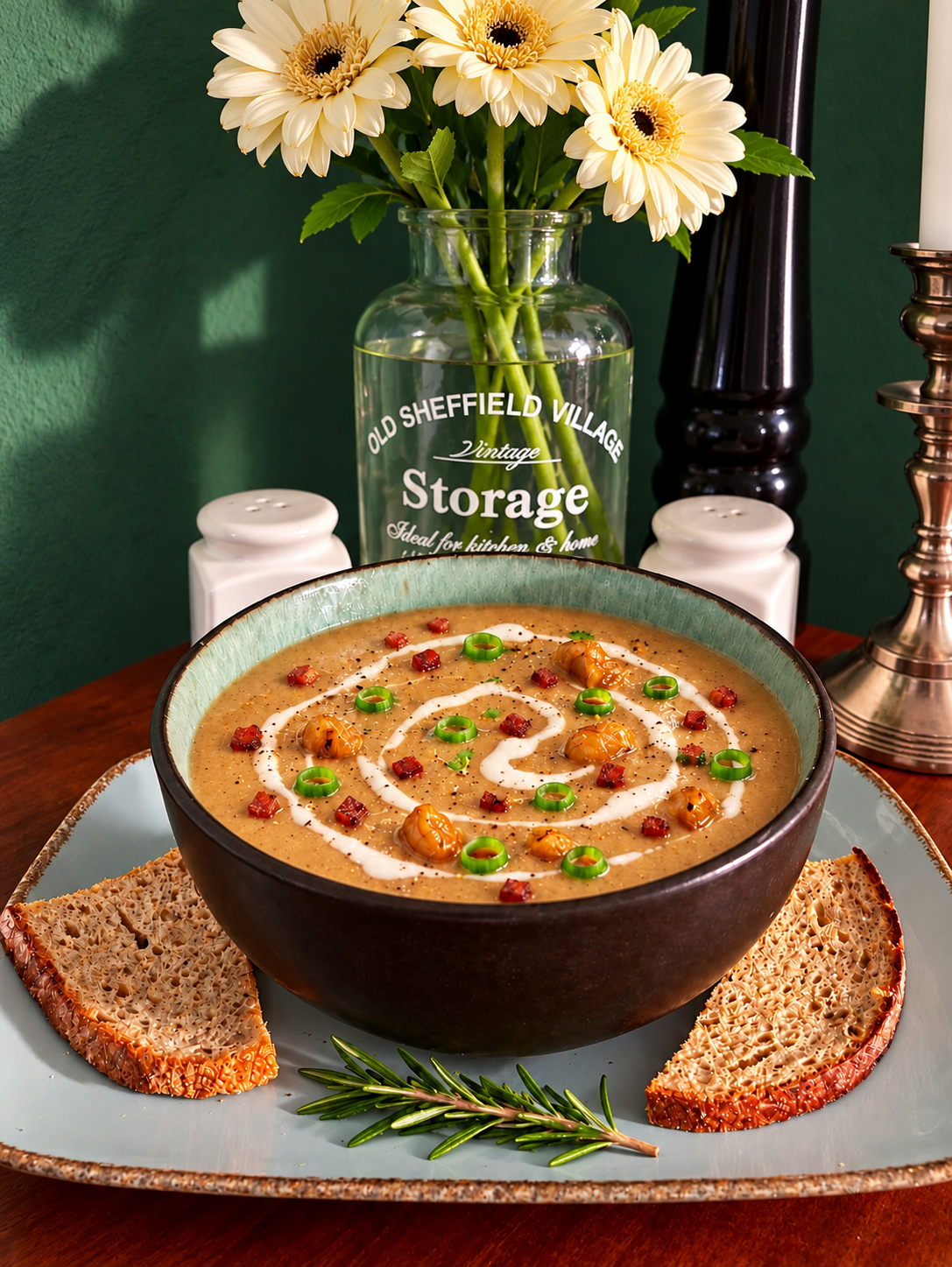
Supa me gështenja simply means chestnut soup in Albanian. This recipe is a rustic, Albanian-inspired preparation rather than a single standardized national dish. Cooked chestnuts are combined with leeks, potatoes, garlic and vegetable stock to create a naturally creamy texture. A little olive oil adds richness, while nutmeg complements the chestnuts' mild sweetness. For my Via Veggie Vegan version, crispy plant-based bacon replaces the optional traditional meat topping, bringing a smoky, savory contrast to the smooth soup.
▣ Ingredients (2 servings)
- 200 g cooked and peeled chestnuts, roughly chopped
- 1 small leek, white and light green parts only
- 1 clove garlic
- 1 potato
- 1 pinch ground nutmeg
- 2 sprigs fresh parsley
- 30 g vegan bacon cubes
- 2 tbsp extra virgin olive oil
- 450 ml vegetable broth
- to taste salt & freshly ground black pepper
♨ Preparation
- 8. Prepare the Aromatic Base
Heat the olive oil in a small saucepan over medium heat.
Add the sliced leek and diced potato. Sauté gently for approximately 4–5 minutes until the leek becomes soft and translucent.
Add the finely chopped garlic during the final minute, stirring gently to prevent it from burning. - Gently Roast the Chestnuts
Add the roughly chopped chestnuts to the saucepan, reserving 3–4 attractive pieces for garnish.
Cook gently for approximately 2 minutes, stirring regularly to release their warm, nutty aroma. - 3. Simmer the Soup
Pour in the hot vegetable stock.
Season with salt, freshly ground black pepper and a small pinch of nutmeg.
Cover the saucepan and simmer gently for approximately 15 minutes, until the potato pieces are completely tender. - 4. Blend Until Creamy
Remove the saucepan from the heat.
Use an immersion blender to puree the soup until smooth and velvety.
If the consistency is too thick, add a small amount of vegetable stock or water.
Taste and adjust the seasoning as necessary. - 5. Prepare the Crispy Topping
While the soup is simmering, heat a small non-stick frying pan.
Add the vegan bacon cubes and fry according to the manufacturer's instructions until lightly crispy.
Add the reserved chestnut pieces and toss briefly with the bacon to warm them through and develop a little color. - 6. Garnish and Serve
Divide the hot chestnut soup between two bowls.
Garnish with the crispy vegan bacon cubes, golden chestnut pieces and freshly chopped parsley.
Serve immediately, preferably with a slice of rustic bread.
Food Story
Oh, Chestnut Season – What a Wonderful Time!
Oh, chestnut season! There is something about it that makes me ridiculously happy. Although, come to think of it, every season can be a happy season. As long as we are healthy, there is already so much to be grateful for. But chestnuts do have a very special place in my heart. Their warm, slightly sweet, wonderfully nutty flavor brings back memories of autumn afternoons, cozy kitchens and those first chilly days when a bowl of soup suddenly becomes the most inviting thing in the world. Chestnuts in a creamy soup? Wonderful. A pumpkin stuffed with chestnuts? Even better. Apparently, when chestnuts are involved, I find it rather difficult to say no.
Cold Fingers, Warm Chestnuts and Childhood Memories
And then there are the Christmas markets. I can almost feel the cold air on my face and those freezing fingers wrapped around a little paper bag of freshly roasted chestnuts. Peeling them one by one, warming my hands in the process and trying not to burn my fingertips on the first one. Pure happiness! But my memories go back even further. As a child, simply collecting chestnuts from the ground was an adventure in itself. Those shiny brown treasures hiding among autumn leaves always seemed far too beautiful to leave behind. Of course, the horse chestnuts we collected for crafts weren’t the edible kind, but that never made them any less magical. Some childhood memories are wonderfully simple. A handful of chestnuts, colorful leaves and an afternoon outdoors. What more could you possibly need?
A Little Bowl of Albanian Autumn
Today, my culinary journey takes me to Albania, where chestnuts have their own place in regional food traditions. I decided to turn these little autumn treasures into a creamy, rustic soup with leeks, potatoes, garlic and a touch of nutmeg. No heavy cream required – the chestnuts and potatoes create a beautifully velvety texture all by themselves. And because a little contrast never hurts, I finished the soup with crispy vegan bacon cubes, golden chestnut pieces and fresh parsley. The result? A bowl full of warmth, flavor and memories. From childhood walks to Christmas markets, from stuffed pumpkins to Albanian chestnut soup – these little brown treasures keep finding their way back into my kitchen. And I couldn’t be happier about it.
♨ Nutrition per serving
Nutritional values are approximate and may vary depending on the ingredients and products used.
Good to Know
Albania – A Country of Mountains and Coastlines
Albania is located on the Balkan Peninsula in southeastern Europe. Despite its relatively small size, the country features a remarkable variety of landscapes, including mountains, forests, rivers, lakes and Mediterranean coastlines. These different environments have helped shape regional agricultural practices and food traditions.
Tirana – Albania's Capital
Tirana is Albania's capital and largest city. Its food culture combines traditional Albanian cooking with contemporary influences. Markets, bakeries and family restaurants reflect the importance of fresh produce, bread, olive oil and seasonal ingredients in everyday meals.
Albanian Cuisine – A Meeting of Culinary Traditions
Albanian cuisine has been influenced by geography, local agriculture and historical connections across the Balkans and Mediterranean. Common ingredients include vegetables, beans, herbs, olive oil, grains and dairy products. Traditional dishes vary considerably between coastal, lowland and mountainous regions.
Why Seasonal Cooking Matters in Albania
Seasonal availability has historically influenced food preparation throughout Albania. Families have made use of vegetables, fruits, nuts and other local produce according to the harvest. Preservation methods such as drying, pickling and storing foods for winter have also been important.
Chestnuts in Albanian Food Culture
Sweet chestnuts grow in parts of Albania and have been valued as a seasonal food. In forested and mountainous areas, chestnuts can be roasted, boiled or incorporated into different preparations. Their natural sweetness and starchy texture make them suitable for both savory and sweet dishes.
What Does Gështenja Mean?
Gështenja is the Albanian word for chestnut. The plural form is gështenja, and supa me gështenja translates as chestnut soup. The name describes the main ingredient rather than one universally fixed recipe.
Is Chestnut Soup a Traditional Albanian National Dish?
Chestnuts have a place in Albanian regional food traditions, but there is no single universally recognized national recipe for chestnut soup. This version is an Albanian-inspired, plant-based interpretation using ingredients compatible with the country's rustic and Mediterranean-influenced cooking traditions.
Tropoja – Northern Albania's Mountain Landscape
Tropoja is a mountainous area in northern Albania, near the Albanian Alps. Its landscape includes forests, valleys and agricultural communities. Seasonal forest products, including chestnuts in suitable growing areas, form part of the broader relationship between local food culture and the surrounding environment.
Pogradec and Lake Ohrid
Pogradec lies beside Lake Ohrid in southeastern Albania. The lake and surrounding mountains create a distinctive natural environment, while local food traditions reflect the region's agricultural and freshwater resources. Chestnut-growing areas can be found in parts of southeastern Albania.
What Exactly Are Sweet Chestnuts?
Sweet chestnuts are the edible nuts of trees belonging to the genus Castanea. The European sweet chestnut, Castanea sativa, is native to parts of southern Europe and western Asia and has been cultivated for centuries. Its nuts are enclosed in a prickly outer husk.
Sweet Chestnuts Versus Horse Chestnuts
Edible sweet chestnuts and horse chestnuts are not the same thing. Sweet chestnuts belong to the beech family, Fagaceae, while horse chestnuts belong to the soapberry family, Sapindaceae. Horse chestnuts are not suitable for human consumption and can cause poisoning if eaten.
Why Chestnuts Are Different from Most Nuts
Unlike almonds, walnuts and many other culinary nuts, chestnuts are relatively low in fat and comparatively rich in starch. This gives them a softer, flourier texture when cooked. Their mild sweetness makes them particularly versatile in soups, stuffings, purees and desserts.
Chestnuts – A Source of Complex Carbohydrates
Chestnuts provide carbohydrates, including starch, that contribute energy. They also contain dietary fiber and smaller amounts of protein and fat. Their nutritional composition differs significantly from that of many higher-fat nuts.
Dietary Fiber in Chestnuts
Chestnuts contain dietary fiber, which supports normal bowel function. Fiber also contributes to the overall texture and nutritional value of the soup. A varied diet containing vegetables, legumes, whole grains and nuts can help meet daily fiber requirements.
Vitamin C in Chestnuts
Fresh chestnuts contain vitamin C, which is unusual among many commonly eaten nuts. However, cooking and storage can reduce vitamin C content. The amount remaining in prepared chestnuts depends on processing and cooking conditions.
Minerals Found in Chestnuts
Chestnuts contain minerals including potassium, copper and manganese. Potassium contributes to normal muscle and nerve function, while copper and manganese participate in various metabolic processes. Their contribution to the diet depends on serving size and preparation.
Why Chestnuts Make Soup Creamy
Cooked chestnuts contain starch that softens and disperses during blending. When combined with cooked potatoes and vegetable stock, they create a smooth, thick texture without requiring dairy cream. This makes chestnuts particularly useful in plant-based soups.
Why Roasting Chestnuts Changes Their Flavor
Heating chestnuts encourages the development of roasted aromas and changes their texture. Some of the characteristic flavor comes from heat-driven reactions involving sugars and amino compounds. In this recipe, gently sautéing cooked chestnuts helps deepen their nutty aroma.
How to Recognize Good Chestnuts
Fresh edible chestnuts should feel relatively heavy for their size and have firm, intact shells. Avoid nuts with visible mold, unusual softness or signs of spoilage. Vacuum-packed cooked chestnuts are a convenient alternative and should be checked for freshness and package integrity.
Why Leeks Work So Well with Chestnuts
Leeks have a mild, sweet onion-like flavor that complements chestnuts without overpowering them. Gentle cooking softens their texture and brings out their natural sweetness. The white and light green parts are particularly suitable for a smooth soup.
Leeks and the Allium Family
Leeks belong to the Allium group, which also includes onions, garlic and chives. These vegetables contain sulfur compounds that contribute to their distinctive aromas. Their flavors change during cooking, becoming generally milder and sweeter.
Garlic – A Small but Important Ingredient
Garlic adds savory depth to the soup. When chopped, enzymatic reactions create sulfur-containing compounds responsible for its pungent aroma. Adding garlic near the end of sautéing helps prevent excessive browning and bitterness.
Why Potatoes Help Bind the Soup
Potatoes contain starch that softens during cooking and helps thicken blended soups. A small potato provides additional body without dominating the chestnut flavor. This technique is useful when preparing creamy soups without dairy cream.
Nutmeg – A Classic Partner for Creamy Soups
Nutmeg has a warm, aromatic flavor that complements chestnuts, potatoes and leeks. Only a small pinch is needed because its aroma is concentrated. Culinary quantities are appropriate; consuming large amounts of nutmeg can be harmful.
Olive Oil – A Mediterranean Influence
Olive oil is widely used in Mediterranean cooking, including many Albanian dishes. It contributes flavor and richness while supplying predominantly monounsaturated fatty acids. Extra virgin olive oil also contains various naturally occurring plant compounds.
Why This Soup Doesn't Need Heavy Cream
The combination of cooked chestnuts, potatoes and blended vegetables creates a naturally velvety consistency. Olive oil contributes richness, while vegetable stock provides the liquid base. This approach allows the chestnuts' flavor to remain prominent.
Vegetable Stock – The Foundation of Flavor
A well-seasoned vegetable stock adds savory depth to the soup. Homemade stock can be prepared from suitable vegetable trimmings and herbs, while commercial products offer convenience. Check the salt content before adding additional seasoning.
Vegan Bacon – A Contemporary Addition
Vegan bacon alternatives can be made from soy, wheat protein, pea protein or other plant ingredients. Their smoky flavor and crispy texture provide contrast to creamy soups. Nutritional composition varies considerably between products, particularly sodium, protein and saturated fat content.
Why Crispy Toppings Improve Creamy Soups
A smooth soup benefits from contrasting textures. Crispy vegan bacon, lightly browned chestnut pieces and fresh herbs make each spoonful more interesting. Adding these ingredients immediately before serving helps preserve their texture.
Parsley – Freshness and Color
Fresh parsley adds a bright, slightly peppery flavor that balances the sweetness of chestnuts. It also provides vitamin K and other nutrients. Adding it at the end preserves its fresh appearance and aroma.
Understanding the Soup's Carbohydrates
Chestnuts and potatoes contribute most of the carbohydrates in this recipe. These foods also provide fiber and other nutrients. The carbohydrate content is relevant for people who monitor their intake, but the soup can fit into a varied, balanced diet.
Plant-Based Protein in This Recipe
Chestnuts and vegetables contain some protein, while the amount supplied by vegan bacon depends on the product used. This soup is not necessarily a high-protein meal. Serving it with protein-rich bread or another suitable accompaniment can increase the overall protein content.
Unsaturated and Saturated Fatty Acids
Extra virgin olive oil is rich in monounsaturated fatty acids. Replacing some saturated fat in the diet with unsaturated fat can help reduce LDL cholesterol. However, plant-based processed foods may still contain saturated fat, depending on their ingredients.
LDL and HDL Cholesterol – What's the Difference?
LDL and HDL are lipoproteins that transport cholesterol in the bloodstream. Elevated LDL cholesterol contributes to the development of atherosclerosis and increases cardiovascular risk. HDL helps transport cholesterol toward the liver, but a high HDL value alone does not guarantee cardiovascular protection. Overall dietary patterns and individual risk factors are important.
Is This Soup Cholesterol-Free?
Plant ingredients naturally contain no dietary cholesterol. A soup made entirely from plant-based ingredients is therefore generally cholesterol-free, although it may still contain saturated fat depending on the vegan bacon used. Dietary cholesterol and blood cholesterol are related but distinct concepts.
Albania's Forest Ecosystems
Albania's forests include a variety of broadleaf and coniferous tree species. These habitats support wildlife and contribute to biodiversity, soil protection and water regulation. Forest products have also played roles in local livelihoods.
The Albanian Alps
The Albanian Alps, also called the Accursed Mountains, extend across parts of northern Albania and neighboring countries. Their dramatic peaks, valleys and forests create habitats for diverse plant and animal species. The region is also known for traditional mountain communities and hiking landscapes.
Brown Bears in Albania
Brown bears inhabit suitable mountainous and forested areas in the Balkans, including Albania. They are omnivorous mammals whose diets can include fruits, nuts, roots, insects and other foods. Habitat conservation is important for maintaining viable populations.
Wolves in the Balkan Mountains
Gray wolves occur in parts of Albania and the wider Balkan region. As large predators, they play ecological roles in food webs. Their conservation requires balancing wildlife protection with the concerns of rural communities and livestock owners.
Golden Eagles – Birds of the Mountains
The golden eagle is a large bird of prey found in mountainous landscapes across parts of Europe, including Albania. Eagles are prominent in Albanian national symbolism, although symbolic associations should not be confused with the conservation status of individual species.
Lake Ohrid – An Ancient European Lake
Lake Ohrid, shared by Albania and North Macedonia, is one of Europe's oldest lakes. It is known for its remarkable biodiversity and numerous endemic species. Protecting its water quality and surrounding habitats is important for conserving this distinctive ecosystem.
Autumn Harvest Traditions
Across many European regions, autumn has traditionally been a time for gathering nuts, fruits and other seasonal foods. Chestnuts have been roasted, boiled, dried or stored for winter. These practices connect seasonal cooking with local landscapes and family traditions.
Why Roasted Chestnuts Are Associated with Winter Markets
Freshly roasted chestnuts are a familiar seasonal street food in many European countries. Their warm shells and distinctive aroma make them especially appealing during colder months. They are commonly sold in paper bags or cones for eating while walking outdoors.
Chestnuts and Childhood Memories
Collecting shiny brown horse chestnuts is a familiar childhood activity in parts of Europe. They are often used for crafts and seasonal decorations rather than food. Distinguishing them from edible sweet chestnuts is important, particularly when children are involved.
Zero Waste – Use the Green Parts of the Leek
The darker green parts of the leek can be tougher than the white portion but are still useful in cooking. Wash them thoroughly and add suitable pieces to homemade vegetable stock. This reduces waste while contributing additional flavor.
Zero Waste – Save Vegetable Trimmings
Clean potato peelings, leek greens and other suitable vegetable scraps can be collected for homemade stock or composted where appropriate. Avoid using spoiled ingredients. If making stock, refrigerate or freeze collected scraps promptly.
Zero Waste – Don't Waste Leftover Chestnuts
Leftover cooked chestnuts can be chopped into salads, added to vegetable stuffings or blended into sauces and soups. Store them according to package instructions and use them promptly after opening.
How to Store Leftover Chestnut Soup
Cool the soup promptly and refrigerate it in an airtight container. Consume within approximately 2–3 days, provided it has been handled hygienically and stored at a safe refrigerator temperature. Store crispy toppings separately whenever possible.
Can You Freeze Chestnut Soup?
Yes. Chestnut soup generally freezes well because of its blended texture. Allow it to cool, transfer it to suitable freezer-safe containers and freeze promptly. Thaw safely in the refrigerator and reheat thoroughly. Stir in additional stock or water if the soup has thickened.
Why Chestnut Soup Thickens Overnight
As the soup cools, starch from the chestnuts and potatoes changes its structure and can make the texture noticeably thicker. This is normal. Gently reheat the soup while stirring in a little vegetable stock until it returns to the desired consistency.
You may also like
♡
You may also like
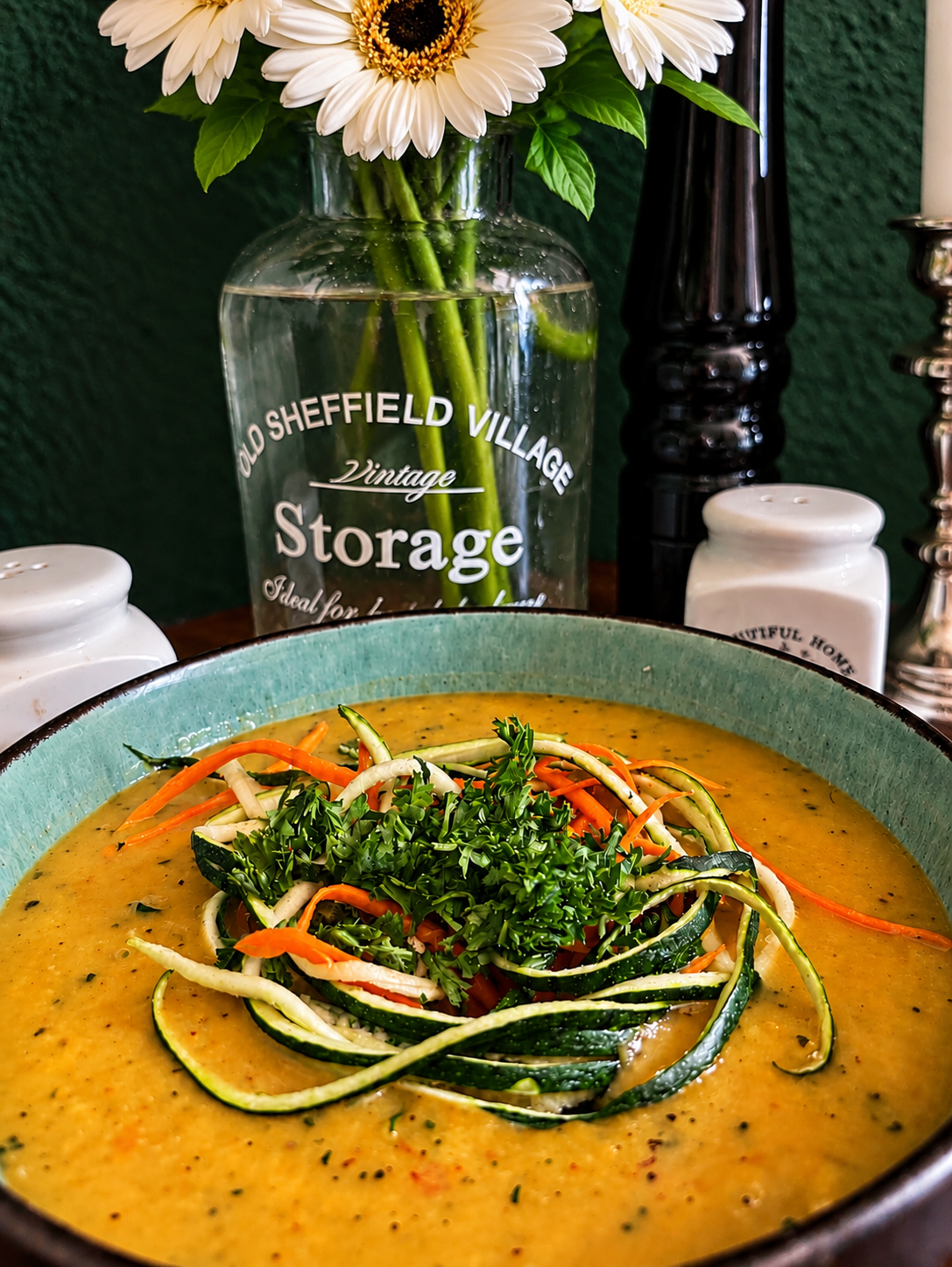
Serbian Zucchini & Carrot Soup – Vegan Čorba sa Tikvicama i Šargarepom
You may also like
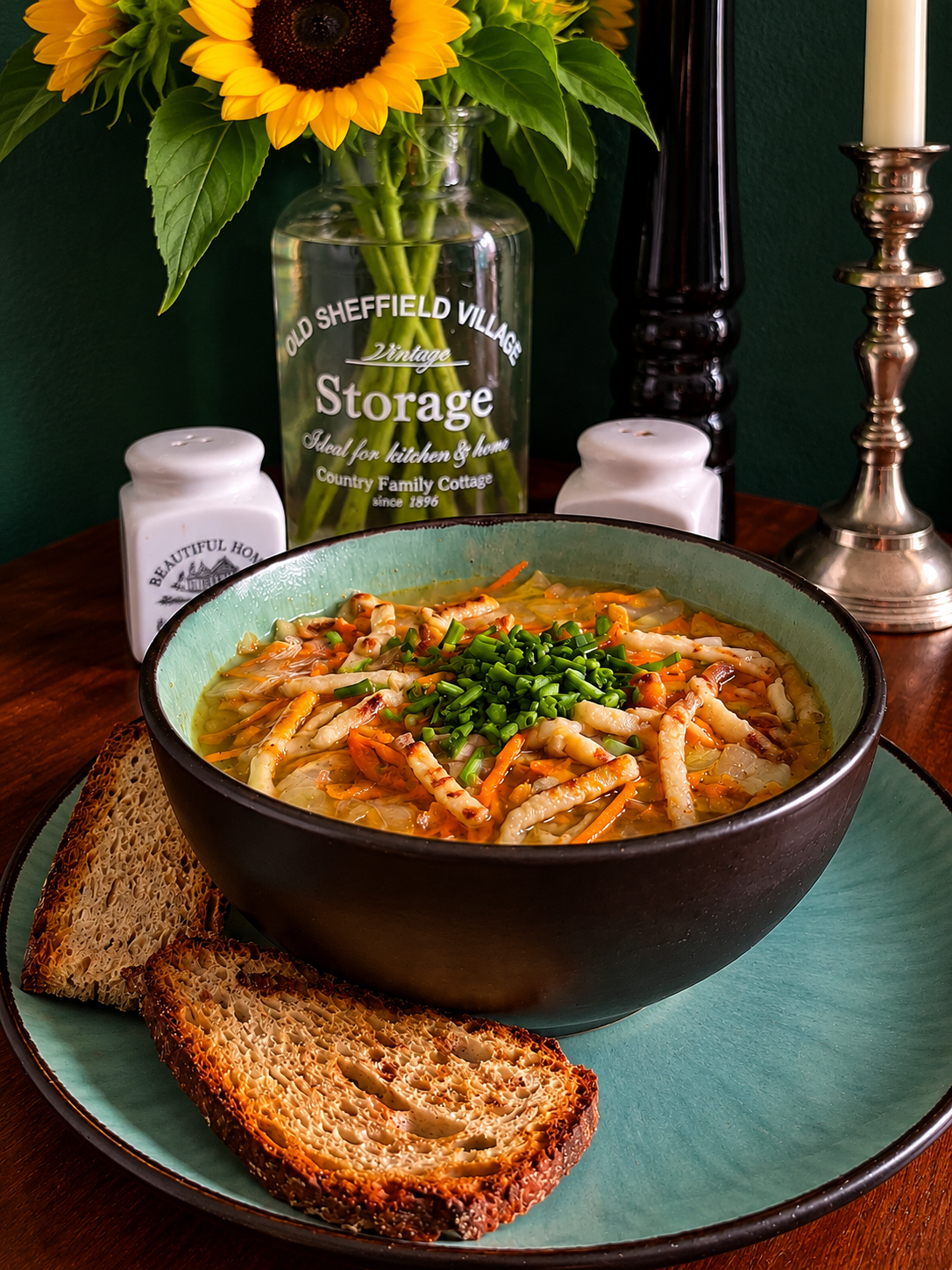
Austrian Vegan Frittatensuppe – Pancake Strip Soup with Vegetables & Lovage
You may also like