
Luxembourg – A Small Country with a Rich Culinary Heritage
Luxembourg is a small landlocked country in Western Europe, bordered by Belgium, Germany and France. Its cuisine reflects influences from all three neighboring countries while maintaining its own distinctive traditions. Hearty soups, potatoes, legumes, regional vegetables and rustic meat dishes have long played important roles in Luxembourgish home cooking. The country's landscape ranges from the wooded hills of the Ardennes in the north to the fertile agricultural regions and vineyards of the Moselle Valley in the southeast.
What Is Bouneschlupp?
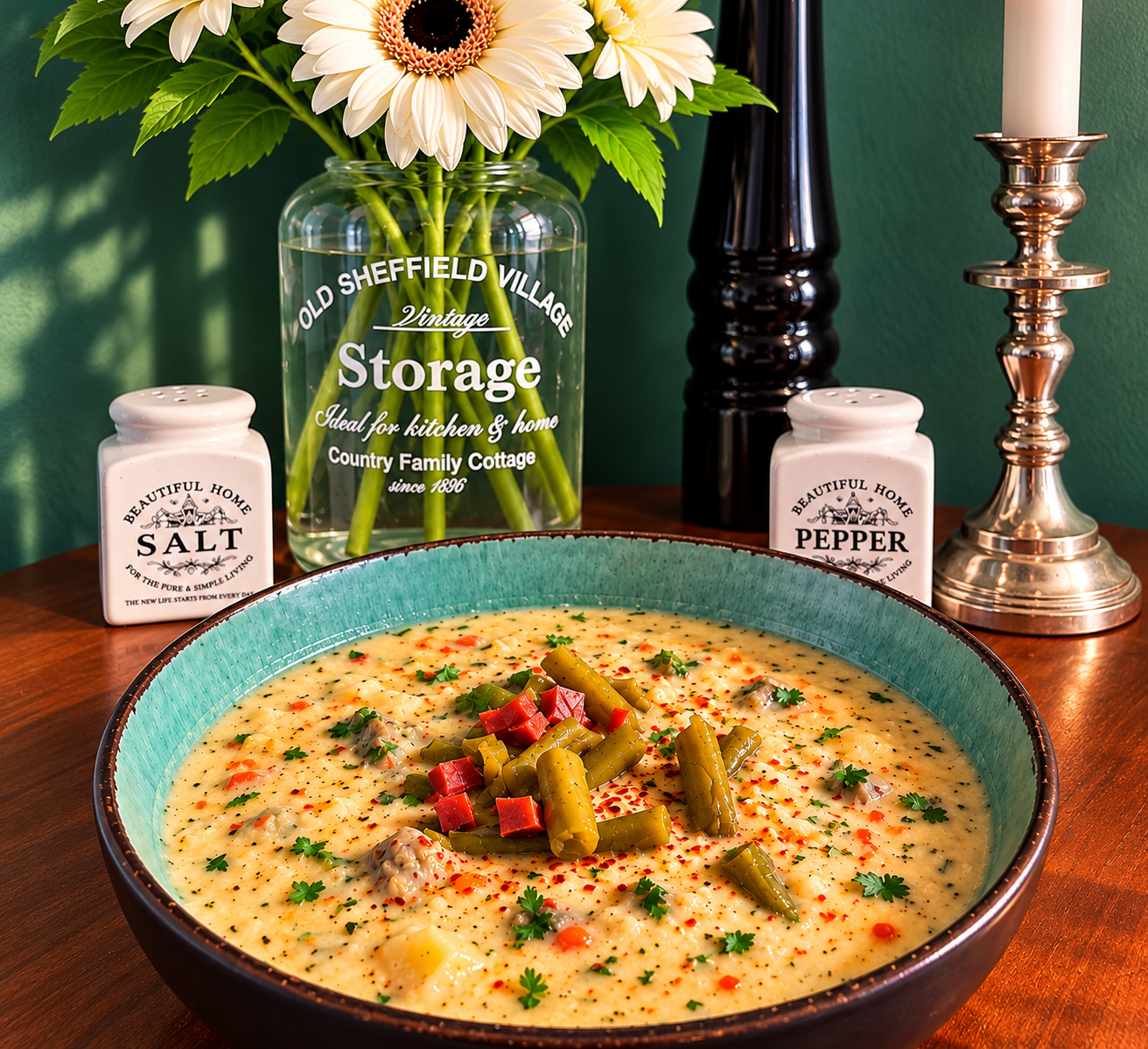
Bouneschlupp is one of Luxembourg's best-known traditional soups, prepared primarily with green beans and potatoes. Depending on the household and regional tradition, it may also contain onions, bacon, sausage, cream and aromatic herbs such as savory. The soup is particularly associated with simple, satisfying home cooking. This Via Veggie Vegan version keeps the green beans and potatoes at the heart of the dish while replacing traditional meat products with vegan beef-style pieces and crispy plant-based bacon. Vegan cooking cream creates a rich, comforting broth without dairy.
▣ Ingredients (2 servings)
- 300 g potatoes
- 250 g green beans
- 100-120 g vegan beef-style pieces
- 60-80 g vegan bacon
- 1 onion
- 1 clove garlic
- 750 ml vegetable broth
- 1 tbsp vegan butter
- 1 tbsp flour
- 1 tsp dried majoran
- 1 bay leaf
- 100 ml vegan cooking cream
- 1 tsp dijon mustard
- to taste fresh parsley
- to taste salt & freshly ground black pepper
♨ Preparation
- Prepare the Vegetables
Peel the potatoes and cut them into small, evenly sized cubes.
Trim the green beans and remove any tough ends.
Reserve a few whole green beans for the garnish.
Cut the remaining beans into bite-sized pieces.
Peel and finely dice the onion.
Peel and finely chop the garlic. - – Prepare the Soup Base
Heat the vegan butter or neutral vegetable oil in a large saucepan over medium heat.
Add the diced onion and sauté for approximately 2–3 minutes, until softened and translucent.
Add the garlic and cook for another 30 seconds, stirring continuously.
Sprinkle the flour over the vegetables.
Stir for approximately 30 seconds to create a light roux.
Gradually pour in the vegetable stock while stirring to prevent lumps from forming. - Cook the Vegetables
Add the diced potatoes, cut green beans, reserved whole green beans, dried savory, marjoram and bay leaf.
Bring the soup to a gentle boil.
Reduce the heat and simmer for approximately 15–20 minutes, until the potatoes and green beans are tender.
Remove the reserved whole green beans as soon as they are cooked but still retain a pleasant bite.
Set them aside for serving. - Fry the Vegan Bacon
While the soup simmers, heat a separate frying pan.
Add the vegan bacon and fry according to the package instructions until nicely browned and crisp.
Remove the bacon from the pan and set aside.
Keep it separate from the soup so it retains its crunch. - Brown the Vegan Beef
Add the vegan beef-style pieces to the same frying pan.
Cook briefly until browned around the edges and heated through.
Transfer the browned pieces to the soup.
Stir gently to combine.
Step 6 – Finish the Creamy Broth
Add the vegan cooking cream and Dijon mustard.
Stir thoroughly.
Allow the soup to simmer gently for another 2–3 minutes.
Season with freshly ground black pepper.
Taste before adding salt, as the vegetable stock, vegan bacon and beef-style pieces may already contain a considerable amount.
Remove the bay leaf. - Serve
Divide the hot Bouneschlupp between two generous bowls.
Arrange the reserved whole green beans on top.
Add the crispy vegan bacon immediately before serving.
Finish with freshly chopped parsley and a little freshly ground black pepper if desired.
Serve while hot and creamy, with the bacon still pleasantly crisp.
Serving Suggestion
Serve the Bouneschlupp in deep rustic bowls, making sure each portion contains plenty of tender potatoes, green beans and vegan beef-style pieces.
Arrange a few whole green beans in the center and scatter crispy vegan bacon over the top.
Finish with fresh parsley.
For an extra hearty meal, serve with a slice of crusty bread.
Food Story
Green Beans, Potatoes and a Little Luxembourgish Comfort
Some dishes prove that the simplest ingredients can create the most satisfying meals. Luxembourg’s Bouneschlupp is one of them. Green beans and potatoes may not sound particularly extravagant, but combine them with a flavorful broth, aromatic herbs and a little creaminess, and suddenly you have a proper bowl of comfort food. I love discovering recipes that have remained popular precisely because they are so uncomplicated. For my vegan interpretation, the beans and potatoes stay firmly in charge, while savory, marjoram and a touch of Dijon mustard bring the flavors together. Vegan beef-style pieces make the soup even heartier, turning this traditional favorite into a satisfying plant-based main course.
International Bacon Day – But Make It Vegan
And then there is the bacon. This particular bowl made its appearance for International Bacon Day, which seemed like the perfect opportunity to celebrate one of those ingredients that people often assume cannot possibly work without meat. Challenge accepted! Instead of allowing the vegan bacon to disappear into the hot soup and surrender its crunch, I fried it separately until properly crispy and added it only at the very end. After all, if you are celebrating Bacon Day, hiding the bacon somewhere underneath the potatoes would rather defeat the purpose. The result was exactly what I wanted: a creamy, comforting soup with little bursts of smoky, savory crunch.
A Bowl That Deserves to Look as Good as It Tastes
Of course, I could not resist giving the Bouneschlupp a little Via Veggie Vegan finishing touch. I reserved a few green beans and arranged them whole on top, added the crispy vegan bacon and finished everything with fresh herbs. Partly because those ingredients add extra texture, and partly because even the most rustic comfort food deserves a little attention before its photographic debut. Underneath the garnish, however, this remains exactly what Bouneschlupp should be: generous, warming and wonderfully uncomplicated. Green beans underneath and on top, crispy bacon where it belongs, and Luxembourg served with a plant-based twist.
♨ Nutrition per serving
Nutritional values are approximate and may vary depending on the ingredients and products used.
Good to Know
What Does Bouneschlupp Mean?
Bouneschlupp is the Luxembourgish name for a traditional green bean soup. The word Bounen means beans, while the name of the dish reflects Luxembourg's distinctive culinary vocabulary. Luxembourgish also uses Zopp as a general word for soup. Bouneschlupp is widely recognized as one of the country's characteristic traditional dishes.
A Traditional Soup with Many Family Variations
Bouneschlupp does not follow one universally fixed recipe. Some versions contain bacon, sausage or other meat products, while others emphasize vegetables, herbs and potatoes. The consistency can also vary from relatively light and brothy to thick and creamy. These differences reflect the way traditional recipes develop through generations of home cooking.
Luxembourg – A Country Between Three Culinary Traditions
Luxembourg shares borders with Belgium, France and Germany, and its cuisine reflects centuries of cultural exchange. French culinary techniques, German-style hearty dishes and Belgian influences can all be found in the country's food culture. Nevertheless, Luxembourg has preserved its own regional specialties, traditional recipes and culinary identity.
Why Green Beans and Potatoes Work So Well Together
Green beans contribute a fresh, slightly earthy flavor, while potatoes add substance and a naturally comforting texture. As potatoes cook, some starch enters the broth and contributes to its body. Together, these vegetables create a balanced foundation that works particularly well with creamy sauces and aromatic herbs.
Summer Beans and Seasonal Cooking
Fresh green beans are traditionally associated with the warmer growing season in temperate European climates. They can also be preserved through freezing or other methods for use throughout the year. In Luxembourgish home cooking, seasonal vegetables have historically played an important role in soups and everyday meals.
Savory – The Classic Herb for Green Beans
Savory is particularly associated with bean dishes in several European culinary traditions. Its slightly peppery, herbal aroma complements the mild flavor of green beans. Summer savory and winter savory have somewhat different flavor profiles, but both can contribute aromatic depth to vegetable dishes.
Marjoram – A Gentle Aromatic Companion
Marjoram belongs to the mint family and is related to oregano. Its flavor is generally softer, sweeter and more delicate than that of oregano. In this recipe, dried marjoram complements the savory and bay leaf without overpowering the vegetables.
The Moselle Valley – Luxembourg's Wine-Growing Landscape
The Moselle River forms part of Luxembourg's southeastern border with Germany. The surrounding valley is known for its vineyards, picturesque villages and relatively mild microclimate. The region contributes to Luxembourg's agricultural diversity and provides a striking contrast to the forested northern landscapes.
The Ardennes – Forests, Hills and Wildlife
Northern Luxembourg forms part of the wider Ardennes region, characterized by wooded hills, river valleys and rural landscapes. These habitats support a variety of wildlife and are important for nature conservation, recreation and sustainable tourism.
The European Wildcat – A Secretive Forest Resident
The European wildcat inhabits suitable woodland habitats in parts of Luxembourg and neighboring regions. Unlike domestic cats, wildcats are generally elusive and avoid human contact. Habitat connectivity and the preservation of healthy forest ecosystems are important for their long-term conservation.
Red Deer and the Forest Ecosystem
Red deer are among the larger mammals found in Luxembourg's wooded landscapes. As herbivores, they influence vegetation through browsing and grazing. Their populations are managed in relation to forest regeneration, agricultural impacts and ecological conditions.
The Black Stork – A Rare Woodland Bird
Unlike the more familiar white stork, the black stork is a secretive species associated with quiet forests and nearby wetlands. It feeds primarily on aquatic animals and depends on suitable nesting habitats. Conservation efforts across Europe aim to protect the forests and waterways important to this species.
Luxembourg's Nature Parks
Luxembourg has several nature parks dedicated to conserving landscapes, supporting biodiversity and promoting sustainable regional development. These areas include forests, farmland, wetlands and river valleys. They also help preserve traditional landscapes shaped by generations of agricultural activity.
Green Beans – Fiber, Folate and Vitamin K
Green beans provide dietary fiber, folate and vitamin K, along with smaller amounts of several other vitamins and minerals. Folate contributes to normal blood formation and cell division, while vitamin K plays an important role in normal blood clotting and bone maintenance.
Why Green Beans Must Be Properly Cooked
Raw or insufficiently cooked green beans can contain lectins, including phytohaemagglutinin, which may cause gastrointestinal symptoms. Proper cooking reduces these compounds to safe levels. Green beans should therefore be thoroughly cooked rather than eaten raw.
Potatoes – An Important Source of Energy
Potatoes provide carbohydrates, potassium and vitamin C. Carbohydrates supply energy, while potassium contributes to normal muscle function and the maintenance of normal blood pressure. The exact nutrient content depends on the variety, storage conditions and cooking method.
Plant-Based Beef Alternatives and Protein
Vegan beef-style pieces are commonly made from soy, wheat, pea or other plant proteins. Depending on the product, they can contribute substantial amounts of protein to a meal. Their nutritional composition varies considerably, so the product label is the most reliable source for exact protein, fat and salt values.
Protein and Muscle Maintenance
Protein contributes to the growth and maintenance of muscle mass and supports numerous physiological functions. Combining plant-based protein alternatives with vegetables and other foods can help create a satisfying meal that contributes to daily protein requirements.
Vegan Bacon – Flavor and Nutritional Considerations
Plant-based bacon alternatives can provide smoky, savory flavors without using animal meat. However, their nutritional composition depends on the ingredients and manufacturing process. Some products contain considerable amounts of salt or saturated fat, so it is worth comparing labels rather than assuming all vegan bacon products have the same nutritional profile.
Vegan Cooking Cream – Choosing the Right Base
Vegan cooking creams can be made from oats, soy, rice, coconut or other plant ingredients. Soy-based products may provide more protein, while coconut-based alternatives can contain relatively high amounts of saturated fat. Oat-based cooking creams often have a mild flavor that works well in savory soups.
Saturated and Unsaturated Fatty Acids
Saturated and unsaturated fats differ in their chemical structure and physiological effects. Replacing saturated fatty acids with unsaturated fatty acids can help lower LDL cholesterol. Choosing vegetable oils rich in unsaturated fats and checking the composition of plant-based cream alternatives can contribute to a balanced dietary pattern.
LDL and HDL Cholesterol – What Is the Difference?
LDL and HDL are lipoproteins that transport cholesterol through the bloodstream. Elevated LDL cholesterol contributes to atherosclerosis and increases cardiovascular risk. HDL participates in transporting cholesterol back toward the liver, but higher HDL levels alone do not guarantee protection against cardiovascular disease. Overall cardiovascular risk depends on multiple factors.
What Does Dijon Mustard Add?
Dijon mustard contributes acidity, mild pungency and aromatic complexity. A small quantity can enhance the flavor of creamy soups without making them taste strongly of mustard. In this recipe, it helps balance the richness of the vegan cooking cream and savory plant-based ingredients.
Why a Roux Thickens Soup
A roux is made by combining flour with fat and heating the mixture briefly. When liquid is added, the starch granules absorb water and swell as the mixture heats, thickening the soup. Stirring while gradually adding the vegetable stock helps prevent lumps.
Why the Soup Becomes Thicker as It Cools
Starch from the flour and potatoes contributes to the soup's texture. As the soup cools, the starch structure changes and the consistency can become thicker. When reheating, a small amount of additional vegetable stock can restore the desired creaminess.
Fresh Parsley – Flavor and Micronutrients
Fresh parsley adds brightness and a gentle herbal flavor. It contains vitamin K and vitamin C, although the nutritional contribution of a small garnish is limited. Adding parsley just before serving helps preserve its fresh aroma and appearance.
Salt Awareness in Plant-Based Convenience Products
Vegan bacon, plant-based beef alternatives, vegetable stock and mustard may all contain added salt. Using several of these ingredients together can increase the sodium content of a meal. Tasting the finished soup before adding salt is therefore particularly important.
Zero Waste – Save Your Vegetable Trimmings
Clean, suitable vegetable trimmings can be collected in the freezer and used to prepare homemade vegetable stock. Leftover cooked potatoes and green beans can also be added to a vegetable hash, warm salad or simple pan-fried breakfast. Store leftover vegan bacon separately and reheat it briefly before serving to restore some of its crispiness.
How to Store Leftover Bouneschlupp
Cool leftover soup promptly and refrigerate it in an airtight container. Consume within approximately 2–3 days, reheating thoroughly before serving. Store crispy vegan bacon separately to prevent it from becoming soft in the broth.
You may also like
♡
You may also like
Serbian Zucchini & Carrot Soup – Vegan Čorba sa Tikvicama i Šargarepom
You may also like
Vegan Soup Joumou – Haitian Freedom Soup
You may also like