Belgium – A Country of Regional Culinary Traditions
Belgium is famous for much more than waffles, chocolate and fries. Its regional cuisine combines French and Flemish influences with hearty home cooking, seasonal vegetables and flavorful sauces. Brussels sprouts have a particularly strong historical association with the region around Brussels, while warm salads are a familiar part of Belgian culinary tradition.
What Is Belgian Brussels Sprout Salad?
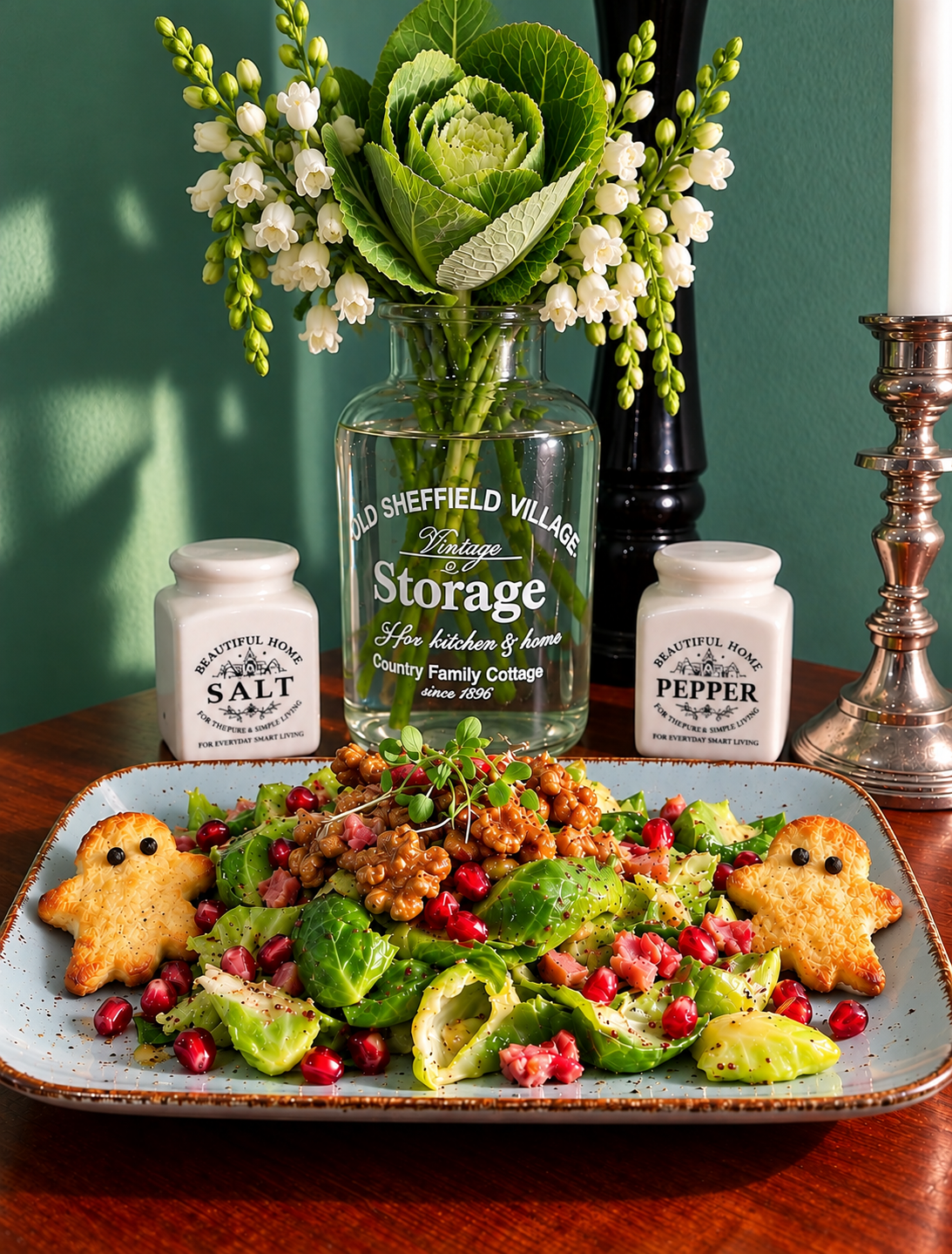
This warm Brussels sprout salad is inspired by Salade Liégeoise, a traditional dish from the Liège region commonly prepared with green beans, potatoes, bacon and a tangy dressing. My Via Veggie Vegan version replaces those vegetables with tender Brussels sprout leaves, uses vegan ham instead of bacon and adds caramelized walnuts, pomegranate seeds and two edible pizza dough ghosts. It is a creative Belgian-inspired variation rather than a traditional Salade Liégeoise.
▣ Ingredients (2 servings)
- 300 g fresh Brussels sprouts
- 75 g vegan ham cubes
- 1 onion
- 2 tbsp olive oil
- 1 tsp Dijon mustard
- 1 tsp maple syrup, for caramelizing the walnuts
- 2 tbsp apple vinegar
- 1 tsp maple syrup, for the dressing
- 40 g walnut halves
- 1/2 pomegranate, seeds removed
- to taste salt & freshly ground black pepper
- pizza dough, enough for 2 small ghost-shaped decorations
♨ Preparation
- Prepare the Brussels Sprout Leaves
Wash the Brussels sprouts thoroughly and trim the tough stem ends. Carefully separate the individual leaves by hand, working from the outside toward the center. Trim a little more of the stem as necessary to release the inner leaves without tearing them.
This takes patience, especially with tightly packed sprouts, but the delicate leaves create a particularly attractive salad. - Blanch the Brussels Sprout Leaves
Bring a large saucepan of lightly salted water to a boil. Add the separated Brussels sprout leaves and blanch briefly for approximately 1–2 minutes, until just tender but still vibrant green.
Drain immediately and refresh briefly in cold water to stop the cooking process. Drain thoroughly and gently pat dry. Set aside. - Prepare the Pizza Dough Ghosts
Preheat the oven according to the pizza dough manufacturer's instructions, usually around 200°C / 390°F conventional heat.
Cut two small ghost shapes from the pizza dough and place them on a baking tray lined with parchment paper. Bake until puffed, lightly golden and cooked through. Remove from the oven and allow to cool slightly. - Sauté the Onion and Vegan Ham
Heat the olive oil in a large frying pan over medium heat. Add the finely diced onion and sauté gently until soft and translucent.
Add the vegan ham cubes and continue frying briefly until lightly browned and aromatic. Stir occasionally to prevent sticking. - Prepare the Warm Dijon-Maple Dressing
Reduce the heat to low. Stir the Dijon mustard and 1 teaspoon of maple syrup into the onion and vegan ham mixture.
Add the apple cider vinegar and stir until the ingredients are evenly combined. Season with salt and freshly ground black pepper. The dressing should taste pleasantly tangy, with a gentle sweetness from the maple syrup. - Warm the Brussels Sprout Leaves
Add the drained Brussels sprout leaves to the frying pan and toss gently through the warm dressing until evenly coated.
Heat only briefly to preserve their delicate texture and fresh green color. Remove from the heat. - Caramelize the Walnuts
Place the walnut halves in a separate small frying pan over medium-low heat. Add 1 tablespoon of maple syrup and stir gently until the walnuts are evenly coated and the syrup begins to caramelize.
Transfer the walnuts to a piece of baking parchment and allow them to cool slightly. The coating will become stickier and firmer as it cools. Take care, as hot sugar syrup can cause burns. - Prepare the Pomegranate
Cut the pomegranate in half and remove the seeds from one half. Work over a bowl to catch the juice and wear gloves if desired, as pomegranate juice can stain skin, clothing and cutting boards.
Remove any pieces of the bitter white membrane and set the seeds aside. - Arrange and Serve
Divide the warm Brussels sprout salad between two plates, making sure the vegan ham cubes and onions are evenly distributed.
Scatter the caramelized walnut halves and fresh pomegranate seeds over the salad. Finish each plate with one little pizza dough ghost.
Serve immediately while the Brussels sprout leaves are still warm and the walnuts retain their crunch.
Food Story
Brussels Sprouts – A Childhood Love Story Gone Wrong
These days, I absolutely love Brussels sprouts. But growing up? That was a completely different story! My father adored them, and as soon as Brussels sprout season arrived, it felt as though those little green cabbages appeared on our dinner table every single day. Dad was delighted. Me? Not so much. Let’s just say I wasn’t exactly the president of the Brussels Sprout Fan Club. Fortunately, tastes can change, and somewhere along the way, my former childhood enemies became one of my favorite vegetables. Who would have thought?
Every. Single. Leaf. Seriously!
For this Belgian-inspired salad, I decided that simply halving or slicing the Brussels sprouts would be far too easy. Instead, I carefully separated them leaf by leaf. All 300 grams of them! If you’ve ever tried this, you’ll know that it’s not exactly a five-minute job. So I put on a podcast and settled in for what felt like an extended Brussels sprout meditation session. But the result was worth every minute: delicate green leaves, crispy vegan ham, a warm Dijon-maple dressing, caramelized walnuts and juicy pomegranate seeds. A wonderful combination of sweet, savory, tangy and crunchy!
Dad, Meet My Little Brussels Sprout Ghosts!
And because it’s Spooky Season, I couldn’t resist inviting two little pizza dough ghosts to join the salad. Suddenly, those once-dreaded childhood vegetables had turned into something rather boo-tiful! I suspect my father would have been delighted to see me voluntarily preparing Brussels sprouts after all these years. Although I’m not entirely sure what he would have made of the ghosts. Perhaps he’d have simply shaken his head and reached for another helping. Either way, this dish proves that childhood food enemies can become lifelong favorites – sometimes all it takes is a little patience, a good podcast and two edible ghosts!
♨ Nutrition per serving
Nutritional values are approximate and may vary depending on the ingredients and products used.
Good to Know
Why Are Brussels Sprouts Associated with Belgium?
Brussels sprouts belong to the cabbage family and have a long historical association with cultivation around Brussels, the capital of Belgium. Their English name reflects this connection. Although their exact botanical history is complex, they became an important cool-season vegetable in European agriculture. Today, Brussels sprouts are grown and enjoyed throughout Europe and beyond, but their connection with Belgium remains particularly well known.
Salade Liégeoise – The Inspiration Behind This Recipe
Salade Liégeoise is a traditional warm salad from the Belgian city and region of Liège. Classic versions usually contain green beans, potatoes, bacon and a tangy dressing. My interpretation borrows the idea of warm vegetables combined with savory ingredients and acidity but replaces the traditional components with individually separated Brussels sprout leaves, crispy vegan ham and a Dijon-maple dressing. Caramelized walnuts, pomegranate seeds and edible pizza dough ghosts are creative Via Veggie Vegan additions rather than traditional Belgian ingredients.
Do Our Taste Buds Really Change Every Seven Years?
There is a popular claim that our taste buds completely renew themselves every seven years. This is a myth. Individual taste receptor cells are continuously replaced, often within approximately one to two weeks, although their lifespan varies. What can change over the years is our perception of flavor and our food preferences. Genetics, repeated exposure, age, experience and changes in smell perception can all influence what we enjoy eating. So yes, it is entirely possible to dislike Brussels sprouts as a child and love them as an adult – just not because of a magical seven-year reset!
Why Do Brussels Sprouts Taste Bitter?
Brussels sprouts contain naturally occurring plant compounds, including glucosinolates, which contribute to their characteristic flavor. How strongly we perceive bitterness also depends partly on genetic differences in taste receptors. Cooking methods can make a noticeable difference. Brief blanching softens the leaves, while roasting and caramelization can develop sweeter, nuttier flavor notes. In this recipe, the combination of maple syrup, Dijon mustard, walnuts and pomegranate helps balance the natural bitterness of the sprouts.
Brussels Sprouts – Small Vegetables, Plenty of Nutrients
Brussels sprouts belong to the Brassica family, alongside broccoli, kale, cabbage and cauliflower. They provide dietary fiber, vitamin C, vitamin K and folate. Vitamin C contributes to normal immune function and helps protect cells from oxidative stress. Vitamin K supports normal blood clotting, while fiber contributes to normal digestive function. Brief cooking can reduce some heat-sensitive vitamins, but Brussels sprouts remain a nutritious addition to a balanced plant-based diet.
Why Separate Brussels Sprouts Leaf by Leaf?
Separating the sprouts into individual leaves changes both their appearance and texture. The thin leaves cook much faster than whole Brussels sprouts and become wonderfully delicate after brief blanching. Their folds also catch the warm dressing, allowing the mustard, maple syrup and vinegar to coat the vegetables evenly. The only disadvantage is the preparation time. Three hundred grams of Brussels sprouts can turn into a surprisingly long kitchen project – which makes a good podcast an almost essential ingredient!
Why Blanch the Leaves for Only One or Two Minutes?
Individual Brussels sprout leaves have a large exposed surface area and soften quickly in boiling water. Brief blanching helps preserve their vibrant green color and prevents them from becoming excessively soft. Refreshing them in cold water stops the cooking process, while thorough draining prevents excess moisture from diluting the warm Dijon-maple dressing. The leaves are then briefly reheated in the frying pan immediately before serving.
Dijon Mustard – Small Ingredient, Big Impact
Dijon mustard takes its name from the French city of Dijon and is known for its sharp, savory flavor. It is particularly useful in vinaigrettes because mustard contains compounds that help oil and water-based ingredients form a more cohesive mixture. In this recipe, just one teaspoon contributes depth and helps bring together the olive oil, apple cider vinegar and maple syrup.
Why Combine Apple Cider Vinegar and Maple Syrup?
The dressing relies on a balance between acidity and sweetness. Apple cider vinegar provides a pleasantly tangy flavor, while maple syrup softens its sharpness and complements the natural sweetness of the onions. Together with Dijon mustard, they create a dressing that balances the earthy Brussels sprouts and savory vegan ham. The vinegar is included primarily for its culinary qualities rather than any supposed medicinal effects.
Walnuts – Crunch, Fiber and Omega-3 Fatty Acids
Walnuts contain predominantly unsaturated fats, including alpha-linolenic acid (ALA), a plant-based omega-3 fatty acid. They also provide dietary fiber and minerals such as magnesium and copper. Their slightly earthy flavor works beautifully with Brussels sprouts, while a thin coating of caramelized maple syrup creates a delicious sweet crunch. Because maple syrup contributes added sugar, a modest amount is sufficient to achieve the desired contrast.
HDL, LDL and Cholesterol – What's the Difference?
Cholesterol is needed for cell membranes and the production of certain hormones. LDL particles transport cholesterol through the bloodstream, but elevated LDL cholesterol contributes to plaque formation in arteries and increases cardiovascular risk. HDL particles participate in cholesterol transport toward the liver, although higher HDL cholesterol levels alone do not guarantee protection against cardiovascular disease. Replacing some saturated fats with unsaturated fats is one dietary strategy that can help lower LDL cholesterol.
Why Does the Type of Fat Matter?
Saturated and unsaturated fatty acids differ in their chemical structure and can affect blood cholesterol differently. Replacing saturated fats with unsaturated fats generally helps reduce LDL cholesterol. Walnuts and olive oil provide mainly unsaturated fatty acids, making them useful ingredients in a balanced plant-based diet. Vegan ham products, however, can vary considerably in their fat composition, so checking the nutritional information is worthwhile.
Pomegranate – Little Jewels of Freshness
The juicy red structures inside a pomegranate are called arils. They surround the seeds and provide a refreshing combination of sweetness and acidity. Pomegranate arils contain dietary fiber and naturally occurring polyphenols. Their bright flavor is particularly appealing in salads with earthy or slightly bitter vegetables, while their vibrant red color creates a beautiful contrast with the green Brussels sprout leaves.
Why Does Pomegranate Juice Stain So Easily?
Pomegranates contain natural pigments called anthocyanins, which contribute to their vibrant red color. These water-soluble pigments can leave stubborn stains on clothing, hands and porous surfaces. Remove the arils over a bowl to catch the juice and use a washable cutting board. Wearing gloves can also make preparation a little less messy.
Vegan Ham – A Savory Plant-Based Alternative
Vegan ham cubes provide a savory element inspired by the bacon traditionally used in warm Belgian salads. Depending on the product, they may be made from soy, wheat, pea protein or other plant-based ingredients. Their protein, salt and saturated fat contents can differ considerably between brands. Frying the cubes briefly with the onion helps develop their flavor and creates a pleasant contrast with the tender Brussels sprout leaves.
Why Is This Salad Served Warm?
Warm salads combine the comfort of cooked vegetables with the freshness of traditional salads. Gentle heat releases the aromas of the Dijon dressing, sautéed onion and vegan ham. The contrast becomes particularly appealing when the warm Brussels sprouts meet cool, juicy pomegranate seeds and crunchy caramelized walnuts. Serve immediately to preserve the different textures.
Why Add the Walnuts and Pomegranate at the End?
Caramelized walnuts are at their best when their coating has cooled slightly and developed a firmer texture. Adding them too early would expose them to moisture from the warm vegetables and dressing, reducing their crunch. Pomegranate arils are best scattered over the finished salad because prolonged heating would soften them and diminish their refreshing contrast.
Little Pizza Dough Ghosts – A Spooky Season Surprise
The two edible ghosts are a playful Halloween decoration rather than part of traditional Belgian cuisine. Pizza dough can be cut into simple ghost shapes and baked until lightly golden and cooked through. Their slightly crisp edges provide an additional texture, while their whimsical appearance transforms an autumn salad into a seasonal creation. For a non-Halloween version, simply omit the ghosts.
Can You Prepare This Salad in Advance?
The Brussels sprout leaves can be separated and blanched ahead of time, then cooled promptly, drained thoroughly and refrigerated in a covered container. The walnuts can also be caramelized in advance and stored separately once completely cool. Prepare the warm dressing shortly before serving, gently reheat the leaves and add the fresh pomegranate and walnuts at the end.
How Should Leftovers Be Stored?
Cool leftover salad promptly and transfer it to a clean, covered container in the refrigerator. Use within approximately two to three days. Store the caramelized walnuts, pomegranate seeds and pizza dough ghosts separately whenever possible to preserve their texture. Reheat the cooked salad thoroughly before serving, then add the fresh toppings.
From Childhood Food Enemy to Favorite Vegetable
Brussels sprouts are a wonderful reminder that food preferences can change throughout life. A vegetable that once seemed bitter or unappealing can become a favorite when prepared differently. Whether roasted, sautéed, blanched or transformed into delicate salad leaves, Brussels sprouts offer plenty of culinary possibilities. And sometimes all it takes to make them truly irresistible is a little creativity, caramelized walnuts and two very friendly pizza dough ghosts!