Aotearoa New Zealand – A Land of Remarkable Landscapes and Rich Food Traditions
Aotearoa New Zealand is an island nation in the southwestern Pacific Ocean, renowned for its dramatic mountains, volcanic landscapes, ancient forests, rugged coastlines and extraordinary biodiversity. Its food culture reflects Māori traditions, European influences and the contributions of many other communities. Māori food knowledge includes the cultivation of kūmara, the gathering of seasonal ingredients and cooking practices closely connected to the land and natural environment. Contemporary New Zealand cuisine embraces both traditional ingredients and international influences, creating opportunities for innovative plant-based interpretations.
What Makes This New Zealand-Inspired Vegan Steak Special?
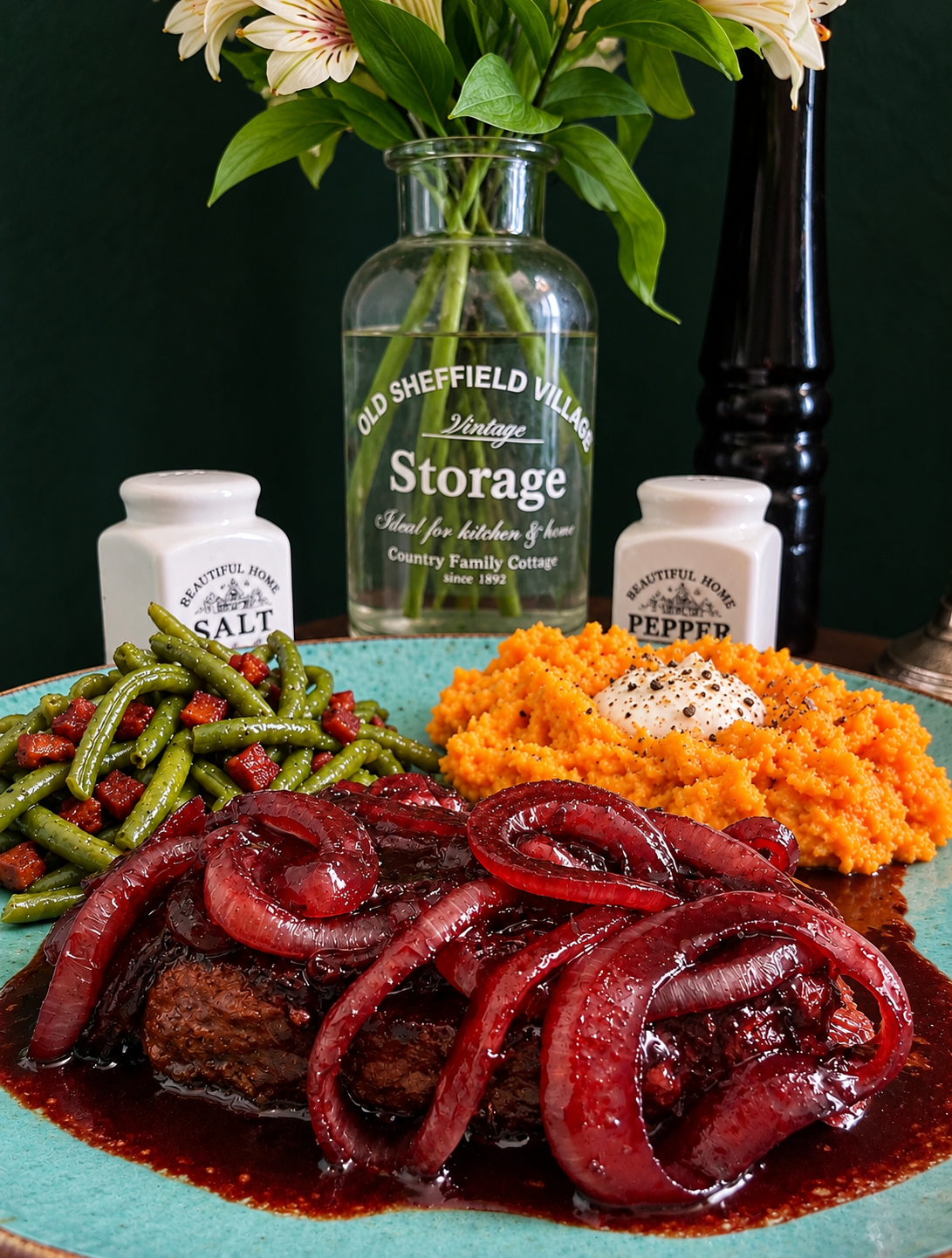
This dish is a contemporary Via Veggie Vegan creation rather than a traditional Māori recipe. Its connection to Aotearoa lies primarily in kūmara, the sweet potato that has played an important role in Māori food culture for centuries. The creamy orange mash is paired with plant-based steaks, caramelised onions in a rich beetroot jus and green beans with smoky vegan bacon. The combination creates a hearty, colorful plate that celebrates a historically significant ingredient while giving the familiar steak dinner a completely plant-based transformation.
▣ Ingredients (2 servings)
- 2 pieces plant-based steaks
- 2 onions
- 1 tbsp vegan butter
- 1 tbsp brown sugar
- 100 ml beetroot juice
- 1 pinch salt
- 1 pinch freshly ground black pepper
- 2 sweet potatoes
- 1 tbsp vegan butter
- 50 ml oat cooking cream
- 2 tbsp vegan crème fraîche
- 1 pinch salt
- 1 pinch freshly ground black pepper
- 200 g fresh green beans
- 50 g vegan bacon cubes
- to taste salt & freshly ground black pepper
♨ Preparation
- Prepare the Kūmara
Peel the sweet potatoes and cut them into evenly sized pieces.
Place them in a saucepan of lightly salted water and bring to a boil.
Cook for approximately 15–20 minutes, until completely tender.
Drain thoroughly and return the sweet potatoes to the warm saucepan. - Make the Creamy Kūmara Mash
Add 1 tablespoon of vegan butter and 50 ml of oat cooking cream.
Mash until smooth and creamy.
Season with salt and freshly ground black pepper.
Keep warm over very low heat or cover until ready to serve.
Reserve the vegan crème fraîche for plating. - Cook the Green Beans
Trim the green beans and place them in lightly salted boiling water.
Cook for approximately 8–10 minutes, until tender but still retaining a little bite.
Drain thoroughly and set aside. - Caramelise the Onions
Peel the onions and slice them into rings.
Melt 1 tablespoon of vegan butter in a frying pan over medium heat.
Add the onion rings and cook gently for approximately 8–10 minutes, stirring occasionally, until softened and beginning to turn golden.
Sprinkle over the brown sugar and continue cooking for another 2–3 minutes, allowing the onions to caramelise. - Prepare the Beetroot Onion Jus
Pour 100 ml of beetroot juice into the pan with the caramelised onions.
Stir gently to combine the beetroot juice with the buttery caramelised mixture.
Allow the liquid to simmer uncovered for approximately 5–7 minutes, until reduced to a glossy, lightly syrupy consistency.
The onions should be coated in the rich burgundy jus.
Season with salt and freshly ground black pepper.
Keep warm. - Cook the Plant-Based Steaks
Prepare the two plant-based steaks according to the package instructions.
Cook until nicely browned on both sides and heated through.
Avoid overcooking, as different plant-based steak products require different cooking times. - Finish the Green Beans
Melt 1 teaspoon of vegan butter in a separate frying pan.
Add the cooked green beans and vegan bacon cubes.
Fry over medium-high heat for approximately 3–4 minutes, stirring occasionally, until the bacon cubes become lightly crispy and the beans develop a little colour.
Taste before adding extra salt, as the vegan bacon may already be well seasoned. - Plate the Kūmara Mash
Divide the warm kūmara mash between two plates.
Create a small indentation in the centre of each portion.
Add 1 tablespoon of vegan crème fraîche to each serving.
Finish with freshly ground black pepper. - Add the Steaks and Beetroot Jus
Place one cooked plant-based steak on each plate.
Spoon the caramelised onion rings generously over the steaks.
Drizzle with the remaining glossy beetroot jus. - Finish and Serve
Arrange the green beans and crispy vegan bacon cubes alongside the steaks and kūmara mash.
Serve immediately while everything is warm and the beetroot jus is still beautifully glossy. - For extra-creamy kūmara mash: Drain the cooked sweet potatoes thoroughly before adding the vegan butter and oat cream. Excess cooking water can make the mash watery.
For perfectly caramelised onions: Keep the heat moderate and allow enough time for the onions to soften naturally before adding the brown sugar.
For a glossy beetroot jus: Reduce the liquid gradually rather than boiling it aggressively. Stop when it lightly coats the onion rings.
For crispy vegan bacon: Add the bacon cubes to the beans towards the end of cooking so they retain some texture.
For the best steak texture: Always follow the cooking instructions for your particular plant-based steak product.
Food Story
A Little History. A Very Modern Plate.
Today’s culinary journey takes me to Aotearoa, New Zealand. And this time, I’m serving a proper steak dinner. Well, almost. The steaks are plant-based, the bacon has never met a pig, the butter contains no dairy, and the crème fraîche is entirely vegan. So yes, this is very much a Via Veggie Vegan dinner. Two juicy plant-based steaks take centre stage, covered in sweet caramelised onions and a rich, glossy beetroot jus. Alongside them sits a generous mound of creamy orange kūmara mash, topped with vegan crème fraîche and freshly ground black pepper. And because every good steak dinner deserves some vegetables, there are tender green beans with smoky vegan bacon cubes. A hearty steak dinner with all the comfort and none of the animal products.
The Ingredient with the Longest Story
But the ingredient with the longest history on this plate isn’t the steak. It’s the kūmara. Sweet potatoes have been cultivated in Aotearoa for centuries, and their history is closely connected to Māori food culture. The Polynesian ancestors of Māori brought kūmara cultivation to New Zealand, where growing this warm-climate crop required considerable agricultural knowledge and adaptation. I find it fascinating how a single ingredient can carry so much cultural history. My version takes that historically important food and places it in a completely contemporary setting. Creamy, bright orange kūmara mash meets a modern plant-based steak dinner, creating a combination that is both comforting and full of character.
The Entire Plate Is the Vegan Twist
And then there is that beetroot onion jus. Deep burgundy, beautifully glossy and generously spooned over the steaks, it brings a rich sweetness that works wonderfully with the savory plant-based protein. The green beans add freshness, the vegan bacon brings a smoky little crunch, and the kūmara mash ties everything together with its creamy sweetness. Looking at the finished plate, I realised something: there isn’t just one big vegan twist here. The entire plate is the twist. Steak. Butter. Cream. Bacon. All the comfort-food favorites, just without the animal products. A little history. A very modern plate. And another delicious destination on my culinary journey around the world. 100% plant-based. Definitely Via Veggie Vegan.
♨ Nutrition per serving
Nutritional values are approximate and may vary depending on the ingredients and products used.
Good to Know
What Does Aotearoa Mean?
Aotearoa is a Māori name for New Zealand, commonly translated as “land of the long white cloud.” The name is widely used alongside New Zealand and reflects the country's Indigenous cultural heritage. Māori place names, language and traditions remain important elements of national identity.
Who Are the Māori?
Māori are the Indigenous Polynesian people of Aotearoa New Zealand. Their ancestors arrived from East Polynesia several centuries before European settlement. Māori culture includes rich traditions of language, storytelling, navigation, agriculture, food gathering and relationships with the natural environment.
What Exactly Is Kūmara?
Kūmara is the Māori word for sweet potato. The plant belongs to the species Ipomoea batatas and has a long cultivation history in the Americas and the Pacific. In Aotearoa, kūmara became an important cultivated food and remains culturally significant today.
How Did Kūmara Reach New Zealand?
The Polynesian ancestors of Māori brought kūmara cultivation to Aotearoa during the settlement period beginning in the thirteenth century. Transporting and successfully cultivating this crop across the Pacific required extensive knowledge of plants, seasons, navigation and food production.
Growing Kūmara in a Cooler Climate
Sweet potatoes originate from warmer environments, making cultivation in New Zealand's cooler climate challenging. Māori developed specialized gardening techniques, selected suitable locations and prepared soils to support successful harvests. These practices demonstrate considerable agricultural knowledge and adaptation.
Traditional Kūmara Storage
Māori developed storage structures, including carefully constructed underground pits known as rua kūmara, to protect harvested sweet potatoes. Appropriate storage helped preserve food supplies through colder seasons and contributed to the reliability of kūmara as an important cultivated crop.
Rongomātāne and Cultivated Foods
In Māori traditions, Rongomātāne is associated with cultivated foods, peace and agriculture. Kūmara cultivation has historical connections with customary practices and knowledge relating to planting, harvesting and food production. Specific traditions vary between iwi and communities.
Traditional Kūmara and Modern Varieties
The sweet potatoes commonly sold in New Zealand today are not necessarily identical to the varieties cultivated before European contact. Additional varieties introduced during the nineteenth century influenced modern kūmara production. Red-, orange- and golden-fleshed varieties are now familiar ingredients in New Zealand kitchens.
Is This a Traditional Māori Recipe?
No. This dish is a contemporary Via Veggie Vegan creation inspired by Aotearoa rather than a traditional Māori preparation. Plant-based steak, beetroot onion jus, vegan bacon and vegan crème fraîche are modern additions. Kūmara provides the historical and cultural connection.
What Is a Hāngī?
Hāngī is a traditional Māori cooking method in which food is cooked using heated stones in an earth oven. Ingredients are arranged and covered to retain heat and steam during cooking. Hāngī is associated with gatherings, hospitality and important cultural occasions.
New Zealand's Contemporary Food Culture
Modern New Zealand cuisine reflects Māori food traditions alongside influences from Europe, Asia and the wider Pacific. Fresh produce, seasonal ingredients and international cooking techniques contribute to a diverse contemporary food culture. Plant-based interpretations are one part of this evolving culinary landscape.
Why Kūmara Makes Such Creamy Mash
Cooking softens sweet potato cell structures and gelatinizes starches, making the flesh easier to mash. The natural sweetness and smooth texture of orange-fleshed varieties make them particularly suitable for creamy purées. Thorough draining helps prevent an overly watery result.
Kūmara and Beta-Carotene
Orange-fleshed sweet potatoes contain beta-carotene, a carotenoid that the body can convert into vitamin A as needed. Vitamin A contributes to normal vision, immune function and the maintenance of healthy skin and mucous membranes. The intensity of the orange color reflects the presence of carotenoid pigments.
Why a Little Fat Helps with Carotenoid Absorption
Carotenoids are fat-soluble compounds. Consuming sweet potatoes with some dietary fat can help improve the absorption of certain carotenoids. The vegan butter alternative, oat cooking cream and vegan crème fraîche in this dish contribute fat alongside the kūmara.
Sweet Potatoes and Dietary Fiber
Sweet potatoes provide dietary fiber, which contributes to normal digestive function. Fiber can also help support satiety and is an important component of a varied diet. The exact fiber content depends on the variety, preparation and portion size.
Potassium – An Important Mineral
Sweet potatoes contain potassium, an essential mineral involved in normal muscle function, nerve signaling and fluid balance. A varied diet including vegetables, fruits and legumes can contribute to adequate potassium intake.
Why Beetroot Produces Such an Intense Color
Beetroot contains natural pigments known as betalains, particularly the red-violet betacyanins. These compounds create the characteristic deep burgundy color of beetroot juice. In this recipe, they transform the caramelised onion jus into a visually striking sauce.
Beetroot Juice – More Than Just Color
Beetroot juice contributes earthy sweetness, acidity and natural pigments. It may also contain dietary nitrate, although the amount varies according to the product and processing method. Its concentrated flavor works particularly well with slowly cooked onions.
Dietary Nitrate in Beetroot
Dietary nitrate can be converted through physiological pathways into nitric oxide, a molecule involved in blood vessel function. Research has examined the effects of beetroot juice on blood pressure and exercise performance, but results vary and depend on dosage and individual circumstances. A culinary serving of beetroot jus should not be treated as a medical intervention.
Why Onions Become Sweet When Cooked
Slow cooking softens onion tissues and reduces their sharpness while allowing moisture to evaporate. As cooking progresses, natural sugars become more concentrated and browning reactions can develop additional flavors. Adding brown sugar intensifies the sweetness and helps create a glossy finish.
Caramelisation and Browning – What's the Difference?
Caramelisation involves the thermal transformation of sugars, while Maillard reactions involve reducing sugars and amino compounds. Both can contribute to complex flavors during cooking, although their relative importance depends on temperature, moisture and ingredients. Slowly cooked onions develop their characteristic flavor through several overlapping processes.
Why Reduce the Beetroot Jus?
Reducing the beetroot juice evaporates water and concentrates its flavor, color and natural sugars. As the liquid thickens, it coats the onion rings more effectively. Gentle simmering provides greater control over the final consistency and reduces the risk of scorching.
Plant-Based Steaks – What Are They Made From?
Plant-based steaks may contain proteins derived from soy, peas, wheat or other plant sources. Their structure is designed to imitate some of the texture and cooking characteristics of meat. Nutritional composition, protein content and cooking requirements vary considerably between products.
Why Browning Improves Plant-Based Steak Flavor
Browning the surface of plant-based steaks can create roasted and savory aromas through heat-driven chemical reactions. Cooking according to the manufacturer's instructions helps achieve the intended texture while avoiding excessive drying.
Vegan Bacon – Smoky Flavor Without Pork
Vegan bacon alternatives may be made from soy, wheat protein, pea protein, tofu or other plant ingredients. Their smoky flavor often comes from seasonings or smoke flavorings. Sodium and fat content vary, so the nutritional profile depends on the product.
Green Beans – Freshness and Texture
Green beans provide dietary fiber and micronutrients, including vitamin C and folate. Their fresh flavor and firm texture balance the richness of the steak and beetroot jus. Cooking them before briefly frying with vegan bacon helps produce a tender yet structured result.
Why Green Beans Must Be Cooked Thoroughly
Raw and insufficiently cooked common green beans contain naturally occurring lectins, including phytohaemagglutinin, which can cause gastrointestinal symptoms. Thorough cooking reduces these compounds. Green beans should therefore be properly cooked before serving rather than eaten raw or only lightly heated.
Vegan Butter Alternatives – What to Look For
Vegan butter alternatives are made from different combinations of plant fats and oils. Products rich in coconut or palm fat may contain relatively high amounts of saturated fatty acids, while those based on rapeseed or sunflower oil often provide more unsaturated fats. Checking the ingredient list helps identify the product's composition.
Oat Cooking Cream – A Dairy-Free Alternative
Oat cooking cream typically contains water, oats and added fats, sometimes with stabilizers or emulsifiers. It provides a mild flavor and creamy consistency suitable for savory dishes. Nutritional values and cooking behavior depend on the brand and formulation.
Vegan Crème Fraîche – A Creamy Finishing Touch
Vegan crème fraîche alternatives can be made from soy, oats, nuts or other plant ingredients. They provide creaminess and a gentle tang that contrasts with the sweet kūmara mash. Adding the crème fraîche at serving preserves the visual contrast between the white topping and orange mash.
Saturated and Unsaturated Fatty Acids
Saturated and unsaturated fats differ in their chemical structures and effects on blood lipids. Replacing some saturated fats with unsaturated fats can help reduce LDL cholesterol and support cardiovascular health. Plant-based products are not automatically low in saturated fat, particularly when coconut or palm fat is a major ingredient.
Understanding LDL and HDL Cholesterol
LDL and HDL are lipoproteins that transport cholesterol through the bloodstream. Elevated LDL cholesterol contributes to atherosclerosis and increases cardiovascular risk. HDL participates in transporting cholesterol back toward the liver, but high HDL levels alone do not guarantee cardiovascular protection. Overall dietary patterns, physical activity and other individual factors influence cardiovascular risk.
Plant-Based Protein and a Balanced Diet
Plant-based meat alternatives can contribute protein to a vegan diet. Their nutritional composition varies, so it is useful to consider protein content, sodium, saturated fat and fortification. A varied vegan diet can provide sufficient protein through legumes, soy products, grains, nuts, seeds and suitable plant-based alternatives.
New Zealand – A Country of Extraordinary Biodiversity
New Zealand's long geographic isolation allowed many unusual plants and animals to evolve. The country is especially known for its distinctive birdlife and high levels of endemism. Habitat loss and introduced predators have placed considerable pressure on many native species.
The Kiwi – New Zealand's Famous Flightless Bird
Kiwi are nocturnal, flightless birds native to New Zealand. They have hair-like feathers, strong legs and a highly developed sense of smell. Several kiwi species are threatened by habitat loss and introduced predators, making conservation programs essential.
The Kākāpō – A Remarkable Parrot
The kākāpō is a large, flightless, nocturnal parrot endemic to New Zealand. It is one of the world's rarest parrots and has an unusual breeding biology. Intensive conservation management has helped protect the remaining population.
The Kea – An Intelligent Mountain Parrot
The kea is an alpine parrot found in New Zealand's South Island. Known for its curiosity and problem-solving abilities, it inhabits mountainous environments. Kea populations face threats from introduced predators and human-related hazards.
The Tuatara – A Living Link to Ancient Reptiles
The tuatara is a reptile endemic to New Zealand and the only surviving representative of the order Rhynchocephalia. Although it resembles a lizard, it belongs to a distinct evolutionary lineage. Tuatara conservation depends on habitat protection and predator management.
New Zealand's Ancient Forests
Native New Zealand forests contain distinctive trees such as kauri, rimu and various southern beech species. These ecosystems provide habitats for endemic birds, insects and other wildlife. Conservation efforts address threats including invasive species, habitat fragmentation and plant diseases.
The Silver Fern – A National Symbol
The silver fern, known as ponga, is closely associated with New Zealand's cultural identity. Its distinctive fronds have a pale underside and are widely used in national symbolism, including sporting emblems. Ferns are also important components of many native forest ecosystems.
The Southern Alps
The Southern Alps extend along much of New Zealand's South Island. They include Aoraki / Mount Cook, the country's highest mountain. These dramatic landscapes contain glaciers, alpine ecosystems and important freshwater catchments.
Fiordland – A Landscape Shaped by Ice
Fiordland in southwestern New Zealand is famous for its steep mountains, deep fiords, waterfalls and temperate rainforests. Glacial processes shaped much of the landscape. The region supports distinctive wildlife and forms part of a major protected natural area.
New Zealand's Volcanic Landscapes
Parts of New Zealand's North Island contain active volcanic and geothermal systems. These landscapes include volcanic cones, geothermal springs and geothermal fields. Volcanic activity has influenced the country's geology, ecosystems and cultural history.
Why This Plate Is So Colorful
The deep burgundy beetroot jus, bright orange kūmara mash and green beans create strong visual contrasts. These colors come from different natural plant pigments, including betalains, carotenoids and chlorophyll. The result is a visually appealing dish with a variety of vegetables and plant compounds.
Zero Waste – Save Your Beetroot Juice
If you purchase cooked beetroot packed in suitable juice, save the liquid instead of discarding it. The juice can be used to prepare the beetroot onion jus, provided it is appropriate for cooking and has a flavor suitable for the sauce. Beetroot preserved in strongly acidic pickling liquid may produce a noticeably different result.
Creative Ways to Use Leftover Beetroot
Leftover cooked beetroot can be added to salads, hummus, soups or sandwich spreads. Its vibrant color also makes it useful in vegetable dips and savory purées. Store leftovers appropriately and use them within a suitable refrigerated period.
How to Store Leftover New Zealand Vegan Steak
Cool leftovers promptly and refrigerate in airtight containers. Consume within approximately 2–3 days and reheat thoroughly. Store the beetroot jus separately where practical, and warm the kūmara mash gently with a splash of oat cooking cream if necessary to restore its creamy texture.