Recipe postcard
Tunisia – North African Flavours with a Mediterranean SoulTunisia lies on the Mediterranean coast of North Africa, where Amazigh, Arab, Ottoman and Mediterranean influences have shaped a rich and distinctive culinary heritage. Olive oil, legumes, vegetables, garlic, cumin and chili peppers feature prominently in traditional cooking. Harissa, the country's famous chili paste, adds depth and heat to everything from soups and stews to vegetable dishes. Tunisian cuisine is known for its bold seasoning, comforting everyday meals and the wonderful ability to transform simple ingredients into something memorable.
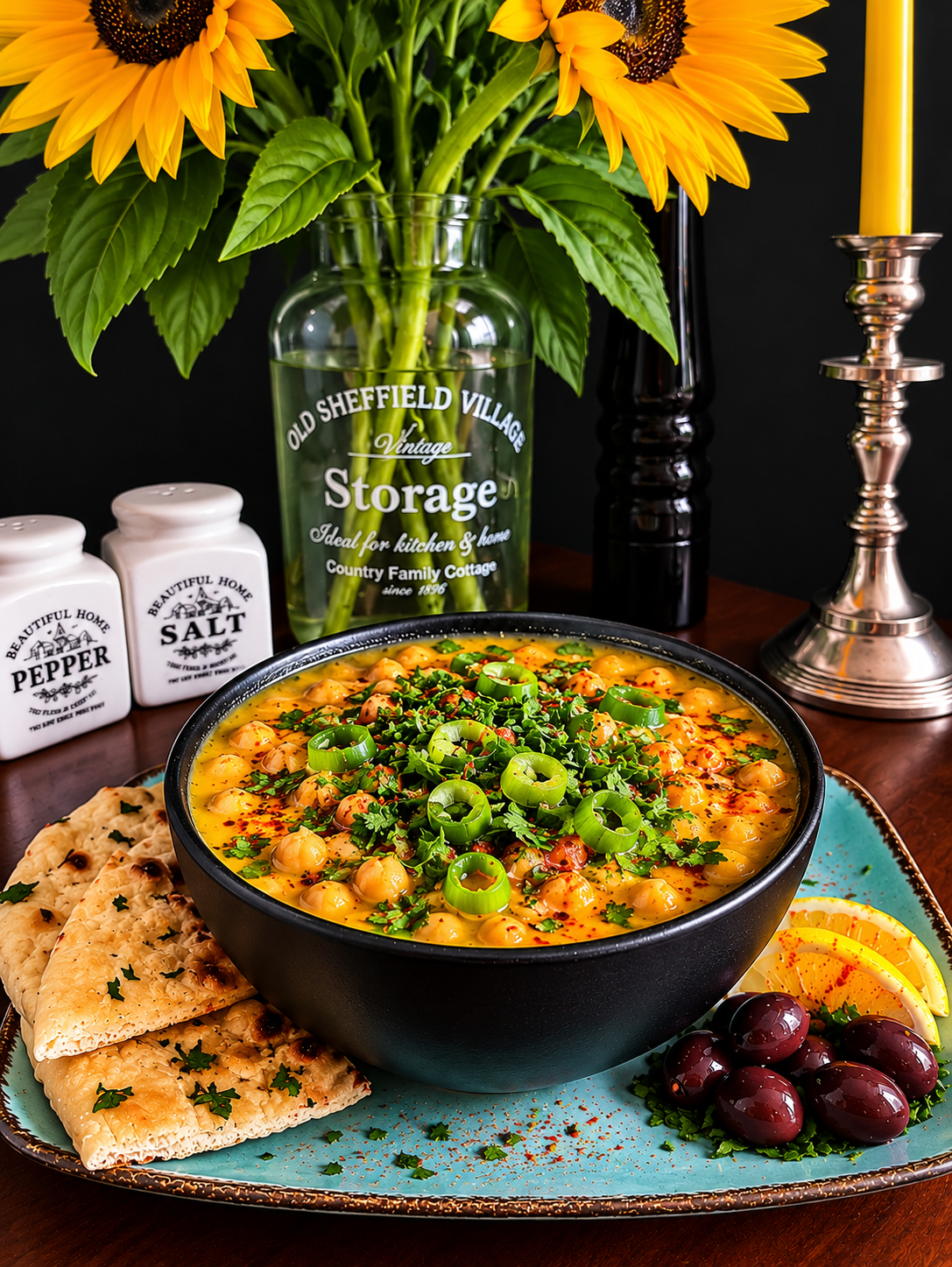
Lablabi – Tunisia's Beloved Chickpea and Bread SoupLablabi is a traditional Tunisian dish made with tender chickpeas, their cooking broth, garlic, cumin, harissa and pieces of bread. Particularly popular during the colder months, it is widely enjoyed as an affordable, filling street food and everyday comfort meal. The bread absorbs the fragrant broth, gradually turning the soup into a thick, rustic mixture. Depending on the preparation, Lablabi may be served with additional toppings such as eggs, tuna, capers or olives. My Via Veggie Vegan version keeps the chickpeas, spices, bread and olives while leaving out the animal-derived toppings. Fresh coriander and spring onion greens provide a colourful finishing touch.
Cook this recipe →
Recipe postcard
Trinidad & Tobago – Where Indian and Caribbean Food Traditions MeetTrinidad and Tobago is a twin-island Caribbean nation whose cuisine reflects African, Indian, Indigenous, European and Chinese influences. Indian indentured labourers began arriving in Trinidad in 1845, bringing culinary techniques and food traditions that gradually became part of the islands' distinctive cuisine. Today, dishes such as roti, doubles and choka are closely associated with Indo-Trinidadian food culture. Garlic, hot peppers, fresh herbs and boldly seasoned vegetables play an important role in everyday cooking.
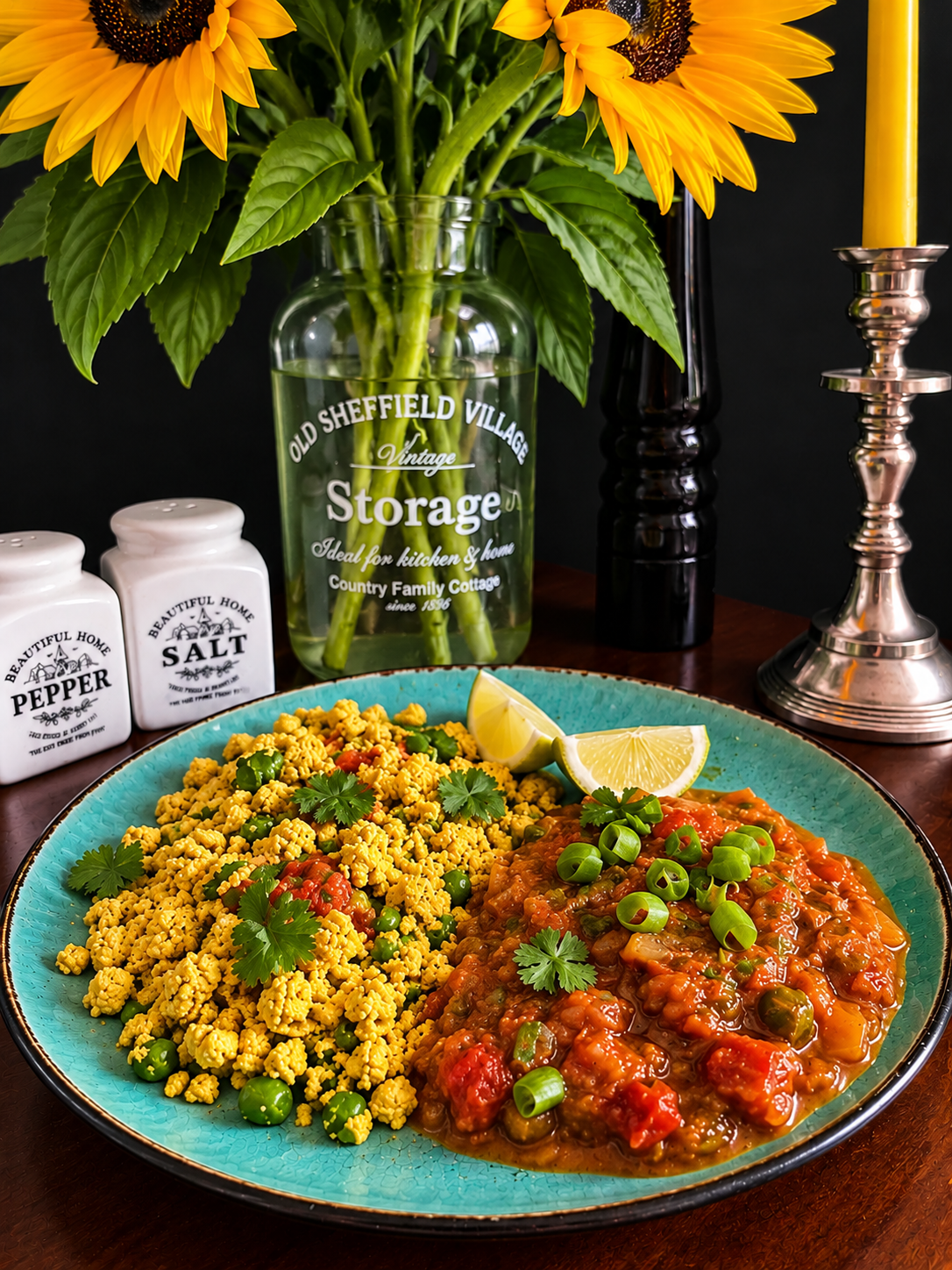
Tomato Choka – Smoky Roasted Tomatoes with a Sizzling FinishTomato Choka is a traditional Trinidadian preparation in which ripe tomatoes are roasted until soft and smoky, mashed and combined with garlic, onion and chili. One characteristic technique is known as chunkay: hot oil is poured over the seasoned vegetables to release their aromas. Tomato Choka is commonly enjoyed with Sada Roti, a simple unleavened flatbread. My Via Veggie Vegan version preserves the character of the tomato preparation but pairs it with creamy tofu scramble instead of the traditional bread accompaniment. The result is a completely plant-based breakfast combining authentic Trinidadian inspiration with a modern vegan twist.
Cook this recipe →
Recipe postcard
Switzerland – Alpine Comfort Food and Regional Culinary TraditionsSwitzerland is famous for its Alpine landscapes, regional food traditions and long history of cheese-making. Swiss cuisine reflects influences from neighbouring Germany, France, Italy and Austria, while also maintaining its own distinctive regional specialities. In German-speaking Switzerland, hearty dishes made with potatoes, flour, dairy products and cheese have long been associated with everyday home cooking and mountain life. The country's different regions have developed their own culinary identities, making Switzerland a fascinating destination for anyone exploring traditional European comfort food.
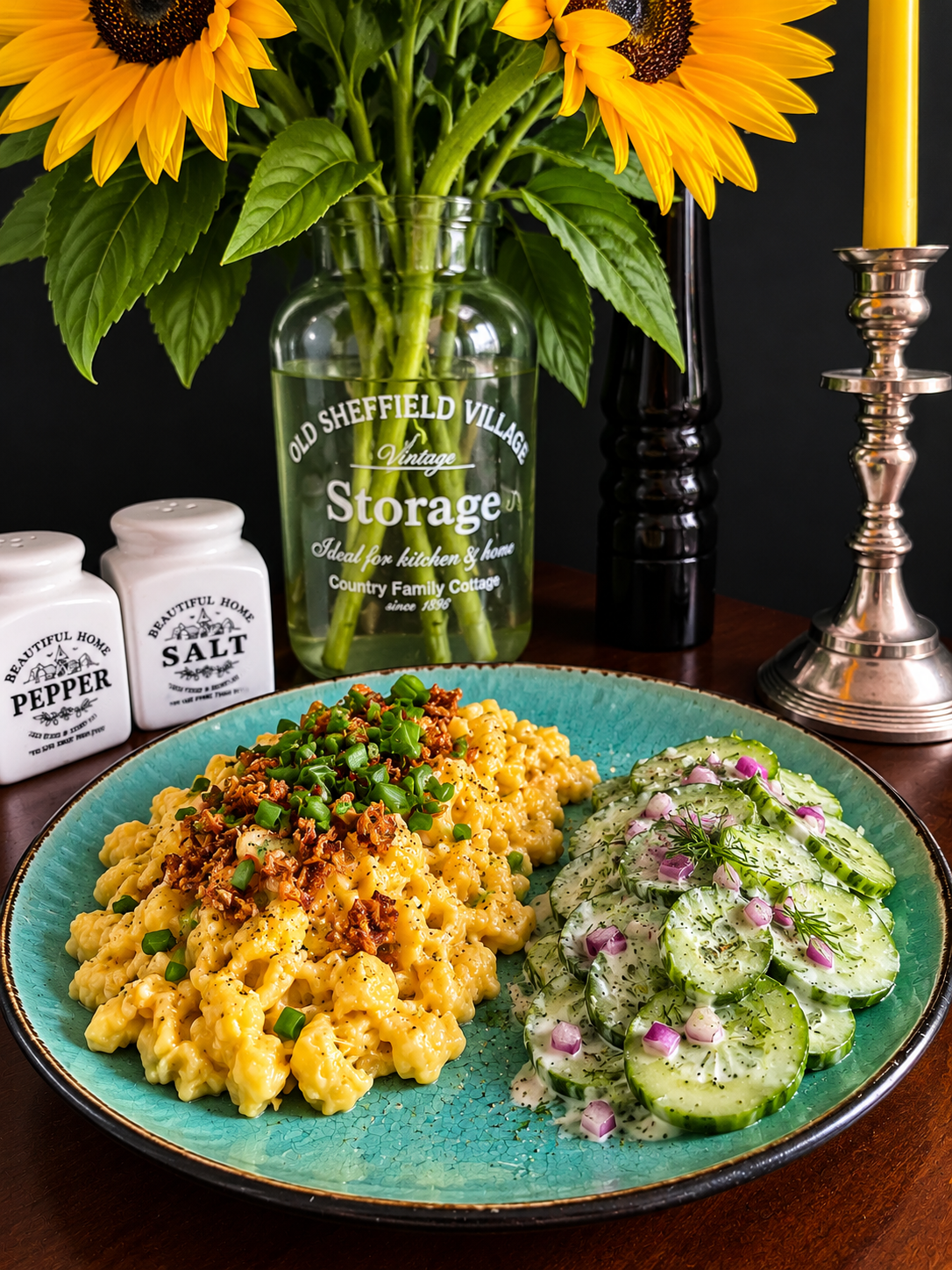
Chäschnöpfli – Switzerland's Beloved Cheese SpätzleSpätzle and Knöpfli belong to the shared culinary heritage of the German-speaking Alpine region, with particularly well-known traditions in southern Germany, Austria and Switzerland. In Switzerland, the small dumpling-like pasta is often called Knöpfli, while versions combined with melted cheese are known as Chäschnöpfli or Käsespätzli. Traditional preparations generally use eggs in the dough and regional cheeses for their rich flavour. My Via Veggie Vegan version replaces the eggs with sparkling mineral water, Kala Namak and turmeric, while plant-based cheddar, almond butter and nutritional yeast create a creamy, savoury finish. A fresh cucumber dill salad provides a colourful contrast to this wonderfully comforting Swiss-inspired dish.
Cook this recipe →
Recipe postcard
Indonesia – A Culinary Journey to West JavaIndonesia is a vast Southeast Asian archipelago with an extraordinary diversity of regional cuisines, ingredients and culinary traditions. West Java is home to the Sundanese people, whose food culture is particularly associated with fresh vegetables, aromatic herbs, sambal and rice. Sundanese cuisine often celebrates the natural flavours and textures of vegetables, making it a wonderful source of inspiration for plant-based cooking. Fresh produce, chillies, garlic, peanuts and fragrant rhizomes such as kencur play important roles in many local preparations. Karedok is one of the region's best-known vegetable dishes and beautifully reflects this appreciation for freshness, texture and bold seasoning.
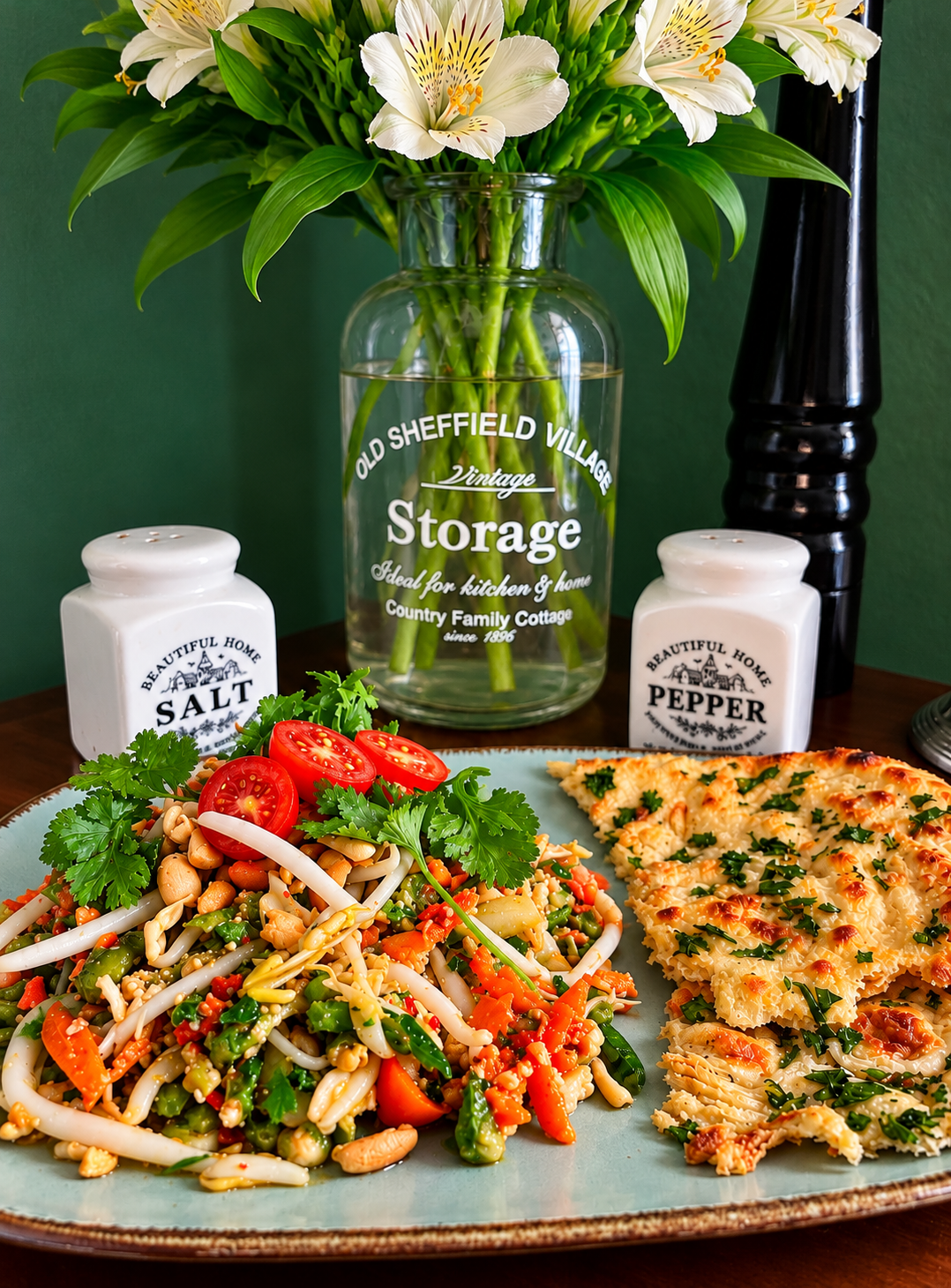
Karedok – A Traditional Sundanese Salad with a Vegan TwistKaredok is a traditional Sundanese vegetable salad from West Java, usually prepared with raw vegetables and a thick, aromatic peanut dressing. Common ingredients include cabbage, cucumber, bean sprouts, long beans and fresh herbs, while the dressing typically combines roasted peanuts, garlic, chilli, palm sugar, tamarind and kencur. Some versions also contain terasi, a fermented shrimp paste that adds savoury depth. My Via Veggie Vegan interpretation replaces terasi with white miso, adds carrot, Thai basil and fresh coriander, and uses thoroughly cooked ordinary green beans instead of raw long beans. The result is a colourful, crunchy and completely plant-based version inspired by the flavours of traditional Karedok.
Cook this recipe →
Recipe postcard
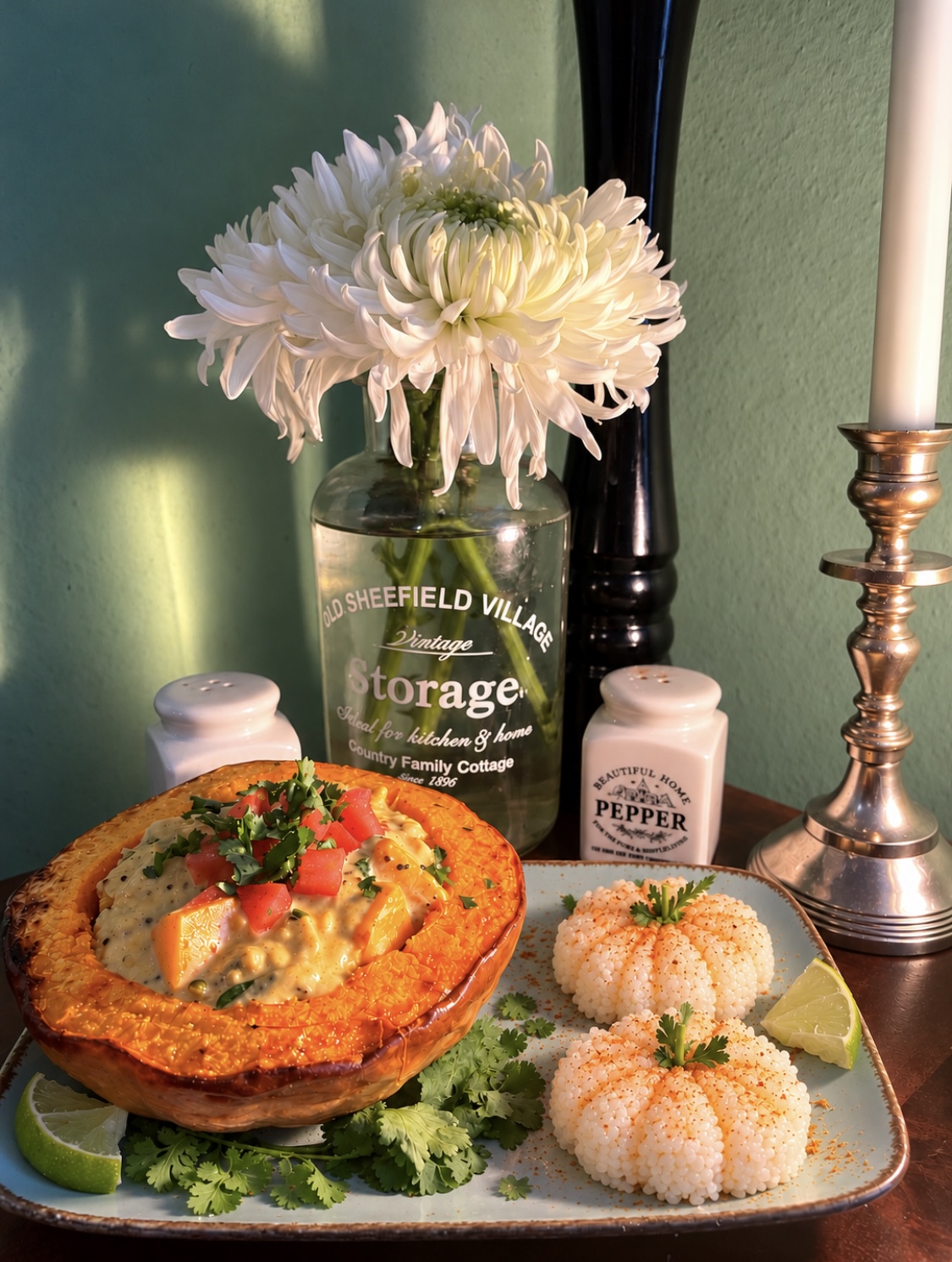
Fiji – A South Pacific Island Nation with a Remarkable Culinary HeritageFiji is an island nation in the South Pacific, consisting of more than 300 islands. Its cuisine reflects Indigenous Fijian traditions alongside Indian and other cultural influences. Root vegetables, tropical fruits, leafy greens and coconut feature in many local food traditions, while Indo-Fijian cuisine is especially known for aromatic vegetable curries, roti, dhal and carefully balanced spice mixtures. Beginning in 1879, Indian indentured labourers were brought to Fiji during the British colonial period. Over generations, their culinary traditions evolved alongside local ingredients and food cultures, creating the distinctive Indo-Fijian cuisine enjoyed today.
Kaddu Tarkari – Indo-Fijian Pumpkin Curry with a Creative Halloween TwistKaddu means pumpkin or squash in Hindi, while tarkari refers to a vegetable dish or curry. Indo-Fijian pumpkin curry is commonly prepared with pumpkin, onions, garlic, chilli and aromatic spices, often using relatively little liquid. As the pumpkin softens, some of the flesh breaks down and creates a naturally thick texture. My Via Veggie Vegan version takes inspiration from these flavours but introduces a few personal twists: a whole muscat pumpkin roasted with chilli oil, a creamy coconut milk sauce and two decorative pumpkins shaped from leftover basmati rice. The roasted pumpkin becomes both an ingredient and an edible serving vessel. This is a creative Indo-Fijian-inspired interpretation rather than a traditional Fijian presentation.
Cook this recipe →
Recipe postcard
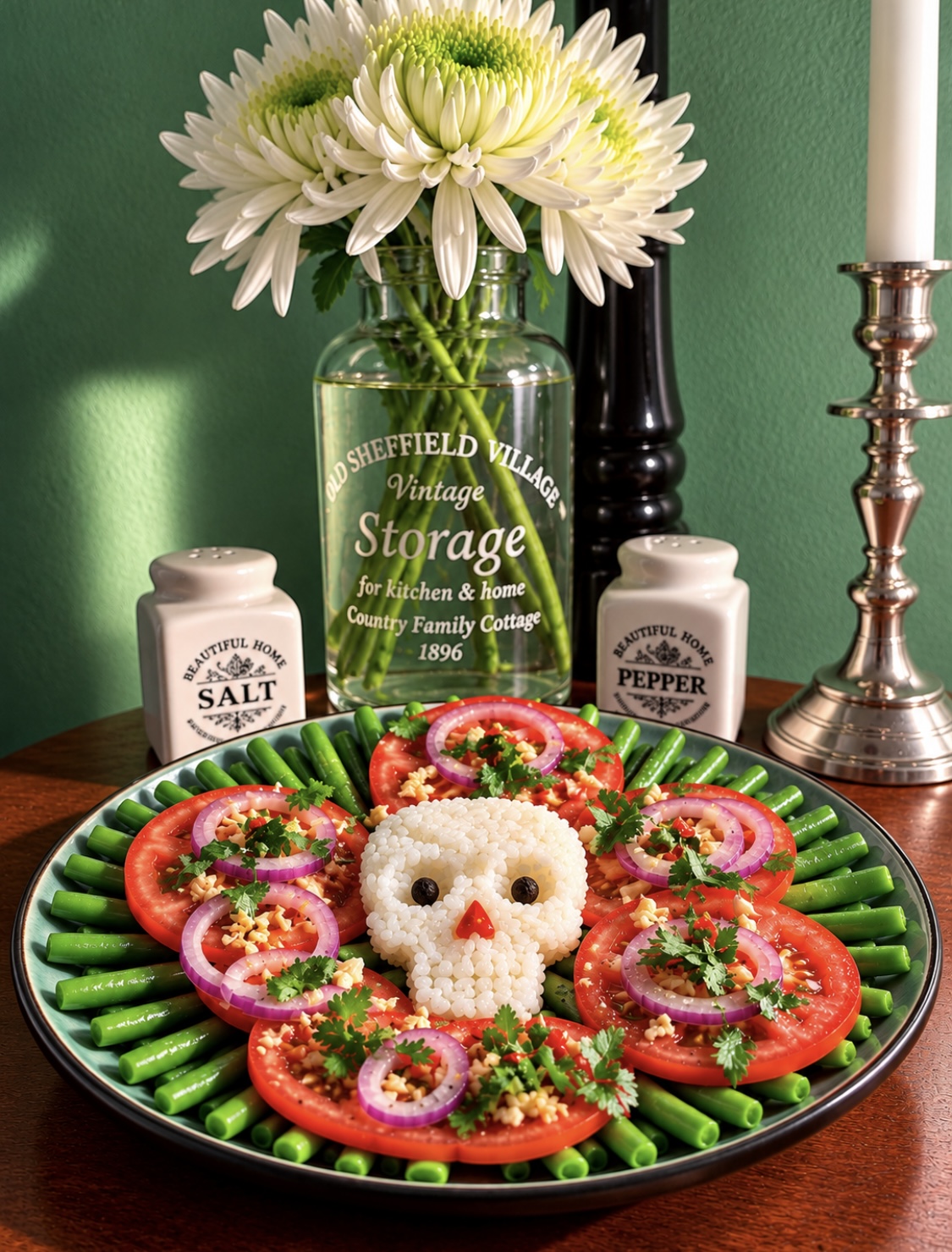
Madagascar – The Island of Extraordinary FlavoursMadagascar, the world's fourth-largest island, lies in the Indian Ocean off the southeastern coast of Africa. Its remarkable culinary heritage reflects African, Asian and European influences, shaped by centuries of migration, trade and local traditions. Rice is central to everyday Malagasy food culture and is commonly served with vegetables, legumes, sauces or meat. Fresh ingredients, ginger, garlic, chilli and aromatic herbs contribute to the distinctive flavours of the island's cuisine.
Lasary Voatabia – Madagascar's Refreshing Tomato SaladLasary Voatabia is a traditional Malagasy tomato salad, typically prepared with fresh tomatoes, onions and a tangy dressing. Depending on the household and region, ginger, lime juice, vinegar, chilli and herbs may be added. The salad is commonly served as a refreshing accompaniment to rice and other savoury dishes. My Via Veggie Vegan interpretation combines the traditional tomato salad with tender French green beans and fresh coriander. A handmade Halloween skull shaped from sticky white rice adds a playful seasonal twist while celebrating rice's important place in Malagasy food culture.
Cook this recipe →
Recipe postcard
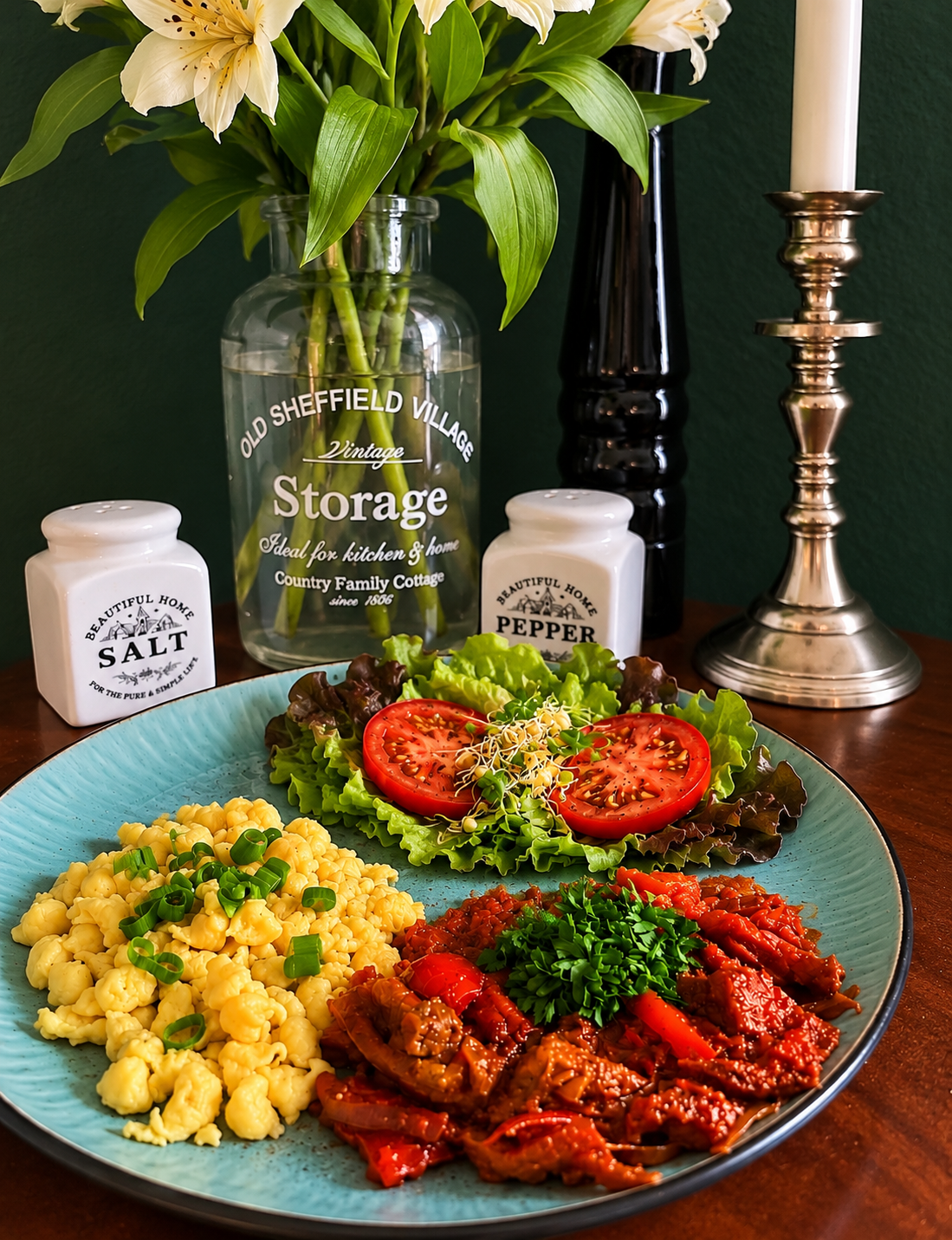
Hungary – The Land of Paprika and Hearty Comfort FoodHungary is a Central European country with a rich culinary heritage shaped by agricultural traditions, regional influences and a deep appreciation for warming, satisfying food. Hungarian cuisine is particularly famous for its generous use of paprika, onions, peppers and slow-cooked dishes. From the banks of the Danube to the vast Hungarian Great Plain, traditional cooking reflects a love of bold flavours, nourishing meals and hospitality. Goulash, paprikash and various dumpling dishes are among the country's best-known culinary specialities.
Goulash and Galuska – A Hungarian-Inspired CombinationGulyás, commonly known internationally as goulash, originated in Hungary and is traditionally associated with the cooking of cattle herders. In Hungary, gulyás is usually a substantial soup, while thicker paprika-based meat stews are more closely related to pörkölt. This Via Veggie Vegan version follows the familiar international interpretation of a thick, hearty goulash, replacing meat with a plant-based alternative. It is served with Galuska, also known as nokedli, small Hungarian dumplings traditionally made with flour, water and eggs. My egg-free version uses sparkling water, Kala Namak and a little turmeric to create deliciously tender dumplings without animal ingredients.
Cook this recipe →
Recipe postcard
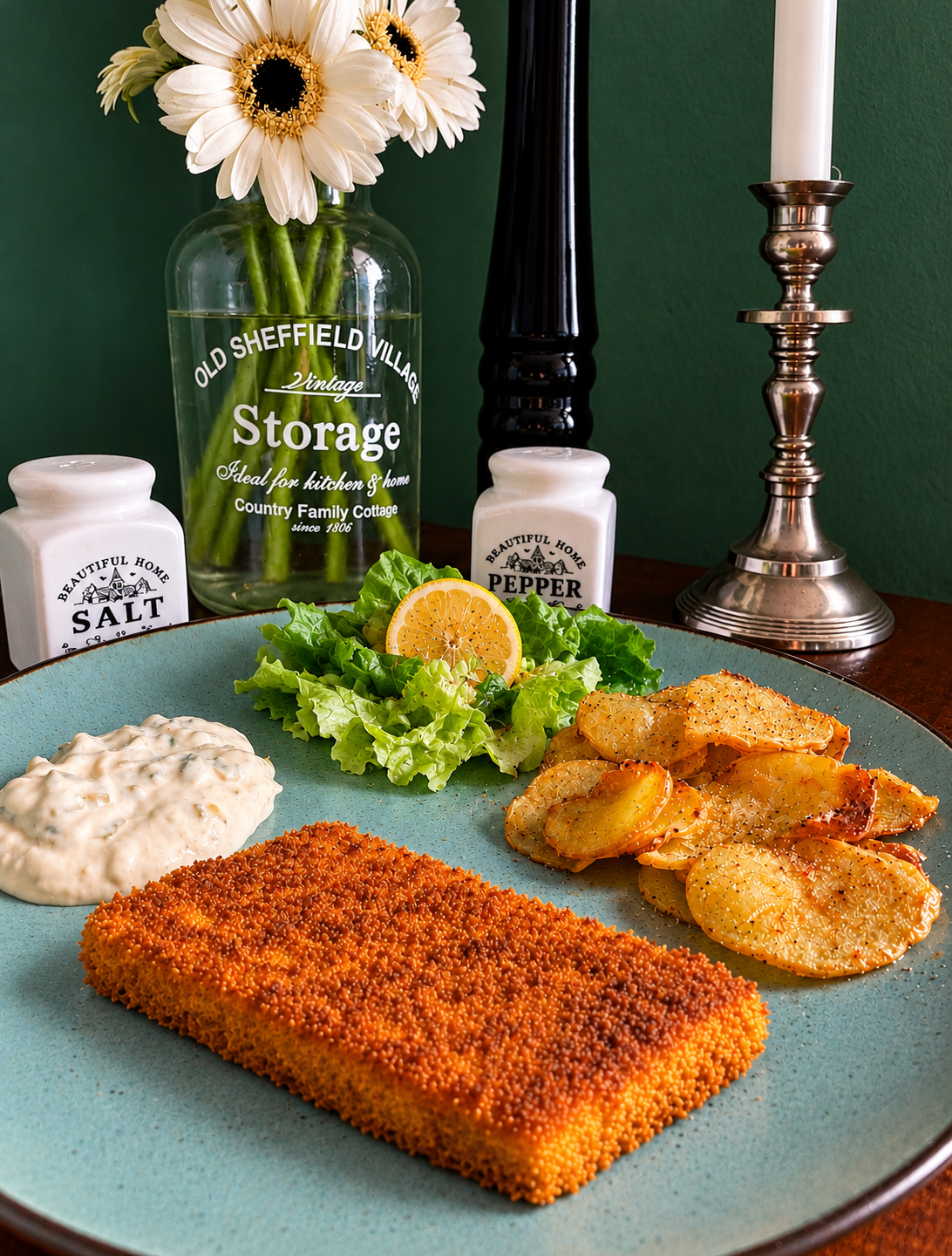
England – The Home of Fish and ChipsEngland is famous for its comforting pub food, seaside traditions and classic dishes enjoyed across generations. One of the country's best-known culinary symbols is fish and chips, traditionally consisting of battered fried fish served with thick-cut fried potatoes. The dish became especially popular during the nineteenth century, when fish-and-chip shops developed into an important part of British everyday food culture. Today, fish and chips remain closely associated with seaside holidays, takeaway meals and traditional British comfort food.
From Fish and Chips to Vegan Fish & CrispsTraditional British fish and chips usually features white fish such as cod or haddock, coated in batter and fried until golden. In this Via Veggie Vegan interpretation, firm tofu replaces the fish, while nori seaweed, lemon juice and soy sauce provide a savoury, sea-inspired flavour. Instead of a conventional batter-only coating, the tofu receives a crunchy breadcrumb crust. And here's the twist: British chips are thick-cut fries, whereas thin potato chips are called crisps. My accidental interpretation of the famous dish therefore became Vegan Fish & Crisps, served with homemade vegan remoulade.
Cook this recipe →
Recipe postcard
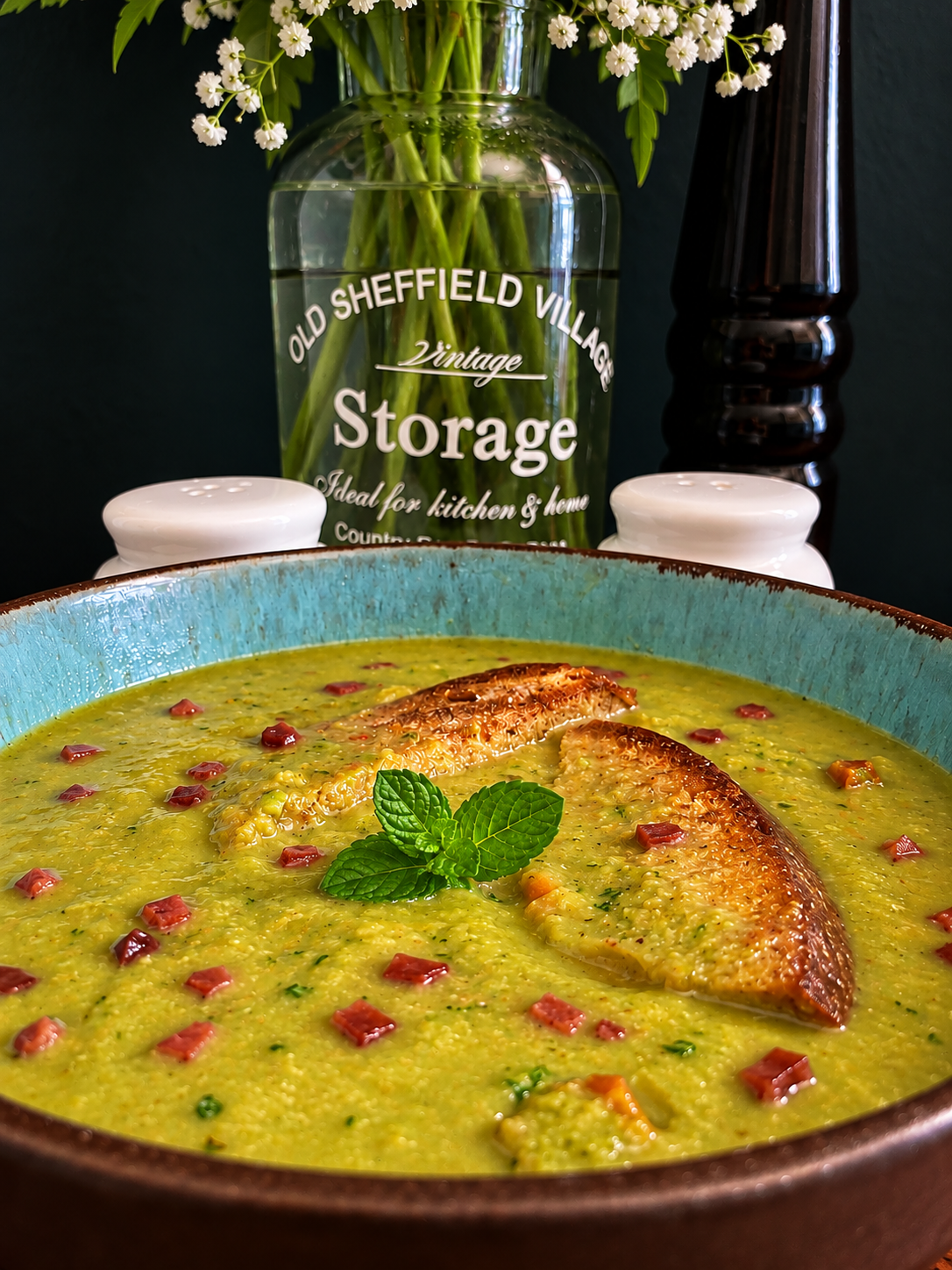
England – A Country of Gardens, Traditions and Comfort FoodEngland is the largest constituent country of the United Kingdom, known for its historic cities, picturesque countryside, traditional gardens and diverse culinary heritage. British cooking has long celebrated seasonal vegetables, hearty soups, homemade bread and comforting family meals. Garden peas are particularly popular during spring and summer, when their natural sweetness pairs beautifully with fresh herbs. Mint has an equally established place in English cooking, appearing in everything from sauces and vegetable dishes to refreshing drinks and desserts.
Pea & Mint Soup – A Fresh British FavouritePea and mint soup is a familiar dish in British home cooking, bringing together the sweetness of green peas and the refreshing aroma of garden mint. It can be prepared with fresh or frozen peas and is often finished with cream, crème fraîche or yoghurt. Depending on the season, it may be served warm or chilled. My Via Veggie Vegan interpretation uses soy cream for a silky texture, while crispy vegan bacon and warm lemon farmhouse bread provide an optional savoury and citrusy contrast.
Cook this recipe →
Recipe postcard
Czechia – A Country with a Rich Soup Tradition
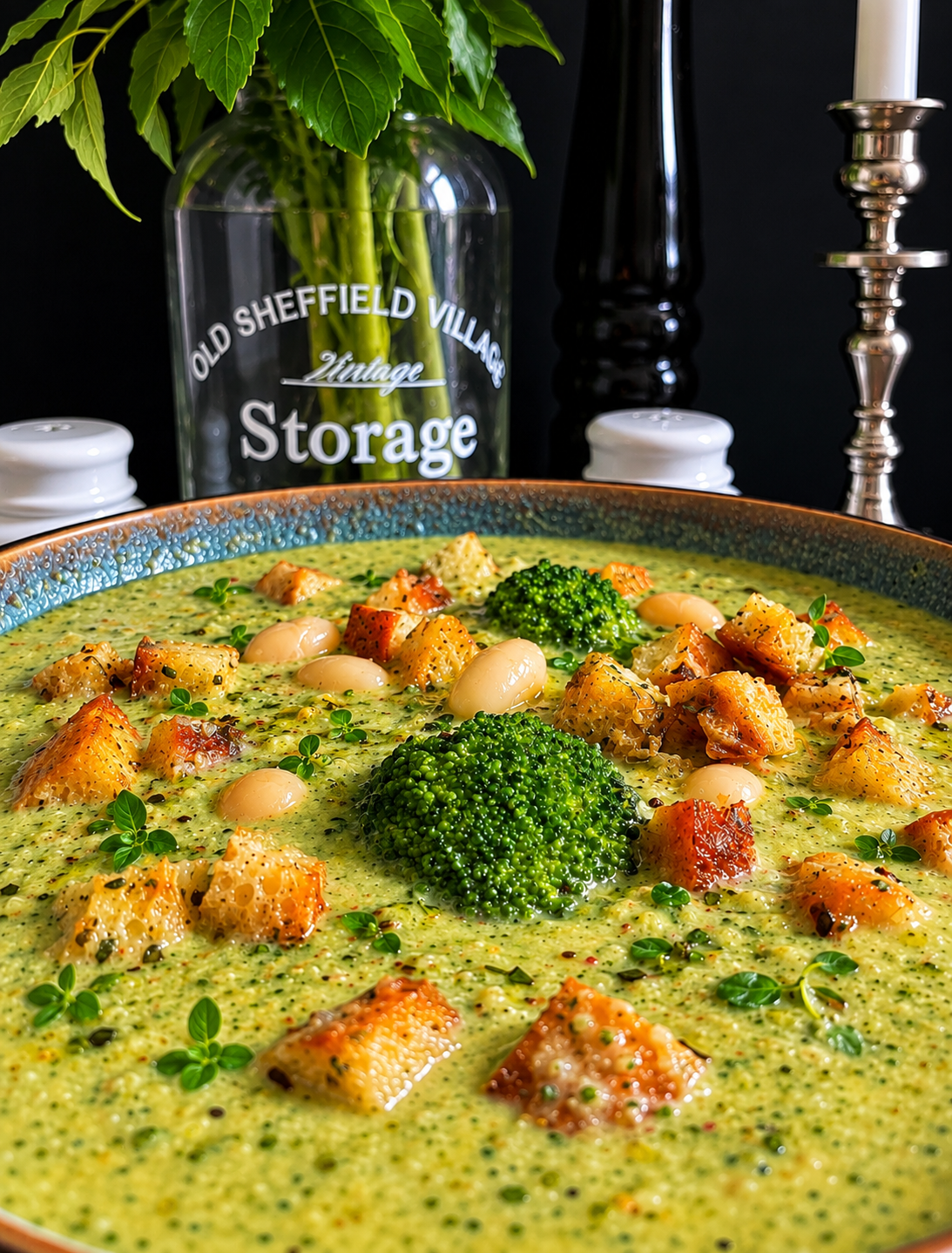
Czechia, also known as the Czech Republic, lies in the heart of Central Europe and is famous for its historic cities, rolling countryside and hearty culinary traditions. Soups, known as polévky, play an important role in Czech home cooking and are frequently served as the first course of a traditional meal. Potatoes, root vegetables, legumes, garlic and aromatic herbs are common ingredients, while marjoram, or majoránka, is one of the country's characteristic soup seasonings.
What Is Brokolicová Polévka s Bílými Fazolemi?
Brokolicová polévka means broccoli soup, while bílé fazole are white beans. This Via Veggie Vegan creation brings these ingredients together in a creamy, satisfying soup inspired by Czech home cooking. White beans provide natural creaminess, nutritional yeast adds savoury depth, and garlic croutons – česnekové krutony – deliver a wonderfully crispy contrast. Instead of using fresh bread, my version gives leftover homemade naan a delicious second life.
Cook this recipe →
