Madagascar – The Island of Extraordinary Flavours
Madagascar, the world's fourth-largest island, lies in the Indian Ocean off the southeastern coast of Africa. Its remarkable culinary heritage reflects African, Asian and European influences, shaped by centuries of migration, trade and local traditions. Rice is central to everyday Malagasy food culture and is commonly served with vegetables, legumes, sauces or meat. Fresh ingredients, ginger, garlic, chilli and aromatic herbs contribute to the distinctive flavours of the island's cuisine.
Lasary Voatabia – Madagascar's Refreshing Tomato Salad
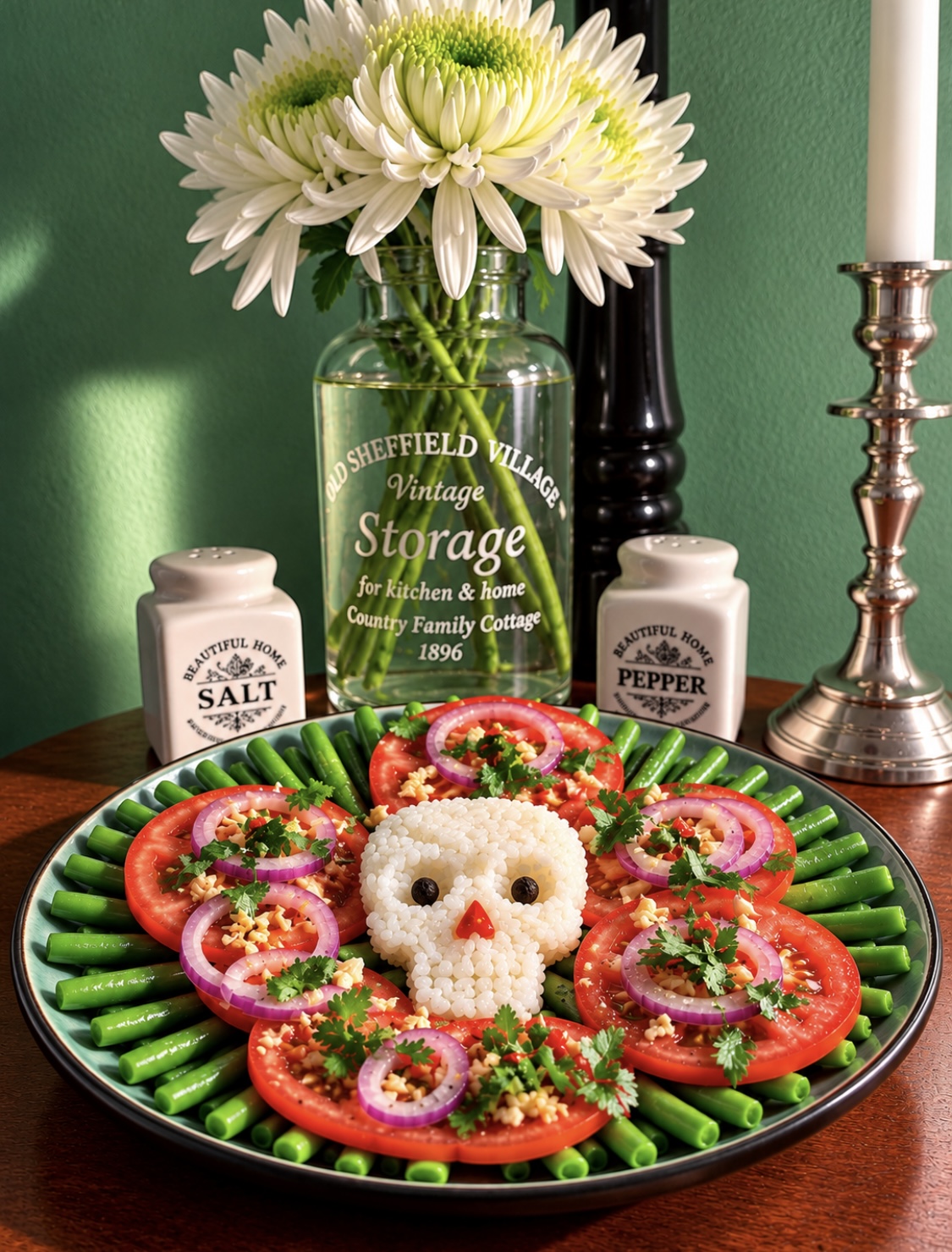
Lasary Voatabia is a traditional Malagasy tomato salad, typically prepared with fresh tomatoes, onions and a tangy dressing. Depending on the household and region, ginger, lime juice, vinegar, chilli and herbs may be added. The salad is commonly served as a refreshing accompaniment to rice and other savoury dishes. My Via Veggie Vegan interpretation combines the traditional tomato salad with tender French green beans and fresh coriander. A handmade Halloween skull shaped from sticky white rice adds a playful seasonal twist while celebrating rice's important place in Malagasy food culture.
▣ Ingredients (2 servings)
- 2 ripe tomatoes
- 250 g fresh French green beans (prince beans)
- 1 red onion
- 1 clove garlic
- 120 g white short-grain rice, uncooked
- 1/2 tsp freshly grated ginger
- 1 pinch salt
- 2 small piece of fresh red chilli, for the skull's nose
- 1-2 drops hot chilli sauce
- 1 tsp peanut oil
- 1 tsp freshly squeezed lime juice
- 1 tsp vegan butter alternative
- to taste salt & pepper
♨ Preparation
- Prepare the Green Beans
Wash the green beans and trim only one end of each bean. Leave the opposite ends untouched.
Bring lightly salted water to a boil and cook the beans until fully cooked but still pleasantly firm, approximately 5–8 minutes for thin French beans, depending on their thickness.
Drain and rinse briefly with cold water to stop further cooking. - Prepare the Tomatoes and Onion
Wash the tomatoes and cut them into even slices rather than traditional small cubes.
Peel the red onion and slice it into very thin rings.
Set aside. - Make the Malagasy Dressing
Finely grate the ginger and garlic into a small bowl.
Add the lime juice, peanut oil, salt and just a few drops of hot chilli sauce.
Stir thoroughly and adjust the balance of acidity and heat to taste. - Marinate the Tomatoes
Place the tomato slices and onion rings in a shallow dish.
Drizzle with the ginger-lime dressing and carefully turn to coat.
Cover and refrigerate for approximately 30 minutes.
Keep the fresh coriander separate until serving. - Give the Skull Its Spooky Face
Place two whole black peppercorns where the eyes should be.
Position a tiny piece of fresh red chilli horizontally in the nose area.
The whole peppercorns are decorative and should be removed before eating. - Arrange the Green Beans
Arrange the cooked green beans in a circular pattern on a large serving plate.
Point the previously trimmed ends towards the centre.
Once the beans are positioned, carefully trim the remaining outer ends so they form a neat border within the rim of the plate. - Add the Tomatoes and Rice Skull
Arrange the marinated tomato slices over the green beans.
Add the thin red onion rings and freshly chopped coriander.
Carefully position the rice skull in the centre of the plate.
Place a dressed tomato slice with onion and coriander beneath the skull's chin to complete the Halloween presentation. - Serve and Enjoy
Spoon the remaining ginger-lime dressing over the tomatoes and green beans.
Serve immediately while the vegetables are fresh and the rice is pleasantly warm or at room temperature.
Remove the decorative whole peppercorns before eating.
Food Story
A Soup Lover’s Unexpected Salad Craving
I’m usually a real soup enthusiast, especially during autumn and winter. Once the temperatures start dropping, there’s hardly anything I love more than a steaming bowl of homemade soup. But every now and then, even in the middle of the colder months, I suddenly crave something completely different. Something fresh, crunchy, colourful and bursting with flavour. And when that happens, a salad is exactly what I want for dinner. Apparently, even a devoted soup lover needs a little change of scenery now and then!
195 Countries, One Kitchen and a Little Research
Since I’m currently on my culinary mission to cook my way through all 195 countries of the world, deciding what to make for dinner has become a little adventure of its own. During one of my rather intensive research sessions, I discovered Lasary Voatabia from Madagascar. A refreshing tomato salad with ginger, lime, onion and a touch of chilli? That sounded absolutely wonderful! I decided to add tender green beans and serve it with rice, bringing together fresh vegetables and one of Madagascar’s most important everyday staples. A simple, colourful dinner with plenty of Malagasy inspiration – exactly what I was craving.
Two Kitchen Tricks and a Halloween Skull
Of course, it’s October, and Halloween has completely taken over my Via Veggie Vegan kitchen! So an ordinary little mound of rice simply wasn’t going to happen. Instead, I cooked the rice extra sticky, pressed it firmly together and used a skull-shaped cookie cutter to create tonight’s slightly spooky dinner guest. The green beans received their own little styling trick, too: trimming one end before cooking and the other after arranging them on the plate. It might look like hours of painstaking food styling, but the truth is much simpler. Two clever little tricks, one wonderfully colourful plate and absolutely no witchcraft required! Although I suspect my rice skull might disagree.
♨ Nutrition per serving
Nutritional values are approximate and may vary depending on the ingredients and products used.
Good to Know
Lasary Voatabia – A Traditional Malagasy Favourite
Lasary Voatabia is a traditional tomato salad from Madagascar. The Malagasy word "voatabia" means tomato, while "lasary" refers to a salad or relish. Recipes differ between households and regions, but fresh tomatoes, onions and an acidic dressing are common ingredients. Ginger, chilli and fresh herbs add character to many variations. Lasary Voatabia is often served as a refreshing accompaniment to rice and other savoury dishes.
Lasary, Rougail and Regional Influences
Tomato-based relishes and salads are popular across several islands in the Indian Ocean. Similar preparations can be found in Réunion and Mauritius, where the term "rougail" is particularly familiar. These dishes reflect overlapping ingredients, migration histories and culinary influences. However, Malagasy lasary and Réunion-style rougail are not necessarily identical, and their preparation varies between regions and households.
Why Rice Is So Important in Madagascar
Rice is one of the central staples of Malagasy cuisine and plays an important role in everyday meals. The Malagasy word "vary" means rice. It is commonly served with vegetables, legumes, meat or other accompaniments, and rice cultivation has a long history on the island. Pairing Lasary Voatabia with rice therefore makes culinary sense, even though the Halloween skull presentation is entirely my own invention.
Why Use Short-Grain Rice for the Halloween Skull?
Short-grain rice generally contains a relatively high proportion of amylopectin, a starch component that contributes to its sticky texture after cooking. This makes the grains easier to press together into a compact shape. Long-grain rice tends to remain more separate and is therefore less suitable for this particular food-art technique. Pressing the rice while warm and allowing it to cool slightly helps the skull retain its shape.
Why Does Rice Become Sticky?
During cooking, rice starch absorbs water and gelatinizes. The balance between amylose and amylopectin influences the final texture. Rice varieties with lower amylose content generally become softer and stickier, making them particularly suitable for shaping. The small amount of vegan butter alternative in this recipe adds flavour, but the rice variety and correct water ratio are the main factors responsible for the skull's structure.
Green Beans – A Colourful Addition
French green beans, sometimes called prince beans, provide a pleasant contrast to the juicy tomatoes and soft rice. They contribute dietary fibre, folate and vitamin K, while their mild flavour complements ginger, lime and fresh coriander. In this recipe, they also create a decorative green background for the Halloween skull.
Why Green Beans Must Be Cooked
Raw green beans contain naturally occurring lectins, including phytohaemagglutinin, which can cause gastrointestinal symptoms when consumed in sufficient amounts. Adequate cooking reduces these compounds. Thin French beans may become tender relatively quickly, while thicker beans need longer. The beans should be fully cooked rather than merely warmed, even when they are intended for a salad.
Why Blanching Helps Preserve Colour
Brief cooking softens green beans while helping them retain a pleasant texture. Rapid cooling slows further cooking and helps preserve their bright appearance. However, the beans must first receive sufficient cooking time for safe consumption. Once cooked and cooled, they can be arranged neatly without becoming excessively soft.
Tomatoes – Fresh, Juicy and Naturally Colourful
Ripe tomatoes contain plenty of water and contribute vitamin C, potassium and various carotenoids. Their natural sweetness and acidity make them especially suitable for refreshing salads. Slicing the tomatoes rather than cutting them into small cubes creates a more decorative presentation and allows the dressing to coat their surfaces evenly.
Tomatoes and Lycopene
Lycopene is a carotenoid pigment responsible for much of the red colour of ripe tomatoes. It has antioxidant properties and has been studied for potential health effects. Cooking and processing can improve lycopene's bioavailability, although fresh tomatoes remain nutritious too. Consuming tomatoes with a little dietary fat, such as the peanut oil in this recipe, may support absorption of fat-soluble carotenoids.
Vitamin C and Plant-Based Iron Absorption
Tomatoes and lime provide vitamin C, which contributes to normal immune function and helps the body absorb non-haem iron from plant foods. Non-haem iron is found in ingredients such as legumes, whole grains, nuts and seeds. Combining vitamin-C-rich vegetables or citrus juice with iron-containing plant foods is a useful habit in a balanced vegan diet.
Ginger – Small Root, Big Flavour
Fresh ginger adds a warm, slightly peppery and citrus-like aroma to the dressing. Its distinctive flavour comes partly from compounds known as gingerols. These substances have been investigated for various biological effects, but the small amount used in this salad should be appreciated primarily for its culinary contribution rather than as a therapeutic ingredient.
Why Fresh Garlic Tastes So Intense
Garlic contains sulfur-containing compounds that contribute to its characteristic aroma. When garlic is crushed or grated, enzymatic reactions produce compounds including allicin. Raw garlic has a sharper flavour than cooked garlic, making a small quantity particularly effective in fresh dressings. Combining it with lime juice, ginger and peanut oil creates a balanced aromatic mixture.
Peanut Oil and Unsaturated Fats
Peanut oil contains predominantly unsaturated fatty acids, including monounsaturated fats. Replacing some saturated fats with unsaturated fats can help reduce LDL cholesterol. This recipe uses only one teaspoon of peanut oil for two servings, providing flavour without making the dressing heavy. Anyone with a peanut allergy should use a suitable alternative oil and check ingredient labels carefully.
Why a Little Fat Is Useful
Dietary fat is essential for the absorption of fat-soluble vitamins A, D, E and K. It can also help the body absorb certain carotenoids from vegetables. A small amount of oil therefore contributes more than flavour alone. However, adding large quantities of fat is not necessary to enjoy the nutritional benefits of a colourful vegetable salad.
Understanding LDL and HDL Cholesterol
LDL particles transport cholesterol through the bloodstream, and elevated LDL cholesterol increases the risk of atherosclerotic cardiovascular disease. HDL particles participate in transporting cholesterol towards the liver, although a high HDL measurement alone does not guarantee cardiovascular protection. Replacing saturated fats with unsaturated fats and eating fibre-rich plant foods can help support healthier blood cholesterol levels.
Fresh Coriander – More Than a Garnish
Fresh coriander adds a bright, citrus-like aroma that complements ginger, lime, tomatoes and chilli. Its tender leaves are best added shortly before serving because prolonged exposure to heat can reduce their fresh flavour. Interestingly, some people perceive coriander leaves as soapy, partly because of genetic differences in sensitivity to certain aroma compounds.
Chilli and Capsaicin
Chilli heat comes mainly from capsaicinoids, including capsaicin. These compounds activate sensory receptors involved in detecting heat and irritation. Even a few drops of hot chilli sauce can noticeably change the flavour of a mild tomato salad. Start with a small amount and adjust according to personal preference, particularly when using an unfamiliar chilli sauce.
Why Lime Works So Well in Tomato Salad
Lime juice adds acidity and a fresh citrus aroma that balances the sweetness of ripe tomatoes and the sharpness of raw onion. Its acidity also helps bring the flavours of ginger, garlic and chilli together. The goal is a refreshing dressing rather than an aggressively sour one. Taste the mixture before adding more lime juice.
Why Marinate the Tomatoes and Onion?
Allowing the tomatoes and red onion to rest in the dressing gives their flavours time to combine. Salt encourages some moisture to move out of the vegetables, creating a little additional dressing as the salad marinates. The onion also becomes slightly less sharp as it absorbs the acidic mixture. Approximately 30 minutes in the refrigerator is enough to develop flavour without excessively softening the tomato slices.
A Naturally Vegan Malagasy-Inspired Meal
Traditional Lasary Voatabia can be naturally vegan when prepared entirely from tomatoes, onions, herbs, spices and plant-based dressing ingredients. This interpretation adds green beans and rice, along with a small amount of vegan butter alternative. The salad itself requires no meat, egg or dairy substitutes. Only the optional butter-style ingredient is a plant-based replacement.
Is This Salad a Complete Main Course?
The combination of rice and vegetables provides carbohydrates, fibre and a modest amount of protein. The estimated nutritional values are approximately 390 calories and 10 g protein per serving. For a more protein-rich meal, the salad could be accompanied by lentils, chickpeas, tofu or another suitable plant-based protein source. This is particularly useful when serving it as a main course rather than a side dish.
Food Safety – Handle Cooked Rice Carefully
Cooked rice requires particular attention because spores of Bacillus cereus can survive normal cooking temperatures. If rice is left warm or at room temperature for too long, bacteria may multiply and produce toxins. Prepare the rice close to serving time, cool it promptly when necessary and refrigerate leftovers without delay. Reheating does not reliably destroy every toxin that may have formed during improper storage.
How Long Can the Salad Be Stored?
Lasary Voatabia tastes best on the day it is prepared because the tomatoes gradually release moisture and become softer. Refrigerate leftovers promptly in a covered container. The rice skull should ideally be stored separately from the dressed vegetables to preserve its texture and shape. Use refrigerated leftovers within a short period and follow safe cooked-rice storage practices.
Halloween Food Art Without Food Waste
The rice left around the skull-shaped cookie cutter does not need to be discarded. Collect it immediately and use it in another dish, following appropriate cooling and storage precautions. Clean, suitable green bean trimmings can be added to vegetable stock. Creative presentation does not have to mean wasting ingredients, and even a playful Halloween dinner can follow a zero-waste approach.
Why This Dish Belongs in Via Veggie Vegan
Madagascar Lasary Voatabia brings together traditional Malagasy inspiration, fresh plant-based ingredients and playful seasonal creativity. The tomato salad celebrates familiar flavours from Madagascar, while the green bean arrangement and rice skull turn a simple dinner into an imaginative Halloween presentation. It is another delicious stop on my culinary journey around the world –