
Saint Lucia – A Caribbean Island of Culinary Influences
Saint Lucia is a beautiful island nation in the eastern Caribbean, known for its volcanic landscapes, tropical climate and rich cultural heritage. Its cuisine reflects African, Indigenous Caribbean, European and South Asian influences, with fresh local produce, aromatic spices, root vegetables and chilies playing important roles. Pumpkin and other varieties of squash are familiar ingredients in Caribbean home cooking, appearing in soups, stews and hearty vegetable dishes. The island's culinary traditions combine comforting ingredients with bold, fragrant flavors.
Soupe de Citrouille – A Caribbean-Inspired Pumpkin Soup
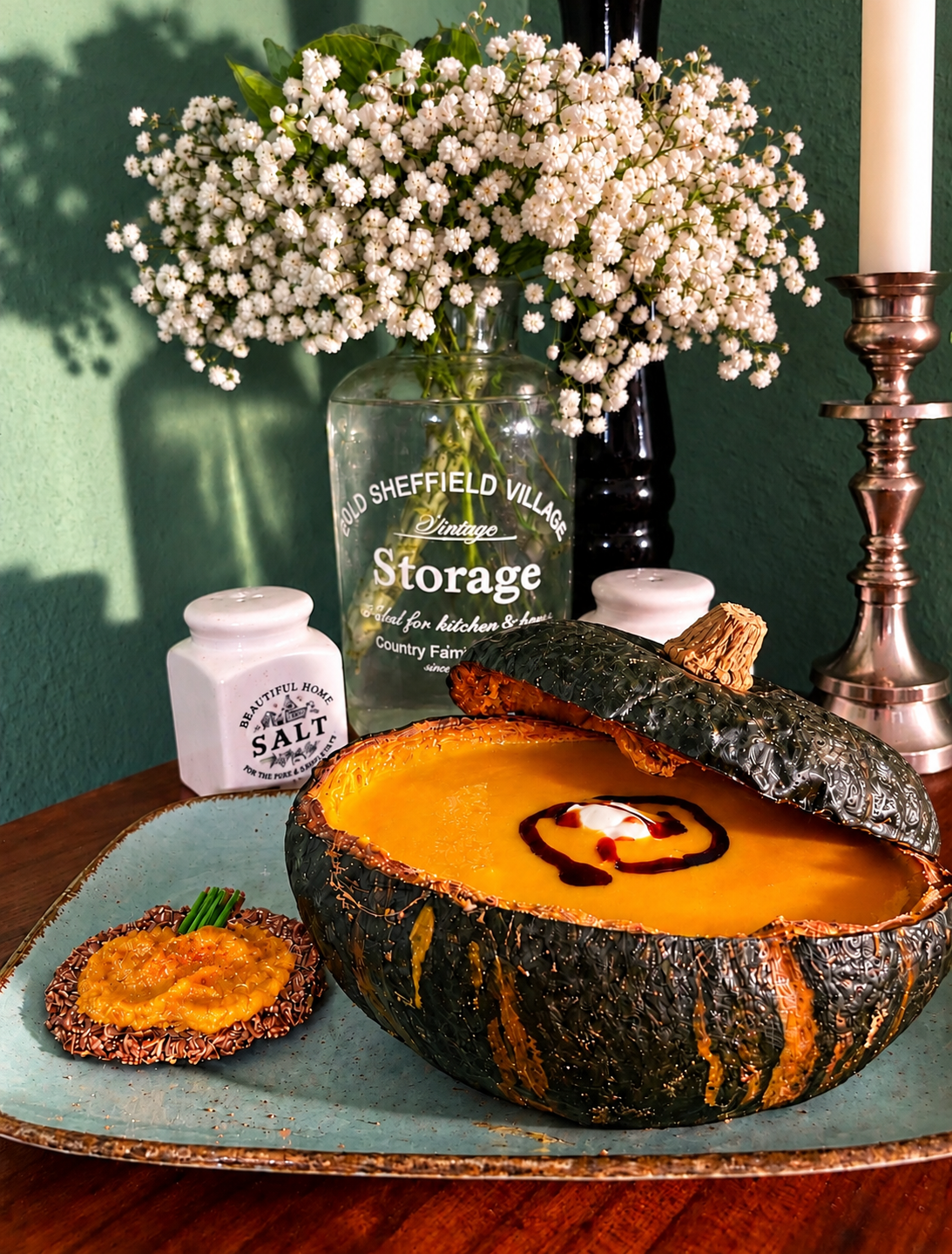
Soupe de Citrouille translates from French as pumpkin soup, although there is no single definitive Saint Lucian recipe under this name. My Via Veggie Vegan interpretation combines tender pumpkin with garlic, ginger, Caribbean-style curry spices, coconut milk and freshly squeezed orange juice. Instead of serving the soup in ordinary bowls, I hollowed out two small green Hokkaido pumpkins, roasted them with chili oil and transformed them into edible serving bowls. A swirl of vegan sour cream and pumpkin seed oil completes this warming, aromatic and entirely plant-based Caribbean-inspired creation.
▣ Ingredients (2 servings)
- 2 small green Hokkaido pumpkins
- 1 yellow onion
- 2 cloves garlic
- 1 tbsp fresh ginger
- 1 piece Scotch Bonnet chili
- 1 tbsp mild Caribbean-style curry powder
- 1 pinch freshly grated nutmeg
- 2-4 sprigs fresh coriander
- 1-2 tsp chili oil, for brushing the pumpkin bowls
- 400 ml vegetable broth
- 100 ml coconut milk
- 60-80 ml freshly squeezed orange juice
- 2 tbsp vegan sour cream
- to taste pumpkin seed oil, for drizzling
- to taste salt & freshly ground black pepper
♨ Preparation
- Prepare the Edible Pumpkin Bowls
Preheat the oven to 180°C fan. Carefully cut a lid from the top of each green Hokkaido pumpkin and remove the seeds and fibrous center. Scoop out approximately 450 g of pumpkin flesh for the soup, leaving sufficiently thick walls and a sturdy base so the pumpkins can safely hold the hot soup. Set the scooped-out flesh aside. - Roast the Hokkaido Pumpkins
Lightly brush the inside and cut edges of the hollowed pumpkins and their lids with chili oil. Season with a little salt and arrange on a baking tray lined with parchment paper. Roast for approximately 45 minutes until tender and lightly caramelized but still firm enough to function as serving bowls. - Prepare the Aromatic Soup Base
While the pumpkins are roasting, finely dice the onion, chop the garlic and grate the ginger. Heat the coconut oil or vegetable oil in a saucepan over medium heat. Add the onion, garlic and ginger and sauté for 3–4 minutes until softened and fragrant. Stir in the Caribbean-style curry powder and nutmeg, cooking for another minute to release their aromas. - Cook the Pumpkin Soup
Add the reserved 450 g pumpkin flesh and the optional Scotch Bonnet chili. Pour in the vegetable broth and coconut milk, bring to a gentle boil and reduce the heat. Simmer for approximately 15–20 minutes until the pumpkin is completely tender. - Blend and Season
Remove the Scotch Bonnet piece, if used. Blend the soup with an immersion blender until completely smooth and velvety. Stir in the freshly squeezed orange juice and season with salt and black pepper. If necessary, add a little hot vegetable broth or water to adjust the consistency. - Fill the Roasted Pumpkin Bowls
Remove the roasted Hokkaido pumpkins from the oven and carefully transfer them to serving plates. Make sure both pumpkins are stable before filling. Ladle the hot, creamy pumpkin curry soup into the edible bowls. - Add the Finishing Touches
Add a spoonful of vegan sour cream to each pumpkin bowl and finish with a drizzle of pumpkin seed oil. Position the roasted pumpkin lids slightly tilted on top or alongside the bowls. Serve immediately while the soup is hot and the roasted pumpkin flesh is beautifully tender.
Food Story
Sometimes the Bowl Is Dinner
Sometimes dinner needs a bowl. And sometimes the bowl is dinner! For my culinary stop in Saint Lucia, I decided that an ordinary soup bowl simply wouldn’t do. Instead, I picked two small green Hokkaido pumpkins, carefully cut off their lids and scooped out the flesh for a wonderfully fragrant Caribbean-inspired pumpkin curry soup. The hollowed pumpkins went straight into the oven with a little chili oil, while the soup simmered away with ginger, garlic, curry spices, coconut milk and fresh orange juice. My kitchen smelled absolutely amazing!
Team Coriander Meets an Empty Fridge
The original plan was to finish the soup with a generous handful of fresh coriander. And anyone who knows my cooking knows that I’m firmly Team Coriander! Unfortunately, my fridge had other plans. Not a single fresh coriander leaf in sight. With two roasted pumpkins waiting to be filled, a pot of hot soup on the stove and my stomach becoming increasingly impatient, I had to improvise. The available candidates? Vegan sour cream and pumpkin seed oil. Both sounded delicious. Both looked promising. And apparently, making decisions while hungry isn’t one of my greatest talents.
Why Choose One When You Can Have Both?
So I did the only reasonable thing: I used both! A generous spoonful of vegan sour cream went into the center of each pumpkin bowl, followed by a beautiful drizzle of dark pumpkin seed oil. And what a delicious combination it turned out to be! The creamy, slightly tangy topping balanced the warm curry spices and sweet orange beautifully, while the nutty pumpkin seed oil added another layer of flavor. The roasted Hokkaido flesh was edible too, so nothing had to go to waste. Traditional? Not exactly. Delicious? Absolutely! Another little reminder that some of my favorite kitchen discoveries happen when the original plan doesn’t quite work out.
♨ Nutrition per serving
Nutritional values are approximate and may vary depending on the ingredients and products used.
Good to Know
What Is Soupe de Citrouille?
Soupe de Citrouille is the French expression for pumpkin soup. Pumpkin-based soups are enjoyed throughout the Caribbean, although ingredients and preparation methods vary between islands and households. Saint Lucia's culinary heritage reflects African, Indigenous Caribbean, European and South Asian influences. While English is the country's official language, Saint Lucian French Creole, known as Kwéyòl, remains an important part of local culture. My Via Veggie Vegan version is a Saint Lucia-inspired interpretation rather than a reproduction of one specific traditional recipe. It combines pumpkin, Caribbean-style curry spices, coconut milk, ginger and fresh orange juice in a warming, aromatic plant-based soup.
Pumpkin in Caribbean Cuisine – A Versatile Ingredient
Pumpkin and other varieties of squash are widely used in Caribbean home cooking, particularly in soups, stews and vegetable dishes. The term pumpkin may refer to different squash varieties depending on the region. Its naturally sweet flavour and creamy texture make it an excellent partner for garlic, ginger, chili, coconut milk and aromatic spices. Pumpkin also provides dietary fibre and carotenoid pigments, including beta-carotene, which the body can convert into vitamin A. Vitamin A contributes to normal vision, immune function and the maintenance of healthy skin. Because beta-carotene is fat-soluble, the coconut milk and pumpkin seed oil in this recipe can help support its absorption.
Green Hokkaido – An Edible Pumpkin Bowl
Not every Hokkaido pumpkin has bright orange skin! Green-skinned Hokkaido-type pumpkins also exist and can have dense, sweet, slightly nutty flesh. Their skin is generally edible when thoroughly cooked, provided they are culinary varieties intended for consumption. This makes them ideal for creating attractive edible serving bowls. When hollowing out the pumpkins, leave sufficiently thick walls and a sturdy base so they can hold the hot soup after roasting. The flesh softens considerably in the oven, so avoid overcooking the shells until they collapse. Once the soup is finished, the tender roasted pumpkin flesh can be scraped from the inside and enjoyed along with the filling. Beautiful presentation, delicious flavour and less food waste!
Caribbean Curry Powder – A Blend of Cultural Influences
Caribbean-style curry powder is a mixture of aromatic spices rather than one fixed recipe. Depending on the blend, it may contain turmeric, coriander, cumin, fenugreek, mustard, allspice and other seasonings. Curry traditions in parts of the Caribbean reflect the culinary heritage of South Asian communities alongside other regional influences. In this soup, mild curry powder creates warmth and depth without overpowering the natural sweetness of pumpkin and orange. Briefly sautéing the spices in oil before adding the liquids helps release their aromatic compounds and intensifies their flavour. The result is a wonderfully fragrant base that complements the creamy coconut milk and fresh ginger.
Ginger and Garlic – The Aromatic Foundation
Fresh ginger and garlic are responsible for much of this soup's warming, savoury character. Ginger contains naturally occurring pungent compounds, including gingerols, which contribute to its distinctive slightly peppery flavour. Garlic contains sulfur compounds that create its characteristic aroma and develop a softer, more rounded taste during gentle sautéing. Together, they balance the sweetness of pumpkin and orange while complementing the curry spices. Cooking them briefly over medium heat helps release their aromas without burning the garlic. For my Via Veggie Vegan kitchen, this combination is practically irresistible – Team Garlic certainly approves!
Scotch Bonnet – Small Chili, Serious Heat
Scotch Bonnet peppers are closely associated with Caribbean cooking and are known for their intense heat and distinctive fruity aroma. They belong to the species Capsicum chinense and can be considerably hotter than common jalapeños. Even a very small piece may noticeably increase the spiciness of a dish. For this moderately spicy soup, use only a small amount and allow it to infuse the liquid while simmering. Remove the chili before blending to avoid unexpectedly intense heat. If you prefer a milder version, omit it entirely and rely on the curry powder and chili oil for gentle warmth. Always wash your hands thoroughly after handling hot chilies and avoid touching your eyes.
Coconut Milk – Creaminess with a Tropical Touch
Coconut milk gives this Caribbean-inspired soup its smooth, velvety texture and delicate tropical flavour. It is produced from coconut flesh and water and contains varying amounts of fat depending on the product. Coconut milk is relatively rich in saturated fatty acids, which can raise LDL cholesterol when consumed in excess as part of an overall diet high in saturated fat. Replacing some saturated fats with unsaturated fats is generally beneficial for cardiovascular health. In this recipe, 100 ml of coconut milk provides creaminess without overwhelming the pumpkin, curry spices and citrus notes. Its richness also helps balance the gentle heat of ginger and chili.
Fresh Orange Juice – Sweetness, Acidity and Balance
Freshly squeezed orange juice gives this soup its distinctive fruity character. Its natural sweetness complements the pumpkin, while its acidity balances the richness of the coconut milk. Orange juice also contributes fresh citrus aromas that work surprisingly well with ginger and curry spices. Adding it after blending helps preserve its bright flavour. Start with approximately 60 ml, taste the soup and gradually increase to 80 ml if you prefer a more noticeable citrus note. Because oranges vary in sweetness and acidity, adjusting the amount is more reliable than adding everything at once. The goal is a beautifully balanced savoury soup, not a pumpkin dessert!
Vegan Sour Cream and Pumpkin Seed Oil – The Perfect Finishing Duo
Vegan sour cream adds a creamy, slightly tangy contrast to the warm curry spices and naturally sweet pumpkin. Depending on the product, plant-based sour cream alternatives may be made from soy, oats, nuts or coconut-based ingredients, and their nutritional values can vary considerably. Pumpkin seed oil contributes a rich, nutty aroma and a striking dark-green colour. It also contains unsaturated fatty acids, including linoleic acid. Because its distinctive flavour is best appreciated without prolonged heating, pumpkin seed oil is particularly suitable for drizzling over finished dishes. Together, these two toppings create a delicious contrast in flavour, texture and colour – a happy little kitchen improvisation that turned into one of my favourite details of this recipe!
Zero Waste – Eat the Bowl and Save the Seeds
One of the most enjoyable features of this recipe is that the serving bowl becomes part of the meal. The roasted Hokkaido flesh and thoroughly cooked, tender skin can be eaten along with the soup, provided the pumpkin is an edible culinary variety. The flesh removed while hollowing out the pumpkins forms the base of the soup, so very little goes to waste. The seeds can also be cleaned, dried and roasted separately with a little oil and seasoning for a crunchy snack. Only the tough stems and any damaged or inedible parts need to be discarded. If you have leftover soup, cool it promptly, refrigerate it in an airtight container and enjoy it within approximately two to three days. Zero Waste, Full Flavour – exactly the Via Veggie Vegan philosophy!
You may also like
♡
You may also like
Smurfy’s Magic Pumpkin Orange Soup – Roasted Hokkaido & Madras Curry
You may also like
Moroccan Carrot Soup – Vegan Shorba al-Ghazar
You may also like