
Morocco – A Country of Mountains, Deserts and Aromatic Spices
Morocco lies in northwestern Africa, where the Atlantic Ocean, Mediterranean coastline, Atlas Mountains and Sahara create an extraordinary diversity of landscapes. Moroccan cuisine reflects Amazigh, Arab, Andalusian, Mediterranean and African influences developed through centuries of cultural exchange. Fragrant spices such as cumin, ginger, coriander, cinnamon and paprika are important elements of its culinary traditions. From bustling souks filled with aromatic spices to family kitchens preparing slow-cooked tagines, soups and vegetable dishes, Moroccan cooking celebrates the balance between warmth, freshness and deeply developed flavors.
What Is Shorba al-Ghazar?
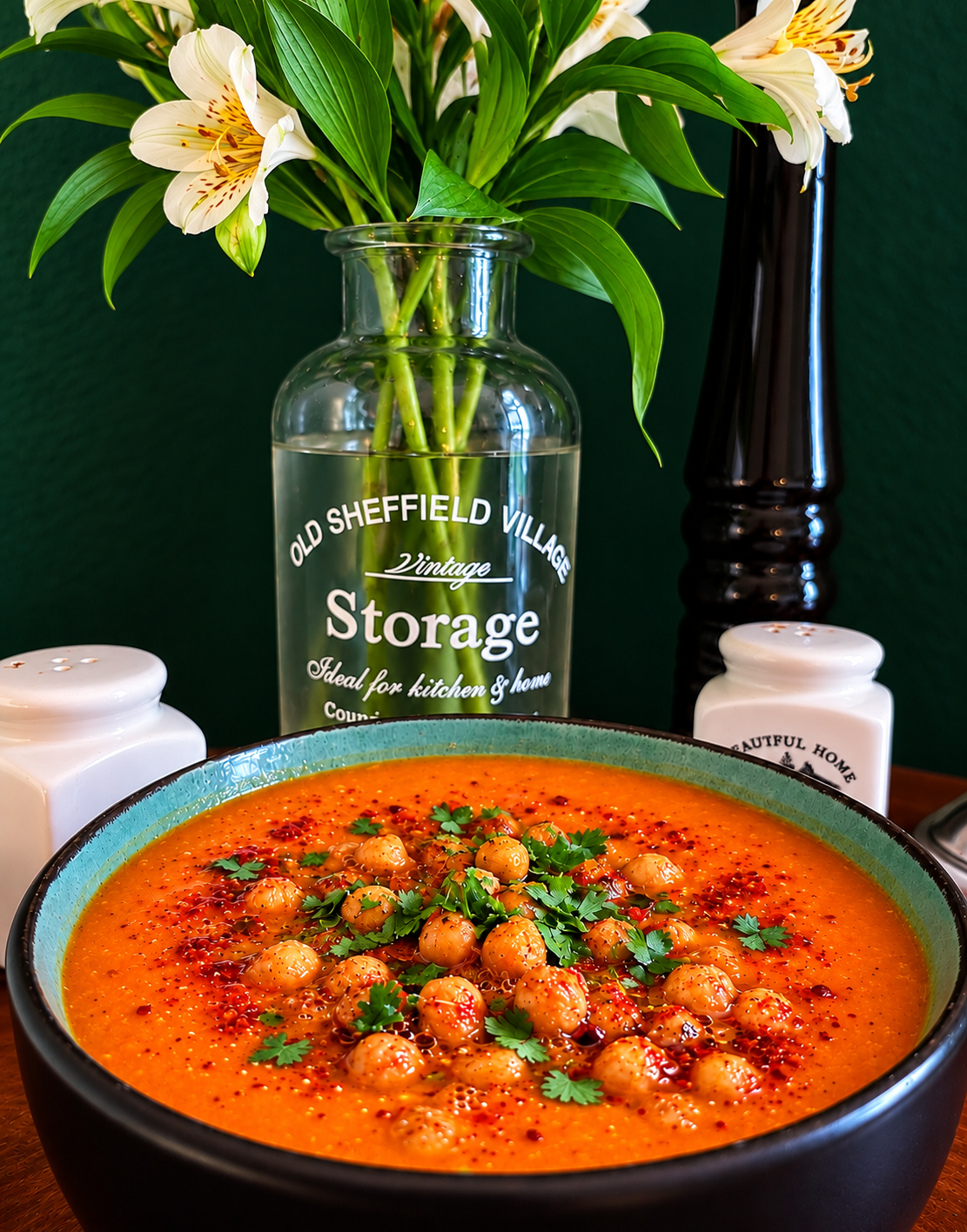
Shorba al-Ghazar (شوربة الجزر) simply means carrot soup in Arabic. Carrot soups appear in different forms throughout North Africa and the wider Arabic-speaking world, but there is no single universally established Moroccan recipe under this name. This Via Veggie Vegan interpretation draws inspiration from Moroccan spice combinations, bringing together naturally sweet carrots, cumin, coriander, ginger, cinnamon and paprika. The vegetables are blended into a smooth, dairy-free soup and finished with lightly spiced chickpeas, fresh coriander and chili flakes for extra texture, flavor and color.
▣ Ingredients (2 servings)
- 350 g carrots
- 1 onion
- 1 clove garlic
- 1 tsp olive oil
- 1/2 tsp vegan butter
- 1/2 tsp ground cumin
- 1/2 tsp ground coriander
- 1/4 tsp ground ginger
- 1 pinch ground cinnamon
- 1 pinch sweet paprika
- 1/2 tsp maple syrup
- 1 tsp fresh lemon juice
- 100 g cooked chickpeas
- 1/2 tsp olive oil
- 1 pinch ground cumin
- 1 pinch sweet paprika
- 1 pinch chili flakes
- to taste fresh coriander
- to taste salt & freshly ground black pepper
♨ Preparation
- Prepare the Vegetables
Peel the carrots and cut them into thin, evenly sized slices.
Peel and finely dice the onion.
Peel and finely chop or crush the garlic. - Sauté the Aromatics
Heat the olive oil and vegan butter in a medium saucepan over medium heat.
Add the chopped onion and garlic.
Sauté gently for approximately 3–5 minutes, stirring regularly, until the onion becomes soft and translucent.
Avoid browning the garlic. - Add the Carrots and Spices
Add the sliced carrots to the saucepan.
Sprinkle over the ground cumin, coriander, ginger, cinnamon and sweet paprika.
Stir thoroughly to coat the vegetables with the aromatic spices.
Cook for approximately 1 minute, stirring continuously.
This allows the spices to release their fragrance. - Simmer the Soup
Pour in the vegetable broth.
Bring the mixture to a boil.
Reduce the heat, cover the saucepan and simmer gently for approximately 18–20 minutes, until the carrots are completely tender.
The carrots should be soft enough to blend into a smooth soup. - Prepare the Chickpea Topping
While the soup simmers, drain and rinse the cooked chickpeas.
Pat them dry with a clean kitchen towel.
Heat ½ teaspoon of olive oil in a small frying pan over medium heat.
Add the chickpeas, ground cumin, paprika, chili flakes and a small pinch of salt.
Sauté for approximately 4–5 minutes, stirring occasionally, until heated through and lightly golden.
Set aside. - Blend the Soup
Remove the saucepan from the heat.
Using an immersion blender, blend the carrots and broth until completely smooth and creamy.
Alternatively, carefully transfer the mixture to a heat-safe blender and blend in batches.
If the soup is too thick, add a small splash of hot vegetable broth or water. - Season and Finish
Stir in the maple syrup.
Add a small amount of fresh lemon juice.
Season with salt and freshly ground black pepper.
Taste and adjust the seasoning if necessary.
The finished soup should be gently sweet, aromatic and warming rather than sour. - – Serve
Divide the hot Moroccan Carrot Soup between two bowls.
Arrange the spiced chickpeas in the center.
Scatter freshly chopped coriander over the chickpeas and surrounding soup.
Finish with a light sprinkling of chili flakes.
Serve immediately. - Serving Suggestion
Serve the Moroccan Carrot Soup in a wide, deep ceramic bowl.
Fill the bowl generously with the smooth, orange-red soup.
Arrange the warm, lightly spiced chickpeas in the center.
Add a small handful of fresh coriander, distributing some leaves across the surface.
Finish with a delicate scattering of red chili flakes for color and gentle heat.
The contrast between the bright soup, golden chickpeas and fresh green coriander creates a beautiful presentation.
For a more substantial meal, serve with warm vegan flatbread.
Food Story
When Carrots Steal the Spotlight
Some vegetables are perfectly happy playing a supporting role. Carrots, however, occasionally deserve the entire spotlight. And today’s Moroccan-inspired Shorba al-Ghazar is exactly that kind of moment. I love how something as simple as a carrot can turn into such a colorful, comforting dish. A little cumin, coriander, ginger, cinnamon and paprika transform its natural sweetness into a beautifully aromatic soup. Nothing complicated, nothing extravagant. Just a handful of ingredients working together to create something that tastes like considerably more effort than it actually requires. And that vibrant orange color? Quite a performance from one very humble vegetable.
Team Coriander and Team Spicy Have Entered the Kitchen
Of course, I couldn’t leave it at a simple bowl of carrot soup. That would have been far too sensible for Via Veggie Vegan. So I added a generous spoonful of lightly spiced chickpeas, followed by fresh coriander and a little chili. Team Coriander never misses an opportunity, and Team Spicy certainly wasn’t going to sit this one out either. The chickpeas bring a lovely contrast to the creamy soup, while the herbs add freshness and the chili provides a gentle kick. Suddenly, my innocent little carrot soup had developed quite a personality.
A Little Sweetness, a Little Spice and a Lot of Comfort
A tiny splash of lemon balances the carrots’ sweetness, while maple syrup adds a gentle finishing touch. The trick is to keep everything beautifully balanced rather than turning the soup sour or overly sweet. I wanted a dish that felt warming and comforting but still had plenty of character. And that’s exactly what landed in my bowl: smooth orange soup, golden chickpeas, bright green coriander and a scattering of red chili flakes. A little sunshine, a little spice and a very happy spoon. Morocco, you’ve officially turned the humble carrot into a superstar!
♨ Nutrition per serving
Nutritional values are approximate and may vary depending on the ingredients and products used.
Good to Know
What Does Shorba al-Ghazar Mean?
Shorba is an Arabic word for soup, while al-ghazar refers to carrots. The name therefore describes a carrot soup rather than one specific, standardized Moroccan dish. Carrot soups are prepared in different ways across North Africa and the wider Arabic-speaking world. This recipe is best understood as a Moroccan-inspired interpretation featuring spices commonly associated with Moroccan cooking.
Morocco – A Culinary Crossroads
Moroccan cuisine reflects centuries of interaction between Amazigh, Arab, Andalusian, Mediterranean and sub-Saharan African cultures. Regional traditions vary considerably, but vegetables, legumes, aromatic spices, grains and olive oil feature prominently in many dishes. The country's culinary heritage includes tagines, couscous, soups, salads and a wide variety of breads.
Moroccan Soups – More Than Just Harira
Harira is among Morocco's best-known soups, traditionally prepared with ingredients such as tomatoes, lentils, chickpeas and herbs. It is particularly associated with Ramadan, although it is enjoyed at other times as well. Morocco also has a broader tradition of vegetable and legume soups, reflecting the availability of seasonal produce and regional ingredients.
Why Cumin Is So Important in Moroccan Cooking
Cumin has a warm, earthy and slightly bitter flavor that complements vegetables and legumes. It is widely used in Moroccan dishes, from soups and tagines to salads and roasted vegetables. Its distinctive aroma comes from naturally occurring volatile compounds released during grinding and heating.
Ground Coriander and Fresh Coriander – Two Different Flavors
Ground coriander is made from the dried seeds of the coriander plant and has a warm, slightly citrusy aroma. Fresh coriander leaves have a brighter, more herbal character. Using both forms in one dish creates additional flavor complexity, with the ground spice providing depth and the fresh leaves adding a lively finishing note.
Ginger, Cinnamon and Paprika – Building Layers of Flavor
Ginger contributes gentle pungency, cinnamon adds a subtle sweet warmth, and paprika provides mild peppery notes and color. Used in small quantities, these spices complement the natural sweetness of carrots without overwhelming them. Their combination creates an aromatic soup with a distinctly Moroccan-inspired character.
Why Carrots Become Sweeter When Cooked
Carrots contain naturally occurring sugars that contribute to their characteristic sweetness. Cooking softens their cell walls and changes their texture, making the sweetness easier to perceive. Gentle simmering also allows the carrots to blend into a smooth consistency.
Carrots and Beta-Carotene
Carrots are particularly well known for their beta-carotene content. Beta-carotene is a carotenoid that the body can convert into vitamin A as needed. Vitamin A supports normal vision, immune function and the maintenance of healthy skin and mucous membranes. The body regulates the conversion of beta-carotene, so eating carrots does not have the same effect as consuming excessive amounts of preformed vitamin A.
Why a Little Fat Helps with Carotenoid Absorption
Beta-carotene is fat-soluble, meaning its absorption can be improved when carotenoid-rich vegetables are eaten with some dietary fat. The olive oil and small amount of vegan butter alternative in this recipe contribute fat that can support the absorption of these compounds.
Are Cooked Carrots Healthier Than Raw Carrots?
Raw and cooked carrots both contribute valuable nutrients. Cooking can improve the accessibility of some carotenoids by softening plant cell structures, although heat may reduce certain heat-sensitive nutrients. Including vegetables in a variety of raw and cooked preparations is a practical way to benefit from their different nutritional characteristics.
Chickpeas – A Staple of North African Cuisine
Chickpeas have been cultivated for thousands of years and are important ingredients in many Mediterranean, Middle Eastern and North African food traditions. They appear in soups, stews, salads and spreads. Their mild, nutty flavor makes them particularly suitable for pairing with aromatic spices.
Chickpeas and Plant-Based Protein
Chickpeas provide plant-based protein, complex carbohydrates and dietary fiber. They also contain minerals such as iron and magnesium. Adding chickpeas to a vegetable soup makes the dish more substantial and introduces a pleasant contrast in texture.
Dietary Fiber – Supporting Digestive Health
Carrots and chickpeas both contribute dietary fiber. Fiber supports normal bowel function, and certain types can be fermented by beneficial intestinal microorganisms. A fiber-rich dietary pattern is associated with several long-term health benefits, including improved digestive and cardiovascular health.
Why Blend the Soup?
Blending breaks the cooked carrots into fine particles and distributes them throughout the liquid, creating a smooth, creamy consistency. Because the carrots themselves provide body, there is no need to add dairy cream or large amounts of plant-based cream.
Lemon Juice – Balancing Sweetness Without Making the Soup Sour
A small amount of lemon juice can brighten the flavor of cooked carrots and aromatic spices. Acidity helps balance sweetness and richness, but too much can overpower the dish. This recipe uses only a small quantity so that the soup remains gently sweet and warming rather than noticeably sour.
Maple Syrup – A Gentle Finishing Touch
Maple syrup adds a small amount of sweetness that complements the carrots and spices. Although it contains traces of minerals and plant compounds, it remains a source of added sugar. The quantity in this recipe is deliberately small, serving primarily to balance the overall flavor.
Olive Oil and Unsaturated Fatty Acids
Olive oil is rich in monounsaturated fatty acids, particularly oleic acid. Replacing some saturated fat in the diet with unsaturated fat can help improve blood lipid profiles, including lowering LDL cholesterol. Olive oil is therefore a useful ingredient in a balanced plant-based diet.
Understanding LDL and HDL Cholesterol
LDL and HDL are lipoproteins that transport cholesterol through the bloodstream. Elevated LDL cholesterol contributes to plaque formation in arteries and increases cardiovascular risk. HDL participates in transporting cholesterol back toward the liver, but higher HDL levels do not automatically guarantee cardiovascular protection. Overall dietary patterns, physical activity and other health factors influence cardiovascular risk.
Morocco's Atlas Mountains
The Atlas Mountains extend across much of Morocco and shape the country's geography, climate and cultural traditions. Their valleys, forests and high-altitude landscapes support a variety of plant and animal species. The mountains also influence local agriculture and the availability of seasonal ingredients.
The Sahara – Morocco's Desert Landscapes
Southern and southeastern Morocco include arid landscapes associated with the Sahara. Desert ecosystems may appear barren, but they support specialized plants and animals adapted to limited water availability and extreme temperatures. Oases provide important habitats and have historically supported agriculture and trade.
The Argan Tree – A Moroccan Botanical Treasure
The argan tree is native to southwestern Morocco and is particularly associated with the region around Essaouira and Agadir. Its nuts are used to produce argan oil, which has culinary and cosmetic applications. Argan woodlands support biodiversity and local livelihoods, although they face environmental pressures.
Barbary Macaques – Morocco's Remarkable Primates
Barbary macaques inhabit forested mountain regions of Morocco and Algeria. They are the only macaque species native to Africa and are particularly associated with cedar and oak forests. Habitat loss, illegal wildlife trade and other pressures threaten their populations.
The Barbary Lion – A Historical Symbol
The Barbary lion, historically associated with North Africa, once inhabited regions including Morocco's Atlas Mountains. Wild populations disappeared during the twentieth century. The lion remains an important cultural and historical symbol, although it is no longer present in the wild in Morocco.
Morocco's Cedar Forests
Atlas cedar forests occur in Morocco's mountain regions and provide habitats for numerous species, including Barbary macaques. These forests face pressures from climate change, drought, grazing and other environmental factors. Their conservation is important for biodiversity, water regulation and local ecosystems.
Flamingos and Morocco's Coastal Wetlands
Morocco's coastal wetlands and lagoons provide important feeding and resting habitats for migratory birds. Greater flamingos can be observed in suitable wetland environments, alongside many other waterbird species. Protecting these habitats helps maintain important migration routes between Europe and Africa.
Morocco's Atlantic and Mediterranean Coastlines
Morocco borders both the Atlantic Ocean and the Mediterranean Sea. These coastlines influence the country's climate, ecosystems and culinary traditions. Coastal regions have historically played important roles in fishing, trade and cultural exchange.
Zero Waste – Turn Carrot Scraps into Vegetable Broth
Clean carrot peelings and suitable vegetable trimmings can be collected in a freezer container and later simmered with herbs to prepare homemade vegetable broth. Wash vegetables thoroughly before peeling and avoid using spoiled scraps. The resulting broth can be strained and used as the base for another soup or vegetable stew.
Creative Ways to Use Leftover Carrot Soup
Leftover carrot soup can become a flavorful sauce base for pasta, roasted vegetables or grain dishes. If the soup has thickened during storage, add a little vegetable broth or water when reheating. Leftover cooked chickpeas can also be seasoned and roasted until crisp for use as a snack or salad topping.
How to Store Moroccan Carrot Soup
Cool the soup promptly and transfer it to an airtight container in the refrigerator. Consume within approximately 2–3 days and reheat thoroughly before serving. Store the chickpea topping separately when possible to preserve its texture.
You may also like
♡
You may also like
Syrian Red Lentil Soup – Traditional Shorbat Adas
You may also like
Greek Chickpea Lemon Soup – Creamy Vegan Soup with Fresh Dill
You may also like