
Haiti – The Caribbean Nation That Fought for Freedom
Haiti occupies the western part of the Caribbean island of Hispaniola, which it shares with the Dominican Republic. Its culture reflects a rich heritage shaped by African traditions, Indigenous history, French colonial influence and the extraordinary struggle for independence. On 1 January 1804, Haiti declared its independence after a successful revolution against French colonial rule, becoming the first independent Black republic and the first state established through a successful revolt by enslaved people. Haitian cuisine is known for its vibrant seasonings, aromatic herbs, vegetables, rice, beans and deeply flavorful dishes. Food plays an important role in family gatherings, cultural identity and the preservation of traditions.
Soup Joumou – Haiti's Freedom Soup, Traditionally Eaten on 1 January
Soup Joumou is a traditional Haitian squash soup with profound historical and cultural significance. According to Haitian tradition, during French colonial rule, the richly prepared soup was associated with the colonial elite and denied to enslaved Haitians. Following independence on 1 January 1804, preparing and enjoying Soup Joumou became a powerful symbol of liberation, dignity and the freedom to enjoy what had previously been forbidden. Today, Haitian families and communities in Haiti and around the world traditionally prepare and share the soup on New Year's Day, which is also Haiti's Independence Day. Soup Joumou is often described as a soup of freedom, unity and peace. In 2021, UNESCO inscribed the knowledge and practices surrounding Joumou soup on its Representative List of the Intangible Cultural Heritage of Humanity. Traditional versions often contain meat, while this Via Veggie Vegan interpretation celebrates the dish with butternut squash, vegetables, pasta, homemade Haitian epis and vegetable broth.
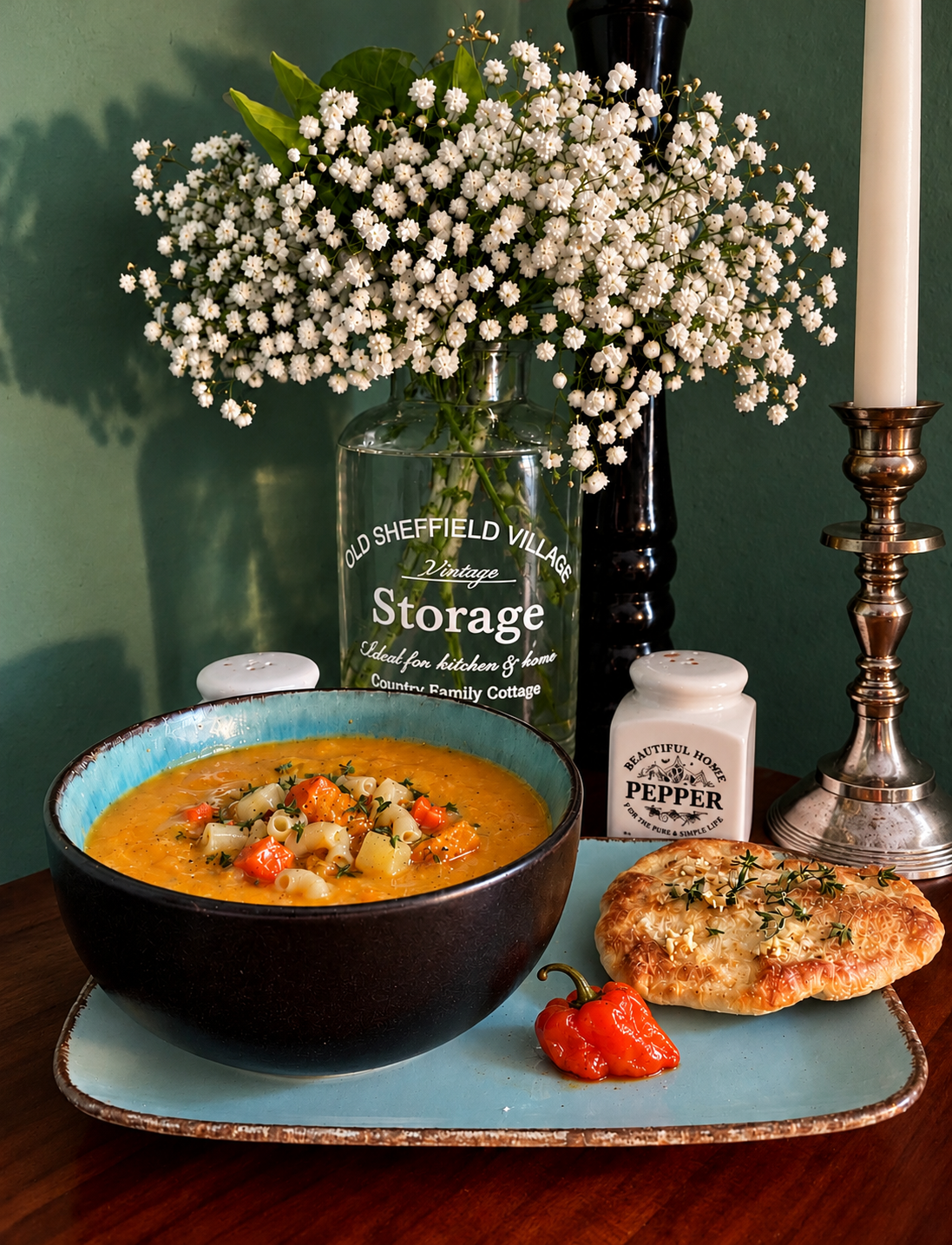
▣ Ingredients (2 servings)
- 1 spring onion
- 2 cloves garlic
- 1/4 green bell pepper
- 3 sprigs fresh parsley
- 3 sprigs fresh thyme
- 1 tbsp olive oil
- 1/2 lime
- 400 g butternut squash
- 600 ml strong vegetable broth
- 1 carrot
- 1 potato
- 40 g short pasta
- 1 pinch ground cloves
- 1 handful white cabbage
- 1 onion
- 1 scotch bonnet or habanero chili
- 1 crusty baguette (optional)
- to taste salt & freshly ground pepper
♨ Preparation
- Prepare the Haitian Epis
Prepare the Aromatics
Wash the spring onion, green bell pepper, parsley and thyme.
Peel the garlic cloves.
Roughly chop the spring onion and green bell pepper.
Squeeze the juice from half a lime. - Blend the Epis
Place the spring onion, garlic, green bell pepper, parsley, thyme, olive oil and lime juice in a small blender.
Blend until a thick, aromatic paste forms.
Alternatively, finely chop the ingredients and crush them together using a mortar and pestle.
Set aside. - Prepare the Squash Base
Cook the Butternut Squash
Peel the butternut squash and cut it into cubes.
Place the squash and vegetable broth in a saucepan.
Bring to a boil, then reduce the heat.
Simmer gently for approximately 15–20 minutes until the squash is completely tender. - Blend the Squash
Blend the cooked squash together with the vegetable broth until smooth and creamy.
Set aside while preparing the remaining vegetables. - Cook the Soup
Sauté the Aromatics
Peel and finely dice the onion.
Heat a little olive oil in a large saucepan over medium heat.
Add the onion and prepared Haitian epis.
Sauté for approximately 3–4 minutes, stirring regularly, until fragrant. - Add the Vegetables
Peel the carrot and potato.
Slice the carrot and dice the potato.
Cut the white cabbage into bite-sized pieces.
Add the vegetables to the saucepan.
Cook for approximately 2 minutes, stirring gently to coat everything in the aromatic epis. - Add the Creamy Squash Base
Pour the blended butternut squash mixture into the saucepan.
Add the ground cloves.
Stir gently until everything is combined. - Add the Whole Scotch Bonnet
Carefully place the whole Scotch Bonnet or Habanero chili into the soup.
Do not cut, pierce or crush the chili.
Cover the saucepan and simmer gently for approximately 15 minutes until the vegetables are almost tender.
Stir carefully around the chili to avoid damaging its skin.
The chili will release some of its fruity aroma and heat into the soup. - Cook the Pasta
Add the dry pasta directly to the soup.
Continue simmering for approximately 8–10 minutes, or according to the package instructions, until the pasta is al dente.
Stir occasionally, taking care not to damage the Scotch Bonnet.
If the soup becomes too thick as the pasta absorbs liquid, add a little hot water or additional vegetable broth. - . Remove the Chili
Carefully lift the whole Scotch Bonnet from the soup.
Check that the chili is still intact.
Do not squeeze or crush it.
Discard or set aside safely. - Season the Soup
Taste the Soup Joumou.
Season with salt, freshly ground black pepper and additional fresh lime juice if desired.
Adjust the consistency with a little hot vegetable broth if necessary. - Garnish and Serve
Divide the hot Soup Joumou between two deep bowls.
Garnish with freshly chopped parsley.
Serve piping hot with crusty baguette or white bread if desired.
Food Story
Some Dinners Are Relaxing. This One Came with Suspense.
When my culinary journey around the world brought me to Haiti, I knew I wanted to make Soup Joumou. Not just because I love a good bowl of homemade soup – and I really do – but because this particular dish carries such a powerful story. A soup that represents freedom, independence and dignity? That’s something truly special. And with butternut squash, vegetables, pasta and aromatic Haitian epis, it sounded absolutely delicious.
Enter the Scotch Bonnet!
Everything was going beautifully. The squash was creamy, the vegetables were simmering, and the kitchen smelled wonderful. I was already seriously hungry and looking forward to dinner. Then came the moment when I carefully lowered one whole Scotch Bonnet into the pot. Now, I love spicy food. But even I know that a Scotch Bonnet is not a chili you casually underestimate. The plan was to leave it completely intact so that its fruity aroma could gently infuse the soup. There was just one tiny condition: it absolutely must not burst!
Operation: Don’t Burst the Chili!
And suddenly, cooking dinner required the concentration of a brain surgeon. Every movement of my wooden spoon was carefully calculated. Stir around the chili. Don’t touch the chili. Definitely don’t accidentally stab the chili. I was hungry, impatient and very aware that one careless move could turn my beautiful Freedom Soup into a bowl of liquid fire. Who knew a single chili could create so much suspense? Apparently, my kitchen had decided to produce its own little culinary thriller.
Freedom Soup – Mission Accomplished!
Fortunately, the Scotch Bonnet behaved itself. The soup made it safely into the bowl, my dinner was saved, and I could finally enjoy the wonderful combination of creamy squash, tender vegetables, pasta and aromatic spices. But beyond all the excitement in my kitchen, I was especially touched by the meaning of this dish. Soup Joumou is a reminder that food can tell stories far greater than the ingredients in a pot. And this particular story deserves to be remembered. Bon appétit – or, as they say in Haitian Creole, Bon apeti!
♨ Nutrition per serving
Nutritional values are approximate and may vary depending on the ingredients and products used.
Good to Know
Soup Joumou – Much More Than Pumpkin Soup
Soup Joumou is one of Haiti's most meaningful culinary traditions. Although it is a hearty soup made with squash, vegetables, pasta and aromatic seasonings, its significance extends far beyond its ingredients. For many Haitians, it represents independence, freedom, dignity, resilience and a connection to national history. Preparing and sharing Soup Joumou is a way of honoring the past while passing cultural knowledge from one generation to the next.
Why Is Soup Joumou Called Freedom Soup?
Soup Joumou is widely known as Freedom Soup because of its association with Haiti's independence from French colonial rule. According to Haitian tradition, the soup had been associated with the colonial elite and was denied to enslaved Haitians. Following independence, preparing and eating the soup became a symbolic act of liberation. The story is central to the dish's cultural meaning, even though individual historical details are preserved largely through collective memory and oral tradition.
Why Is Soup Joumou Traditionally Eaten on 1 January?
Haiti declared its independence on 1 January 1804. The date marks the culmination of the Haitian Revolution and the establishment of an independent nation. Soup Joumou became closely associated with this historic event and is traditionally prepared and shared on New Year's Day, which is also Haiti's Independence Day. Families often begin the year by gathering around a pot of soup, celebrating freedom, togetherness and hope for the future.
Soup Joumou – A Soup of Peace and Unity
Soup Joumou is also associated with community, solidarity and the desire for a peaceful future. Preparing a large pot and sharing it with family, friends and neighbors expresses hospitality and togetherness. Calling it a soup of peace reflects this symbolic meaning, although its best-established historical identity is as Haiti's Freedom Soup. Its importance lies not only in the recipe but also in the act of preparing and sharing it.
Haiti and the Haitian Revolution
The Haitian Revolution began in 1791 in the French colony of Saint-Domingue. Enslaved people fought against slavery and colonial domination in a long and complex struggle involving several political and military forces. On 1 January 1804, Haiti declared independence. The revolution became a landmark in world history because it led to the creation of an independent state through a successful uprising against slavery.
What Made Haiti's Independence Historically Extraordinary?
Haiti became the first independent Black republic and the first country established through a successful revolution led by formerly enslaved people. Its independence challenged the institution of slavery and colonial power structures at a time when both remained widespread. The historical importance of the Haitian Revolution reaches far beyond the Caribbean.
UNESCO Recognition – A Living Cultural Tradition
In 2021, UNESCO inscribed the knowledge and practices surrounding Joumou soup on the Representative List of the Intangible Cultural Heritage of Humanity. This recognition highlights the soup's role in Haitian cultural identity, collective memory and community life. The inscription concerns not simply a written recipe but the living practices associated with preparing, sharing and transmitting the tradition.
What Does Joumou Mean?
Joumou is a Haitian Creole term associated with the squash used to prepare the soup. Traditional Soup Joumou is commonly made with a type of squash or pumpkin that is cooked and puréed to form its characteristic golden base. The precise variety may vary depending on regional availability and family preferences.
Why Use Butternut Squash?
Butternut squash is widely available in many European supermarkets and provides a practical alternative when traditional Haitian squash varieties are difficult to obtain. Its sweet, slightly nutty flavor and smooth texture work particularly well in this recipe. Once cooked and blended, it creates a creamy golden base without requiring dairy products or plant-based cream.
Is Butternut Squash the Same as Pumpkin?
Butternut squash and pumpkins belong to the same broader group of cultivated squash plants, but they are not identical varieties. Butternut squash typically has dense orange flesh, a relatively smooth texture and a sweet, nutty flavor. These characteristics make it especially suitable for blended soups and sauces.
Why Is the Soup So Golden?
The rich golden color comes primarily from the natural carotenoid pigments in the squash. Butternut squash contains beta-carotene, which contributes to its orange color and can be converted by the body into vitamin A. Blending the cooked squash distributes these pigments evenly throughout the broth, creating the soup's distinctive appearance.
What Is Haitian Epis?
Epis is an aromatic seasoning mixture widely used in Haitian cuisine. It commonly combines garlic, peppers, spring onions or scallions, fresh herbs and other seasonings. Depending on the household, recipes may also contain citrus juice, vinegar or oil. Epis forms an important flavor base for soups, stews, vegetable dishes and marinades. Every family may have its own preferred combination.
Why Is Epis So Important in Haitian Cooking?
Epis provides a concentrated mixture of fresh aromatic ingredients that can be incorporated into a dish at the beginning of cooking. Sautéing the mixture gently helps develop its aroma and distributes its flavors throughout the soup. In this recipe, epis balances the sweetness of the squash with garlic, herbs, green pepper and fresh lime.
Can You Prepare Epis Ahead?
Yes. Epis can be prepared in advance and stored in the refrigerator for short-term use or frozen in small portions. An ice cube tray is useful for freezing individual quantities. Once frozen, the portions can be transferred to a suitable freezer container. This is particularly practical when preparing several Haitian-inspired dishes.
What Is a Scotch Bonnet Chili?
Scotch Bonnet is a very hot chili pepper commonly associated with Caribbean cooking. It belongs to the species Capsicum chinense and is known for its intense heat and distinctive fruity aroma. Scotch Bonnet chilies can be extremely pungent, so they should be handled carefully and used according to personal heat tolerance.
Scotch Bonnet Versus Habanero
Scotch Bonnet and Habanero chilies are closely related and both belong to Capsicum chinense. They often have similarly high heat levels, although individual varieties and growing conditions can produce considerable variation. Scotch Bonnet is especially associated with Caribbean cuisines, while Habanero is also widely used in Mexican and other regional cooking. Habanero can serve as a practical substitute when Scotch Bonnet is unavailable.
What Is Capsaicin?
Capsaicin is the compound primarily responsible for the burning sensation associated with chili peppers. It activates heat-sensitive receptors in the mouth and on the skin, creating the perception of intense heat. Capsaicin is concentrated particularly in the internal tissues to which the seeds are attached, although the seeds themselves can also carry capsaicin on their surfaces.
Does Cooking a Whole Chili Make the Soup Mild?
Not necessarily. Leaving a chili intact generally limits the direct exposure of its internal tissues to the broth, but it does not guarantee a mild result. Some capsaicin can still enter the soup, and the amount depends on the chili, cooking time and condition of its skin. A whole Scotch Bonnet can make a dish surprisingly spicy even without being cut open.
Why Must the Scotch Bonnet Stay Intact?
Cutting or crushing the chili exposes more of its internal tissues, potentially releasing substantially more capsaicin into the soup. Keeping it whole provides greater control, although the heat remains unpredictable. Stir gently and remove the chili carefully before serving. If the skin splits, remove it promptly and taste the soup before adding any further seasoning.
What Should You Do If the Soup Becomes Too Spicy?
If the soup becomes hotter than intended, remove the chili immediately. Adding more vegetable broth or squash can dilute the concentration of capsaicin per serving, although it also increases the quantity of soup. Serving the soup with bread may make the meal more comfortable to eat. Water does not dissolve capsaicin particularly well, so simply drinking water may provide limited relief from the burning sensation.
Why Blend the Squash Separately?
Blending the cooked squash with vegetable broth creates a smooth base while allowing the other vegetables to remain in recognizable pieces. This gives the finished Soup Joumou two complementary textures: a creamy golden broth and tender vegetables with pasta. It also avoids the need for cream or a separate thickener.
Why Add Pasta to Soup Joumou?
Pasta is a familiar ingredient in many preparations of Soup Joumou. It adds substance and helps turn the soup into a filling meal. Short pasta shapes such as macaroni are particularly practical because they are easy to eat with a spoon. As the pasta cooks, it absorbs liquid and releases some starch into the broth.
Why Does Soup Joumou Become Thicker Over Time?
The soup naturally thickens as the pasta continues absorbing liquid. The starch from the pasta and potatoes also contributes to its consistency. Leftovers may therefore be considerably thicker than the freshly cooked soup. Adding a little vegetable broth during reheating helps restore the desired texture.
Why Use White Cabbage?
White cabbage adds texture and mild sweetness to the soup. It becomes tender during cooking while retaining some structure if it is not overcooked. Cabbage also contributes dietary fiber and vitamin C, although some vitamin C is lost during prolonged heating.
Why Add Ground Cloves?
Cloves have an intense, warm aroma that can complement sweet squash and savory vegetables. They contain aromatic compounds such as eugenol, which contributes to their distinctive flavor. Because cloves are particularly strong, only a small pinch is needed. Too much can easily overpower the soup.
Why Add Fresh Lime Juice?
Lime juice introduces fresh acidity that balances the sweetness of the butternut squash and brightens the aromatic seasoning mixture. A little extra lime juice added just before serving can make the flavors taste more balanced. The amount should be adjusted according to personal preference.
Is Traditional Soup Joumou Naturally Vegan?
No, not necessarily. Many traditional versions contain beef or other meat, and some use meat-based stock. This Via Veggie Vegan interpretation replaces those ingredients with vegetable broth while retaining the squash, vegetables, pasta and aromatic seasonings. It is a plant-based adaptation rather than a claim that all traditional versions are vegan.
Can Soup Joumou Be a Complete Meal?
Soup Joumou combines vegetables, squash and pasta in a substantial dish. It provides carbohydrates, fiber and a range of vitamins and minerals. However, this particular vegan version is relatively modest in protein compared with some meat-containing preparations. Serving it alongside a protein-rich plant food or including legumes in a separate meal can help support overall dietary balance.
What Nutrients Does Butternut Squash Provide?
Butternut squash contributes beta-carotene, potassium and dietary fiber. Beta-carotene can be converted into vitamin A, which supports normal vision and immune function. The squash also contributes natural carbohydrates that give the soup its characteristic sweetness.
Why Is Fiber Important?
Dietary fiber supports normal digestive function and can contribute to fullness. Vegetables, squash, cabbage and whole-grain foods are useful sources of fiber. Eating a variety of plant foods helps provide different types of fiber that support a balanced diet.
Does Soup Joumou Contain Cholesterol?
The plant-based ingredients in this recipe do not naturally contain dietary cholesterol. Cholesterol is found in animal-derived foods, while plant foods contain other types of sterols. However, a cholesterol-free food is not automatically low in saturated fat or calories. The overall nutritional composition still matters.
HDL and LDL – Understanding Cholesterol
LDL particles transport cholesterol through the bloodstream. Elevated LDL cholesterol is an established risk factor for cardiovascular disease because LDL-containing particles can contribute to plaque formation in blood vessels. HDL particles participate in cholesterol transport, but a high HDL cholesterol level alone does not guarantee cardiovascular protection. Maintaining healthy blood lipid levels depends on several factors, including diet, genetics and lifestyle.
Saturated and Unsaturated Fatty Acids
Olive oil contains predominantly unsaturated fatty acids, especially monounsaturated fat. Replacing some saturated fats with unsaturated fats can help lower LDL cholesterol. This soup uses olive oil and vegetable broth rather than butter or cream, making it possible to create a rich texture without relying on large amounts of added fat.
Why Does a Little Olive Oil Matter?
Olive oil contributes flavor and helps sauté the aromatic epis. The presence of some dietary fat can also support the absorption of fat-soluble carotenoids from the squash and carrots. A modest amount is sufficient for this recipe.
Can You Make Soup Joumou Gluten-Free?
Yes. Replace the wheat-based pasta with a suitable gluten-free short pasta and check that the vegetable broth and other packaged ingredients are gluten-free. Gluten-free pasta may have different cooking times and can soften more quickly, so check it regularly.
Can You Make Soup Joumou Ahead of Time?
Yes. The soup can be prepared in advance, although the pasta will continue absorbing liquid during storage. For the best texture, the squash base and vegetables can be prepared ahead, with the pasta added when reheating. If the pasta is already included, simply add more broth to loosen the soup.
How Should Leftover Soup Joumou Be Stored?
Cool the soup promptly and refrigerate it in a clean, airtight container. Use within approximately 2–3 days and reheat until thoroughly hot. Because pasta continues absorbing liquid, add a little vegetable broth or water when reheating if necessary.
Can You Freeze Soup Joumou?
The squash and vegetable base freezes well, but pasta may become softer after thawing. For the best result, freeze the soup before adding the pasta. Thaw safely, reheat thoroughly and cook fresh pasta directly in the reheated soup.
Zero Waste – Save the Squash Seeds
Butternut squash seeds can be cleaned, dried and roasted for a crunchy snack or garnish. Remove the stringy pulp, rinse the seeds and dry them thoroughly before roasting. Their size and texture differ from commercial pumpkin seeds, but they can still be used in suitable recipes.
Zero Waste – Use Suitable Vegetable Scraps
Clean carrot peels, onion trimmings and suitable herb stems can be collected for homemade vegetable stock. Store them in a freezer container until enough have accumulated. Avoid spoiled or heavily soiled scraps, and use only parts that are suitable for food preparation.
Zero Waste – Don't Waste the Lime
Before squeezing the lime, grate the zest if the peel is suitable for culinary use. The zest can be frozen in a small airtight container and used later in dressings, marinades, sauces or other recipes. This makes better use of the whole fruit.
Zero Waste – Turn Leftovers into Another Meal
Soup Joumou often becomes thicker overnight as the pasta absorbs liquid. Instead of discarding leftovers, add a little vegetable broth and reheat gently. Finish with fresh parsley or lime juice to refresh the flavors. A thick leftover portion can also be enjoyed as a hearty vegetable-and-pasta stew.
A Bowl of History, Hope and Community
What makes Soup Joumou extraordinary is the meaning attached to its preparation and sharing. Every year on 1 January, the tradition connects Haitian families and communities with a history of liberation and resilience. The soup reminds us that food can preserve memory, express identity and bring people together. This vegan version is a respectful culinary tribute to that tradition – prepared in one kitchen, inspired by a story that reaches far beyond it.
You may also like
♡
You may also like
Dominica Callaloo – Creamy Vegan Caribbean Green Soup
You may also like
Greek Chickpea Lemon Soup – Creamy Vegan Soup with Fresh Dill
You may also like