Italy – A Culinary Journey to Puglia
Italy is celebrated for its remarkable regional cuisine, where traditional recipes reflect local ingredients, history and culinary creativity. In the southern region of Puglia, olive oil, tomatoes, garlic, chili and pasta are essential ingredients. Bari, the region's lively coastal capital, is particularly famous for its distinctive pasta traditions and vibrant street-food culture.
What Are Spaghetti all’Assassina?
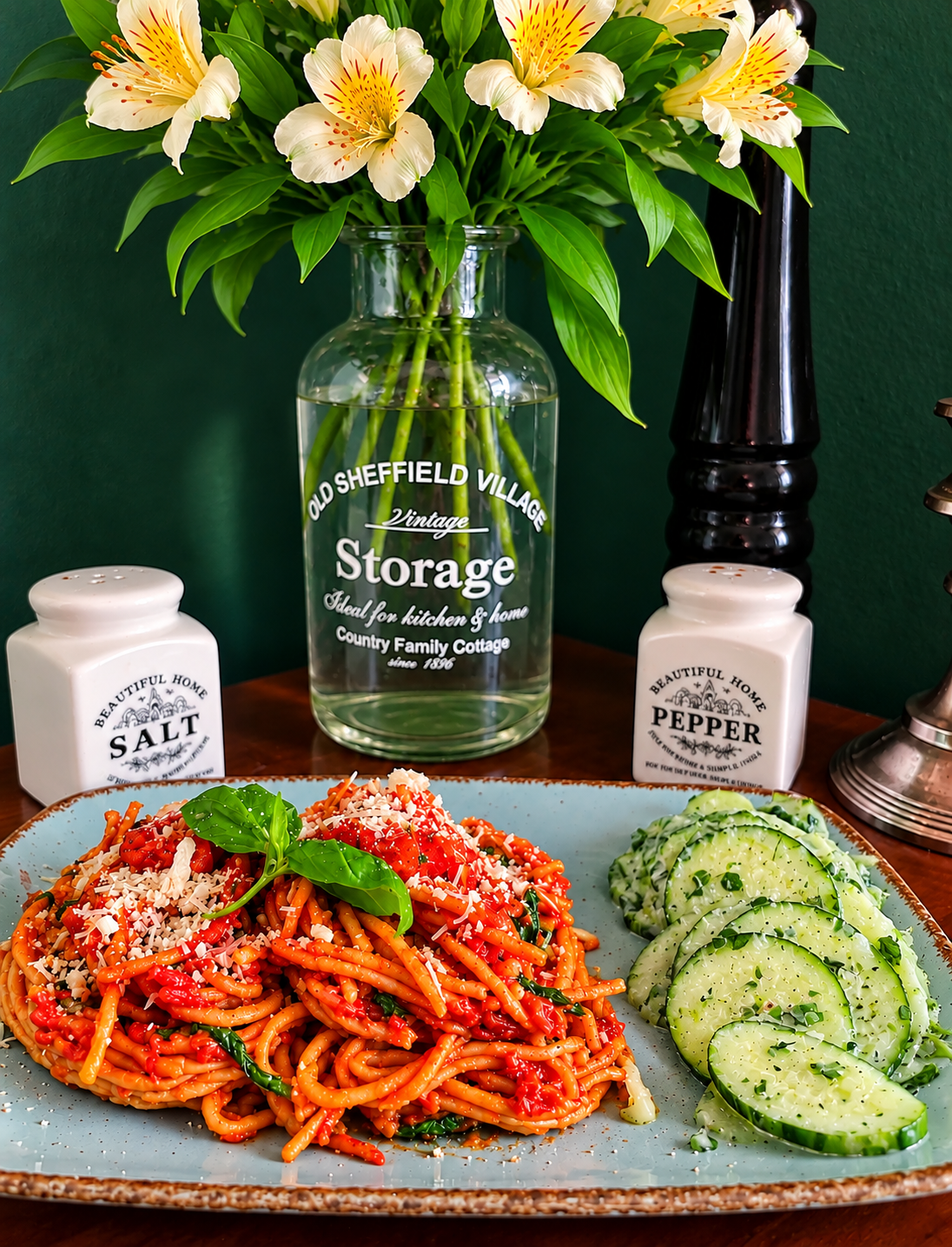
Spaghetti all’Assassina, meaning “Assassin’s Spaghetti,” originated in Bari and became known for a cooking technique that breaks the usual pasta rules. Instead of boiling spaghetti separately, the dry pasta is toasted directly in a hot frying pan with tomato sauce, garlic and chili. Hot tomato broth is gradually added and allowed to evaporate, creating deeply concentrated flavors and characteristic crispy, lightly charred patches. The traditional basic recipe is naturally vegan, making it a perfect addition to Via Veggie Vegan.
▣ Ingredients (2 servings)
- 500 ml tomato broth
- 50 g triple-concentrated tomato paste
- 1 tsp coarse salt
- 200 g spaghetti
- 75 ml extra virgin olive oil
- 2-3 cloves garlic
- 2-3 red chillies
- 100-120 ml tomato passata
- 1 pinch salt
♨ Preparation
- Prepare the Tomato Broth
Heat the Water.
Pour 500 ml water into a small saucepan.
Bring to a boil. - Add the Tomato Paste
Add the triple-concentrated tomato paste.
Stir thoroughly until the tomato paste has completely dissolved. - Season the Broth
Add one level teaspoon of coarse salt.
Stir again. - Keep the Broth Hot
Reduce the heat to low.
Keep the tomato broth very hot throughout the entire pasta-cooking process.
The broth should be ready to add whenever the spaghetti need more liquid. - Prepare the Garlic and Chili
Peel the garlic cloves.
Slice them thinly or crush them lightly.
Prepare the dried or fresh red chilies according to your preferred heat level.
For the full Assassina experience, use a generous amount of chili. - Heat the Olive Oil
Pour the extra virgin olive oil into the frying pan.
Add the garlic and chili.
Heat gently over medium heat.
Allow the aromatics to infuse the oil. - Develop the Garlic Flavor
Continue heating until the garlic becomes fragrant and begins to turn lightly golden.
Watch carefully.
The garlic should release its aroma without becoming dark or bitter. - Prepare the Tomato Base
Add the Passata
Pour the tomato passata directly into the aromatic oil.
Stir gently to combine. - Reduce the Sauce
Cook the tomato mixture for approximately 2–3 minutes.
Allow it to thicken slightly.
Season with a small pinch of salt. - Toast the Dry Spaghetti
Add the Uncooked Spaghetti
Place the dry spaghetti directly into the frying pan.
Arrange them as evenly as possible so they lie flat against the hot surface.
Do not boil them beforehand. - Coat the Spaghetti
Move the spaghetti gently at first so they become coated with the tomato mixture and aromatic oil.
Avoid excessive stirring. - Toast the First Side
Leave the spaghetti relatively undisturbed for approximately 3–4 minutes.
Allow the pasta to make direct contact with the hot pan.
The underside should begin developing darker, caramelized areas.
These toasted sections are essential to the character of Spaghetti all’Assassina. - Turn the Spaghetti
Using kitchen tongs, carefully turn the spaghetti.
Allow the other side to develop some toasted areas as well.
The goal is deep browning and controlled charring, not a uniformly black or bitter crust. - Cook the Pasta by the Risottare Method
Add the First Ladle of Tomato Broth
Pour one ladleful of the piping-hot tomato broth around the edges of the pan.
Avoid pouring it directly over the spaghetti whenever possible.
The liquid should begin bubbling immediately. - Allow the Broth to Reduce
Continue cooking over relatively high heat.
Allow the spaghetti to absorb the tomato broth while the remaining liquid evaporates. - Wait for the Sizzle
Once most of the liquid has disappeared, listen for the pan to begin sizzling again.
This indicates that the spaghetti are coming back into direct contact with the hot surface.
Allow them to toast briefly. - Add More Broth
Add another ladleful of hot tomato broth.
Allow it to reduce again.
Repeat the process gradually.
Do not add all the broth at once. - . Continue Cooking
Continue alternating between adding broth and allowing the pasta to toast.
Move the spaghetti only when necessary to prevent uneven cooking or excessive burning.
If needed, gently shift the spaghetti from the edges toward the center of the pan. - Check the Pasta Texture
Continue cooking for approximately 12–15 minutes during this stage, or until the spaghetti are al dente.
The exact time depends on the pasta thickness, the pan and the heat.
You may not need every drop of tomato broth.
If the spaghetti are still too firm after the broth has been used, add a little more hot water. - Create the Characteristic Crust
Evaporate the Remaining Liquid
Once the spaghetti are al dente, allow the remaining liquid to evaporate.
The pasta should be coated in a concentrated tomato sauce rather than swimming in liquid. - Toast One Final Time
Allow the spaghetti to fry briefly against the hot surface for approximately another minute.
This creates the characteristic irregular dark, crispy patches.
The finished pasta should be intensely red, glossy, spicy and lightly charred in places. - Serve
Plate the Spaghetti
Carefully transfer the spaghetti to two serving plates.
Arrange them loosely to preserve their texture.
Serve Immediately
Serve the Spaghetti all’Assassina while hot.
Traditional versions do not require cheese.
The concentrated tomato, garlic, chili and toasted pasta provide plenty of flavor on their own.
Food Story
When Burning Dinner Is Actually the Plan
There are certain cooking rules we learn early in life. Don’t burn your food. Don’t let pasta stick to the pan. And always cook spaghetti in plenty of boiling water. Well, today we’re breaking all three! Welcome to Bari, where Spaghetti all’Assassina turn everything you thought you knew about cooking pasta upside down. Dry spaghetti go straight into a hot frying pan, surrounded by tomatoes, garlic, chili and olive oil. No boiling beforehand. No draining. And definitely no fear of a little sizzling.
Team Garlic Meets Team Spicy
This recipe couldn’t be more perfect for my Via Veggie Vegan kitchen. Garlic? Absolutely. Chili? Plenty! The spaghetti gradually absorb a rich tomato broth while repeatedly toasting against the hot pan. Normally, those dark crispy patches would make me wonder whether dinner was heading for disaster. Here, they’re exactly what we’re looking for. A little culinary rebellion with a wonderfully fiery personality.
A Deliciously Dangerous Italian Classic
And the best part? Absolutely nothing needs to be veganized. No substitutes, no complicated alternatives, just a handful of simple ingredients and a rather unconventional cooking technique. Sometimes the most extraordinary flavors come from doing the exact opposite of what you’re supposed to do. So here’s to breaking the rules, embracing a little kitchen drama and discovering that slightly burning dinner can actually be delicious. Killer Spaghetti? Challenge accepted!
♨ Nutrition per serving
Nutritional values are approximate and may vary depending on the ingredients and products used.
Good to Know
Why Is It Called Spaghetti all’Assassina?
The name translates approximately as “Assassin’s Spaghetti” or “Killer Spaghetti.” Several stories surround its origin, but there is no universally accepted explanation for the dramatic name. It is often associated with the dish's fiery chili heat and aggressive cooking technique. Unlike conventional pasta, the spaghetti are deliberately exposed to intense heat, developing characteristic dark and crispy areas.
Where Did the Recipe Originate?
Spaghetti all’Assassina are a specialty of Bari, the capital of Puglia in southern Italy. The dish is generally associated with the city's restaurant culture during the 1960s. One frequently cited account connects its creation with the restaurant Al Sorso Preferito. Over time, the recipe became a celebrated local specialty and gained international attention for its unusual preparation.
What Does Risottare Mean?
Risottare describes a technique in which pasta is cooked by gradually adding liquid, similar to preparing risotto. Instead of boiling the pasta separately, the spaghetti absorb the liquid directly in the pan. The released starch helps create a cohesive sauce. Spaghetti all’Assassina take this technique further by allowing the pasta to toast repeatedly between additions of tomato broth.
Why Does the Tomato Broth Matter?
The broth combines water, concentrated tomato paste and salt. It cooks the dry spaghetti while building layers of tomato flavor. As the liquid repeatedly evaporates, the tomato flavor becomes more concentrated. Keeping the broth hot also helps maintain the temperature needed for the characteristic toasting process.
Controlled Charring vs. Burning
The dark patches on Spaghetti all’Assassina are intentional, but there is an important difference between controlled browning and excessive burning. Toasted areas contribute texture and roasted flavors, while heavily burnt food can taste acrid and bitter. Frequent consumption of heavily charred starchy foods is best avoided because high-temperature cooking can increase the formation of acrylamide. Aim for an irregular, deeply toasted crust rather than uniformly blackened pasta.
Tomatoes and Lycopene
Tomatoes contain lycopene, a naturally occurring carotenoid responsible for their red color. Lycopene has antioxidant properties, and its bioavailability generally increases when tomatoes are cooked and combined with a little fat. The olive oil in this recipe therefore complements the tomato ingredients particularly well. However, lycopene is not a substitute for an overall balanced diet.
Olive Oil and Heart Health
Extra virgin olive oil is rich in monounsaturated fatty acids, particularly oleic acid. Replacing saturated fats with unsaturated fats can help lower LDL cholesterol, which is an important factor in cardiovascular health. LDL transports cholesterol through the bloodstream, and elevated levels increase the risk of atherosclerosis. HDL participates in transporting cholesterol back toward the liver, although HDL levels alone do not determine cardiovascular risk. Olive oil is beneficial as part of a balanced diet, but it remains energy-dense.
What About the Chili?
Chilies contain capsaicin, the compound responsible for their characteristic heat. Capsaicin activates heat-sensitive receptors in the mouth, creating the familiar burning sensation. Chili tolerance varies considerably between individuals, so the amount can be adjusted. This version is classified as Very Hot (4/4), reflecting the traditionally fiery character of the dish.
Does Spaghetti all’Assassina Provide Fiber?
Regular wheat spaghetti, tomato products, garlic and chili contribute dietary fiber, although the total amount depends on the ingredients used. Fiber supports normal bowel function and helps promote satiety. Using whole-wheat spaghetti would generally increase the fiber content, but it would also change the traditional texture and cooking behavior of the dish.
Naturally Vegan – No Substitutes Required
Traditional Spaghetti all’Assassina are made with spaghetti, tomatoes, garlic, chili, olive oil, water and salt. These ingredients are naturally plant-based, so no meat, dairy or egg alternatives are required. When buying dried spaghetti, simply check the ingredient list to ensure they contain no eggs.
Zero Waste – Make the Most of Your Ingredients
Leftover tomato paste can be frozen in small portions for soups, sauces and curries. Unused tomato passata can also be refrigerated promptly or frozen for later use. Spaghetti all’Assassina taste best immediately after cooking, but leftovers can be refrigerated and reheated thoroughly in a hot frying pan with a little olive oil to restore some of their toasted texture.