
India – A Country of Extraordinary Culinary Diversity
India is a vast South Asian country with a rich and remarkably diverse culinary heritage. Regional cooking traditions vary according to geography, climate, religion, history and local ingredients. In North India, dishes featuring spinach, lentils, aromatic spices, flatbreads and yogurt are particularly familiar. Fresh ginger, garlic, cumin, turmeric, coriander and garam masala contribute layers of flavor to countless savory preparations. Indian cuisine also makes extensive use of tadka, a technique in which spices and aromatics are briefly heated in fat to release their fragrance. From simple home-cooked meals to elaborate regional specialties, the combination of fresh ingredients and carefully balanced spices is central to many Indian food traditions.
Palak Shorba – A Fragrant Indian Spinach Soup
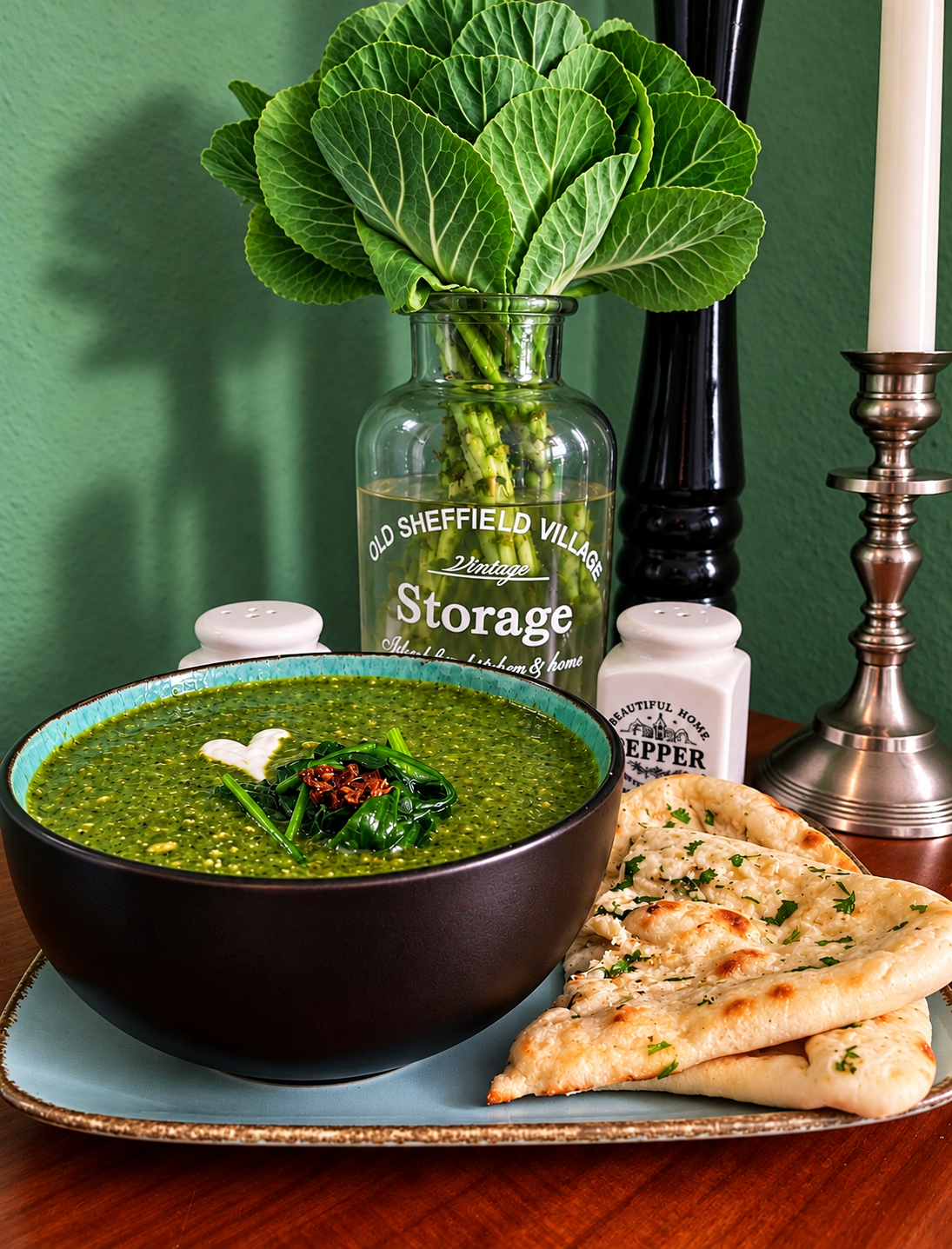
Palak means spinach in Hindi, while shorba refers to soup or broth. The term shorba has connections with Persian and Arabic culinary vocabulary and is used for various soups and broths across South Asia and neighboring regions. Palak Shorba is a spinach-based soup associated with North Indian-inspired cooking, although preparations differ between cooks and households. This Via Veggie Vegan version combines fresh spinach with red onion, tomato, ginger, garlic, green chili, turmeric, cumin and whole spices. A final cumin-garlic tadka adds toasted aromas, while vegan sour cream provides a creamy contrast. Homemade Garlic Naan completes the meal, turning a light spinach soup into a satisfying plant-based dish.
▣ Ingredients (2 servings)
- 200 g fresh spinach
- 1 red onion
- 1 tomato
- 1 tsp fresh ginger
- 2 cloves garlic
- 1 green chili
- 1 clove garlic, for the tadka
- 1-2 cloves garlic, for the Naan topping
- 1 bay leaf
- 2 cloves
- 1/4 tsp ground cumin
- 1/4 tsp turmeric
- 1/4 tsp garam masala
- 1/2 tsp cumin seeds
- 3,5 g dry yeast
- 1 tsp sugar
- 1/2 tsp salt, for the Naan dough
- 6 sprigs fresh coriander
- 1 tbsp vegan butter alternative or neutral vegetable oil
- 300 ml vegetable broth
- 50 ml unsweetened plant-based drink or coconut milk
- a small squeeze of fresh lemon juice
- 1 tsp neutral vegetable oil or vegan butter alternative, for the tadka
- 2 tbsp vegan sour cream alternative
- 300 g wheat or spelt flour, Type 630, for the Naan
- 120 ml lukewarm water
- 60 g unsweetened vegan yogurt
- 1 tbsp olive oil or rapeseed oil
- 2 tbsp vegan butter alternative, for the Naan topping
- to taste salt& freshly ground black pepper
♨ Preparation
- Prepare the Naan Dough
Combine the lukewarm water, sugar and dry yeast in a mixing bowl.
Leave for approximately 5 minutes until the yeast begins to activate and the mixture becomes slightly foamy.
Add the flour, salt, vegan yogurt and oil.
Knead for approximately 5–10 minutes until a smooth, supple dough forms.
Cover the bowl with a clean kitchen towel and leave the dough in a warm place for approximately 1 hour, or until roughly doubled in size. - Shape the Garlic Naans
Transfer the risen dough to a lightly floured work surface.
Knead briefly and divide into six equal portions.
Roll each portion into a small oval or teardrop shape approximately 5 mm thick.
Keep the remaining dough pieces covered while shaping the Naans. - Cook the Naans in a Pan
Heat a dry non-stick or cast-iron frying pan over medium-high to high heat.
Place one Naan in the hot pan and cook for approximately 2–3 minutes until bubbles appear and the underside develops dark golden spots.
Turn carefully and cook for another 1–2 minutes.
Repeat with the remaining dough portions.
Alternatively, preheat the oven and a baking tray to 230–250°C conventional heat and bake the Naans for approximately 5–7 minutes until puffed and lightly browned. - Prepare the Garlic Topping
Melt the vegan butter alternative gently.
Add the finely chopped or pressed garlic and fresh herbs.
Stir until evenly combined.
Brush the freshly cooked Naans with the garlic mixture.
Keep the Naans warm beneath a clean kitchen towel until serving.
Allow any extra Naans to cool completely before freezing. - Blanch the Spinach
Bring a saucepan of water to a boil.
Add the thoroughly washed spinach and blanch for approximately 1 minute until just wilted.
Immediately drain and transfer the spinach to very cold water to stop the cooking process.
Drain thoroughly and gently squeeze out excess water.
Set aside. - Prepare the Vegetables and Aromatics
Peel and finely dice the red onion.
Wash and finely dice the tomato.
Peel and grate the fresh ginger.
Peel and finely chop the garlic cloves.
Finely chop the green chili.
Prepare the bay leaf, whole cloves and ground spices. - Build the Shorba Base
Heat the vegan butter alternative or vegetable oil in a saucepan over medium heat.
Add the bay leaf and whole cloves.
Allow them to become fragrant without burning.
Add the diced red onion, grated ginger, chopped garlic and green chili.
Sauté gently until the onion becomes soft and lightly golden.
Add the Tomato
Add the diced tomato to the aromatic mixture.
Cook gently until the tomato softens and begins to break down.
Stir regularly so the mixture does not stick to the saucepan. - Add the Ground Spices
Add the turmeric and ground cumin.
Stir briefly until the spices become fragrant.
Season lightly with salt and freshly ground black pepper.
Do not add the garam masala yet. - Blend the Spinach Soup
Remove the bay leaf and whole cloves.
Add the blanched spinach to the aromatic onion and tomato mixture.
Blend with an immersion blender until smooth.
Add a small amount of the vegetable broth if necessary to help the ingredients blend evenly. - Finish the Palak Shorba
Return the spinach purée to the saucepan if necessary.
Add the remaining vegetable broth and unsweetened plant-based drink or coconut milk.
Bring briefly to a gentle simmer and cook for approximately 3–4 minutes.
Stir occasionally.
Switch off the heat.
Add the garam masala and stir gently.
Cover the saucepan and allow the soup to rest briefly so the fragrant spices can develop in the residual heat.
Finish with a small squeeze of fresh lemon juice.
Adjust the salt and black pepper to taste. - Prepare the Cumin-Garlic Tadka
Heat the vegetable oil or vegan butter alternative in a small frying pan over medium heat.
Add the cumin seeds and allow them to sizzle until fragrant.
Add the thinly sliced garlic.
Fry briefly until the garlic turns golden.
Watch carefully, as garlic can become bitter very quickly if overcooked.
Remove the pan from the heat as soon as the garlic reaches the desired color. - Serve the Palak Shorba
Divide the hot spinach soup between two bowls.
Spoon the freshly prepared cumin-garlic tadka over the surface.
Finish each bowl with a spoonful of vegan sour cream alternative.
Serve immediately with warm homemade Garlic Naan.
Freeze any remaining Naans for future meals.
Food Story
India, My Culinary Love Affair
I’ve traveled to India several times, and somehow, the country manages to surprise me all over again with every visit. The colors, the people, the chaos, the incredible aromas and, of course, the food! Indian cuisine is one of those things I simply never get tired of. Give me garlic, ginger, chili and a generous selection of spices, and I’m already happy. Add homemade Garlic Naan, and I’m practically in heaven.
A Scooter, a Cowpat and a Very Bad Landing
But speaking of India, there’s one little travel memory that suddenly comes to mind. During one of my trips, my travel companion and I decided to explore on a scooter. Brave? Absolutely. Sensible? Well, that depends on your definition. Everything was going reasonably well until we encountered a rather unexpected obstacle: a cowpat. Yes, an actual cowpat. We slipped, lost our balance and ended up on the ground. Not exactly the glamorous travel adventure we’d imagined!
When the Menu Suddenly Became Soup Only
Fortunately, the accident wasn’t too serious. I did, however, bruise my jaw. And anyone who has ever tried chewing with a bruised jaw knows that suddenly even the most delicious meal becomes a challenge. So there I was, surrounded by one of the world’s most exciting cuisines, temporarily reduced to eating soup. Only soup! For someone who loves food as much as I do, that was almost more tragic than the accident itself. Although, to be fair, if you have to survive on soup somewhere, India certainly isn’t the worst place to do it.
Palak Shorba – A Soup I Would Happily Choose
Back in my own kitchen, thankfully with my jaw fully recovered, I can enjoy Indian food in all its wonderful forms again. But this Palak Shorba is exactly the kind of soup I would have happily eaten back then. Vibrant spinach, ginger, garlic, green chili and aromatic spices, finished with a sizzling cumin-garlic tadka. And this time, I get to enjoy homemade Garlic Naan alongside it. Much better than a compulsory soup diet!
Six Naans, Two People and a Very Happy Freezer
Of course, my Garlic Naan recipe makes six small breads, which is slightly ambitious when you’re cooking for two. But that’s entirely intentional. Some go straight onto the table, warm and covered in garlic butter. The others go into the freezer. Because future me deserves good food too. And if there’s one thing I’ve learned from my travels, it’s that life can surprise you at any moment. Sometimes with wonderful flavors. Sometimes with a cowpat. Personally, I’d rather have the garlic naan.
♨ Nutrition per serving
Nutritional values are approximate and may vary depending on the ingredients and products used.
Good to Know
What Does Palak Shorba Mean?
Palak is the Hindi word for spinach, while shorba refers to soup or broth. Together, the words describe a spinach-based soup. Palak Shorba is associated with Indian cooking, particularly North Indian-inspired preparations featuring leafy greens and aromatic spices. The exact ingredients and consistency vary depending on the recipe. Some versions are light and broth-like, while others are blended into a creamy soup.
Shorba – A Soup with a Long Culinary Journey
The term shorba is related to words for soup or broth used in Persian, Arabic and other languages. Related soup traditions can be found across the Middle East, Central Asia and South Asia. In Indian cooking, shorba often refers to a fragrant soup or broth seasoned with spices and herbs. The name reflects historical culinary exchanges across regions rather than belonging exclusively to one country. Different cuisines have developed their own interpretations, from clear broths to richer vegetable and lentil soups.
Why Is Spinach So Nutritious?
Spinach provides folate, vitamin K, beta-carotene and dietary fiber, along with minerals such as magnesium and iron. Vitamin K contributes to normal blood clotting and bone health, while folate supports normal cell division. Spinach contains non-heme iron, which is less readily absorbed than the heme iron found in animal-derived foods. Combining spinach with a source of vitamin C, such as lemon juice, can support non-heme iron absorption. People taking vitamin K-antagonist medication should keep their vitamin K intake consistent and follow medical advice.
Why Blanch Spinach Before Blending?
Brief blanching softens spinach and makes it easier to blend into a smooth soup. Transferring the leaves immediately to very cold water stops further cooking and helps preserve their green appearance. Spinach contains chlorophyll pigments that can change during prolonged heating, particularly in acidic conditions. Blanching also reduces some water-soluble compounds, although it can lead to losses of certain vitamins. The short cooking time used here helps balance texture, color and flavor.
What Is Tadka?
Tadka, also known as tarka or chhonk in different parts of South Asia, is a cooking technique in which spices and aromatics are briefly heated in fat. The hot oil helps release and distribute aromatic compounds, creating an intense burst of flavor. Depending on the dish, tadka may be prepared at the beginning of cooking or added as a finishing touch. In this Palak Shorba, cumin seeds and thinly sliced garlic are fried immediately before serving and spooned over the soup, adding fragrance, texture and a delicious contrast to the smooth spinach base.
What Is Garam Masala?
Masala is a term used in Indian cuisine for a mixture of spices or a seasoned preparation, depending on the context. Garam masala is a fragrant spice blend that often contains cumin, coriander, cardamom, cinnamon, cloves and black pepper. The exact composition varies between regions, households and manufacturers. Garam refers to warmth rather than necessarily indicating intense chili heat. Adding garam masala after switching off the heat helps preserve its fragrant finishing notes, although many traditional recipes also use it during cooking.
Why Use Whole Cloves and Bay Leaf?
Whole cloves and bay leaf contribute aromatic depth to the soup base. Cloves contain eugenol, a compound responsible for much of their warm, intense fragrance. Bay leaves add a subtle herbal aroma that complements garlic, ginger and cumin. Because whole cloves and bay leaves remain firm during cooking, they should be removed before blending. This prevents unpleasant hard pieces from ending up in the finished soup.
Why Does Garlic Naan Work So Well with Soup?
Naan is a leavened flatbread associated with several South and Central Asian culinary traditions. It is commonly prepared with wheat flour, water, yeast or another leavening method and often yogurt or other enriching ingredients. Traditionally, many Naans are baked against the hot walls of a tandoor oven, although home versions can be cooked successfully in a frying pan or conventional oven. Garlic Naan adds savory aroma and a soft, slightly chewy texture that makes it ideal for scooping up thick soups and curries.
Plant-Based Cooking, Fats and Cholesterol
This vegan soup contains no animal-derived ingredients and therefore no naturally occurring dietary cholesterol from meat, eggs or dairy. However, the nutritional quality of a plant-based dish still depends on its ingredients. Plant-based butter alternatives and coconut milk can contain substantial amounts of saturated fat, depending on the product. Replacing some saturated fats with unsaturated fats, such as those found in rapeseed or olive oil, can help lower LDL cholesterol. LDL particles transport cholesterol through the bloodstream, and elevated LDL cholesterol is an established cardiovascular risk factor. HDL particles participate in cholesterol transport, but high HDL levels alone do not guarantee protection against cardiovascular disease.
Zero Waste – Freeze Your Homemade Naan
Homemade Garlic Naan is ideal for batch preparation. This recipe makes approximately six small breads, so any Naans not needed immediately can be cooled completely and frozen in suitable airtight packaging. To reheat, lightly sprinkle the bread with water and warm it in a hot oven or frying pan until soft and thoroughly heated. Brush with freshly prepared garlic butter and herbs just before serving. Suitable spinach stems can be included in the soup, and clean vegetable trimmings can be collected for homemade vegetable stock. Leftover soup should be cooled promptly, refrigerated and used within approximately 2–3 days.
You may also like
♡
You may also like
Moroccan Carrot Soup – Vegan Shorba al-Ghazar
You may also like
Spicy Miso Ramen – Japanese-Inspired Vegan Noodle Soup
You may also like